
Free legal aid under Article 39A: NALSA, Lok Adalats and undertrial bail
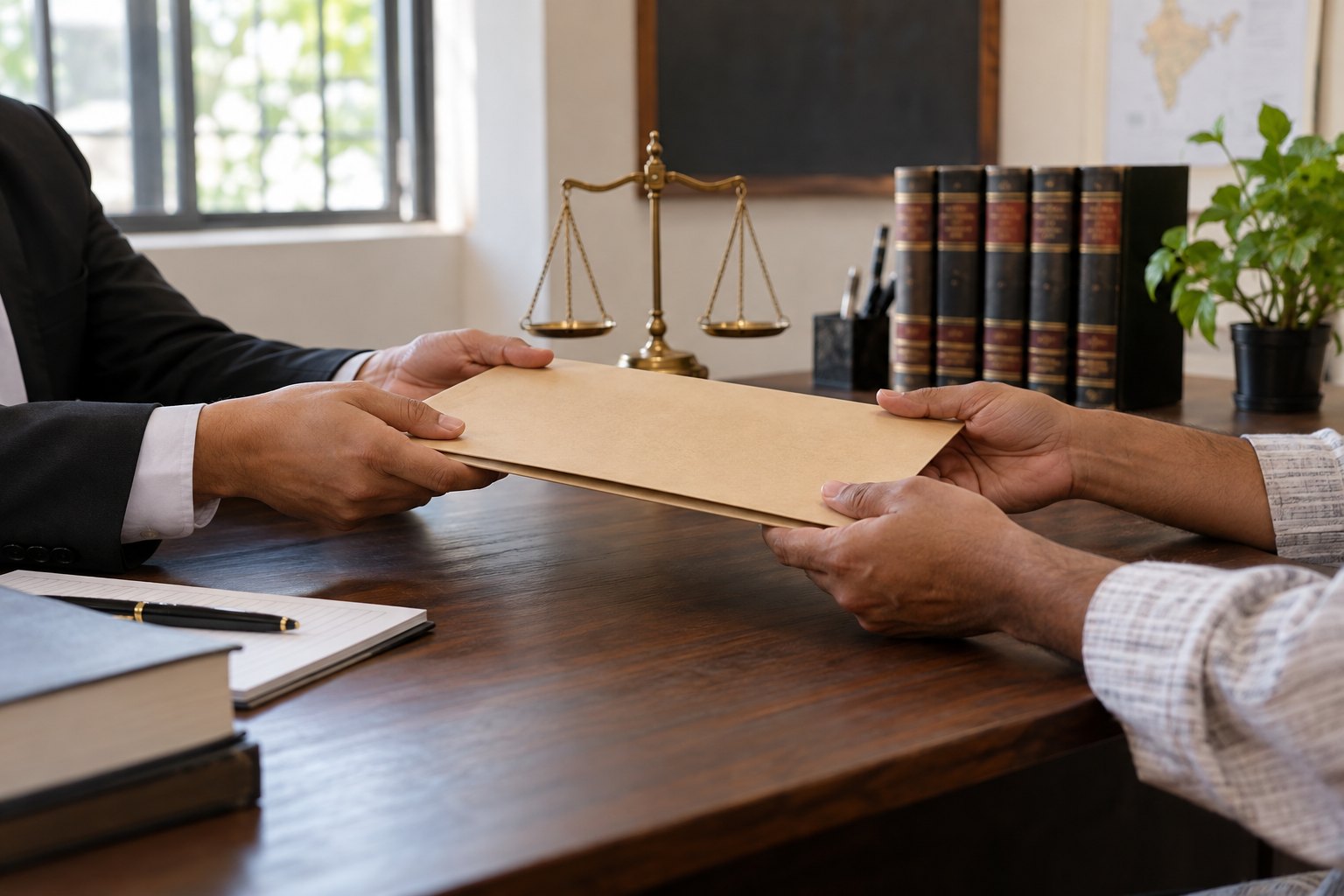
Article 39A of the Constitution directs the State to provide free legal aid. The Legal Services Authorities Act, 1987 delivers it through the National Legal Services Authority (NALSA) and its State, district and taluk bodies. The Union Home Ministry has asked States to use section 479 of the Bharatiya Nagarik Suraksha Sanhita, 2023 to bail eligible undertrials continuously.
Syllabus: GS2 · Separation of Powers; Prelims · Polity & Governance; GS2 · Statutory & Regulatory Bodies
Why this matters for UPSC
GS2 polity and welfare of vulnerable sections: Prelims asks who qualifies under section 12, who heads NALSA and how final a Lok Adalat award is; Mains, about access to justice and undertrial detention.
In short
Free legal aid is the State's duty under Article 39A, made a statutory entitlement by the Legal Services Authorities Act, 1987, so that poverty denies no one justice.
Article 39A is met only when aid arrives before detention outlasts any likely sentence; States must apply section 479 continuously and keep counsel competent.
Why it matters
A daily-wage worker arrested for a petty theft often cannot pay a lawyer, so the case drags on while the worker stays in jail, sometimes longer than any sentence the court could give. Free legal aid puts a lawyer beside such a person at no cost, from the first hearing to the Supreme Court. A woman seeking maintenance gets the same help whatever her income. Lok Adalats let a family settle a bank loan or a motor accident claim in a day instead of years. The larger issue is equal justice: rights on paper mean little to people who cannot afford to claim them in court.
Prelims pointers
- Article 37: Directive Principles such as Article 39A cannot be enforced by any court but bind the State in making laws.
- Section 3, Legal Services Authorities Act, 1987: the President nominates NALSA's Executive Chairman, a serving or retired Supreme Court judge, in consultation with the CJI.
- Section 6: a State Legal Services Authority's Executive Chairman is nominated by the Governor; the High Court Chief Justice is Patron-in-Chief.
- Section 12(c): a woman or a child is entitled to legal services whatever the income; NALSA treats a child as anyone below 18 years.
- Section 21: every Lok Adalat award is final and binding on all parties, and no appeal lies to any court.
- Section 22C: a Permanent Lok Adalat cannot hear a non-compoundable offence; the Act's Rs 10 lakh value ceiling may be raised by Central Government notification.
- Section 479(3), BNSS: the jail Superintendent must apply to the court once an undertrial completes half, or one-third, of the maximum term.
- Entry 4, List II (State List): prisons and persons detained in them are a State subject under the Seventh Schedule.
Practise a UPSC-style question
With reference to the National Legal Services Authority (NALSA), consider the following statements:
1. The Chief Justice of India is the Patron-in-Chief of NALSA under the Legal Services Authorities Act, 1987.
2. NALSA's Executive Chairman is a serving or retired Supreme Court judge nominated by the President in consultation with the Chief Justice of India.
3. The Executive Chairman of a State Legal Services Authority is nominated by the Governor in consultation with the Chief Justice of the High Court.
Which of the statements given above is/are correct?
- (a) 1 and 2 only
- (b) 2 and 3 only
- (c) 1 and 3 only
- (d) 1, 2 and 3
Show the answer
Answer: (d) 1, 2 and 3
Answer: (d) 1, 2 and 3. All three follow sections 3 and 6 of the Legal Services Authorities Act, 1987.
Statement 1: correct. Section 3(2)(a) of the 1987 Act makes the Chief Justice of India the Patron-in-Chief of NALSA.
Statement 2: correct. Section 3(2)(b) provides for a serving or retired Supreme Court judge, nominated by the President in consultation with the CJI, as Executive Chairman.
Statement 3: correct. Section 6(2)(b) has the Governor nominate the State authority's Executive Chairman, a serving or retired High Court judge, in consultation with the High Court Chief Justice.
Eliminate: Be sure of statement 1 first: the CJI heads NALSA as Patron-in-Chief, which removes the option without it. Out: (b).
Eliminate: Statements 2 and 3 mirror each other at the national and State level, with the President and the Governor nominating, so both hold. Out: (a), (c).
Trap: Swapped attribution. A student who expects a Chief Minister or the Union Law Ministry to nominate may wrongly reject statement 3, though the Act gives the role to the Governor.
Remember: NALSA: CJI Patron-in-Chief, President nominates Executive Chairman; SLSA: HC Chief Justice, Governor nominates.
More Explainers
- State Legislative Councils: Articles 168-172 and the graduates' and teachers' seats Polity
- Whales and dolphins in Indian waters: legal protection, IUCN status and strandings Environment
- The Aligarh Movement, AMU and the Article 30 minority test Polity
- Environmental clearance by States: SEIAA, SEAC and the EIA Notification, 2006 Environment
- Software vulnerabilities: CVE, CVSS, coordinated disclosure and CERT-In's role Sci-Tech
- Drug trafficking law in India: NDPS Act, PIT-NDPS, NCB and NCORD National
- Choosing the UN Secretary-General: Article 97, UNSC veto and straw polls World & IR
- UN Convention against Torture, and why India has not ratified it Polity
- NavIC: why India's navigation constellation cannot give a standalone position Sci-Tech
- International Energy Agency: membership, 90-day oil stocks and India's status World & IR
- PM Surya Ghar: Muft Bijli Yojana and the rooftop solar subsidy Economy
- HFSS foods: FSSAI's draft limits and front-of-pack warning labels National