
Constitutional tort: State compensation for violating Article 21
Why in news: On 16 October 2026, a Supreme Court bench remarked it could award constitutional tort compensation if curbs over a Delhi protest proved unlawful.
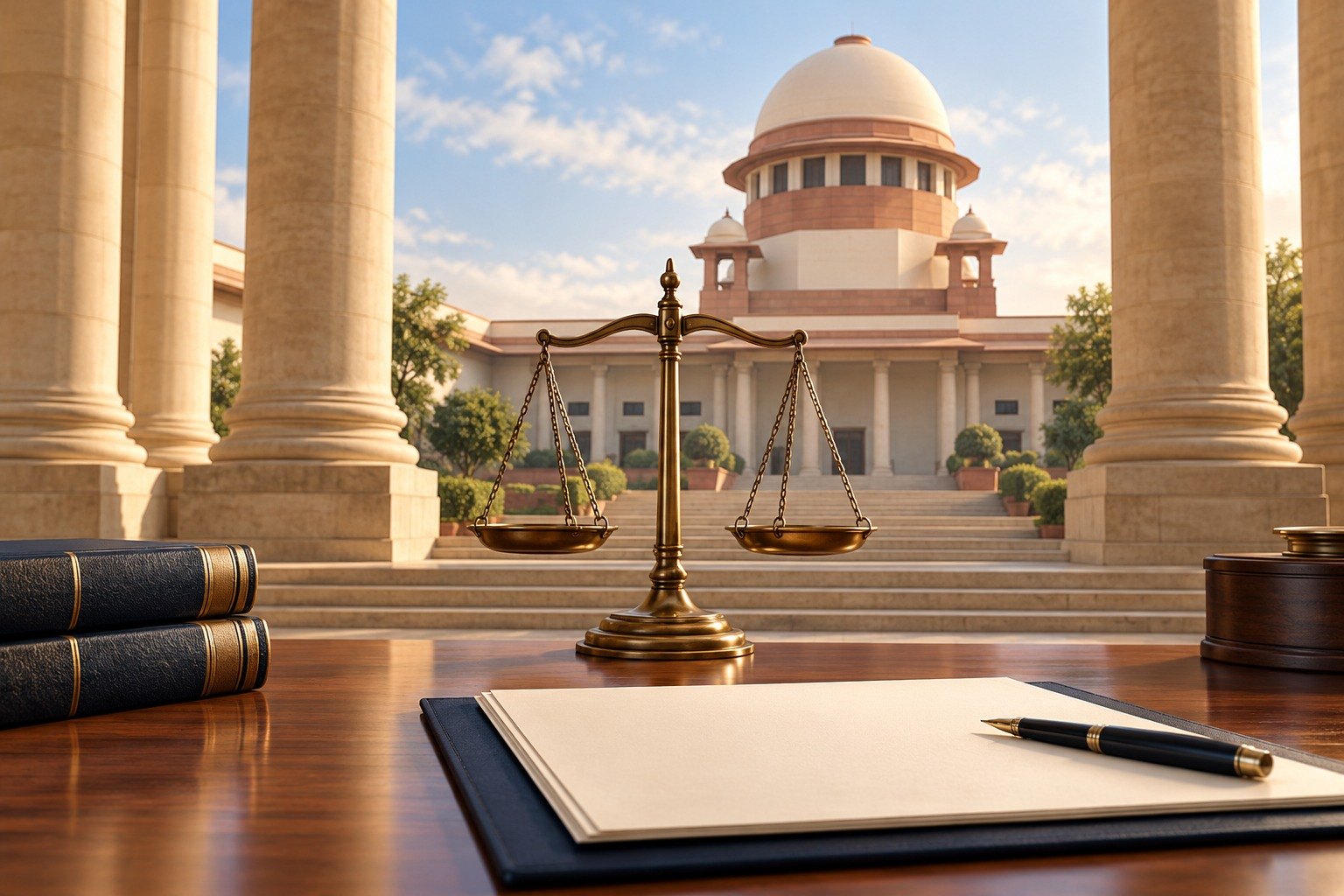
Constitutional tort is the public-law remedy by which the Supreme Court (Article 32) or a High Court (Article 226) makes the State compensate a person whose fundamental right, chiefly Article 21, its officers violated. Sovereign immunity is no defence. On 16 October 2026, a Supreme Court bench remarked it could invoke this jurisdiction if Delhi protest curbs unlawfully hurt traders.
Syllabus: GS2 · Constitution; Prelims · Polity & Governance; GS2 · Executive & Judiciary
Why this matters for UPSC
GS2 polity: fundamental rights and the writ jurisdiction of the Supreme Court and High Courts. Prelims can ask about Articles 21, 32, 226 and sovereign immunity; Mains, about State accountability for custodial violence.
In short
Constitutional tort is the State's duty to compensate a person whose fundamental rights its officers violated, enforced by writ courts under Articles 32 and 226 as a public-law remedy.
Constitutional tort makes Article 21 enforceable in money, not words alone; a statute on State liability should now settle the sovereign-immunity anomaly in ordinary tort.
Why it matters
Think of a poor family whose son dies in a police lock-up. A civil suit against the State could take years and, under the old sovereign-immunity rule, might fail altogether. A writ petition lets the family ask a High Court or the Supreme Court to make the State pay once the death in custody is established. The money cannot undo the loss, but it eases the family's hardship and makes the State, not only the officer, answer for it. That cost is what pushes police and prisons to follow arrest safeguards. The same idea surfaced when Delhi traders said an official closure order could cut into their festive-season earnings.
Prelims pointers
- Article 32(4): the right to move the Supreme Court cannot be suspended except as the Constitution itself provides.
- Article 226(2): a High Court may issue writs where the cause of action arises, wholly or in part, within its territory.
- Article 359: during an Emergency the President may suspend the right to move courts for Part III rights, except Articles 20 and 21.
- Article 300: the Union of India and each State, by its name, may sue or be sued in cases like those against pre-1950 Provinces.
- Article 142: the Supreme Court may pass any decree or order needed for complete justice; Nilabati Behera called it an enabling power for compensation.
- State of Rajasthan v. Vidhyawati (1962): State held liable for a government jeep driver's negligence; Kasturilal (1964) distinguished it as non-sovereign work.
- D.K. Basu requirements flow from Articles 21 and 22(1): arrest memo attested by a witness, a relative informed, medical check every 48 hours.
Practise a UPSC-style question
With reference to compensation awarded by courts for violation of fundamental rights in India, consider the following statements:
1. The Supreme Court can award such compensation in proceedings under Article 32 of the Constitution.
2. A High Court can award such compensation in proceedings under Article 226 of the Constitution.
Which of the statements given above is/are correct?
- (a) 1 only
- (b) 2 only
- (c) Both 1 and 2
- (d) Neither 1 nor 2
Show the answer
Answer: (c) Both 1 and 2
Answer: (c) Both 1 and 2. Both constitutional courts can order the State to pay compensation in writ proceedings.
Statement 1: correct. Rudul Sah (1983) and Nilabati Behera (1993) were petitions under Article 32 in which the Supreme Court ordered the State to pay.
Statement 2: correct. Nilabati Behera (1993) held that the High Courts under Article 226 hold the same public-law power to award compensation.
Eliminate: Judge statement 1 first: Rudul Sah was itself an Article 32 habeas corpus petition, so it is correct. Out: (b), (d).
Eliminate: Judge statement 2: Nilabati Behera named Article 226 alongside Article 32, so it is correct. Out: (a).
Trap: Wrong scope. A student who ties the remedy to the Supreme Court's Article 32 alone may deny the High Courts the same power under Article 226.
Remember: Constitutional tort compensation: Supreme Court under Article 32, High Courts under Article 226.
More Explainers
- State Legislative Councils: Articles 168-172 and the graduates' and teachers' seats Polity
- Whales and dolphins in Indian waters: legal protection, IUCN status and strandings Environment
- The Aligarh Movement, AMU and the Article 30 minority test Polity
- Environmental clearance by States: SEIAA, SEAC and the EIA Notification, 2006 Environment
- Software vulnerabilities: CVE, CVSS, coordinated disclosure and CERT-In's role Sci-Tech
- Drug trafficking law in India: NDPS Act, PIT-NDPS, NCB and NCORD National
- Choosing the UN Secretary-General: Article 97, UNSC veto and straw polls World & IR
- UN Convention against Torture, and why India has not ratified it Polity
- NavIC: why India's navigation constellation cannot give a standalone position Sci-Tech
- International Energy Agency: membership, 90-day oil stocks and India's status World & IR
- PM Surya Ghar: Muft Bijli Yojana and the rooftop solar subsidy Economy
- HFSS foods: FSSAI's draft limits and front-of-pack warning labels National