
Chennai–Vladivostok Eastern Maritime Corridor: India–Russia sea route
Why in news: An 8 October 2026 analysis argued the corridor could bring Russian oil to Bay of Bengal ports as Hormuz and Red Sea risks grow.
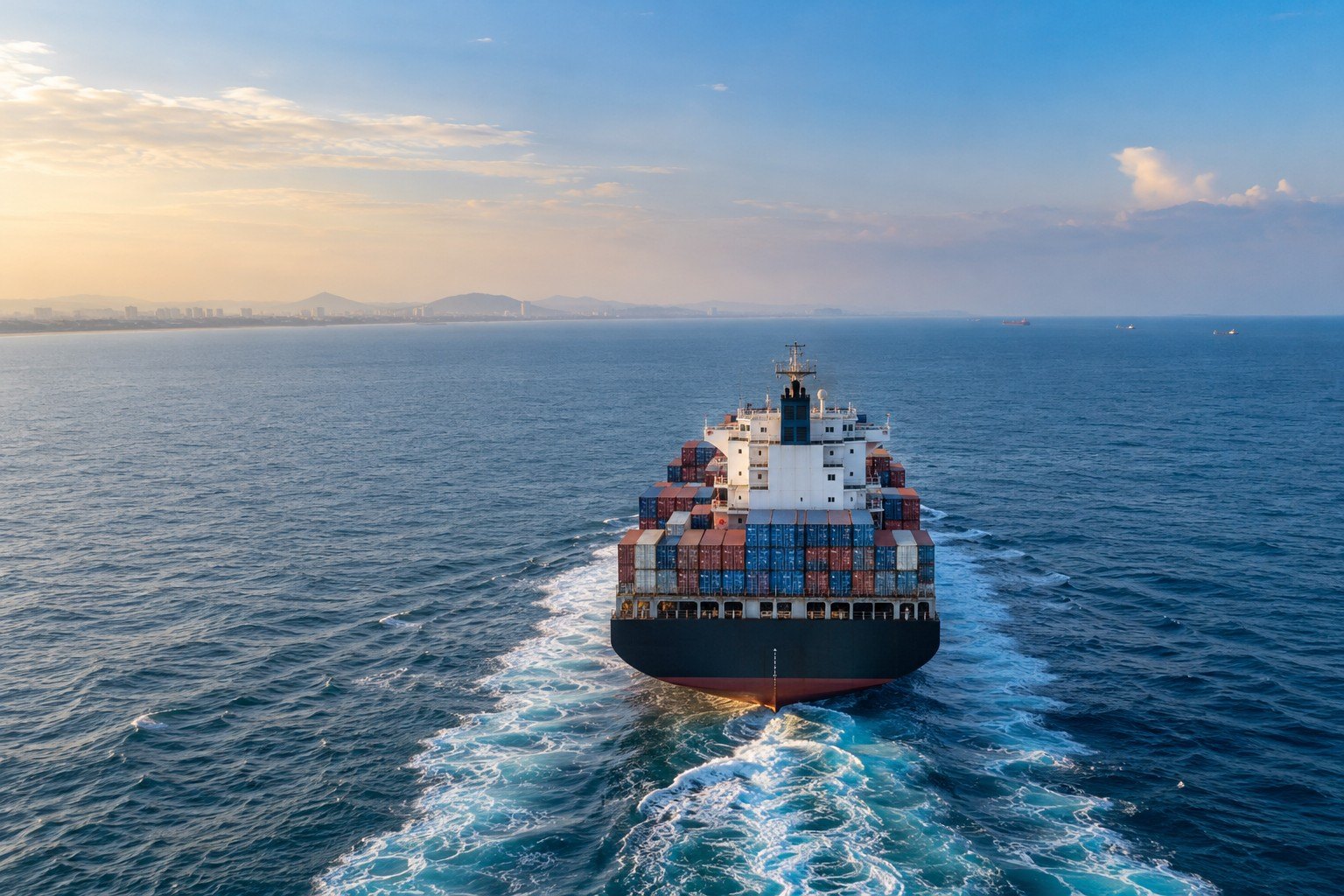
The Chennai–Vladivostok Eastern Maritime Corridor is a sea link between India's east coast and Russia's Far East, taken up under a 2019 Memorandum of Intent. The Ports Minister put it at 5,647 nautical miles in January 2024. Hormuz and Red Sea disruption has put it in focus as a possible route for Russian oil to Bay of Bengal ports.
Syllabus: Prelims · Geography; GS3 · Infrastructure; GS2 · Groupings & Agreements
Why this matters for UPSC
GS2 bilateral relations and GS3 infrastructure: Prelims can ask the corridor's ports and seas and how it differs from INSTC and the Northern Sea Route; Mains, sea-route diversification for India's energy security.
In short
The Chennai–Vladivostok Eastern Maritime Corridor is a direct sea link between India's east coast and Russia's Far East, taken up under a 2019 India–Russia Memorandum of Intent.
The corridor is a sound hedge against western chokepoints, but only weekly scheduled sailings and two-way cargo will make it a working trade route.
Why it matters
A west-coast oil refinery that runs on Russian crude depends today on tankers passing the Suez Canal and the Red Sea; when ships there come under attack, freight and insurance rise and fuel costs follow. A second route ending at Chennai or other Bay of Bengal ports gives refiners, power plants and steel mills that use coking coal another way to get supplies. For an Indian drug maker or machine exporter, a regular ship to Vladivostok could open buyers in the Russian Far East. The larger question is whether India can protect its energy security by diversifying not just whom it buys from but the sea lanes its cargo uses.
Prelims pointers
- Vladivostok: Russian port on Peter the Great Bay in the Sea of Japan, home of the headquarters of Russia's Pacific Fleet.
- INSTC route: Mumbai to Chabahar by sea, road to Bandar-e-Anzali on the Caspian, ship to Astrakhan, then Russian railways.
- Suez Canal: crosses Egypt, joining the Mediterranean Sea to the Red Sea; Bab-el-Mandeb is the Red Sea's other chokepoint for India-bound ships.
- Arctic Council: India takes part as an Observer and has stated its readiness to play an active role in that capacity.
- Russia's Arctic Zone covers about 4.9 million sq km, roughly 1.5 times India's area.
- India–Russia Declaration on Strategic Partnership: signed in October 2000; the partnership is now styled Special and Privileged Strategic Partnership.
- Program of India–Russia cooperation in the Russian Far East covers 2024–2029: agriculture, energy, mining, manpower, diamonds, pharmaceuticals and maritime transport.
Practise a UPSC-style question
With reference to the Chennai–Vladivostok Eastern Maritime Corridor, consider the following statements:
1. Its Russian end, Vladivostok, lies on Peter the Great Bay in the Sea of Japan.
2. It was taken up under a 2019 Memorandum of Intent between India's Ministry of Shipping and Russia's Ministry of Energy.
Which of the statements given above is/are correct?
- (a) 1 only
- (b) 2 only
- (c) Both 1 and 2
- (d) Neither 1 nor 2
Show the answer
Answer: (a) 1 only
Answer: (a) 1 only. Vladivostok is on the Sea of Japan, but the 2019 Memorandum of Intent was with Russia's Ministry of Transport.
Statement 1: correct. Vladivostok, Russia's Pacific Fleet base, sits on Peter the Great Bay in the Sea of Japan, where India–Russia naval exercises have been held.
Statement 2: incorrect. The Memorandum of Intent of 4 September 2019 on Chennai–Vladivostok maritime communications was between India's Ministry of Shipping and Russia's Ministry of Transport.
Eliminate: Statement 2 names the wrong Russian ministry, so it is false. Out: (b), (c).
Eliminate: Statement 1 is a map fact that holds. Out: (d).
Trap: Swapped attribution. Russia's energy ties with India are so prominent that its Energy Ministry seems a natural partner for a corridor carrying oil.
Remember: Chennai–Vladivostok: Ministry of Shipping with Russia's Ministry of Transport, 2019; Vladivostok is on the Sea of Japan.
More Explainers
- State Legislative Councils: Articles 168-172 and the graduates' and teachers' seats Polity
- Whales and dolphins in Indian waters: legal protection, IUCN status and strandings Environment
- The Aligarh Movement, AMU and the Article 30 minority test Polity
- Environmental clearance by States: SEIAA, SEAC and the EIA Notification, 2006 Environment
- Software vulnerabilities: CVE, CVSS, coordinated disclosure and CERT-In's role Sci-Tech
- Drug trafficking law in India: NDPS Act, PIT-NDPS, NCB and NCORD National
- Choosing the UN Secretary-General: Article 97, UNSC veto and straw polls World & IR
- UN Convention against Torture, and why India has not ratified it Polity
- NavIC: why India's navigation constellation cannot give a standalone position Sci-Tech
- International Energy Agency: membership, 90-day oil stocks and India's status World & IR
- PM Surya Ghar: Muft Bijli Yojana and the rooftop solar subsidy Economy
- HFSS foods: FSSAI's draft limits and front-of-pack warning labels National