
Non-tariff barriers: SPS and TBT measures and India's trade remedies
Why in news: On 16 October 2026 the Finance Minister said China's non-tariff barriers, citing phytosanitary measures, are the biggest hurdle in India-China trade.
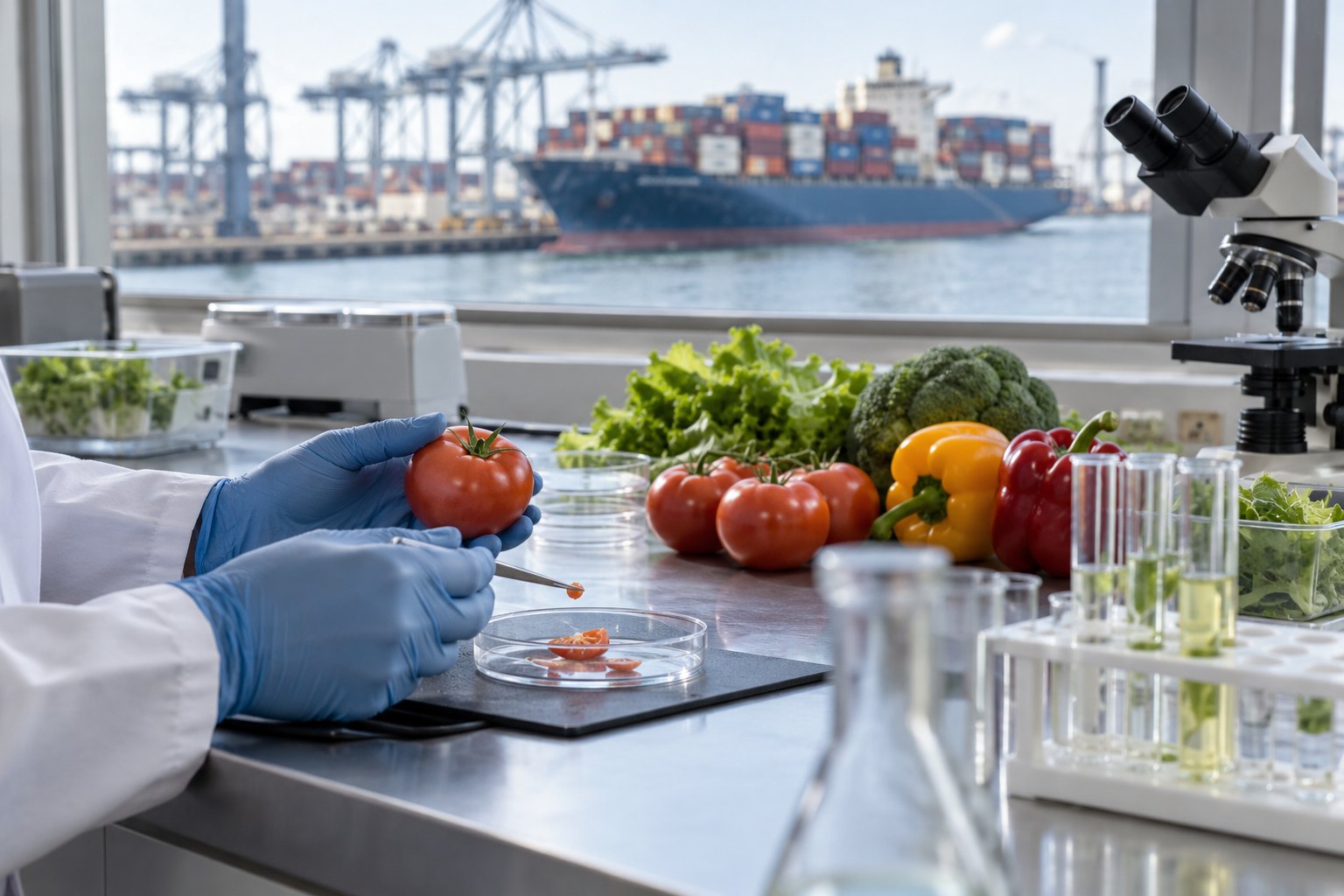
Non-tariff barriers restrict trade through rules instead of duties: food-safety and plant-health (SPS) checks and technical standards (TBT), both disciplined by WTO agreements. Trade remedies, namely anti-dumping, countervailing and safeguard duties, investigated in India by the DGTR, answer unfair or surging imports. On 16 October 2026 the Finance Minister called non-tariff barriers the biggest hurdle in India-China trade.
Syllabus: GS3 · Indian Economy & Growth; GS3 · Liberalisation & Industry; GS2 · International Institutions
Why this matters for UPSC
Trade barriers sit in GS3 (Indian economy, effects of liberalisation) and GS2 (the WTO). Prelims asks what SPS and TBT measures cover and how anti-dumping, countervailing and safeguard duties differ; Mains asks how India should answer protectionism and China's non-tariff barriers.
In short
Non-tariff barriers restrict trade through rules and standards instead of tariffs; WTO agreements on SPS and TBT measures discipline them, while trade remedies let members counter dumping, subsidies and surges.
India should contest unscientific SPS and TBT barriers in WTO committees, and keep trade remedies targeted so industry gains without overtaxing users.
Why it matters
An Indian vegetable exporter or generic-drug maker can be shut out of a foreign market without paying a rupee of tariff: a residue limit, a quarantine check or a slow approval process does the job. When such rules are genuine, they keep consumers safe; when they are disguised protection, exporters lose orders and workers lose jobs. At home, a small chemical plant competing with cheap imports may survive only because an anti-dumping duty lifts the import price, while the garment maker that buys the chemical then pays more. The larger question is how India can shield producers and consumers from unfair trade while staying open to the markets its exporters need.
Prelims pointers
- SPS reference bodies: Codex Alimentarius Commission (FAO/WHO) for food safety, WOAH (founded as OIE) for animal health, IPPC (FAO) for plant protection.
- SPS or TBT: a measure's purpose decides SPS coverage, its type decides TBT coverage; environmental, consumer and animal-welfare rules fall outside SPS.
- TBT Article 2.2: technical regulations must not be more trade-restrictive than necessary to fulfil a legitimate objective such as health, safety or national security.
- Anti-dumping Agreement: implements GATT Article VI; an investigation ends if the dumping margin is below 2% of export price or imports are negligible.
- SCM Agreement: a subsidy needs a financial contribution by a government or public body that confers a benefit; export and local-content subsidies are prohibited.
- Safeguards Agreement: prohibits voluntary export restraints and other grey-area measures; a measure lasting over a year must be progressively liberalised.
- Customs Tariff Act, 1975: Section 8B for safeguard duty, Section 9 for countervailing duty, Section 9A for anti-dumping duty.
- DGTR: attached office of the Department of Commerce, Ministry of Commerce and Industry; earlier called the Directorate General of Anti-dumping and Allied Duties.
Practise a UPSC-style question
With reference to the WTO Agreement on the Application of Sanitary and Phytosanitary Measures, consider the following statements:
1. It allows members to adopt standards stricter than international standards if there is scientific justification.
2. The Codex Alimentarius Commission is its reference standard-setting body for food safety.
3. It allows measures to differ by country of origin, given differences in pest or disease conditions.
Which of the statements given above is/are correct?
- (a) 1 and 2 only
- (b) 2 and 3 only
- (c) 1 and 3 only
- (d) 1, 2 and 3
Show the answer
Answer: (d) 1, 2 and 3
Answer: (d) 1, 2 and 3. The SPS Agreement allows science-based stricter rules, uses Codex for food and allows origin-based differences.
Statement 1: correct. Members may set higher protection than international standards if there is scientific justification or an appropriate risk assessment, per the WTO.
Statement 2: correct. The FAO/WHO Codex Alimentarius Commission sets food-safety standards; WOAH covers animal health and the IPPC plant protection.
Statement 3: correct. Because climate, pests and diseases differ, SPS requirements may vary with the product's country of origin, and disease-free areas must be recognised.
Eliminate: statement 3 is correct, so (a) goes. Out: (a).
Eliminate: statement 1 is correct, so (b) goes. Out: (b).
Eliminate: statement 2 is correct, so (c) goes. Out: (c).
Trap: Wrong scope. A student who reads the agreement as a cap on health rules wrongly rejects stricter, science-based national standards.
Remember: SPS: own level of protection, based on science; Codex food, WOAH animals, IPPC plants.
More Explainers
- State Legislative Councils: Articles 168-172 and the graduates' and teachers' seats Polity
- Whales and dolphins in Indian waters: legal protection, IUCN status and strandings Environment
- The Aligarh Movement, AMU and the Article 30 minority test Polity
- Environmental clearance by States: SEIAA, SEAC and the EIA Notification, 2006 Environment
- Software vulnerabilities: CVE, CVSS, coordinated disclosure and CERT-In's role Sci-Tech
- Drug trafficking law in India: NDPS Act, PIT-NDPS, NCB and NCORD National
- Choosing the UN Secretary-General: Article 97, UNSC veto and straw polls World & IR
- UN Convention against Torture, and why India has not ratified it Polity
- NavIC: why India's navigation constellation cannot give a standalone position Sci-Tech
- International Energy Agency: membership, 90-day oil stocks and India's status World & IR
- PM Surya Ghar: Muft Bijli Yojana and the rooftop solar subsidy Economy
- HFSS foods: FSSAI's draft limits and front-of-pack warning labels National