
Off-budget borrowing by States and Article 293
Why in news: On 15 October 2026, a Keralam expert committee's report tabled in the Assembly proposed ending KIIFB's independent market borrowing.
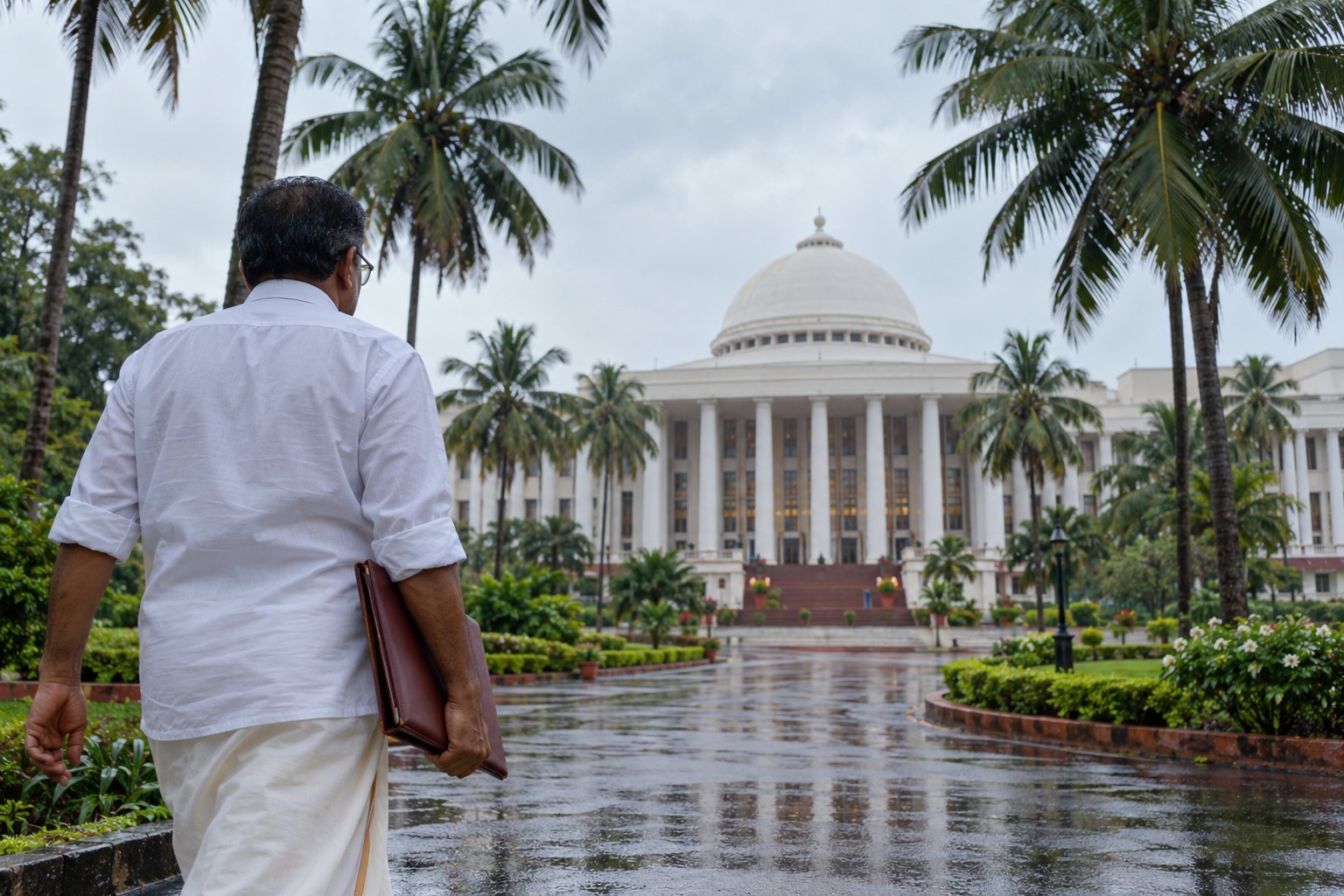
Off-budget borrowing is debt raised by a State-controlled body outside the budget but repaid from State revenue. It sidesteps Article 293, under which a State owing the Centre needs Union consent to borrow, the basis of its annual ceiling. A Keralam expert committee report tabled on 15 October 2026 proposes ending KIIFB's independent market borrowing.
Syllabus: GS2 · Constitution; GS2 · Federalism & Local Government; GS3 · Government Budgeting
Why this matters for UPSC
GS3 government budgeting and GS2 Centre-State finance: Prelims can ask what Article 293 provides and who fixes a State's borrowing limits; Mains, whether off-budget borrowing by bodies such as KIIFB undermines fiscal transparency and federalism.
In short
Off-budget borrowing is debt a State-controlled entity raises outside the budget but repays from State revenue; it tests the limits Article 293 places on State borrowing.
Off-budget borrowing buys speed at the cost of transparency; full budget disclosure, with Article 293 limits on all State-backed debt, should replace it.
Why it matters
A Keralam vehicle owner pays motor vehicle tax, and part of it goes not into the State's common pool but straight to KIIFB to repay its lenders. When such debt sits outside the budget, legislators approve spending without seeing the full bill, and taxpayers later carry repayments that crowd out salaries, pensions and new schools. Hidden debt can also raise what the State pays to borrow, because lenders price the risk. The larger question is honest accounts in a federation: the Centre wants every rupee of State debt counted within one limit, while States guard their freedom to fund development.
Prelims pointers
- Article 292: the Union borrows on the security of the Consolidated Fund of India within limits Parliament may fix by law.
- Article 293(2): the Government of India may lend to a State, or guarantee its loans while limits fixed under Article 292 are not exceeded.
- Article 293(4): the Union may attach whatever conditions it thinks fit to a consent given under Article 293(3).
- Seventh Schedule: 'Public debt of the Union' is entry 35 and 'Foreign loans' entry 37 of List I; 'Public debt of the State' is entry 43 of List II.
- Article 266: a State's revenues and its treasury bills, loans and ways and means advances form its Consolidated Fund; other public money goes to its Public Account.
- Article 131: the Supreme Court alone has original jurisdiction over a legal dispute between the Government of India and one or more States.
- Fiscal rule laws: the Union's Fiscal Responsibility and Budget Management Act, 2003; Keralam's counterpart is the Kerala Fiscal Responsibility Act, 2003.
Practise a UPSC-style question
With reference to Article 293 of the Constitution of India, consider the following statements:
1. The executive power of a State extends to borrowing within the territory of India upon the security of its Consolidated Fund.
2. A State that still owes any part of a loan made by the Government of India needs the Union's consent to raise a new loan.
3. The limits on a State's borrowing under Article 293(1) are fixed by Parliament by law.
Which of the statements given above is/are correct?
- (a) 1 and 2 only
- (b) 2 and 3 only
- (c) 1 and 3 only
- (d) 1, 2 and 3
Show the answer
Answer: (a) 1 and 2 only
Answer: (a) 1 and 2 only. A State's own Legislature, not Parliament, fixes the limits under Article 293(1).
Statement 1: correct. Article 293(1) lets a State borrow within India on the security of the Consolidated Fund of the State.
Statement 2: correct. Article 293(3) requires the Government of India's consent while any part of a Union loan to the State is outstanding.
Statement 3: incorrect. Article 293(1) says the limits are fixed by the Legislature of the State by law; Parliament fixes the Union's limits under Article 292.
Eliminate: Judge statement 3 first: the State Legislature sets State borrowing limits, so statement 3 is incorrect. Out: (b), (c), (d).
Trap: Swapped attribution. The power to fix limits is moved from the State Legislature to Parliament, which holds it only for Union borrowing under Article 292.
Remember: Article 292 limits by Parliament for the Union; Article 293(1) limits by the State Legislature for a State.
More Explainers
- State Legislative Councils: Articles 168-172 and the graduates' and teachers' seats Polity
- Whales and dolphins in Indian waters: legal protection, IUCN status and strandings Environment
- The Aligarh Movement, AMU and the Article 30 minority test Polity
- Environmental clearance by States: SEIAA, SEAC and the EIA Notification, 2006 Environment
- Software vulnerabilities: CVE, CVSS, coordinated disclosure and CERT-In's role Sci-Tech
- Drug trafficking law in India: NDPS Act, PIT-NDPS, NCB and NCORD National
- Choosing the UN Secretary-General: Article 97, UNSC veto and straw polls World & IR
- UN Convention against Torture, and why India has not ratified it Polity
- NavIC: why India's navigation constellation cannot give a standalone position Sci-Tech
- International Energy Agency: membership, 90-day oil stocks and India's status World & IR
- PM Surya Ghar: Muft Bijli Yojana and the rooftop solar subsidy Economy
- HFSS foods: FSSAI's draft limits and front-of-pack warning labels National