
Offshore mineral blocks and the International Seabed Authority
Why in news: On 13 October 2026 the Ministry of Mines held an outreach for bidders on two Andaman Sea blocks of polymetallic nodules and crusts.
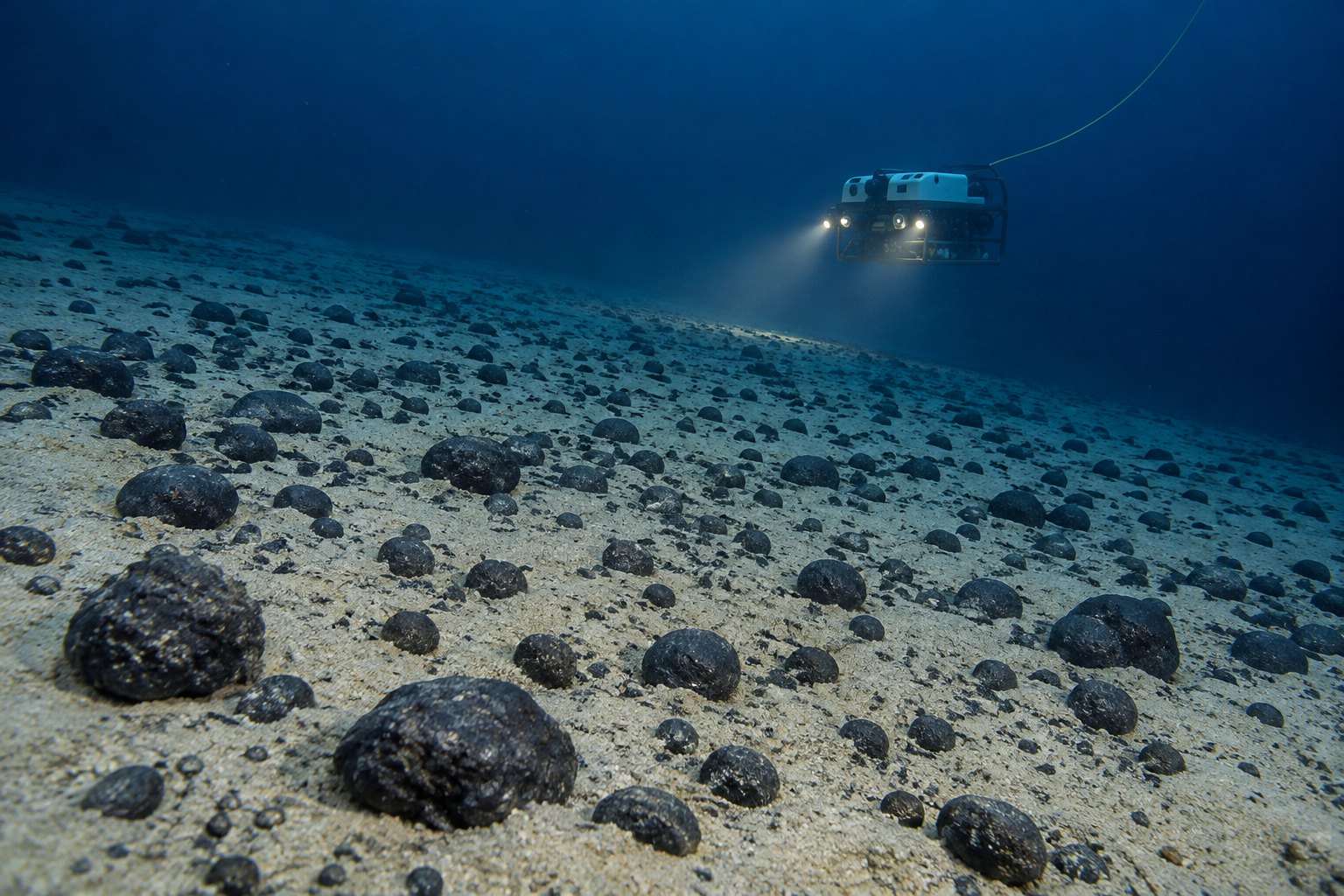
India regulates seabed mining in its territorial waters, continental shelf and exclusive economic zone through the Offshore Areas Mineral (Development and Regulation) Act, 2002, which since 2023 grants private entities rights only by auction. Beyond national jurisdiction, the International Seabed Authority licenses exploration. The Ministry of Mines is now seeking bidders for two Andaman Sea nodule blocks.
Syllabus: GS3 · Indian Economy & Growth; GS1 · Resources & Industry Location; GS2 · International Institutions
Why this matters for UPSC
GS3 mineral resources and GS2 international institutions: Prelims can ask India's maritime zone limits, the composite licence under the 2002 Act, and what the International Seabed Authority does; Mains, how to balance mineral security with deep-sea ecology.
In short
India's offshore mineral regime governs seabed minerals inside its maritime zones through the Offshore Areas Mineral (Development and Regulation) Act, 2002; beyond them, the International Seabed Authority governs.
India must pair auction-driven exploration with finalised environmental baselines, so seabed minerals add to supply security without sacrificing deep-sea ecosystems.
Why it matters
Electric-vehicle makers, battery plants and electronics firms in India depend on imported nickel, cobalt and copper. Nodules on the sea floor carry these metals, so a working offshore regime could open a domestic source and cut that dependence. Auctions decide who gets the seabed, which makes the process open and lets the State earn from it. Fishing communities and marine life carry the risk: mining scrapes the sea floor, and India's environmental guidelines for offshore mining are still being finalised. The larger issue is the blue economy, using the ocean for growth without wrecking ecosystems that are barely mapped.
Prelims pointers
- Territorial waters: twelve nautical miles; EEZ: two hundred nautical miles from the baseline, under the Maritime Zones Act, 1976.
- In the EEZ, the Union holds sovereign rights to explore and exploit living and non-living resources, not full sovereignty.
- Ministry of Mines auctions offshore blocks under the 2002 Act; the Ministry of Earth Sciences holds the ISA contracts and runs the Deep Ocean Mission.
- ISA: set up under UNCLOS (1982) and the 1994 Part XI Agreement; headquarters in Kingston, Jamaica.
- Polymetallic nodules lie on abyssal plains and carry nickel, copper, cobalt and manganese; polymetallic sulphides form at hydrothermal vents.
- India became the first pioneer investor in 1987 and holds a Central Indian Ocean Basin nodule area.
- Offshore Areas Mineral Trust, created by the 2023 amendment, funds exploration, ecological research and disaster relief.
Practise a UPSC-style question
With reference to India's maritime zones under the Territorial Waters, Continental Shelf, Exclusive Economic Zone and other Maritime Zones Act, 1976, consider the following statements:
1. The exclusive economic zone extends to three hundred and fifty nautical miles from the baseline.
2. The limit of the territorial waters is twelve nautical miles from the nearest point of the baseline.
3. In the exclusive economic zone, the Union has sovereign rights to explore and exploit living and non-living resources.
Which of the statements given above is/are correct?
- (a) 1 and 2 only
- (b) 2 and 3 only
- (c) 1 and 3 only
- (d) 1, 2 and 3
Show the answer
Answer: (b) 2 and 3 only
1 is incorrect: the Act fixes the exclusive economic zone at two hundred nautical miles from the baseline. 2 is correct: section 3 sets the territorial waters at twelve nautical miles. 3 is correct: section 7 gives sovereign rights over living and non-living resources in the zone.
More Explainers
- State Legislative Councils: Articles 168-172 and the graduates' and teachers' seats Polity
- Whales and dolphins in Indian waters: legal protection, IUCN status and strandings Environment
- The Aligarh Movement, AMU and the Article 30 minority test Polity
- Environmental clearance by States: SEIAA, SEAC and the EIA Notification, 2006 Environment
- Software vulnerabilities: CVE, CVSS, coordinated disclosure and CERT-In's role Sci-Tech
- Drug trafficking law in India: NDPS Act, PIT-NDPS, NCB and NCORD National
- Choosing the UN Secretary-General: Article 97, UNSC veto and straw polls World & IR
- UN Convention against Torture, and why India has not ratified it Polity
- NavIC: why India's navigation constellation cannot give a standalone position Sci-Tech
- International Energy Agency: membership, 90-day oil stocks and India's status World & IR
- PM Surya Ghar: Muft Bijli Yojana and the rooftop solar subsidy Economy
- HFSS foods: FSSAI's draft limits and front-of-pack warning labels National