
Environment Current Affairs for UPSC
Every Environment story from the daily editions, newest first, each in short with why it matters for Prelims and Mains. Page 2 of 4.
-
EnvironmentPrelimsGS1
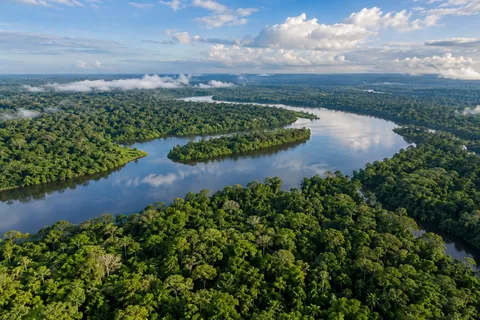
PRODES satellite survey puts Brazil's Amazon clearing at a series low
Brazil's National Institute for Space Research (INPE) on 16 October 2026 estimated deforestation in the Legal Amazon at 3,335 sq km for August 2025 to July 2026, 41.8% below the year before and, per INPE, the lowest since its PRODES series began in 1988. Clearing in the Cerrado fell 23.8% to 5,516.69 sq km, also a series low.
Read the story -
EnvironmentGS3GS2
Groundwater in India: assessment, regulation and the Atal Bhujal Yojana
Why in news: On 8 October 2026, SANDRP said tests at Ambad, Nashik, found hexavalent chromium in groundwater over 1,000 times the BIS drinking-water limit.
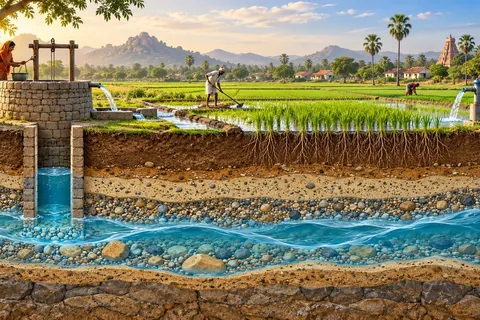
Groundwater stress in India is measured each year by the Central Ground Water Board and the States. Their 2025 assessment, reported by the Ministry of Jal Shakti, put the national stage of extraction at 60.63%, with 730 of 6,762 units over-exploited. Quality is a second worry: an NGO reported toxic chromium in Nashik's groundwater on 8 October 2026.
Read the story -
EnvironmentPrelimsGS1
Glacial lake outburst floods (GLOFs) and India's early-warning push
Why in news: Uttarakhand announced a pilot GLOF warning system at Vasundhara Tal on 13 October 2026; Himachal reported one at Ghepan Gath on 16 October.
A glacial lake outburst flood (GLOF) is the sudden release of water from a lake held behind a glacier or loose moraine, sending water and debris rushing downstream. NDMA has listed 195 potentially high-risk Himalayan lakes. In October 2026, Uttarakhand and Himachal Pradesh reported early-warning systems at Vasundhara Tal and Ghepan Gath lakes.
Read the story -
EnvironmentPrelimsGS1
Monsoon low-pressure systems: lows, depressions and deep depressions
Why in news: IMD's 2026 southwest monsoon review (30 September 2026) counted 14 low-pressure systems and 77 system-days against a normal 57.
Monsoon low-pressure systems are lows, depressions and deep depressions, graded by the India Meteorological Department by wind speed at sea and closed isobars over land. Many form over the north Bay of Bengal and move west-northwest along the monsoon trough, bringing heavy rain. IMD counted 14 such systems in the 2026 southwest monsoon, against a normal 13.
Read the story -
EnvironmentPrelimsGS3
Human-leopard conflict in India and how it is managed
Why in news: Leopards killed several people in sugarcane fields of Bijnor and Moradabad, western Uttar Pradesh, in August 2026, despite repeated capture operations.
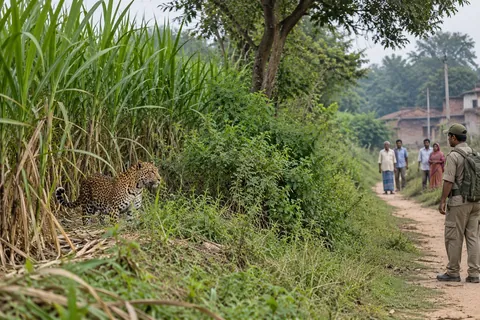
Human-leopard conflict is the harm leopards and people do each other where forests, farms and villages meet. The leopard is a Schedule I animal under the Wild Life (Protection) Act, 1972, and MoEFCC's 2023 guidelines stress prevention, not just capture. Fatal attacks in western Uttar Pradesh's sugarcane belt in August 2026 have brought it back.
Read the story -
EnvironmentPrelimsGS3
Western hoolock gibbon and the Hollongapar Gibbon Sanctuary
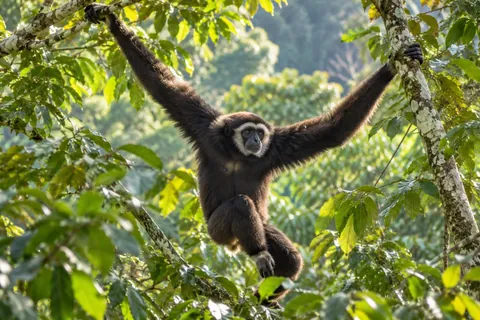
The western hoolock gibbon (Hoolock hoolock) is India's only ape, an Endangered tree-dweller of the Northeast that seldom touches the ground. In Assam's Hollongapar Gibbon Sanctuary a railway line splits its forest, so canopy bridges are built to let family groups cross. Rope bridges over the line, whose first gibbon crossing was reported in May 2026, are in the news.
Read the story -
EnvironmentPrelimsGS1
Coral reefs, bleaching and the IUCN Red List status of corals
Why in news: On 15 October 2026, Nature published the IUCN SSC Coral Specialist Group's reassessment: 44% of assessed reef-building coral species are threatened.
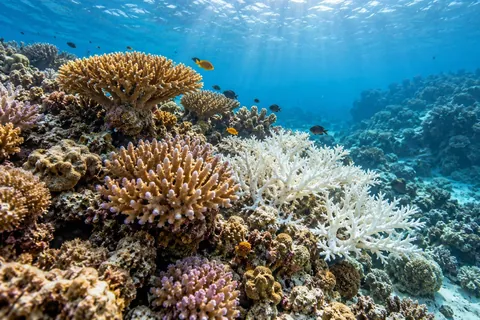
Coral reefs are built by colonies of tiny animals called polyps that lay down calcium carbonate and live with algae called zooxanthellae; heat-stressed corals expel the algae and bleach. An IUCN Species Survival Commission reassessment, published in Nature on 15 October 2026, classed 340 of 774 assessed reef-building coral species, or 44%, as threatened.
Read the story -
EnvironmentPrelimsGS3
Convention on Biological Diversity and the Kunming-Montreal framework
Why in news: CBD COP17 meets in Yerevan, Armenia, from 19 to 30 October 2026; the UN Secretary-General addressed its Leaders' Summit on 16 October.
The Convention on Biological Diversity, opened for signature at the 1992 Rio Earth Summit, pursues conservation, sustainable use and fair sharing of benefits from genetic resources. Its Kunming-Montreal Global Biodiversity Framework of 2022 sets four goals for 2050 and 23 targets for 2030. The treaty's seventeenth Conference of the Parties meets in Yerevan, Armenia, from 19 to 30 October 2026.
Read the story -
EnvironmentPrelimsGS2
IUCN Red List of Ecosystems: categories and criteria of collapse risk
Why in news: On 8 October 2026 Keralam launched a two-year Red List assessment of its ecosystems, funded by the Kerala State Biodiversity Board and run by KFRI.
The IUCN Red List of Ecosystems is a global standard that rates whole ecosystems, not species, by their risk of collapse, using five criteria and eight categories from Least Concern to Collapsed. On 8 October 2026 Keralam launched a two-year assessment of its ecosystems across all 14 districts under this framework, run by the Kerala Forest Research Institute.
Read the story -
EnvironmentPrelimsGS3
Carbon capture, utilisation and storage (CCUS) and direct air capture
Carbon Capture, Utilisation and Storage (CCUS) traps carbon dioxide at a factory or power plant, then reuses it or locks it deep underground; direct air capture takes the gas from open air instead. The Union Budget 2026-27 proposed ₹20,000 crore over five years for CCUS in five industries, aligned with a December 2025 DST roadmap.
Read the story -
EnvironmentPrelimsGS1
The 4.2 ka arid event and Holocene monsoon change
Why in news: On 16 October 2026, PIB reported a BSIP study reconstructing 4,600 years of monsoon history from Karela Lake in the Central Ganga Plain.
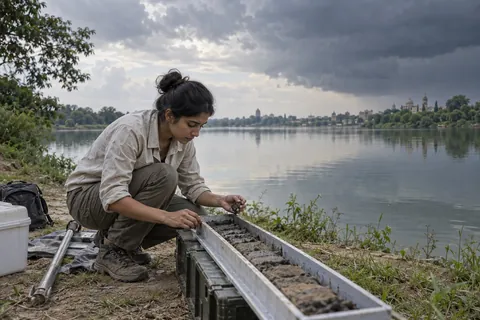
The 4.2 ka event was an abrupt weakening of the Indian Summer Monsoon about 4,200 years ago, now the marker for the base of the Meghalayan Stage of the Holocene. A Birbal Sahni Institute of Palaeosciences study of Karela Lake near Lucknow, released by PIB on 16 October 2026, traced it and later monsoon swings across 4,600 years.
Read the story -
EnvironmentGS3GS2
Centre cancels paraquat herbicide's registration; Madhya Pradesh orders stocks destroyed
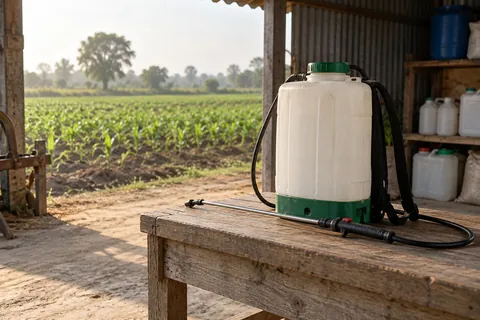
The Ministry of Agriculture and Farmers Welfare's final order of 22 September 2026 under the Insecticides Act, 1968 prohibits registration of the herbicide paraquat dichloride and cancels its registration certificates. Madhya Pradesh on 15 October told companies and dealers to destroy their stocks. Critics say the final order dropped the draft's explicit ban on sale and use.
Read the story -
EnvironmentPrelimsGS3
Green hydrogen, the National Green Hydrogen Mission and green steel
Why in news: Union Minister Pralhad Joshi launched MNRE's Green Hydrogen Certification Portal of India on 17 June 2026.
Green hydrogen is hydrogen made by splitting water with renewable electricity, or from biomass, emitting at most 2 kg CO2 equivalent per kg. The National Green Hydrogen Mission, run by the Ministry of New and Renewable Energy, backs its use in steel and other hard-to-abate industries. Steel pilots and a June 2026 certification portal keep it in the news.
Read the story -
EnvironmentPrelimsGS2
Musk deer in India: protection and conservation breeding
Why in news: A Central Zoo Authority inventory of September 2026, reported on 14 October 2026, lists only two captive musk deer, both male.
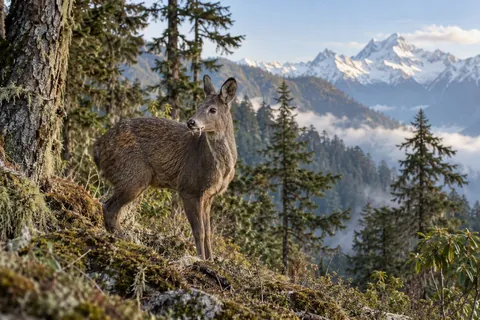
India has four musk deer species, all in Schedule I of the Wild Life (Protection) Act, 1972, and its musk deer populations are in CITES Appendix I; males are killed for their musk. The Central Zoo Authority's inventory as of September 2026, disclosed under RTI, lists only two captive musk deer in recognised zoos, both male.
Read the story -
EnvironmentPrelimsGS3
Kunming-Montreal biodiversity framework off track, finds first global review report
Fewer than half of countries reporting say their national targets are on track for any of the Kunming-Montreal Global Biodiversity Framework's 23 targets, finds 'State of Biodiversity Action', the Convention on Biological Diversity Secretariat's first global report on the framework. UN Secretary-General António Guterres launched it in Yerevan on 15 October 2026, before COP17 opens there on 19 October.
Read the story -
EnvironmentPrelimsGS3
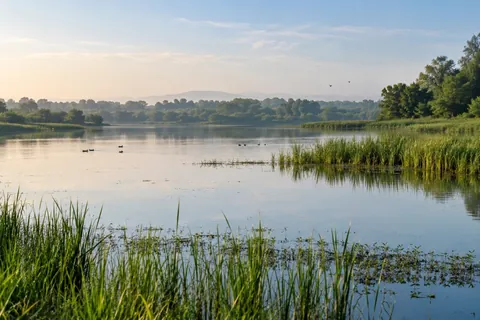
The Ramsar Convention and India's wetlands
Why in news: On 15 October 2026 the Union Environment Minister announced Sukhna Wetland and Sauj Jheel as India's newest Ramsar sites, taking the national tally to 103.
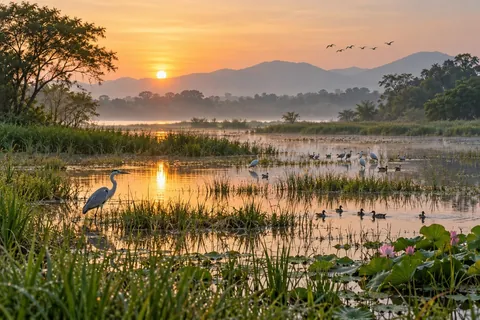
The Ramsar Convention, adopted in Iran in 1971 and in force for India since 1 February 1982, commits its Parties to list Wetlands of International Importance, use all wetlands wisely and cooperate across borders. On 15 October 2026 the Environment Minister announced Sukhna Wetland (Chandigarh) and Sauj Jheel (Uttar Pradesh) as new sites, taking India's tally to 103.
Read the story -
EnvironmentPrelimsGS2
Lead poisoning: sources, health effects and WHO's response
Why in news: On 15 October 2026 WHO urged faster action on lead exposure, ahead of International Lead Poisoning Prevention Week from 18 October.
Lead poisoning is harm from a toxic metal taken in from paint, cookware, cosmetics, spices, informal recycling and industry; no level of exposure is known to be safe. On 15 October 2026 the World Health Organization urged countries to speed up prevention, ahead of International Lead Poisoning Prevention Week beginning 18 October.
Read the story -
EnvironmentPrelimsGS3
India's Ramsar sites reach 103 with Sukhna Wetland and Sauj Jheel
Union Environment Minister Bhupender Yadav announced on 15 October 2026 that India now has 103 Ramsar sites, after Sukhna Wetland in Chandigarh and Sauj Jheel in Uttar Pradesh were designated Wetlands of International Importance under the Ramsar Convention. He said the additions serve biodiversity conservation, water and climate security, and local livelihoods.
Read the story -
EnvironmentPrelimsGS1
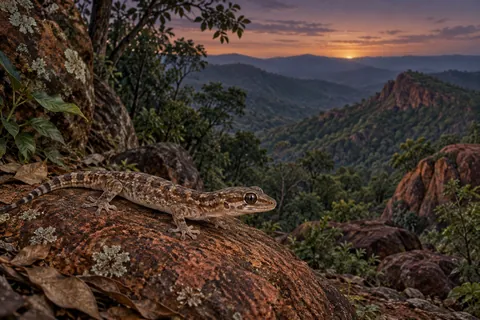
Jeypore ground gecko and the Eastern Ghats' bauxite hills
Why in news: The Hindu reported on 14 October 2026 that a bauxite mining project on the Balda hills of Odisha's Koraput district threatens the gecko.
The Jeypore ground gecko (Cyrtodactylus jeyporensis) is a nocturnal gecko found only in high Eastern Ghats forests of southern Odisha and northern Andhra Pradesh. It is Endangered on the IUCN Red List, in CITES Appendix II and in Schedule I of the Wild Life (Protection) Act, 1972. A Koraput bauxite project threatens it, The Hindu reported on 14 October 2026.
Read the story -
EnvironmentPrelimsGS3
Nationally Determined Contributions under the Paris Agreement
Why in news: The Global Climate and Health Alliance released its 2026 Healthy NDC Scorecard on 14 October 2026, rating how 117 national climate plans address health.
A Nationally Determined Contribution (NDC) is the climate plan each Party to the Paris Agreement prepares and communicates under Article 4, setting its own emission targets and renewing them every five years with higher ambition. A civil-society scorecard released on 14 October 2026, ahead of COP31, assessed how 117 national plans address health.
Read the story -
EnvironmentPrelimsGS3
The Kigali Amendment to the Montreal Protocol and the HFC phase-down
Why in news: The Kigali Amendment, adopted on 15 October 2016, marked its tenth anniversary on 15 October 2026, with 175 parties by early October.
The Kigali Amendment to the Montreal Protocol, adopted in Rwanda in 2016 and in force since January 2019, sets binding schedules to phase down hydrofluorocarbons (HFCs), refrigerants that spare the ozone layer but trap heat strongly. India, which ratified it in 2021, must freeze HFC use in 2028. The amendment turned ten on 15 October 2026.
Read the story -
EnvironmentPrelimsGS3
Draft rules propose BS-VII emission norms for new cars from April 2029
The Ministry of Road Transport and Highways has proposed Bharat Stage VII (BS-VII) emission norms for M1 vehicles, mainly passenger cars, made from 1 April 2029, in a draft notification dated 12 October 2026. Further phases in 2031 and 2035 would add brake-particle and tyre-abrasion limits. Public comments are invited for 30 days.
Read the story -
EnvironmentPrelimsGS3
State of the World's Forests: FAO's flagship report on restoration
Why in news: FAO launched The State of the World's Forests 2026, on forest and landscape restoration, on 28 September 2026 at COFO 28 in Rome.
The State of the World's Forests (SOFO) is the Food and Agriculture Organization's flagship forest report, issued every two years with one theme per edition. Its 2026 edition, launched in Rome on 28 September at the Committee on Forestry, counts 1.56 billion hectares of degraded land and sets out four pathways to scale up forest and landscape restoration.
Read the story -
EnvironmentPrelimsGS3
PFAS 'forever chemicals' and the Stockholm Convention: where India stands
Why in news: On 15 September 2026, Japan withdrew its notification of non-acceptance of the PFHxS listing, the UN depositary record shows.
PFAS, or per- and polyfluoroalkyl substances, are fluorinated chemicals that barely break down. The Stockholm Convention on Persistent Organic Pollutants restricts PFOS and lists PFOA, PFHxS and long-chain PFCAs for elimination. The UN depositary record shows no Indian acceptance of these four listings. Japan withdrew its non-acceptance of the PFHxS listing on 15 September 2026.
Read the story -
EnvironmentPrelimsGS3
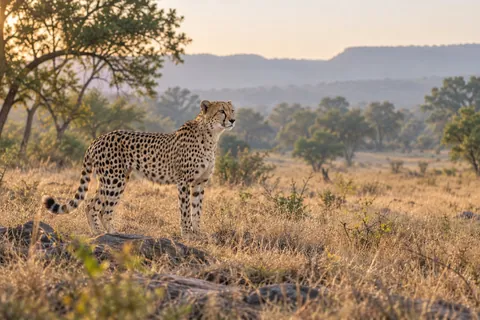
Project Cheetah: India's intercontinental cheetah reintroduction
Why in news: An eight-month-old cub of Namibian cheetah Aasha was found dead at Kuno National Park, reported on 13 October 2026.
Project Cheetah, launched on 17 September 2022 and implemented by the National Tiger Conservation Authority, reintroduces African cheetahs from Namibia, South Africa and Botswana to Kuno National Park and Gandhi Sagar Wildlife Sanctuary in Madhya Pradesh. A cub's death at Kuno, reported on 13 October 2026, brings the programme back into the news.
Read the story -
EnvironmentGS3Prelims
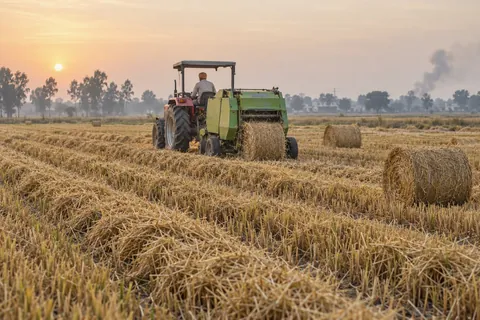
Paddy stubble burning: the CRM scheme, CAQM and residue management
Why in news: On 13 October 2026, the Union Agriculture and Environment Ministers jointly reviewed States' stubble management for the ongoing paddy harvest.
Paddy stubble burning is the setting alight of crop residue to clear fields quickly for rabi sowing in Punjab, Haryana and Uttar Pradesh. The Agriculture Ministry's Central Sector Scheme on Crop Residue Management subsidises straw machines, and the Commission for Air Quality Management issues binding directions. On 13 October 2026, the Union Agriculture and Environment Ministers reviewed States' preparedness.
Read the story -
EnvironmentPrelimsGS2
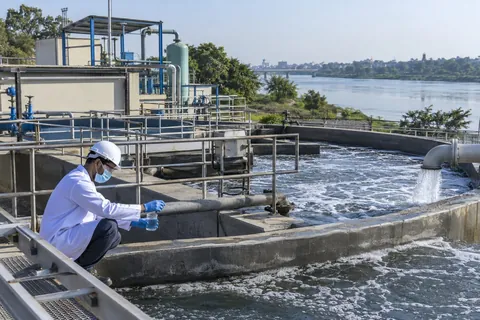
Industrial pollution control under Namami Gange: GPIs, CETPs and charters
Why in news: On 13 October 2026 the Ministry of Jal Shakti reported Ganga-basin GPI compliance at 86% in 2025, up from 39% in 2017.
Under the Namami Gange Programme, Grossly Polluting Industries in the Ganga basin face yearly third-party inspection since 2017 with CPCB support, sector-specific charters for five polluting sectors, and checks on Common Effluent Treatment Plants serving industrial clusters. The Jal Shakti Ministry said on 13 October 2026 that Ganga-basin GPI compliance rose from 39% in 2017 to 86% in 2025.
Read the story -
EnvironmentPrelimsGS3
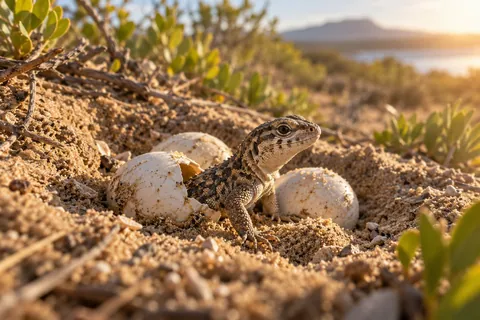
Ectotherms and climate change: temperature-dependent sex determination
Why in news: A Science Advances study of 2 September 2026 found heat-driven sex reversal could push Hungary's agile frog populations towards extinction sooner.
Ectotherms, cold-blooded animals such as fish, amphibians, reptiles and insects, take their body temperature from their surroundings. In many reptiles, nest temperature decides an embryo's sex, and in some frogs heat can override chromosomes to cause sex reversal. A Science Advances study of Hungary's agile frogs, published on 2 September 2026, links heat-driven sex reversal to extinction risk.
Read the story -
EnvironmentGS3Prelims
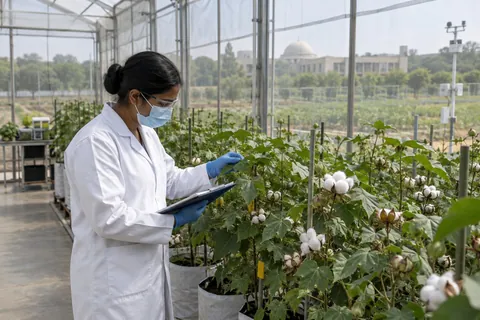
GM crop regulation in India: GEAC and the Rules, 1989
Why in news: An industry-backed field study, reported on 8 October 2026, put unapproved herbicide-tolerant Bt cotton on 24-30% of India's cotton area in Kharif 2025-26.
GM crops in India are regulated under the Rules, 1989, framed under the Environment (Protection) Act, 1986. The Genetic Engineering Appraisal Committee (GEAC) of the Environment Ministry must clear any environmental release; State committees police illegal planting. Bt cotton remains the only GM crop approved for commercial cultivation. An industry-backed study of unapproved herbicide-tolerant Bt cotton put enforcement in focus.
Read the story -
EnvironmentPrelimsGS3
Invasive alien species in India: how they are listed and managed
Why in news: On 21 March 2026, the National Biodiversity Authority set up an Expert Committee on Invasive Alien Species on the National Green Tribunal's direction.
Invasive alien species are plants, animals or microbes that people move beyond their natural range and that establish, spread and harm native biodiversity. A 2023 IPBES assessment found them a major factor in 60% of recorded global extinctions. In March 2026, India's National Biodiversity Authority set up an expert committee to prepare a national list.
Read the story









Other subjects
- National 86 stories
- World & IR 92 stories
- Economy 171 stories
- Polity 150 stories
- Sci-Tech 67 stories
- Defence 29 stories
- Miscellany 5 stories