
Centre cancels paraquat herbicide's registration; Madhya Pradesh orders stocks destroyed
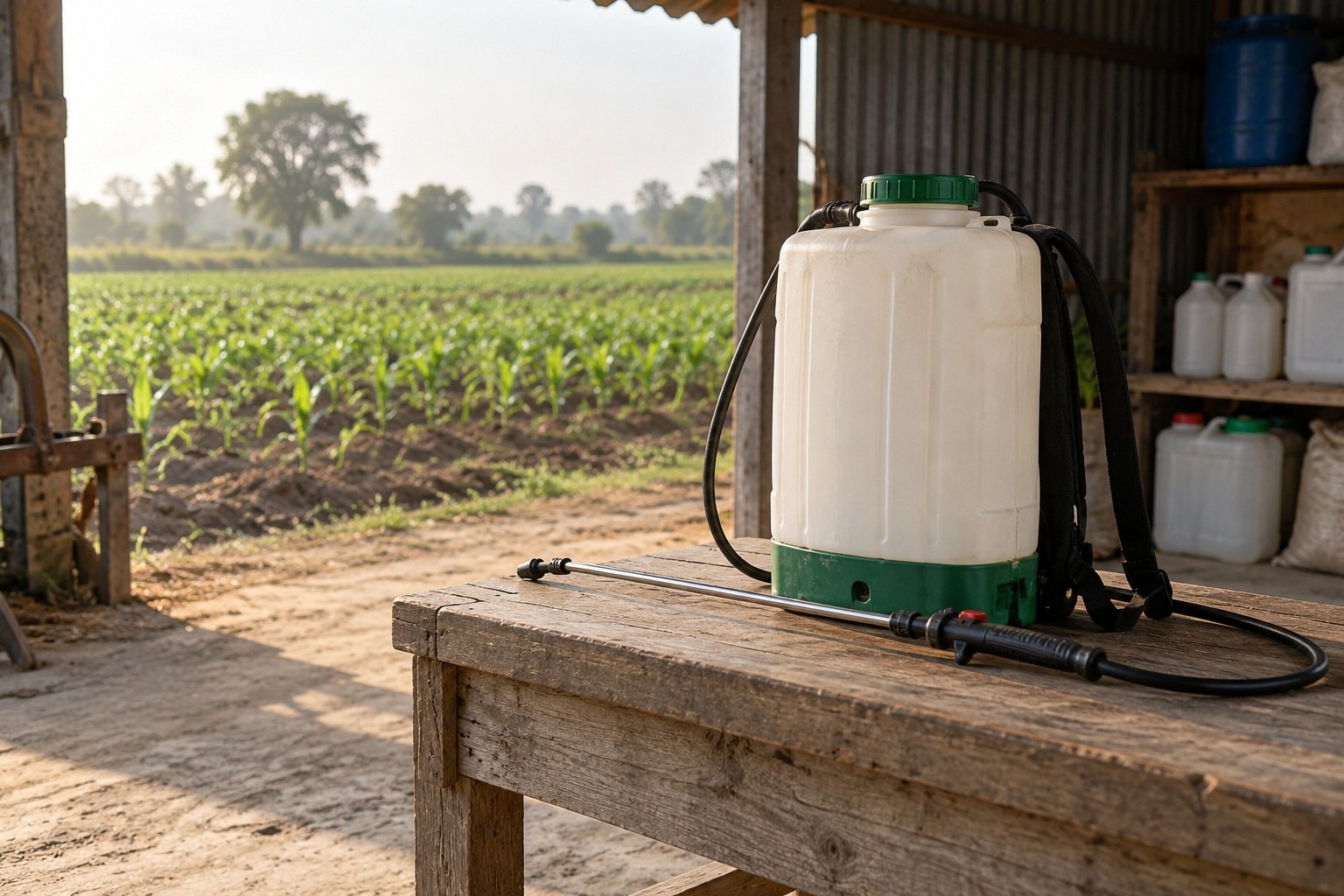
The Ministry of Agriculture and Farmers Welfare's final order of 22 September 2026 under the Insecticides Act, 1968 prohibits registration of the herbicide paraquat dichloride and cancels its registration certificates. Madhya Pradesh on 15 October told companies and dealers to destroy their stocks. Critics say the final order dropped the draft's explicit ban on sale and use.
Syllabus: GS3 · Agriculture & Irrigation; GS2 · Government Policies; GS2 · Health, Education & Human Resources
Why this matters for UPSC
GS3 agriculture and GS2 health policy: Prelims can ask what the Insecticides Act, 1968 provides and what the Central Insecticides Board and Registration Committee do; Mains, about regulating hazardous pesticides and Centre-State enforcement.
Why it matters
A farmer in Madhya Pradesh who sprayed paraquat to dry out a summer moong crop before harvest must now find another way, and dealers holding stock must destroy it or face action. The gain is for farm workers and rural families: reports describe the chemical as fatal in small amounts with no known antidote, and insecticide poisoning, by NCRB counts, claims thousands of lives a year. Consumers of pulses gain too if fewer chemicals reach the grain. The ban's force, though, depends on each State, because the Centre has acted on registration and left enforcement in shops and fields to them. Where a State does not act, old stock may keep selling.
Prelims pointers
- Section 4, Insecticides Act, 1968: the Central Insecticides Board is chaired, ex officio, by the Director General of Health Services.
- Section 9: registration may be refused if precautions cannot easily be observed or use involves serious risk to humans or animals.
- Section 3(e): 'insecticide' includes fungicides and weedicides the Centre adds to the Schedule after consulting the Board.
- Section 27(1): the Centre or a State may prohibit sale, distribution or use for up to 60 days, extendable by 30 days in all.
- Section 18(1): no person may sell, stock, distribute, transport or use an insecticide that is not registered under the Act.
- Sections 12 and 13: State Governments appoint licensing officers, who license manufacture, sale, stocking and distribution of insecticides.
- Directorate of Plant Protection, Quarantine and Storage: set up in 1946 on the Woodhead Commission's advice; attached office of the Agriculture Ministry.
- Origins: the Act followed an ICAR expert committee under M.S. Thacker (1964-67), set up after pesticide-contaminated wheat poisoned people in Kerala and Madras.
Practise a UPSC-style question
With reference to the Insecticides Act, 1968, consider the following statements:
1. Insecticides are registered by a Registration Committee constituted by the Central Government.
2. Licensing officers who license the sale of insecticides are appointed by the Central Government.
Which of the statements given above is/are correct?
- (a) 1 only
- (b) 2 only
- (c) Both 1 and 2
- (d) Neither 1 nor 2
Show the answer
Answer: (a) 1 only
Answer: (a) 1 only. Registration is done centrally by the Registration Committee, while licensing officers are State appointees.
Statement 1: correct. Section 5 of the Insecticides Act, 1968 has the Centre constitute a Registration Committee, which registers insecticides under section 9.
Statement 2: incorrect. Section 12 lets the State Government appoint licensing officers, who license manufacture and sale under section 13.
Eliminate: Statement 2 is the surest: licensing officers are appointed by the State Government. Out: (b), (c).
Eliminate: Statement 1 holds under sections 5 and 9, so 'neither' cannot stand. Out: (d).
Trap: Swapped attribution. The power to license, which belongs to the States, is pinned on the Centre, which holds only registration.
Remember: Insecticides Act, 1968: registration at the Centre, licences to make and sell from the States.
More from the 16 October 2026 edition
- Black Sea and the Turkish Straits: drone strikes hit merchant shipping World & IR
- India approves rollover of ₹30 billion currency swap for the Maldives World & IR
- Census Rules, 1990 amended to spell out who can be enumerators Polity
- Sports Ministry issues norms for revised National Sports Federations assistance scheme National
- Section 163 BNSS order and park closure curb Connaught Place assembly Polity
- India presses terrorism, connectivity norms at CICA's Baku summit World & IR
- ISRO: Aditya-L1 and Proba-3 coronagraphs jointly study coronal mass ejections Sci-Tech
- UN DESA's World Social Report 2026 scores 168 countries on inclusive transformation World & IR
- AT-1 bonds: Supreme Court upholds quashing of Yes Bank write-down Economy
- CERT-In issues critical advisory on AI agents reaching Indian systems Sci-Tech
- UN report urges limits on neurotechnology and neural data in justice Sci-Tech
- Kunming-Montreal biodiversity framework off track, finds first global review report Environment