
Environment Current Affairs for UPSC
Every Environment story from the daily editions, newest first, each in short with why it matters for Prelims and Mains. Page 3 of 4.
-
EnvironmentPrelimsGS1
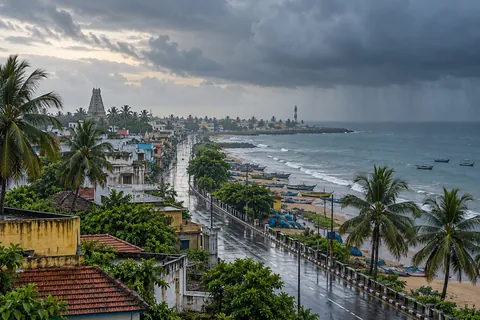
Northeast monsoon: Tamil Nadu's October-December rainy season
Why in news: On 12 October 2026, DD News reported a weather observer's forecast that the northeast monsoon may set in around 15 October.
The northeast monsoon is the October-December rainy season of south Peninsular India, which begins when winds turn northeasterly after the southwest monsoon withdraws. It covers five IMD subdivisions and gives Tamil Nadu about 48% of its yearly rain, per IMD Chennai. A weather observer expects onset around 15 October; IMD has not declared it.
Read the story -
EnvironmentGS2Prelims
Firecracker regulation: green crackers, PESO licensing and Arjun Gopal
Why in news: On 12 October 2026, a Supreme Court Bench hearing Delhi-NCR's air pollution case said it was not inclined to impose a blanket firecracker ban.
India regulates firecrackers on three tracks: PESO licenses them under the Explosives Act, 1884; CSIR-NEERI certifies green crackers, which it says cut emissions by about 30%; and the Supreme Court's Arjun Gopal judgment of 2018 allows only improved and green crackers, at fixed hours. On 12 October 2026, the Court heard the Delhi-NCR firecracker question again.
Read the story -
EnvironmentGS3Prelims
India's Carbon Credit Trading Scheme and the Carbon Border Adjustment Mechanism
Why in news: On 12 October 2026 India's Power Secretary met the European Commission's Director-General for Taxation and Customs Union on India's carbon market and CBAM.
India's Carbon Credit Trading Scheme, specified under the Energy Conservation Act, 2001 as amended in 2022, prices greenhouse gas emissions through tradable Carbon Credit Certificates, with the Bureau of Energy Efficiency as Administrator. The EU's Carbon Border Adjustment Mechanism charges importers for carbon embedded in goods. India's Power Secretary discussed both with the European Commission on 12 October 2026.
Read the story -
EnvironmentPrelimsGS3
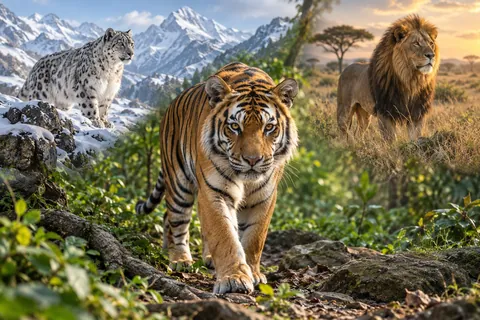
International Big Cat Alliance: India-headquartered treaty body for seven big cats
Why in news: On 12 October 2026 the Union Environment Minister inaugurated IBCA's new headquarters office at 55 Lodhi Estate, New Delhi.
The International Big Cat Alliance (IBCA) is a treaty-based intergovernmental organisation, headquartered in India, that works to conserve seven big cats: tiger, lion, leopard, snow leopard, cheetah, jaguar and puma. PIB put its membership at 29 countries on 12 October 2026, the day the Union Environment Minister opened its new headquarters office at 55 Lodhi Estate, New Delhi.
Read the story -
EnvironmentGS2Prelims
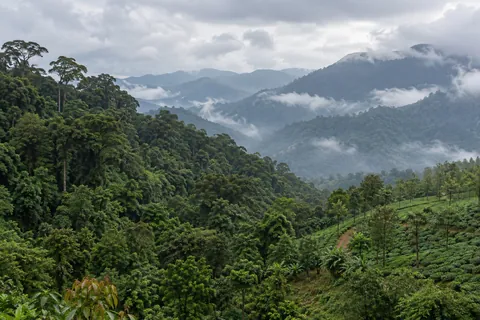
Western Ghats Ecologically Sensitive Area: Gadgil, Kasturirangan and the draft
Why in news: Planters' bodies renewed objections in October 2026 to the Centre's seventh draft Western Ghats ESA notification, issued on 27 July 2026.
An Ecologically Sensitive Area (ESA) is land where the Union government bans or regulates mining, polluting industry and large construction to protect fragile ecology. For the Western Ghats, the Gadgil panel (2011) and the Kasturirangan group (2013) proposed limits, and drafts have lapsed since 2014. The seventh draft, now facing planters' objections, proposes 56,825.7 sq km across six States.
Read the story -
EnvironmentPrelimsGS3
The IPCC: how its climate assessment reports are made
Why in news: The IPCC's 65th Session opens in Addis Ababa on 12 October 2026, with members still divided over when the AR7 reports are due.
The Intergovernmental Panel on Climate Change, set up in 1988 by the World Meteorological Organization and UNEP, assesses published climate science for governments through three Working Groups and a Task Force. It does no research itself, and governments approve its summaries. Its 65th Session opens in Addis Ababa on 12 October 2026, with members split over the AR7 timeline.
Read the story -
EnvironmentPrelimsGS3
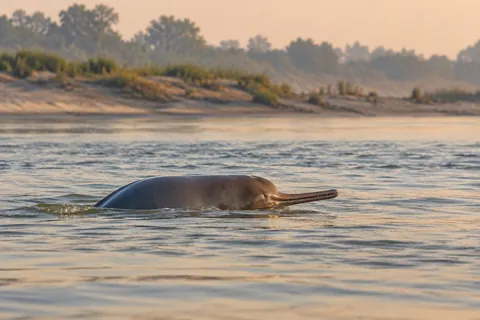
Ganges river dolphin: status, range and Project Dolphin
Why in news: A Wildlife Institute of India acoustic study in the Rupnarayan river, reported on 12 October 2026, links dolphin detections to time, tides and the moon.
The Ganges river dolphin (Platanista gangetica) is India's National Aquatic Animal, listed in Schedule I of the Wild Life (Protection) Act, 1972. It lives in the Ganga and Brahmaputra systems and is counted under Project Dolphin, whose second range-wide estimation began in January 2026. A new acoustic study links its acoustic detections to time of day and tides.
Read the story -
EnvironmentPrelimsGS1
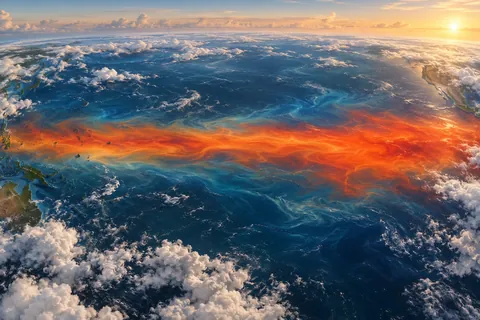
Nino 3.4 sea temperature hits record as El Nino strengthens: Copernicus
The EU's Copernicus Climate Change Service said on 12 October 2026 that sea-surface temperature in Nino 3.4, a key El Nino monitoring region of the Pacific, reached an all-time high of 29.70°C in September, above the 1982/1983, 1997/1998 and 2015/2016 peaks. Copernicus added that it cannot yet call this El Nino the strongest on record.
Read the story -
EnvironmentPrelimsGS3
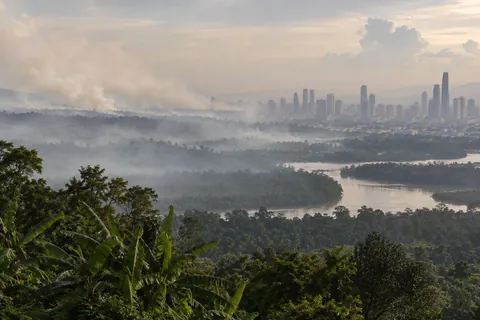
Transboundary haze and the ASEAN Agreement on Transboundary Haze Pollution
Why in news: On 9 October 2026, haze from Indonesian forest fires closed schools for about two million students in Kuala Lumpur, Putrajaya and five Malaysian states.
The ASEAN Agreement on Transboundary Haze Pollution, signed in 2002 and in force since 2003, binds ASEAN states to prevent and monitor smoke from land and forest fires that crosses borders. Indonesia, the last member to ratify, joined in 2015. On 9 October 2026, haze from Indonesian fires closed schools in Kuala Lumpur and five Malaysian states.
Read the story -
EnvironmentPrelimsGS3
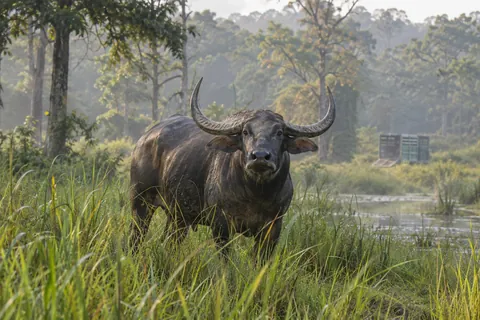
Wild water buffalo: reintroduction from Kaziranga to Kanha
Why in news: On 11 October 2026, eight wild buffaloes from Kaziranga moved from a quarantine enclosure into a 17-hectare enclosure in Kanha's Supkhar range.
The wild water buffalo (Bubalus arnee) is Endangered on the IUCN Red List and protected under Schedule I of the Wild Life (Protection) Act, 1972. Madhya Pradesh is reintroducing it to Kanha Tiger Reserve with animals from Kaziranga National Park. On 11 October 2026, eight buffaloes moved from quarantine into a 17-hectare enclosure at Supkhar.
Read the story -
EnvironmentPrelimsGS3
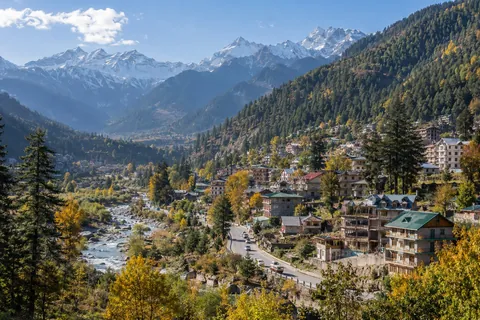
Carrying capacity of Himalayan hill towns
Why in news: Himachal Pradesh must report any carrying-capacity decision for Koksar, Manali and Solang within six weeks, the National Green Tribunal directed on 7 October 2026.
Carrying capacity is the largest number of visitors, vehicles and buildings a place can sustain without degrading its land, water, forests or residents' quality of life. On 7 October 2026 the National Green Tribunal asked Himachal Pradesh to report any capacity decision for Manali, Solang and Koksar.
Read the story -
EnvironmentPrelimsGS2
Air quality governance: NCAP, AQI, CPCB, CAQM and GRAP
Why in news: From 1 October 2026, CAQM's 50 mg/Nm³ particulate emission limit binds all polluting industries it targets in Delhi-NCR, the government said on 7 September 2026.
India's clean-air framework combines the National Clean Air Programme (NCAP), launched in 2019 and now covering 130 cities, the Air Quality Index, the Central Pollution Control Board and, for the NCR, the Commission for Air Quality Management (CAQM), which coordinates the Graded Response Action Plan. From 1 October 2026, CAQM's stricter particulate norm binds all the polluting industries it targets.
Read the story -
EnvironmentPrelimsGS3
Project Elephant: Elephant Reserves, corridors and the DNA-based census
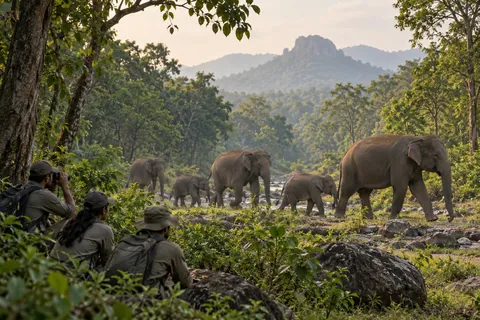
Project Elephant, run by the Union Environment Ministry since 1992, funds and advises States to protect elephants, their habitats and corridors, reduce human-elephant conflict and look after captive elephants. India has 33 Elephant Reserves and 150 identified corridors. A government note for World Elephant Day, 12 August 2026, put the wild population at 22,446 from the first DNA-based count.
Read the story -
EnvironmentGS3Prelims
Bamboo: the 2017 Indian Forest Act change and National Bamboo Mission
Bamboo is a fast-growing grass that the Indian Forest Act, 1927 counted as a 'tree' until a 2017 amendment removed it, freeing bamboo grown outside forests from felling and transit permits. The National Bamboo Mission funds plantation, processing and marketing. In a 12 September 2026 note, the government credited the change with new bamboo enterprises, notably in the Northeast.
Read the story -
EnvironmentPrelimsGS2
Waste to Wealth: circular economy in urban solid waste management
Waste to Wealth treats discarded material as a resource, turning kitchen scraps into compost and coconut husk into coir and cocopeat. Under Swachh Bharat Mission-Urban 2.0, cities are pushed to segregate waste at source, process it and recover value, so less reaches landfills. On 1 October 2026 the government profiled projects in Patna, Chandigarh and Assam.
Read the story -
EnvironmentPrelimsGS2
NBA disburses Rs 2.02 crore Access and Benefit-Sharing funds to States
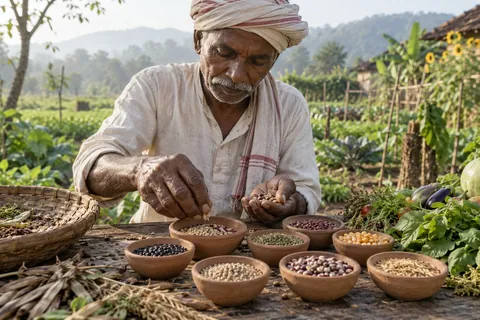
The National Biodiversity Authority (NBA) has disbursed Rs 2.02 crore of Access and Benefit-Sharing (ABS) money, paid by seven seed companies for using crops such as rice, tomato and okra, to 27 States and 3 Union Territories. Where individual benefit claimers could not be identified, shares followed each crop's cultivation area. The top 10 States received Rs 1.43 crore.
Read the story -
EnvironmentPrelimsGS2
Sarus crane: BNHS holds all-India count to set national baseline
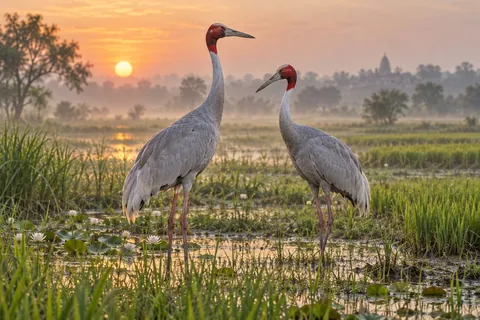
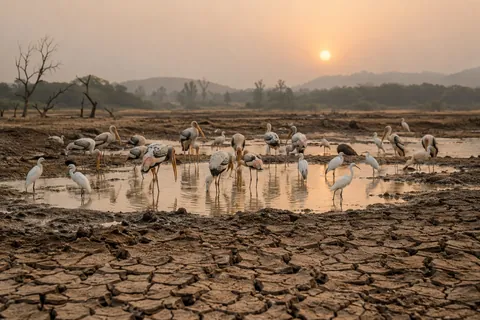
The Bombay Natural History Society (BNHS), a non-government body, is holding an All-India Sarus Crane Survey on October 10 and 11, 2026 to set a standard national population baseline. The sarus crane is listed as Vulnerable on the IUCN Red List, in Appendix II of CITES and in Schedule I of the Wild Life (Protection) Act, 1972. Results are awaited.
Read the story -
EnvironmentPrelimsGS3
London Convention and Protocol parties adopt marine geoengineering assessment frameworks
Parties to the London Convention (1972) and London Protocol (1996), meeting at the International Maritime Organization in London on 5–9 October 2026, adopted frameworks to assess research on three marine geoengineering methods: ocean fertilization, ocean alkalinity enhancement and ocean sinking of biomass. Every proposal must show a legitimate scientific purpose, assess environmental risks and report its monitoring openly.
Read the story -
EnvironmentPrelimsGS1
Coral bleaching in 2024 hit Lakshadweep's reefs hardest, study finds
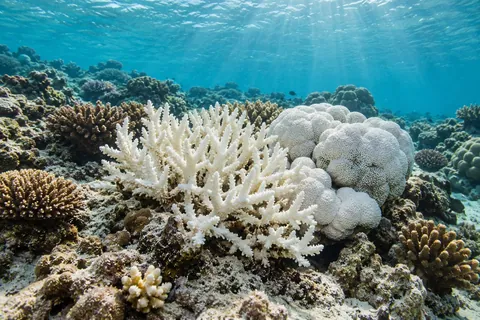
A study in the journal Coral Reefs finds the fourth global coral bleaching event hit India's reefs unevenly in 2024. Surveys of five reef regions found up to 37% of coral cover bleached or dead in Lakshadweep, against 11.5% in the marine national park at Wandoor, Andaman Islands. In Palk Bay, normally hardy Porites corals showed 61.8% mortality.
Read the story -
EnvironmentGS2Prelims
Andhra Pradesh declares early Kharif drought in 388 mandals, 21 districts
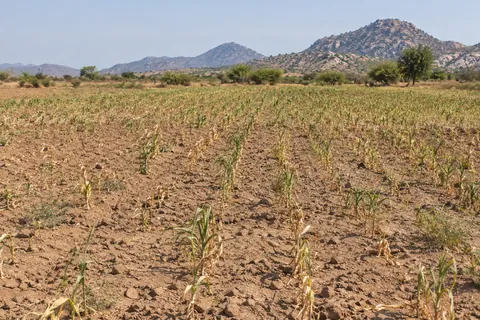
Andhra Pradesh on October 1, 2026 declared drought in 388 mandals of 21 districts for Kharif 2026, a month before the October 31 deadline in the Manual for Drought Management, 2016. It graded 283 mandals as severely and 105 as moderately affected. June–August rainfall was 197.6 mm against a normal 424.3 mm, a 53.4% deficit, amid El Niño conditions.
Read the story -
EnvironmentPrelimsGS3
NHAI details ₹19,700 crore wildlife safeguards against habitat fragmentation on highways
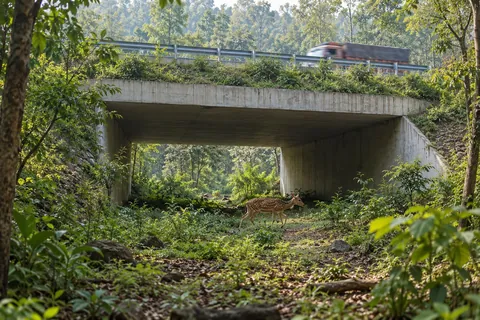
The National Highways Authority of India has released a document on wildlife mitigation along national highways, the Road Transport Ministry said on October 8. About ₹19,700 crore went into wildlife mitigation and related environmental protection over five years, including ₹4,600 crore on animal underpasses. More than 2,150 mitigation structures have been built or proposed.
Read the story -
EnvironmentPrelimsGS2
NBA receives ₹9.68 crore under Access and Benefit Sharing; seed sector leads
The National Biodiversity Authority received ₹9.68 crore from users of India's biological resources in April–September 2026 under the Biological Diversity Act, 2002, the Environment Ministry said on October 8. The agri-seed sector paid the most, ₹7.16 crore. Since 2008, Access and Benefit Sharing has brought the Authority about ₹278 crore, of which more than ₹200 crore has been disbursed.
Read the story -
EnvironmentPrelimsGS1
Glacial lake outburst flood exposure: Himalayan flood-zone building up 46%
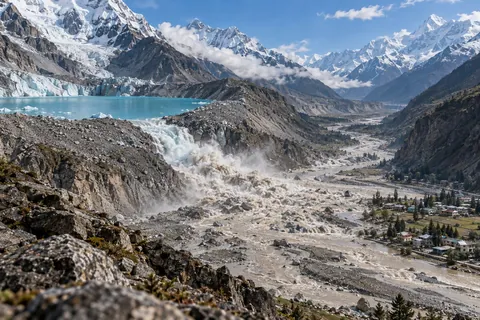
A Scientific Reports study published on 8 October 2026 found building area within 50 vertical metres of rivers below 1,361 glacial lakes in Nepal and adjoining parts of India and China grew about 46% in 2016–2023, and about 78% inside modelled glacial lake outburst flood extents. An estimated 293,800 people across the study area live in that band.
Read the story -
EnvironmentPrelimsGS3
Nameri Tiger Reserve in Assam gets CA|TS Approved status
Nameri Tiger Reserve in Assam's Sonitpur district has received CA|TS Approved status under the Conservation Assured | Tiger Standards framework. The status was accorded on September 10, 2026 after assessment and approval by the CA|TS International Executive Committee, the reserve's field director said on October 8. All four tiger reserves of Assam, Kaziranga, Manas, Orang and Nameri, now hold it.
Read the story -
EnvironmentPrelimsGS1
WMO forecasts December El Niño peak, drier conditions over India
The World Meteorological Organization forecasts El Niño to peak in December, with a near-certain chance of continuing through February 2027. Its October–December outlook indicates drier-than-normal conditions over the Indian subcontinent and above-average temperatures across much of the globe. These are seasonal probabilities, so national and local forecasts remain essential.
Read the story -
EnvironmentPrelimsGS1
Living Planet Index: monitored wildlife populations shrank 73% on average, 1970–2022
Monitored populations of vertebrate wildlife shrank by an average of 73% between 1970 and 2022, WWF's biennial Living Planet Report 2026 finds. Freshwater populations fell hardest, by 85%, ahead of terrestrial (69%) and marine (59%). The report names food production and consumption as the biggest driver of biodiversity loss, yet half the tracked populations are stable or rising.
Read the story -
EnvironmentPrelimsGS3
Madhya Pradesh releases two cheetahs into Veerangana Durgavati Tiger Reserve
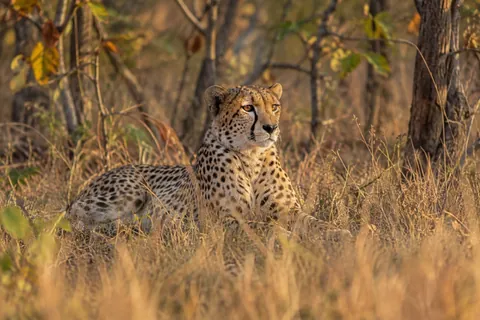
Madhya Pradesh Chief Minister Mohan Yadav released two cheetahs, Vyom and Neera, into the Veerangana Durgavati Tiger Reserve in Sagar district on October 7, 2026. The reserve becomes the state's third cheetah habitat, after Kuno National Park and Gandhi Sagar Wildlife Sanctuary. Two more cheetahs will be brought there next month, the Chief Minister announced.
Read the story -
EnvironmentPrelimsGS3
India, EU formally launch Green Shipping Corridor industry coalition
An industry coalition for the India-EU Green Shipping Corridor was formally launched at Sagarmanthan 2026 in New Delhi on October 7, 2026, with a Letter of Intent signed. V.O. Chidambaranar Port Authority is part of it and RMI is the technical partner. It will assess green ammonia and green methanol supply, port infrastructure and European receiving ports.
Read the story -
EnvironmentGS3Prelims
MoSPI releases 2026–2030 roadmap for environmental-economic accounting
The Ministry of Statistics and Programme Implementation (MoSPI) announced its Strategy for Environmental Economic Accounts in India 2026–2030 on October 7, 2026. It extends a 2022–2026 strategy and plans new or wider accounts for forests, minerals, soil, land, water, carbon stock and biodiversity. It follows the UN's System of Environmental-Economic Accounting and serves as guidance for States and Union Territories.
Read the story -
EnvironmentPrelimsGS3
India seeks equal focus on adaptation at Pre-COP31 in Fiji
India's Environment Minister Bhupender Yadav, addressing the UNFCCC Pre-COP31 meetings in Fiji, called for equal weight to adaptation, mitigation and means of implementation. He said equity and CBDR-RC must be upheld and no single climate pathway suits all nations. The talks, co-hosted by Australia, Fiji and Tuvalu, precede COP31 in Antalya, Türkiye, on November 9–20.
Read the story












Other subjects
- National 86 stories
- World & IR 92 stories
- Economy 171 stories
- Polity 150 stories
- Sci-Tech 67 stories
- Defence 29 stories
- Miscellany 5 stories