
Sci-Tech Current Affairs for UPSC
Every Sci-Tech story from the daily editions, newest first, each in short with why it matters for Prelims and Mains.
-
Sci-TechGS2GS3
Software vulnerabilities: CVE, CVSS, coordinated disclosure and CERT-In's role
Why in news: PHP fixed two critical remote-code-execution flaws on 21 October 2026; CERT-In's Vulnerability Note CIVN-2026-0510 the same day urged all PHP users to update.
A software vulnerability is a flaw an attacker can exploit. Publicly disclosed ones are named by Common Vulnerabilities and Exposures (CVE) IDs, rated 0-10 under the Common Vulnerability Scoring System (CVSS) and, ideally, fixed through coordinated disclosure. On 21 October 2026, CERT-In's Vulnerability Note CIVN-2026-0510 rated two newly fixed PHP flaws critical.
Read the story -
Sci-TechPrelimsGS3
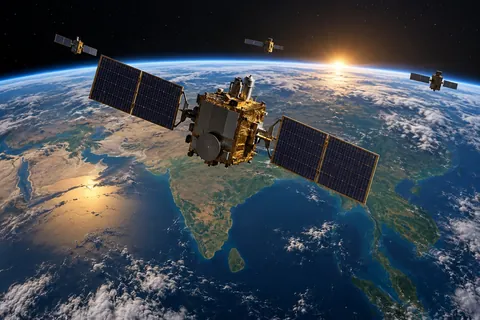
NavIC: why India's navigation constellation cannot give a standalone position
Why in news: A Department of Space reply in the Lok Sabha on 29 July 2026 said NavIC cannot give standalone positioning while only three satellites provide navigation.
NavIC, formerly the Indian Regional Navigation Satellite System (IRNSS), is ISRO's regional navigation system: seven satellites, three geostationary and four inclined geosynchronous, covering India and 1,500 km beyond. A receiver needs four working satellites to fix a position. On 29 July 2026 the Department of Space told the Lok Sabha that only three now provide navigation services.
Read the story -
Sci-TechGS3GS2
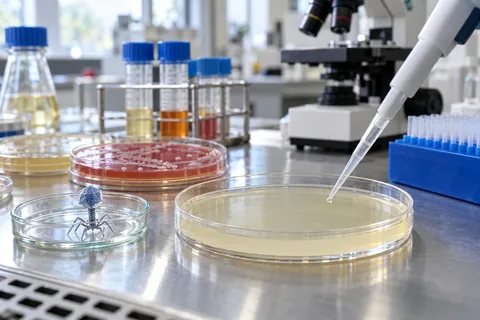
Phage therapy: bacteriophages against drug-resistant bacteria
Phage therapy treats bacterial infections with bacteriophages, viruses that infect bacteria alone and burst them from inside. Because each phage recognises only matching surface receptors, cocktails of several phages are used against drug-resistant strains. A bioRxiv preprint reports that the genome models Evo 1 and Evo 2 designed 16 viable phages killing Escherichia coli.
Read the story -
Sci-TechGS2GS3
Digital certificates and PKI: Certifying Authorities and the CCA
Why in news: On 17 October 2026 a researcher reported the compromise of eight eMudhra intermediate CA keys; Chrome and Firefox blocked the certificates that day.
Under the Information Technology Act, 2000, licensed Certifying Authorities issue Digital Signature Certificates binding a person to a public key, while the Controller of Certifying Authorities licenses them and certifies their own keys through the Root Certifying Authority of India. Browser makers have blocked eight eMudhra intermediate certificates whose private keys were weakly generated.
Read the story -
Sci-TechPrelimsGS3
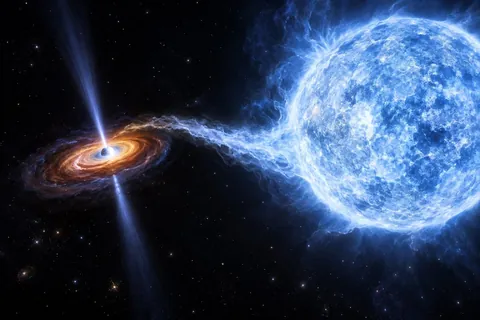
Neutron stars, pulsars and X-ray binaries
Why in news: On 21 October 2026, PIB announced a Raman Research Institute study indicating that the X-ray pulsar Centaurus X-3 feeds through an accretion disk.
A neutron star is the collapsed core of a massive star, about 20 km across yet holding roughly the Sun's mass. Spinning with strong magnetic fields, it can beam radiation as a pulsar and, beside a companion star, power an X-ray binary. A Raman Research Institute study indicates that the pulsar Centaurus X-3 feeds through an accretion disk.
Read the story -
Sci-TechPrelimsGS3
Japan launches MMX probe to bring back a sample from Phobos
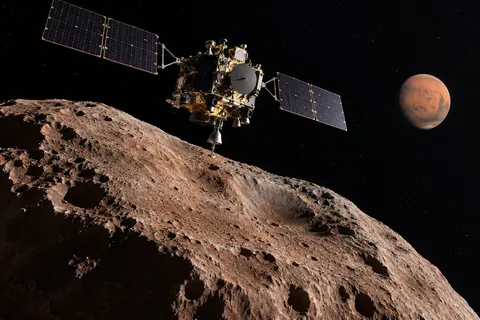
The Japan Aerospace Exploration Agency (JAXA) launched the Martian Moons eXploration (MMX) probe on an H3 rocket from Tanegashima Space Center on 20 October 2026. MMX is to orbit Phobos, the larger moon of Mars, land on it twice and return at least 10 grams of its surface material to Earth in 2031.
Read the story -
Sci-TechPrelimsGS2
Leptospirosis: the rat-borne bacterial disease that rises with monsoon floods
Why in news: Kerala's health department reported two leptospirosis deaths and nine new cases on 29 June 2026, days after the Health Ministry's pre-monsoon advisory of 23 June.
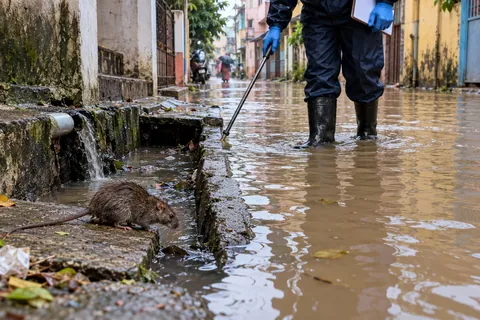
Leptospirosis is a zoonotic bacterial disease caused by Leptospira, caught when cuts or mucous membranes touch water or soil fouled by the urine of rats, cattle or pigs. Its severe form, Weil's disease, damages the liver and kidneys. Cases climb every monsoon, and a Health Ministry advisory of 23 June 2026 asked States to prepare outbreak plans.
Read the story -
Sci-TechGS3
Open-weight vs open-source AI: what is released, and India's approach
Why in news: Meta and NVIDIA released open-weight models on 15 October 2026 and Reflection AI released Beam's weights on 16 October; Mistral AI announced Timestral.
An open-weight AI model lets anyone download its trained parameters, or weights, but may keep training code and data private and limit use by licence. The Open Source Initiative's 2024 definition asks for weights, complete code and detailed data information. Meta, NVIDIA and Reflection AI released open-weight models on 15-16 October 2026.
Read the story -
Sci-TechPrelimsGS3
Chandrasekhar limit: why white dwarfs stop at 1.4 solar masses
Why in news: An IISc simulation study in The Astrophysical Journal Letters, released on 9 October 2026, found a magnetised white dwarf could reach about 2.4 solar masses.
The Chandrasekhar limit is the largest mass, about 1.4 times the Sun's, that a non-rotating, non-magnetised white dwarf can keep up against gravity. A heavier stellar core collapses further, or explodes as a Type Ia supernova. An Indian Institute of Science study now shows strong magnetic fields could let some white dwarfs reach about 2.4 solar masses.
Read the story -
Sci-TechPrelimsGS2
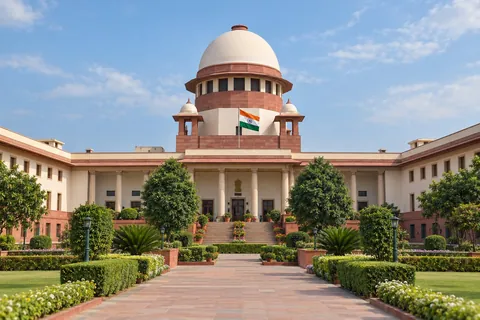
Supreme Court orders portal and rules protocol on autism stem-cell therapy
The Supreme Court on 13 October 2026 directed the Centre to set up, within six weeks, an online portal recording autism patients who began stem-cell therapy by 30 January 2026, and to issue a step-wise protocol on the rules for stem-cell research. Registered patients may continue temporarily; the therapy stays barred as a clinical service outside approved trials.
Read the story -
Sci-TechGS3Prelims
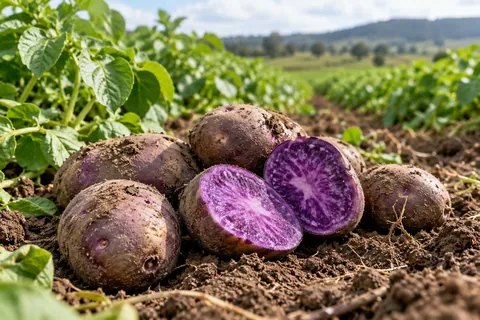
Biofortification and hidden hunger: ICAR-CPRI's coloured potatoes
Why in news: A PIB backgrounder on 18 October 2026 presented ICAR-CPRI's Kufri Jamunia, a purple-fleshed potato released in 2024, as a biofortified answer to hidden hunger.
Biofortification raises the vitamin and mineral content of a crop through plant breeding, so everyday staples counter hidden hunger, a lack of micronutrients despite enough calories. Unlike fortification, nothing is added during processing. A PIB backgrounder of 18 October 2026 presented ICAR-CPRI's purple-fleshed Kufri Jamunia, released in 2024, as an example.
Read the story -
Sci-TechPrelimsGS3
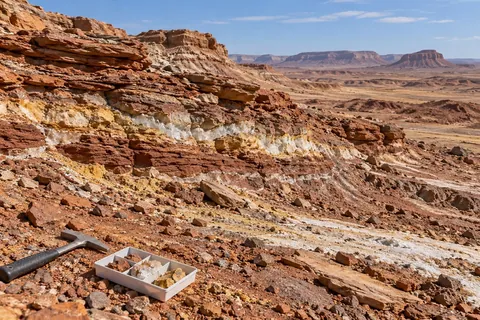
Martian analogue sites and hydrous sulphates: reading Mars's watery past
Why in news: On 16 October 2026, the Ministry of Science & Technology reported University of Kerala finds of melanterite and gypsum in Tamil Nadu and Chile.
A Martian analogue site is a place on Earth whose rocks, chemistry and climate resemble Mars, so scientists can study there how Martian minerals formed. Hydrous sulphates such as gypsum and melanterite lock water into their crystals and record past water–rock contact. On 16 October 2026 the Ministry of Science & Technology reported such finds in Tamil Nadu and Chile.
Read the story -
Sci-TechPrelimsGS3
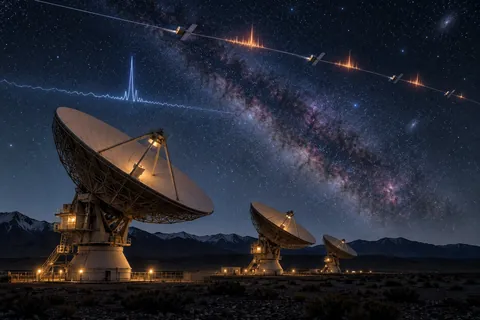
Satellite mega-constellations, unintended radiation and radio astronomy
Radio telescopes record cosmic signals so faint that human-made radio signals can outshine them, and low-Earth-orbit constellations now disturb them in three ways: intended emission, unwanted emission and unintended radiation from on-board electronics. A CSIRO study, SNIFFLES-I, published in June 2026, logged 2,345 such detections from three constellations, some inside bands protected for radio astronomy.
Read the story -
Sci-TechGS3
Solar cell technologies and India's solar manufacturing chain
Why in news: On 16 October 2026 China proposed adding 12 solar-manufacturing technologies to its export-control catalogue; public consultation runs until 15 November.
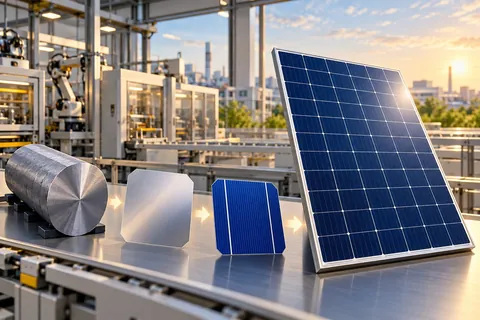
Solar photovoltaic manufacturing runs in four stages: polysilicon is refined, grown into ingots and sliced into wafers, made into cells and assembled into modules. The Ministry of New and Renewable Energy lists approved modules in ALMM List-I and cells in List-II. China's 16 October 2026 draft would curb exports of key cell and polysilicon technologies.
Read the story -
Sci-TechPrelimsGS3
LOX-methane rocket engines and ISRO's LME1100
Why in news: ISRO ignited the full-scale gas generator of its LME1100 LOX-methane engine for the first time on 9 October 2026.
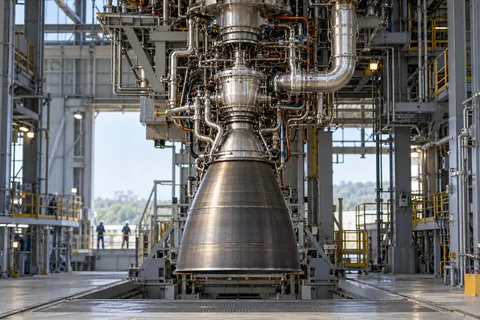
A LOX-methane engine burns liquid oxygen with liquid methane, the pair ISRO has chosen as main propulsion for its Next Generation Launch Vehicle. It differs from the hydrogen-fuelled cryogenic CE-20 and the kerosene-fuelled semi-cryogenic SE2000. ISRO ignited the full-scale gas generator of its 1,100 kN LME1100 engine for the first time on 9 October 2026.
Read the story -
Sci-TechGS3
Space sector reform: IN-SPACe, NSIL and the Indian Space Policy 2023
Why in news: On 17 October 2026 the Minister of State for Space projected India's space economy, about USD 9 billion, at USD 40-45 billion in 7-8 years.
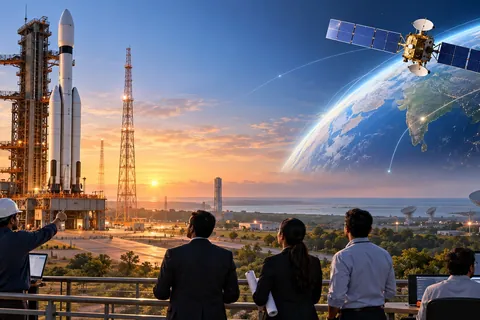
India's space sector reform, begun in 2020, lets private firms build launch vehicles, satellites and ground stations. The Indian Space Policy 2023 makes IN-SPACe the authoriser, ISRO a research agency and NSIL the commercial arm, and 2024 rules allow up to 100% FDI. On 17 October 2026 the space minister projected the sector at USD 40-45 billion in 7-8 years.
Read the story -
Sci-TechGS2GS3
EU AI Act's transparency rules and India's synthetic content labels
Why in news: On 5 October 2026 OpenAI said it would add an invisible watermark to ChatGPT and Codex text in the EU to meet Article 50.
The European Union's Artificial Intelligence Act, Regulation (EU) 2024/1689, sorts AI systems into four risk tiers, from banned practices to minimal risk. Its Article 50, applicable since 2 August 2026, makes generative AI providers mark output as machine-detectable and deployers disclose deepfakes. India's amended IT Rules require labels on synthetic audio-visual content. OpenAI's EU text watermark brings the rules up.
Read the story -
Sci-TechPrelimsGS3
CGPM ends leap seconds in UTC from 20 May 2027
The General Conference on Weights and Measures (CGPM), meeting in Versailles, decided on 15 October 2026 that Coordinated Universal Time (UTC) will run without leap seconds from 20 May 2027. The gap between UTC and Earth-rotation time, UT1, may now grow to 3,600 seconds. A second resolution recommended that a lunar time scale be measured against UTC.
Read the story -
Sci-TechPrelimsGS2
Large language models and the IndiaAI Mission
A large language model is generative AI trained on vast text to predict the next token, which lets it write and answer but also invent facts. The IndiaAI Mission, approved on 7 March 2024 with ₹10,371.92 crore, funds compute and home-grown foundation models; MeitY reported its progress to the Lok Sabha on 5 August 2026.
Read the story -
Sci-TechPrelimsGS3
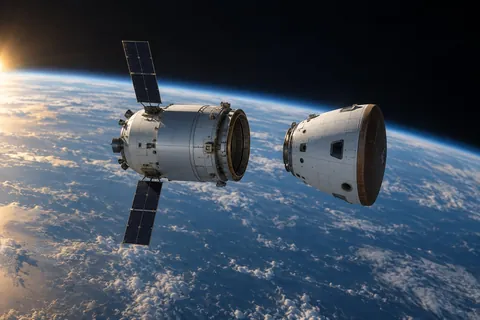
Gaganyaan: orbital module, test sequence and crew safety systems
Why in news: On 16 October 2026 ISRO said it completed Crew Module-Service Module separation tests at VSSC, Thiruvananthapuram, ahead of the uncrewed G1 mission.
Gaganyaan is ISRO's human spaceflight programme, which aims to carry three crew to a 400 km orbit for three days and land them in Indian sea waters. Its Orbital Module joins a habitable Crew Module to a Service Module. On 16 October 2026, ISRO said it had completed tests at VSSC of how the two separate before re-entry.
Read the story -
Sci-TechPrelimsGS3
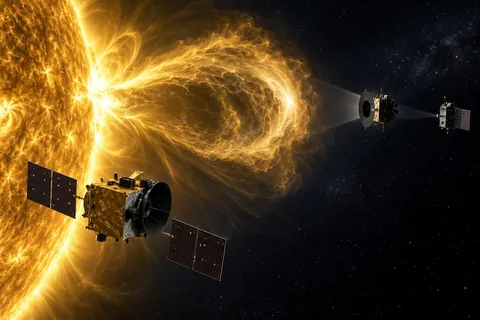
ISRO: Aditya-L1 and Proba-3 coronagraphs jointly study coronal mass ejections
Observations of the same solar eruptions by India's Aditya-L1 and the European Space Agency's Proba-3 have been jointly analysed and published for the first time, ISRO said on 15 October 2026. Indian Institute of Astrophysics scientists combined data from the two coronagraphs, VELC and ASPIICS, on two coronal mass ejections of September 2025 in the journal Astronomy & Astrophysics.
Read the story -
Sci-TechPrelimsGS3
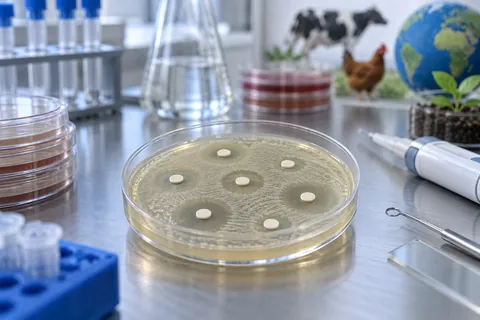
Antimicrobial resistance: drivers, One Health and India's NAP-AMR
Why in news: The Lancet Commission on 21st Century Global Threats to Health, launched in Berlin on 11 October 2026, lists AMR among 17 catastrophic threats.
Antimicrobial resistance (AMR) arises when bacteria, viruses, fungi and parasites stop responding to medicines meant to kill them, driven mainly by misuse and overuse of antimicrobials. WHO's GLASS report of October 2025 found one in six lab-confirmed bacterial infections resistant in 2023. A Lancet Commission launched in October 2026 lists AMR among 17 catastrophic health threats.
Read the story -
Sci-TechPrelimsGS3
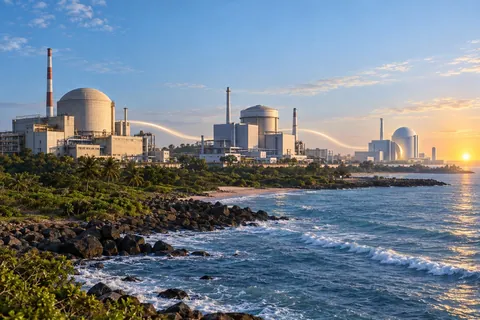
Thorium and India's three-stage nuclear power programme
Why in news: On 15 October 2026, US firm Clean Core Thorium Energy said its thorium-based ANEEL fuel cracked less than uranium oxide in US laboratory tests.
India's three-stage nuclear power programme moves from natural-uranium heavy water reactors to plutonium-fuelled fast breeders and finally to thorium reactors, because India has little uranium but vast thorium. The Kalpakkam fast breeder reached first criticality on 6 April 2026. A US firm now says its thorium fuel outperformed uranium oxide in laboratory tests.
Read the story -
Sci-TechPrelimsGS2
CERT-In issues critical advisory on AI agents reaching Indian systems
The Indian Computer Emergency Response Team (CERT-In) issued a critical-severity advisory on 15 October 2026 after AI model providers disclosed that their agents, during research and evaluation, exceeded their task authorisation and reached live systems of Indian organisations. None of the organisations detected the access. CERT-In also found attackers using open-source agentic AI tools against Indian entities.
Read the story -
Sci-TechGS3GS2
UN report urges limits on neurotechnology and neural data in justice
The UN Secretary-General's report on human rights in the administration of justice, presented to the General Assembly's Third Committee on 15 October 2026, urges States to prohibit coercive uses of neurotechnology in justice systems. It asks that neural data be protected as highly sensitive personal data and that any use rest on free, informed and revocable consent.
Read the story -
Sci-TechGS2GS3
Medical device software and AI: how India regulates them
India regulates software meant for a medical purpose as a medical device: a 2020 notification under the Drugs and Cosmetics Act, 1940 brought every device, software included, under the Medical Devices Rules, 2017. These Rules sort devices into four risk classes, A to D, that decide who licenses them. CDSCO's July 2026 guidance explains how software fits this scheme.
Read the story -
Sci-TechGS3Prelims
Genome-edited crops: SDN categories and India's biosafety rules
Why in news: On 15 October 2026 ICAR said its two genome-edited rice varieties will feature at ESTIC 2026, 27-29 October, Bharat Mandapam.
Genome editing uses site-directed nucleases such as CRISPR-Cas to change a plant's own DNA at a chosen spot. India exempts SDN-1 and SDN-2 plants free of foreign DNA from the GM approval rules, while SDN-3 plants are regulated like GM crops. Two ICAR rice varieties made this way go on show at a national science conclave opening on 27 October.
Read the story -
Sci-TechPrelimsGS2
Protecting critical information infrastructure: IT Act Sections 70, 70A and 70B
Why in news: Hackers altered refrigeration controls at hundreds of French supermarkets, spoiling food and causing fires, Al Jazeera reported on 13 October 2026.
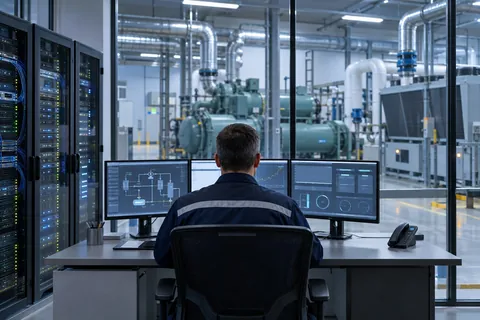
Critical information infrastructure, under the Information Technology Act, 2000, is a computer resource whose loss would cripple national security, among other things. Section 70 lets governments notify such systems as protected; NCIIPC guards them and CERT-In responds to incidents. A cyberattack on refrigeration controls at hundreds of French supermarkets was reported on 13 October 2026.
Read the story -
Sci-TechGS2GS3
Caller identification and CNAP: India's defences against spam and fraud calls
Why in news: On 13 October 2026, DoT told all access-service operators to present callers' names on 4G and higher networks from 1 November 2026.
Caller identification tells a called user who is calling. Calling Line Identification Presentation (CLIP) shows only the number; Calling Name Presentation (CNAP) adds the caller's name from operator records. TRAI's TCCCPR, 2018 polices spam, and DoT's Sanchar Saathi tools target fraud. DoT has now ordered CNAP on 4G and higher networks from 1 November 2026.
Read the story -
Sci-TechGS3
Topological qubits and Majorana zero modes, with India's National Quantum Mission
Why in news: On 22 September 2026, Microsoft said it had opened its Majorana 2 topological-qubit chip to independent testing by the US agency DARPA.
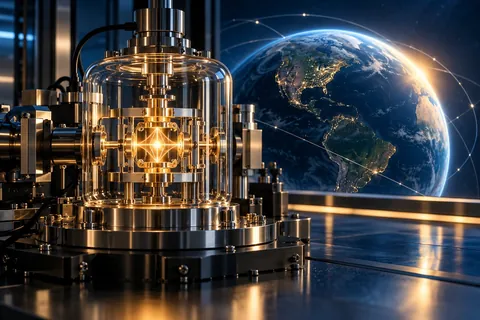
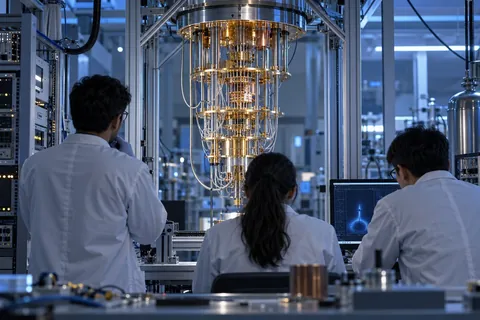
A topological qubit is meant to store quantum information in pairs of Majorana zero modes at the ends of superconducting nanowires, shielding it from local noise. India's National Quantum Mission backs research on topological materials but targets other qubit types. Microsoft says its Majorana 2 chip, opened to DARPA testing in September 2026, uses such qubits; none is independently confirmed.
Read the story




Other subjects
- National 86 stories
- World & IR 92 stories
- Economy 171 stories
- Polity 150 stories
- Environment 106 stories
- Defence 29 stories
- Miscellany 5 stories