
Environment Current Affairs for UPSC
Every Environment story from the daily editions, newest first, each in short with why it matters for Prelims and Mains.
-
EnvironmentGS2GS1
Tamil Nadu orders State-wide rainwater harvesting drive as a mass movement
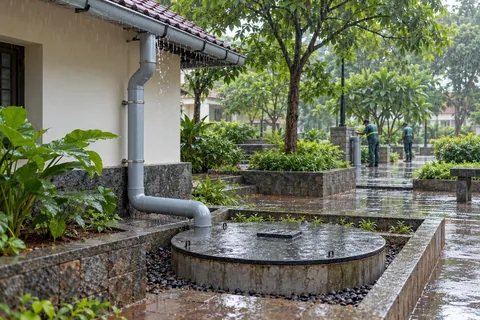
In an order dated 16 October 2026, Tamil Nadu's Municipal Administration and Water Supply Department set out a State-wide campaign to run rainwater harvesting as a mass movement. All government departments and local bodies must make the structures they control fully functional before the Northeast monsoon. It took effect at once and runs on existing budgets.
Read the story -
EnvironmentPrelimsGS3
Whales and dolphins in Indian waters: legal protection, IUCN status and strandings
Why in news: A science feature on 22 October 2026 traced whale strandings on Gujarat's coast and argued that few are now systematically recorded.
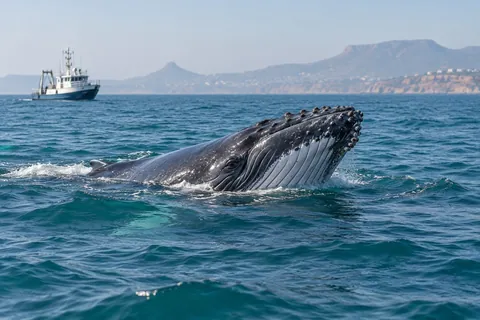
Cetaceans, the whales, dolphins and porpoises, number 30 to 35 species in the waters of the Indian subcontinent. Under the Wild Life (Protection) Act, 1972, as amended in 2022, 30 named species are in Schedule I and every other cetacean is in Schedule II. A 22 October 2026 feature traced decades of whale strandings on Gujarat's coast.
Read the story -
EnvironmentPrelimsGS2
Environmental clearance by States: SEIAA, SEAC and the EIA Notification, 2006
Why in news: Madhya Pradesh's SEIAA chairman wrote to the Chief Secretary in October 2026 seeking action over 237 'deemed' clearances he says bypassed the authority.
Under the Environment Impact Assessment (EIA) Notification, 2006, issued under the Environment (Protection) Act, 1986, Category A projects need prior environmental clearance from the Ministry of Environment, Forest and Climate Change, and Category B projects from a State Level Environment Impact Assessment Authority (SEIAA). Madhya Pradesh's SEIAA chairman has questioned 237 clearances issued as 'deemed' permissions.
Read the story -
EnvironmentPrelimsGS3
UNEP Emissions Gap Report 2026: 1.5°C without overshoot is lost
The United Nations Environment Programme (UNEP) released its Emissions Gap Report 2026 in Nairobi on 21 October, finding that limiting warming to 1.5°C with no or limited overshoot is no longer possible. A return to 1.5°C by 2100 needs emissions cuts of 18% by 2030 and 45% by 2035 from 2025 levels; fully delivered NDCs give only 11-15% by 2035.
Read the story -
EnvironmentPrelimsGS2
Sewage treatment under Namami Gange: technologies, Hybrid Annuity Model, septage
Why in news: PIB's backgrounder "Transforming Wastewater Treatment" of 21 October 2026 reviews the sewage technologies and contract models used under Namami Gange.
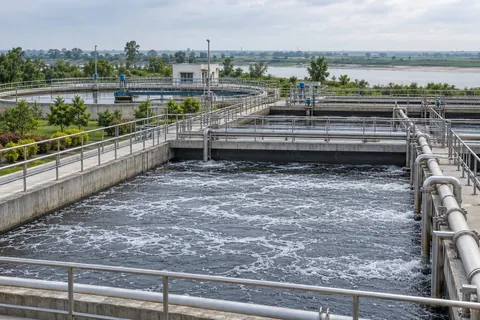
The Namami Gange Programme, run by the National Mission for Clean Ganga, treats Ganga basin sewage in large centralised plants, small decentralised units and septage plants, picking each technology to suit the site. Private operators are paid partly on construction and partly on performance over 15 years under the Hybrid Annuity Model. PIB reviewed these methods on 21 October 2026.
Read the story -
EnvironmentPrelimsGS3
Great Nicobar Island project: the port, the clearances and the Shompen
Why in news: The Supreme Court left the Forest Rights Act PILs to the Calcutta High Court (5 Oct 2026); the Centre opposed a tribal council's impleadment plea.
The Great Nicobar Island project plans a transshipment port at Galathea Bay, a greenfield international airport, a township and a gas-solar power plant on India's southernmost island, home to the Shompen. On 5 October 2026 the Supreme Court left challenges under the Forest Rights Act, 2006 to the Calcutta High Court.
Read the story -
EnvironmentPrelimsGS3
Sustainable Aviation Fuel and ICAO's CORSIA: India's preparation for 2027
Why in news: CORSIA's mandatory phase begins on 1 January 2027, the year of India's indicative 1% SAF blending target for international flights.
Sustainable Aviation Fuel (SAF) is a renewable jet fuel made from crops, biogenic residues and wastes that blends with Aviation Turbine Fuel (ATF) and cuts greenhouse gas emissions. Under CORSIA, airlines on international routes offset emissions above a baseline, and using eligible SAF lowers that bill. CORSIA's mandatory phase begins on 1 January 2027.
Read the story -
EnvironmentPrelimsGS3
Forest clearance under the Van (Sanrakshan Evam Samvardhan) Adhiniyam, 1980
Why in news: NHPC's proposal to divert 3,278 hectares of Arunachal forest for the 1,720 MW Kamala project is listed before the Advisory Committee on 23 October 2026.
The Van (Sanrakshan Evam Samvardhan) Adhiniyam, 1980 bars States from using forest land for non-forest purposes without the Centre's prior approval, given in two stages: in-principle and final. The user agency funds compensatory afforestation. The Advisory Committee is to appraise NHPC's proposal to divert 3,278 hectares in Arunachal Pradesh for the Kamala hydel project on 23 October 2026.
Read the story -
EnvironmentGS4Prelims
Regulating animal experiments: Prevention of Cruelty to Animals Act and CCSEA
Why in news: The Centre's draft laboratory-animal rules (G.S.R. 864(E), 6 October 2026) drew a call for withdrawal from PETA India on 19 October 2026.
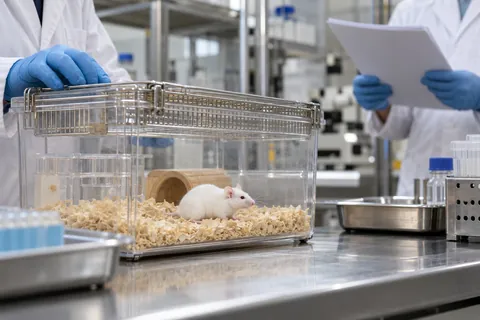
Chapter IV of the Prevention of Cruelty to Animals Act, 1960 allows experiments on animals that advance knowledge to save life or fight disease, under the Committee for Control and Supervision of Experiments on Animals (CCSEA), which registers laboratories and makes binding rules. Draft rules published on 6 October 2026 propose grading experiments by the pain they cause.
Read the story -
EnvironmentPrelimsGS2
Section 5, Environment (Protection) Act, 1986: Delhi's calendar curbs and GRAP
Why in news: Delhi's calendar curbs, notified on 23 June 2026 under section 5, take effect on 1 November 2026; the Chief Minister announced them on 20 October.
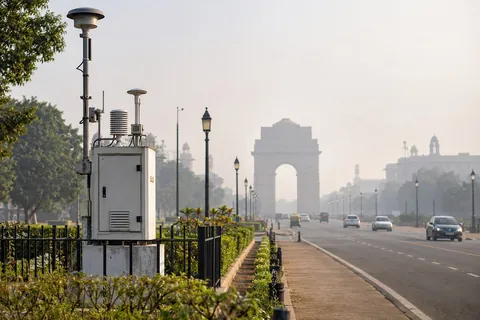
Two legal tracks govern Delhi's winter pollution curbs. Directions under section 5 of the Environment (Protection) Act, 1986 apply by date, every 1 November to 28 February. The Commission for Air Quality Management's Graded Response Action Plan (GRAP) adds curbs only as the Air Quality Index (AQI) worsens. Delhi's dated curbs take effect on 1 November 2026.
Read the story -
EnvironmentPrelimsGS3
IUCN Red List categories and India's national bird assessment
Why in news: Officials said India's national Red List assessment of 1,211 bird species is underway, with 107 species preliminarily assessed as of 19 October 2026.
The IUCN Red List sorts species into nine categories, from Least Concern to Extinct, by testing extinction risk against five criteria on decline, range and numbers. India has begun applying the same framework to its 1,211 regularly occurring bird species; by officials' account, preliminary assessments of 107 were complete by 19 October 2026.
Read the story -
EnvironmentGS3Prelims
Disaster and climate risk insurance: parametric cover in India
Why in news: A June 2026 CETEx policy brief urged India to scale up parametric insurance, after early-stage talks on a nationwide scheme were reported in October 2025.
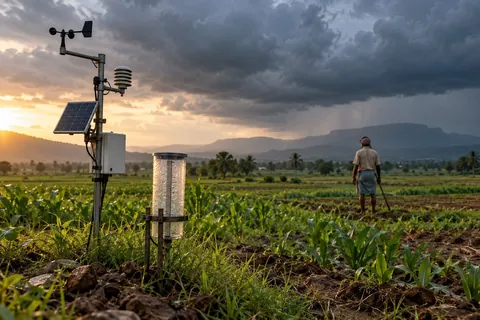
Parametric insurance pays a pre-agreed sum once a measured index, such as rainfall or temperature, crosses a set trigger, without surveying each loss. India applies it in weather-index crop cover and Nagaland's State-wide rainfall policy, and the XV Finance Commission proposed wider risk pools. A June 2026 policy brief urged scaling it up nationally.
Read the story -
EnvironmentPrelimsGS1
Heatwaves in India: IMD criteria, Heat Action Plans and SDRF relief
Why in news: On 4 August 2026 the Home Ministry told the Lok Sabha that heatwaves and lightning are now notified calamities under SDRF/NDRF guidelines for 2026-31.
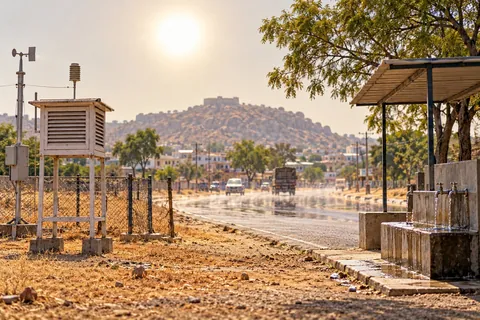
The India Meteorological Department (IMD) declares a heatwave when a plains station of 40°C or more runs 4.5°C above normal, or touches 45°C, at two stations of a sub-division on two consecutive days. States respond through Heat Action Plans under NDMA guidelines. For 2026-31, heatwaves are a notified calamity for SDRF and NDRF relief.
Read the story -
EnvironmentPrelimsGS2
Noise Pollution Rules, 2000: India's ambient noise limits and who enforces them
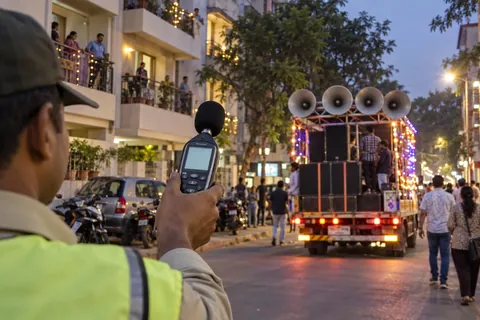
Why in news: The NHRC sought an action taken report within two weeks from the Maharashtra Pollution Control Board on Pune's Ganeshotsav noise (reported 2 September 2026).
The Noise Pollution (Regulation and Control) Rules, 2000, made under the Environment (Protection) Act, 1986, set day and night noise limits for industrial, commercial and residential areas and silence zones, and bar loudspeakers outside closed premises from 10 pm to 6 am. Pune's festival noise revived them when the NHRC sought a State pollution board's report.
Read the story -
EnvironmentPrelimsGS3
Sloth bear: the ant-eating bear of the Indian subcontinent
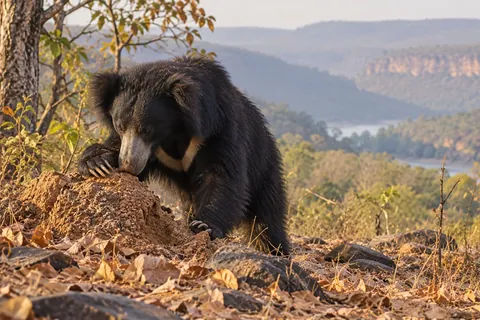
Why in news: An October 2026 species note reports sloth bears in Telangana's Amrabad Tiger Reserve eating shield-tailed snakes this monsoon, possibly a first record.
The sloth bear (Melursus ursinus) is a shaggy, mostly nocturnal bear found only on the Indian subcontinent, living chiefly on termites, ants and fruit. It is Vulnerable on the IUCN Red List and in Schedule I of the Wild Life (Protection) Act, 1972. Scat studies in Telangana's Amrabad Tiger Reserve this monsoon found shield-tailed snakes in its diet.
Read the story -
EnvironmentPrelimsGS3
India's non-fossil power targets: 500 GW, 50% and 60%, and what counts
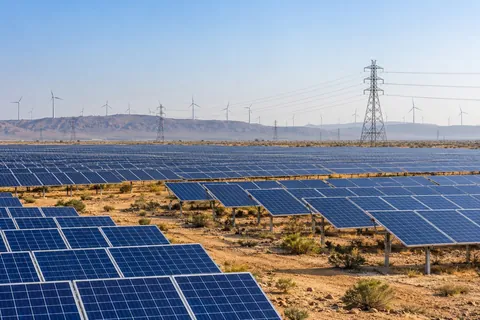
Why in news: On 19 October 2026, newsonair revisited India's non-fossil capacity crossing 300 GW, a milestone MNRE announced on 9 August 2026.
Non-fossil power capacity is installed electricity capacity that burns no fossil fuel: solar, wind, large and small hydro, bio-power and nuclear. India targets 500 GW by 2030 and about 60% of total capacity by 2035. It stood at 300.50 GW, over 54% of capacity, as on 31 July 2026, per the Ministry of New and Renewable Energy.
Read the story -
EnvironmentPrelimsGS3
Orangutan seized in Thane reported repatriated to Indonesia under CITES
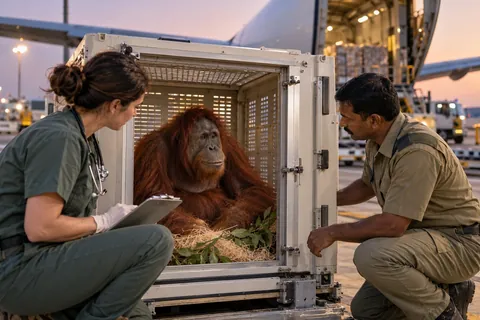
A male orangutan seized from a Dombivli flat in Thane district in November 2024 reached Jakarta, Indonesia, on 19 October 2026, reports say, likely the first return of a wild animal rescued in India to its home country. Wildlife Crime Control Bureau officials supervised the flight from Ahmedabad. Orangutans are listed in CITES Appendix I.
Read the story -
EnvironmentPrelimsGS3
CBD COP17 opens in Yerevan with first Kunming-Montreal framework review
The 17th Conference of the Parties (COP17) to the Convention on Biological Diversity opened in Yerevan, Armenia, on 18 October 2026, with working sessions from 19 to 30 October. Parties will hold the first global review of the Kunming-Montreal Global Biodiversity Framework, adopted in 2022. Meetings of the Parties to the Cartagena and Nagoya protocols run alongside.
Read the story -
EnvironmentPrelimsGS3
IPCC's 65th session suspended without AR7 timeline or budget deal
The Intergovernmental Panel on Climate Change (IPCC) suspended its 65th Plenary Session in Addis Ababa, Ethiopia, on 16 October 2026 without fixing the timelines for the three Working Group reports of its Seventh Assessment Report (AR7) or its budget. Chair Jim Skea halted the overrunning meeting after many least developed and small island delegations had left.
Read the story -
EnvironmentPrelimsGS3
Eco-sensitive zones: the law, the 2011 guidelines and Supreme Court rules
Why in news: An Environment Ministry affidavit to the NGT, dated 5 October 2026, says Similipal's 2019 draft eco-sensitive zone is still unnotified for want of Odisha's information.
Eco-sensitive zones are buffers around national parks and wildlife sanctuaries that the Union Environment Ministry notifies under the Environment (Protection) Act, 1986, to regulate mining, industry and building. Their width is fixed for each protected area, and mining within one kilometre is barred. The ministry's NGT affidavit, dated 5 October 2026, says Similipal's 2019 draft zone remains unnotified.
Read the story -
EnvironmentPrelimsGS2
Coastal Regulation Zone clearance for port dredging and the National Green Tribunal
Why in news: On 26 September 2026 the NGT's Western Zone Bench stayed the clearances for Mormugao Port's channel deepening until its next hearing, set for 2 November.
The Coastal Regulation Zone (CRZ) Notification, 2019, made under the Environment (Protection) Act, 1986, divides India's coast and sea up to 12 nautical miles into zones and fixes who clears projects in each. Most port works in CRZ-I and CRZ-IV need the Union environment ministry's clearance. The National Green Tribunal has now stayed such clearances for Mormugao Port's channel deepening.
Read the story -
EnvironmentPrelimsGS3
Adaptation finance: the Global Goal on Adaptation and the Adaptation Fund
Why in news: India's Permanent Mission to the UN sought predictable adaptation finance at a UN General Assembly event ahead of COP31, reported on 17 October 2026.
Adaptation finance is money that helps countries cope with climate impacts they cannot avoid. Article 7 of the Paris Agreement set a global goal on adaptation, and the Adaptation Fund and the Green Climate Fund channel support to developing countries. Ahead of COP31, India called for predictable adaptation finance and said its first national adaptation plan is being finalised.
Read the story -
EnvironmentPrelims
Subterranean fishes of India: from Kerala's aquifers to Assam's wells
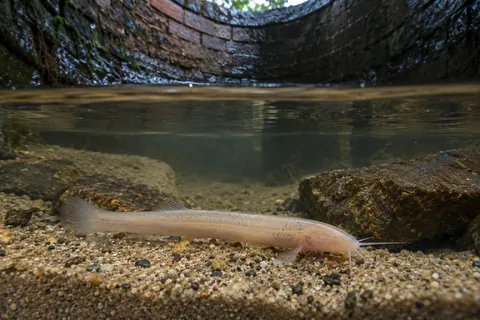
Why in news: A 19 October 2026 report profiled two blind fishes described this year from wells in Assam's Goalpara district: Gitchak nakana and Rakthamichthys anchi.
Subterranean fishes live in permanent darkness in caves or groundwater aquifers, often eyeless and without pigment. India has 21 known species, mainly in Kerala's lateritic aquifers and Meghalaya's limestone caves, a 2026 study counts. Two blind species from wells in Assam's Goalpara district, a loach and a swamp eel, now show alluvial aquifers host them too.
Read the story -
EnvironmentGS4Prelims
Sand mining in India: minor-mineral law, guidelines and the NGT
Why in news: An NGT-appointed joint committee's report on the Sindh river, reported on 19 October 2026, found Madhya Pradesh's sand-mining task force ineffective.
Ordinary sand is a minor mineral under the Mines and Minerals (Development and Regulation) Act, 1957, so each State makes its own rules for leasing it and curbing illegal mining. Environmental clearance and Environment Ministry guidelines of 2016 and 2020 limit where and how much is dug. An NGT-appointed committee has now faulted Madhya Pradesh's enforcement on the Sindh river.
Read the story -
EnvironmentPrelimsGS2
CAQM orders PTZ cameras with live feeds at polluting NCR industries
The Commission for Air Quality Management (CAQM) on 16 October 2026 ordered all NCR industries under its Direction No. 98 to install PTZ cameras at fuel-feeding points, stacks and OCEMS ports by 30 November 2026, streaming live to CPCB and State board servers. Its Enforcement Task Force has proposed five closures and 12 sealings after 55 violations in 124 inspections.
Read the story -
EnvironmentPrelimsGS3
National Policy on Biofuels: ethanol blending, 2G, CBG and SAF
Biofuels are fuels made from biomass such as sugarcane, grain, crop residue and waste. India's National Policy on Biofuels, 2018, notified by the Ministry of Petroleum and Natural Gas and amended in 2022, advanced the 20% ethanol-in-petrol target to ESY 2025-26. The ministry's July 2026 Q&A answered concerns over E20 mileage and the lack of pure petrol at pumps.
Read the story -
EnvironmentPrelimsGS2
Nagoya Protocol and India's access and benefit-sharing law
Why in news: On 17 October 2026 the NBA reported sharing benefit money with 29 State boards and one UT council, before CBD COP17 in Yerevan.
The Nagoya Protocol, a supplementary treaty to the Convention on Biological Diversity, requires users of genetic resources to obtain prior informed consent and share benefits on mutually agreed terms. India applies it through the Biological Diversity Act, 2002, in three tiers: the National Biodiversity Authority, State boards and local committees. The NBA announced a benefit-sharing release on 17 October 2026.
Read the story -
EnvironmentPrelimsGS3
Compliance carbon markets: the Open Coalition and Paris Agreement Article 6
Why in news: On 14 September 2026 in Wuhan, China, the Open Coalition on Compliance Carbon Markets adopted its work plan and admitted six new members.
A compliance carbon market is one where a government, by law, prices emitters' greenhouse gases, through an emissions trading system or a carbon tax. The Open Coalition on Compliance Carbon Markets, chaired by Brazil with China and the European Union as co-chairs, links such countries. It adopted its first work plan in Wuhan, China, on 14 September 2026.
Read the story -
EnvironmentPrelimsGS1
Thwaites Glacier, grounding zones and marine ice-sheet instability
Why in news: A Nature Communications study published online on 12 October 2026 projects up to 30 ± 6 mm of sea-level rise from Thwaites by 2100.
Thwaites Glacier in West Antarctica, about 120 km wide, holds ice equal to 65 cm of global sea level and is retreating as warm ocean water melts it from below. A Nature Communications study published on 12 October 2026 projects it could add up to 30 ± 6 mm to global sea level by 2100, about double earlier projections.
Read the story -
EnvironmentPrelimsGS2
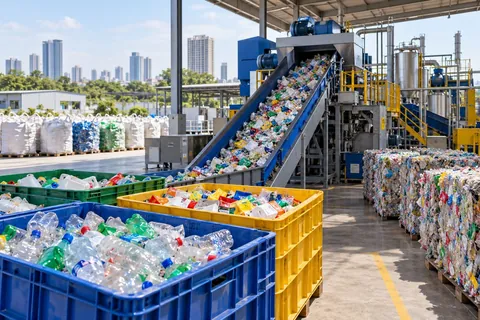
Plastic Waste Management Rules, 2016: single-use ban, EPR and disposal
Why in news: On 23 March 2026 the Environment Minister told the Lok Sabha that 20.7 million tonnes of plastic packaging waste had been recycled under EPR.
The Plastic Waste Management Rules, 2016, under the Environment (Protection) Act, 1986, set who collects, registers and processes plastic waste. Amendments banned identified single-use items from 1 July 2022 and set recycling targets for producers. On 23 March 2026 the Environment Minister told the Lok Sabha that 20.7 million tonnes of packaging waste had been recycled under EPR.
Read the story













Other subjects
- National 86 stories
- World & IR 92 stories
- Economy 171 stories
- Polity 150 stories
- Sci-Tech 67 stories
- Defence 29 stories
- Miscellany 5 stories