
Sci-Tech Current Affairs for UPSC
Every Sci-Tech story from the daily editions, newest first, each in short with why it matters for Prelims and Mains. Page 2 of 3.
-
Sci-TechPrelimsGS2
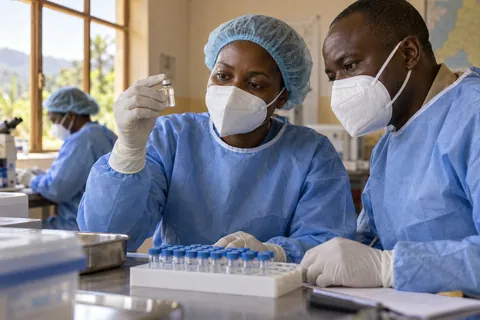
Cholera spreads across 21 DR Congo provinces, WHO warns
The World Health Organization warned on 14 October 2026 that cholera is spreading in the Democratic Republic of the Congo, with over 51,400 suspected cases and 1,487 deaths in 21 provinces this year. South Kivu, North Kivu and Haut-Katanga account for nearly 60% of cases. The DRC and the Republic of Congo are developing a cross-border oral vaccination plan.
Read the story -
Sci-TechGS3GS2
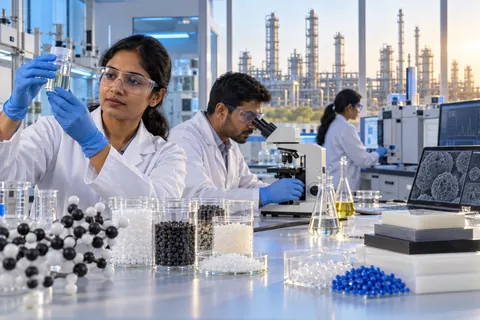
Chemicals and petrochemicals added to RDI Scheme's funding areas
The Department of Science and Technology has made Advanced Chemicals, Petrochemicals and Material Technologies an additional technology area eligible for funding under the Research, Development and Innovation (RDI) Scheme, with effect from 8 October 2026. It acted on a proposal from the Department of Chemicals and Petrochemicals. The scheme, launched in November 2025, has a Rs 1 lakh crore corpus.
Read the story -
Sci-TechPrelimsGS3
Bundibugyo Ebola: WHO expects Ervebo trial in DR Congo this month
The World Health Organization's vaccine advisers said on 13 October 2026 that a large human trial of Ervebo, an Ebola vaccine approved only against the Ebola virus species, should begin in the Democratic Republic of the Congo this month. It will test whether Ervebo also protects against the Bundibugyo virus, whose outbreak there has passed 9,000 cases and 4,000 deaths.
Read the story -
Sci-TechGS3GS2
BHASHINI: the National Language Translation Mission
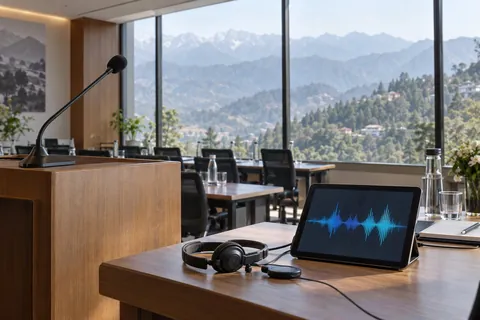
Why in news: On 13 October 2026, MeitY said BHASHINI's Shrutlekh gave live English-Spanish translation at NCGG's Mussoorie programme for foreign civil servants.
BHASHINI (BHASHa INterface for India) is the AI language platform of the National Language Translation Mission, run by the Ministry of Electronics and Information Technology, offering speech and text tools in Indian languages. In October 2026, its Shrutlekh tool gave live English-Spanish translation at a National Centre for Good Governance programme for foreign civil servants in Mussoorie.
Read the story -
Sci-TechPrelimsGS3
Facial recognition technology: how it works and India's privacy law
Why in news: A social media post of 11 October 2026 suggested makeup could dodge facial recognition cameras; a 13 October explainer tested that claim against research.
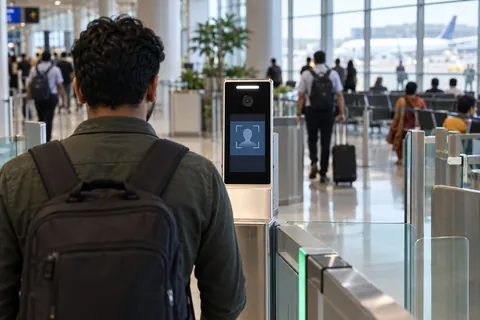
Facial recognition technology (FRT) is an artificial intelligence system that detects a face, converts its features into a numerical template and matches it against stored images, either to verify one person or to identify someone among many. India uses it in Digi Yatra airport boarding and in policing. Whether makeup can fool it was debated in October 2026.
Read the story -
Sci-TechPrelimsGS1
IMD dedicates WebGIS cyclone and marine warning system to the nation
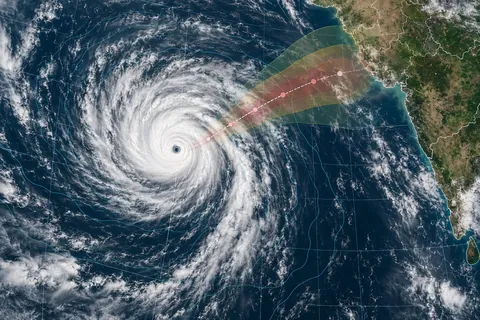
The India Meteorological Department on 12 October 2026 dedicated its Cyclone Warning and Marine Weather Services Decision Support System, a WebGIS platform, to the nation. It maps cyclone tracks and intensity with a cone of uncertainty, winds, storm surge and district-wise rainfall warnings. It was launched at the pre-cyclone exercise meeting for the October-December season.
Read the story -
Sci-TechPrelimsGS3
Lithium-ion power banks in flight: thermal runaway and dangerous-goods rules
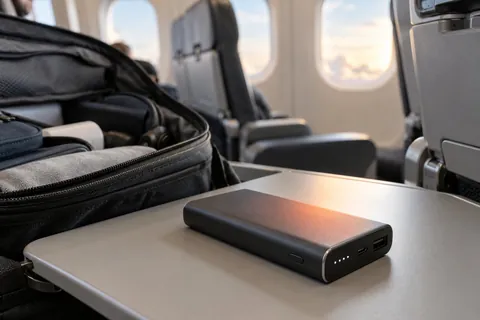
Why in news: A passenger's power bank caught fire on IndiGo flight 6E 6115 from Delhi to Chennai on 11 October 2026, and the flight diverted to Hyderabad.
A lithium-ion power bank can fail through thermal runaway, a self-feeding build-up of heat that can end in fire or explosion. Air-safety rules treat such batteries as dangerous goods: in India they travel only in cabin baggage, out of overhead bins and unused in flight. A power bank fire diverted a Delhi-Chennai IndiGo flight to Hyderabad on 11 October 2026.
Read the story -
Sci-TechGS2GS3
RDI Fund clears first 19 fund managers, commits ₹7,131 crore
The Empowered Group of Secretaries on 8 October 2026 approved the first 19 Second Level Fund Managers of the ₹1 lakh crore Research, Development and Innovation Fund: 14 Alternative Investment Funds and five Focused Research Organisations, with ₹7,131 crore committed. They will finance firms at Technology Readiness Level 4 and above, and are expected to raise equal private capital.
Read the story -
Sci-TechPrelimsGS3
Indian study ties the Sun's bright radio poles to magnetic fields
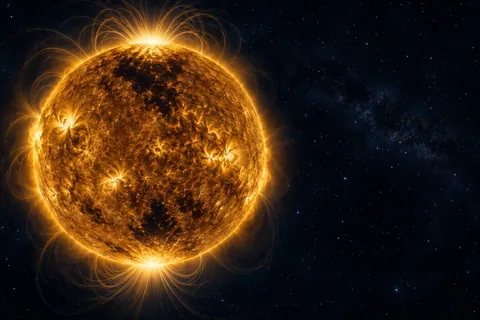
Researchers from ARIES Nainital, the Udaipur Solar Observatory of the Physical Research Laboratory, IIT Delhi and IIT Roorkee have explained why the Sun's poles glow brighter at microwave frequencies. Using nearly three decades of 17 GHz radio data, they found the glow tracks polar magnetic-field strength and coronal hole size, while coronal bright points and jets light up local patches.
Read the story -
Sci-TechPrelimsGS2
Research Development and Innovation (RDI) Scheme: funding private R&D
Why in news: PIB reported on 12 October 2026 that the Technology Development Board had signed a Rs 86 crore RDI Fund agreement with Peptris Technologies.
The Research Development and Innovation (RDI) Scheme, approved by the Union Cabinet on 1 July 2025 with a Rs 1 lakh crore corpus, finances private research at Technology Readiness Level 4 and above through low-interest loans and equity. Second-level fund managers pass the money on. The Technology Development Board has now committed Rs 86 crore to Peptris Technologies.
Read the story -
Sci-TechPrelimsGS3
Post-quantum cryptography: guarding encryption against quantum computers
Post-quantum cryptography (PQC) is encryption built on mathematical problems that neither conventional nor quantum computers are expected to solve quickly. The US National Institute of Standards and Technology finalised its first three PQC standards on 13 August 2024. A Task Force under India's National Quantum Mission wants critical sectors to begin migrating by 2027, its May 2026 report says.
Read the story -
Sci-TechGS2GS3
Private nuclear power under SHANTI: Bharat Small Reactors and land consent
Why in news: On 9 October 2026, villagers in Rewa district, Madhya Pradesh, stopped preliminary borehole work for a proposed 2x220 MW nuclear power project near Rojhauhi village.
The SHANTI Act, 2025 opens nuclear power to private companies, which may run plants and make equipment under licence, while spent-fuel reprocessing and heavy water stay with the Centre. NPCIL offers industry its 220 MW Bharat Small Reactor for captive power. On 9 October 2026, villagers in Rewa, Madhya Pradesh, stopped borehole tests for a proposed 2x220 MW plant.
Read the story -
Sci-TechGS3Prelims
TRISHNA: the ISRO-CNES thermal infrared satellite for water stress
Why in news: On 11 October 2026, a U.R. Rao Satellite Centre director said TRISHNA had reached the realisation stage and could launch within 12-16 months.
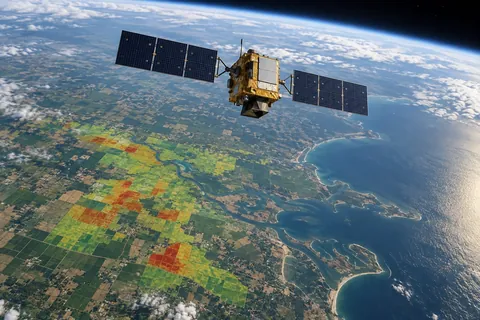
TRISHNA is a joint ISRO-CNES satellite that will map the temperature of land and coastal waters at 57 metres, to estimate evapotranspiration and crop water stress. France's CNES supplies its thermal infrared payload and ISRO its visible-shortwave infrared payload. On 11 October 2026, a URSC director said it was due for launch within 12-16 months.
Read the story -
Sci-TechGS1Prelims
Traditional Knowledge Digital Library (TKDL) and the fight against biopiracy
Why in news: Nalanda University and CSIR's TKDL Unit signed an MoU on 1 October 2026 for research and training on traditional knowledge and IPR, the government said.
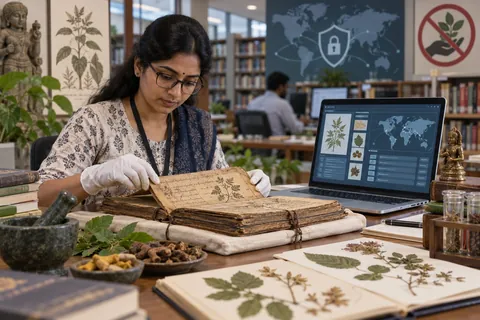
The Traditional Knowledge Digital Library (TKDL), set up in 2001 by CSIR and what is now the Ministry of AYUSH, renders India's traditional medicine and Yoga texts in five languages so patent examiners abroad can cite them as prior art and refuse wrong patents. Nalanda University signed an MoU with its CSIR unit on 1 October 2026.
Read the story -
Sci-TechGS3
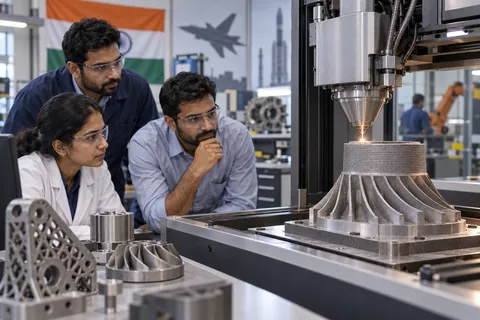
Additive manufacturing: how 3D printing works, and India's NSAM
Why in news: Over 1.54 lakh people have been trained under NSAM, and its next phase, NSAM 2.0, is being conceptualised, the government said on 7 October 2026.
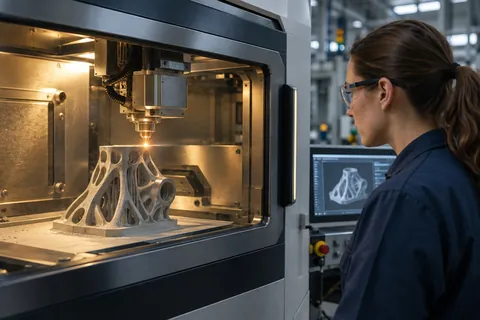
Additive manufacturing, or 3D printing, builds an object layer by layer from a digital design instead of cutting it from a solid block. India's National Strategy for Additive Manufacturing (NSAM), released by the Ministry of Electronics and Information Technology in February 2022, targets 5% of the global market. Its next phase, NSAM 2.0, is now being drawn up.
Read the story -
Sci-TechGS3
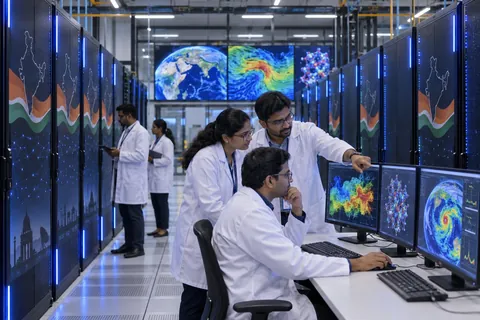
National Supercomputing Mission and India's PARAM supercomputers
Why in news: The National Supercomputing Mission had deployed 40 supercomputers with 68 petaflops of combined capacity by September 2026, the government said on 4 October 2026.
The National Supercomputing Mission (NSM), launched in 2015 and steered jointly by the Department of Science and Technology and the Ministry of Electronics and Information Technology, builds and networks supercomputers for research and develops Indian servers and software. C-DAC and IISc implement it. A government note of 4 October 2026 put its fleet at 40 supercomputers delivering 68 petaflops.
Read the story -
Sci-TechPrelimsGS3
C-STROKE ischaemic stroke atlas released; IIT Madras brain-mapping centre dedicated
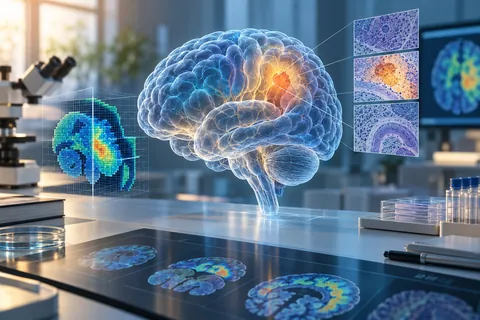
On 11 October 2026 the Prime Minister dedicated to the nation the Sudha Gopalakrishnan Brain Centre (SGBC) at IIT Madras and released C-STROKE, a human ischaemic stroke atlas of over 1,000 annotated microscopic sections from a stroke-affected brain. The SGBC aims to map more than 100 human brains, foetus to old age, into cellular-resolution 3D atlases.
Read the story -
Sci-TechPrelimsGS3
IISc simulation: magnetic fields may push white dwarfs past Chandrasekhar limit
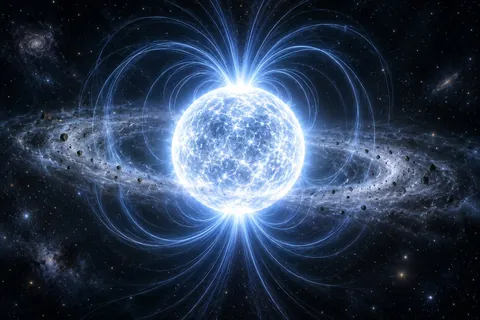
Simulations led by the Indian Institute of Science (IISc), Bengaluru, show that strong internal magnetic fields could let a white dwarf grow well beyond the Chandrasekhar limit of about 1.4 solar masses. One magnetised model reached about 2.4 solar masses. The study, published in The Astrophysical Journal Letters, is a model result and not an observation.
Read the story -
Sci-TechGS3GS2
Centre rejects Musk's Starlink 'blocked' charge; three satcom licensees under security review
The Ministry of Communications said on October 8, 2026 that security assessments are under way for all three satellite communication licensees, which can seek spectrum only after clearing them. A day after Elon Musk alleged that 'certain oligarchs' were blocking Starlink, it called claims of discrimination baseless, saying all three are at broadly the same regulatory stage.
Read the story -
Sci-TechGS3GS2
PM calls for global framework against cyber fraud and deepfakes
Prime Minister Narendra Modi, inaugurating the 10th India Mobile Congress in New Delhi on October 8, 2026, called for a global framework against cyber fraud and deepfakes involving governments, technology companies, telecom operators and financial institutions. He urged the GSMA and telecom operators worldwide to build a mechanism that stops fraud before it reaches people.
Read the story -
Sci-TechPrelimsGS3
World Development Report 2026 on AI gets its India launch
The World Bank Group's World Development Report 2026: The Promise of Artificial Intelligence, released on August 4, 2026, had its India launch in New Delhi on October 8. Union Electronics and IT Minister Ashwini Vaishnaw presented it. It gives developing economies a three-step path: adopt AI tools, adapt them to local conditions, then advance. MeitY's IndiaAI Mission co-hosted it.
Read the story -
Sci-TechPrelimsGS3
Centre to release AI regulation consultation paper within a month
IT Minister Ashwini Vaishnaw said on 8 October that the government will issue a consultation paper on regulating artificial intelligence within a month. It will focus on AI safety, harms such as deepfakes, a human-first approach and skilling, and form the base for regulation. He favoured a techno-legal approach, with industry bearing primary responsibility.
Read the story -
Sci-TechPrelimsGS3
WHO prequalifies Serum Institute's CERVAVAC, first Indian-made HPV vaccine on list
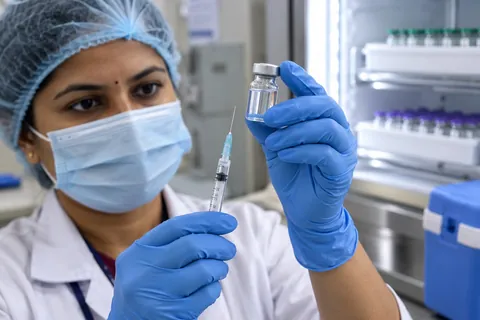
The World Health Organization has prequalified CERVAVAC, Serum Institute of India's quadrivalent HPV vaccine, effective September 25, 2026, making it eligible for procurement by UN agencies. It is the first Indian-made HPV vaccine on WHO's prequalified list. Licensed in India for girls and boys aged 9 to 26, it targets HPV types 6, 11, 16 and 18.
Read the story -
Sci-TechPrelimsGS3
NASA, US Energy Department sign space nuclear pact; Moon reactor by 2030
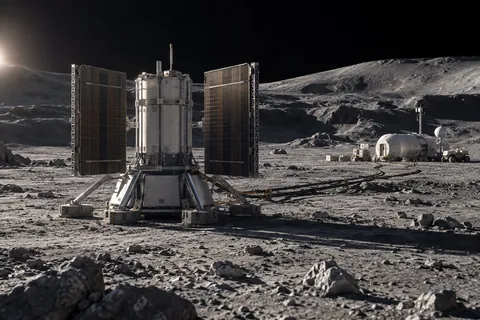
NASA and the US Department of Energy signed a memorandum of understanding on space nuclear power and propulsion on October 8, 2026. It covers Lunar Reactor-1, a fission reactor for NASA's Moon Base near the lunar South Pole, and Space Reactor-1 Freedom, a Mars-bound spacecraft planned for 2028. A December 2025 executive order wants the lunar reactor launch-ready by 2030.
Read the story -
Sci-TechPrelimsGS3
Kagan and Soai win 2026 Chemistry Nobel for mirror-molecule work
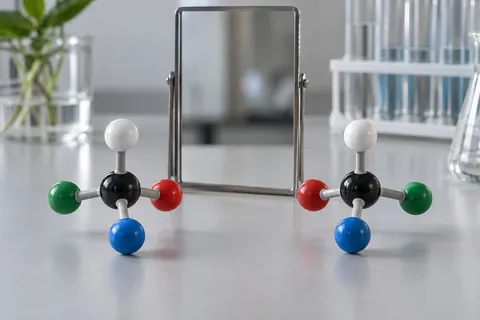
French chemist Henri Kagan and Japanese chemist Kenso Soai have won the 2026 Nobel Prize in Chemistry for discovering non-linear effects and autocatalysis in asymmetric organic synthesis. The two will share the prize equally. Their research shows how chemical reactions can magnify a tiny imbalance between mirror-image molecules into an overwhelming one.
Read the story -
Sci-TechPrelimsGS3
First self-stabilising thorium-229 nuclear clock runs in Vienna
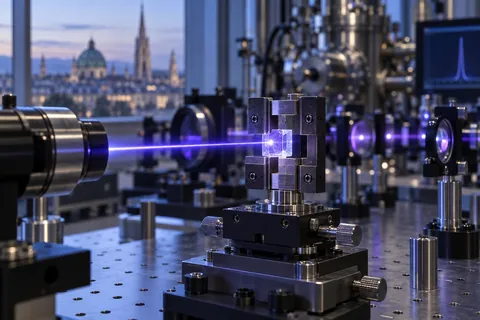
Physicists at TU Wien in Vienna and Germany's Physikalisch-Technische Bundesanstalt (PTB) reported in Nature on October 7, 2026 the first nuclear clock that stabilises itself. A 148-nanometre laser is locked to thorium-229 nuclei held in a calcium fluoride crystal. It ran over 24 hours unattended, at a precision near 10⁻¹⁵, below the best optical atomic clocks.
Read the story -
Sci-TechPrelimsGS3
India readies NSAM 2.0 after 3D-printing push trains 1.54 lakh people
MeitY's National Strategy for Additive Manufacturing (NSAM), released in February 2022, is moving to a second phase, NSAM 2.0. According to PIB, it has trained over 1.54 lakh people, supported 56 start-ups and developed 65 India-specific technologies. NSAM 2.0 plans faster IPR generation, cheaper machines and materials through clusters, and greater support for defence.
Read the story -
Sci-TechPrelimsGS3
IceCube pioneer Francis Halzen wins 2026 Nobel Prize in Physics
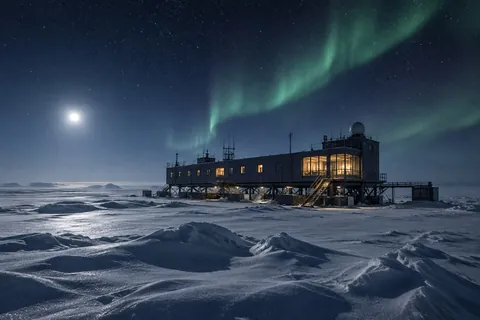
Belgian-born physicist Francis Halzen of the University of Wisconsin–Madison won the 2026 Nobel Prize in Physics on October 6. The award recognises his decisive contributions to the IceCube Neutrino Observatory at the South Pole and the discovery of high-energy neutrinos from astrophysical sources, first reported in 2013.
Read the story -
Sci-TechPrelimsGS3
Optogenetics pioneers win 2026 Nobel Prize in Medicine
Karl Deisseroth, Peter Hegemann and Georg Nagel won the 2026 Nobel Prize in Physiology or Medicine on October 5 for discoveries concerning light-gated ion channels and optogenetics. Their work lets scientists switch specific nerve cells on or off with light, revealing circuits behind memory, fear and behaviour. The trio will share 12 million Swedish kronor equally.
Read the story -
Sci-TechPrelimsGS3
ARIES-coordinated decade-long study tracks binary black hole blazar OJ 287
A study coordinated by the Aryabhatta Research Institute of Observational Sciences (ARIES), Nainital, has tracked the brightness and colour of the blazar OJ 287 from 2015 to 2025, the Department of Science and Technology said on October 6, 2026. OJ 287, about 4 billion light-years away, holds two supermassive black holes on a roughly 12-year orbit.
Read the story





Other subjects
- National 86 stories
- World & IR 92 stories
- Economy 171 stories
- Polity 150 stories
- Environment 106 stories
- Defence 29 stories
- Miscellany 5 stories