
IceCube pioneer Francis Halzen wins 2026 Nobel Prize in Physics
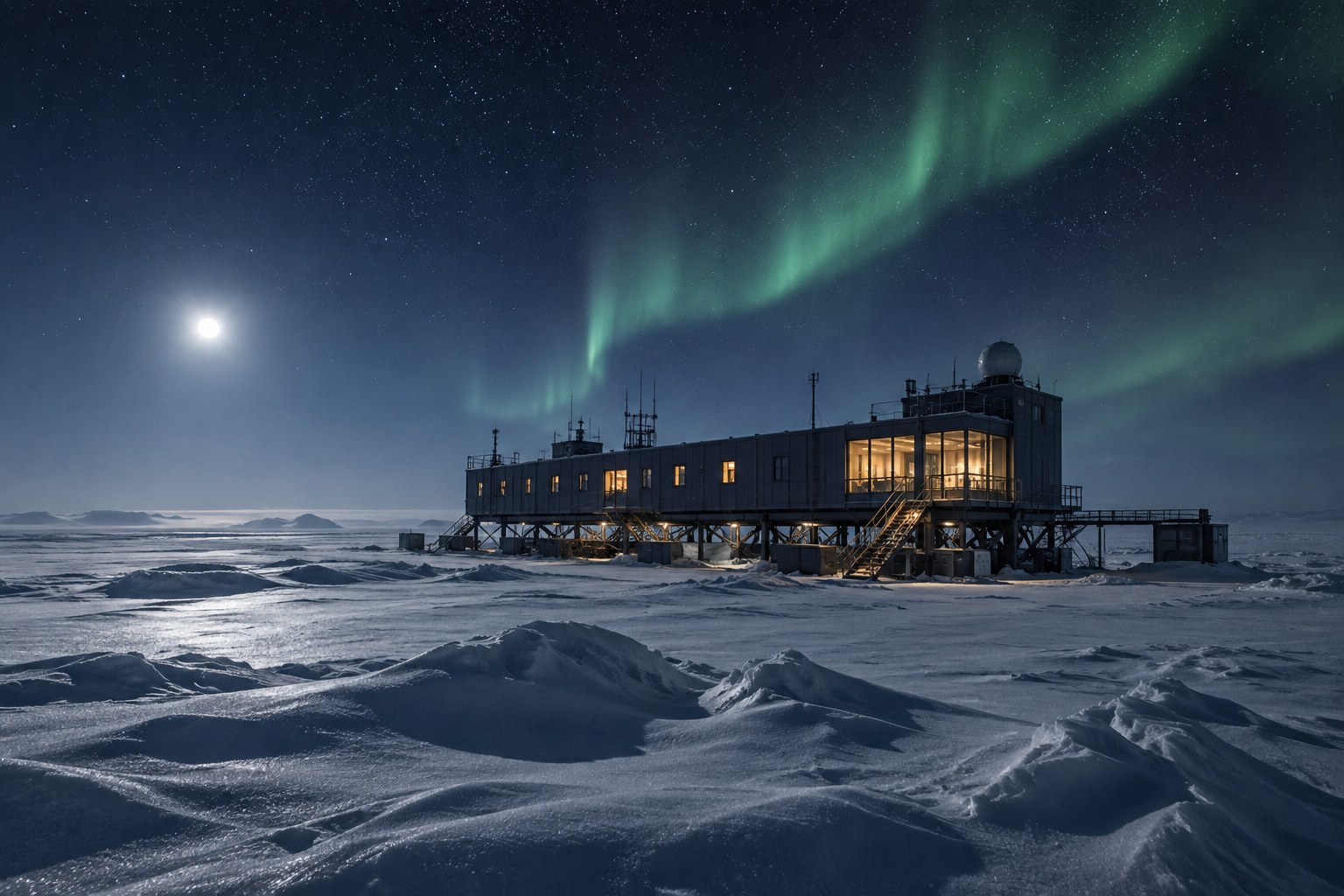
Belgian-born physicist Francis Halzen of the University of Wisconsin–Madison won the 2026 Nobel Prize in Physics on October 6. The award recognises his decisive contributions to the IceCube Neutrino Observatory at the South Pole and the discovery of high-energy neutrinos from astrophysical sources, first reported in 2013.
Syllabus: Prelims · Science & Technology; GS3 · Indian Achievements in S&T; GS3 · IT, Space, Biotech & IPR
Why it matters
Astronomers have long studied the universe through light, but light and other radiation can be hidden behind dust clouds or fade over vast distances. Neutrinos are neither deflected nor weakened on the way, so they can carry information that no other signal brings. IceCube catches them in a cubic kilometre of Antarctic ice. The chair of the Nobel Committee for Physics said Halzen's tenacity and vision paved the way for a new kind of astronomy, and a press statement added that IceCube's data could even reveal unknown cosmic phenomena. The chair also noted that Halzen led the international team of researchers and engineers behind the instrument. For India, the prize recalls the early neutrino experiments at the Kolar Gold Fields and the India-based Neutrino Observatory, which never got built.
Prelims pointers
- Citation: 'for decisive contributions to the IceCube Neutrino Observatory and the discovery of high-energy neutrinos of astrophysical origin'.
- Cherenkov light: blue flash when a charged particle moves through a medium faster than light does in that medium.
- Neutrino: no electric charge, almost no mass; it rarely interacts with matter and is often called a 'ghost particle'. It comes in three flavours: electron, muon, tau.
- The IceCube Collaboration runs the project; the University of Wisconsin–Madison is the lead institution, responsible for maintaining and operating the detector.
- Kolar Gold Fields, Karnataka: an international collaboration recorded atmospheric neutrinos about 2.3 km underground in 1964–65; the work stopped with the mines' closure in 1992.
- India-based Neutrino Observatory was planned at Pottipuram, Theni district, Tamil Nadu, with a 50,000-tonne magnetised iron calorimeter (ICAL) to study neutrino oscillation in atmospheric neutrinos.
- INO was designed mainly for relatively low-energy atmospheric neutrinos; IceCube focuses on higher-energy astrophysical neutrinos.
- The Nobel Prize in Physics is awarded by the Royal Swedish Academy of Sciences.
Practise a UPSC-style question
Consider the following statements about neutrinos:
1. Like protons, neutrinos have their paths bent by magnetic fields on their way to the Earth.
2. They carry no electric charge and have almost no mass.
3. They come in three flavours, known as the electron, muon and tau neutrinos.
Which of the statements given above is/are correct?
- (a) 1 and 2 only
- (b) 2 and 3 only
- (c) 1 and 3 only
- (d) 1, 2 and 3
Show the answer
Answer: (b) 2 and 3 only
1 is incorrect: protons are charged, so magnetic fields change their paths on the way; neutrinos are uncharged, so their direction of arrival points back to their source. 2 is correct: a neutrino has no electric charge and almost no mass, and it very rarely interacts with matter. 3 is correct: neutrinos come in three flavours, electron, muon and tau.
More from the 7 October 2026 edition
- NCAHP notifies autonomous boards, central assessment committee for allied health National
- India, EU formally launch Green Shipping Corridor industry coalition Environment
- First self-stabilising thorium-229 nuclear clock runs in Vienna Sci-Tech
- Defence Ministry eases industry access to DRDO and military test ranges Defence
- MoSPI releases 2026–2030 roadmap for environmental-economic accounting Environment
- Farm workers moving to cities land in low-productivity informal jobs: study Economy
- India readies NSAM 2.0 after 3D-printing push trains 1.54 lakh people Sci-Tech
- Navy's first Fleet Support Ship, FSS-1, launched at Visakhapatnam Defence
- Projectile strikes ship in Strait of Hormuz, injuring 11 Indian crew World & IR
- India, Switzerland sign mobility pacts, widen defence and nuclear cooperation World & IR
- MoSPI plans to widen monthly services index to 78.4% of services GVA Economy
- Seven-judge SC bench closes legislative privilege case, keeps free-speech questions open Polity