
WHO prequalifies Serum Institute's CERVAVAC, first Indian-made HPV vaccine on list
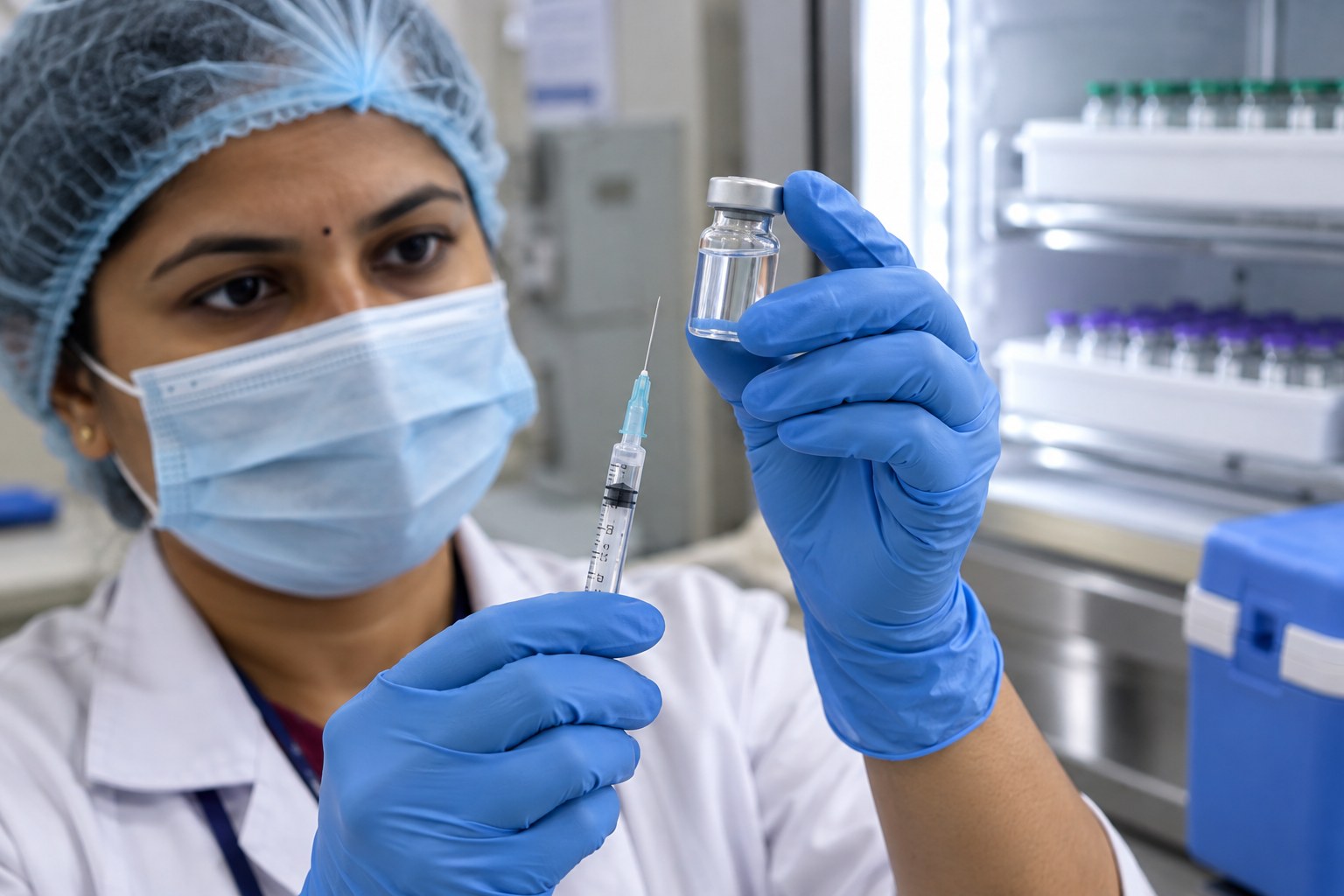
The World Health Organization has prequalified CERVAVAC, Serum Institute of India's quadrivalent HPV vaccine, effective September 25, 2026, making it eligible for procurement by UN agencies. It is the first Indian-made HPV vaccine on WHO's prequalified list. Licensed in India for girls and boys aged 9 to 26, it targets HPV types 6, 11, 16 and 18.
Syllabus: Prelims · Science & Technology; GS3 · Indian Achievements in S&T; GS2 · Health, Education & Human Resources
Why it matters
Cervical cancer is largely preventable, yet WHO estimates it caused about 280,000 deaths worldwide in 2024, with the highest rates in low- and middle-income countries. In India it is the second most common cancer among women, with over 1.2 lakh new cases a year, and India accounts for a quarter of global cervical cancer deaths, the Government says. UN agencies that buy vaccines for national immunisation programmes take them from WHO's prequalified list, and WHO says 65% of the world's babies are immunised with prequalified vaccines. CERVAVAC's listing lets those buyers choose an Indian-made HPV vaccine for the first time. The need is large: WHO puts global first-dose HPV coverage among girls at only 33% in 2025.
Prelims pointers
- WHO List of Prequalified Vaccines: listed vaccines are acceptable, in principle, for procurement by UN agencies; approving a vaccine remains the prerogative of national regulators.
- WHO prequalification involves evaluation of quality, safety and efficacy data, testing of samples and WHO inspection of manufacturing sites.
- HPV types 16 and 18 are high-risk types linked to several cancers; types 6 and 11 are associated with genital warts.
- WHO's priority group for HPV vaccination is girls aged 9-14, before they become sexually active, on a one- or two-dose schedule.
- WHO's 90-70-90 targets for 2030: 90% of girls fully vaccinated by 15; 70% of women screened by 35 and 45; 90% with disease treated.
- Central Drugs Standard Control Organization (CDSCO), headed by the Drugs Controller General of India, is India's national regulatory authority for vaccines under the Drugs and Cosmetics Act, 1940.
- BIRAC is a not-for-profit public sector enterprise set up by the Department of Biotechnology as an interface agency to support research and innovation by biotech firms.
- The International Agency for Research on Cancer (IARC), based in Lyon, France, is the specialised cancer agency of WHO.
Practise a UPSC-style question
With reference to WHO prequalification of vaccines, consider the following statements:
1. It is a marketing authorisation that permits a vaccine to be sold in WHO member countries.
2. A vaccine placed on the WHO List of Prequalified Vaccines becomes eligible for procurement by United Nations agencies.
3. The assessment includes testing of vaccine samples and inspection of the manufacturing facilities.
Which of the statements given above is/are correct?
- (a) 1 and 2 only
- (b) 2 and 3 only
- (c) 1 and 3 only
- (d) 1, 2 and 3
Show the answer
Answer: (b) 2 and 3 only
1 is incorrect: prequalification is not a marketing authorisation or regulatory approval; licensing stays with national regulators. 2 is correct: a prequalified vaccine becomes eligible for purchase by UN agencies, which can now buy CERVAVAC for immunisation programmes. 3 is correct: WHO judges quality, safety and efficacy by reviewing data, testing samples and inspecting manufacturing sites.
More from the 8 October 2026 edition
- CBAM: US invites comments as EU weighs widening carbon border levy Economy
- Glacial lake outburst flood exposure: Himalayan flood-zone building up 46% Environment
- Nobel Prize in Literature 2026: Swedish Academy honours Canada's Anne Carson World & IR
- World Development Report 2026 on AI gets its India launch Sci-Tech
- Nameri Tiger Reserve in Assam gets CA|TS Approved status Environment
- GST Council recommends scrapping arrest powers, ₹5 crore prosecution threshold Economy
- India joins 14 economies in joint statement on industrial overcapacity Economy
- WMO forecasts December El Niño peak, drier conditions over India Environment
- Chhattisgarh High Court seeks State reply on anti-conversion law challenge Polity
- Centre to release AI regulation consultation paper within a month Sci-Tech
- Supreme Court orders expert panel on statutory curbs for pharma marketing National
- Saudi investment treaty to allow arbitration after two years, officials say Economy