
Economy Current Affairs for UPSC
Every Economy story from the daily editions, newest first, each in short with why it matters for Prelims and Mains. Page 4 of 6.
-
EconomyGS3GS2
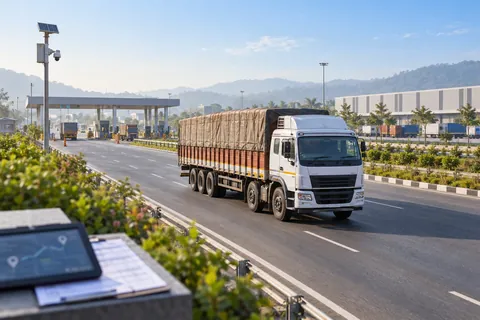
GST Council recommends curbs on stopping goods vehicles in transit
The GST Council, at its 57th meeting on 8 October 2026, recommended amending Sections 68, 129 and 130 of the CGST Act, 2017 so that goods vehicles are stopped only on specific intelligence, with prior authorisation by an officer not below Joint Commissioner. Only origin and destination States could inspect them, not transit States. The changes await amendment and notification.
Read the story -
EconomyGS3Prelims
Global MPI 2026: multidimensional poverty rises to 1.2 billion
The 2026 global Multidimensional Poverty Index, released on 12 October by the UNDP and Oxford University, counts 1.2 billion people in acute poverty across 108 countries, 51.5 million more than in 2025 and the first rise in 15 years, per UNDP. Children make up 617 million. India's incidence fell from 55.1% in 2005/06 to 16.4% in 2019/21.
Read the story -
EconomyGS3Prelims
World Bank sees India's poverty at 12.1% by 2028, slower decline
The World Bank's India Poverty and Equity Brief of October 2026 projects poverty at the $4.20-a-day line falling from an estimated 14.2% in 2026 to 12.1% by 2028, a slower decline than before. The rate fell from 57.7% in 2011 to 16.1% in 2023, lifting about 496 million people out of poverty, per the Bank.
Read the story -
EconomyGS3Prelims
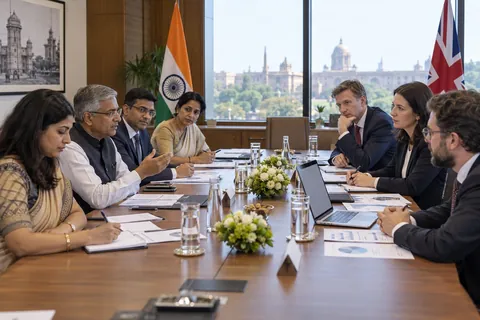
India–UK JETCO sets up CETA committees and yearly tariff-use data swap
India and the United Kingdom agreed on 12 October 2026 to exchange yearly data on how businesses claim the lower tariffs of their Comprehensive Economic and Trade Agreement (CETA). Meeting in New Delhi for the 16th Joint Economic and Trade Committee (JETCO), they also set up CETA's committees and working groups. The 17th JETCO meets in the UK in 2027.
Read the story -
EconomyGS3Prelims
Special Mention Accounts and Non-Performing Assets: RBI's 90-day rule
Why in news: Reported on 12 October 2026: industry body FISME proposed that the SME Growth Fund, approved on 6 October, also aid SMA-2 and NPA borrowers.
Special Mention Accounts (SMA) are the Reserve Bank of India's early-warning classes for a loan in default: SMA-0 up to 30 days overdue, SMA-1 up to 60 and SMA-2 up to 90. After 90 days it becomes a Non-Performing Asset (NPA). Reported on 12 October 2026: industry body FISME wants the SME Growth Fund to aid SMA-2 and NPA borrowers.
Read the story -
EconomyGS3Prelims
India's free trade agreement network: CEPA, ECTA, TEPA and CETA
Why in news: An October 2026 Bloomberg Economics report estimated that India's FTAs, with EU and New Zealand pacts, could add about $140 billion to GDP by 2035.
A free trade agreement cuts customs duties on most trade between partners; India's newer pacts, styled CEPA, ECTA, TEPA or CETA, also cover services, investment and mobility of professionals. Partners include the UAE, Australia, EFTA, the UK, Oman and New Zealand. A Bloomberg Economics report estimates these FTAs could add about $140 billion to India's GDP by 2035.
Read the story -
EconomyGS3Prelims
PM GatiShakti National Master Plan and the National Logistics Policy
Why in news: PIB issued an explainer and a backgrounder on 12 October 2026 marking five years of PM GatiShakti, launched on 13 October 2021.
Launched on 13 October 2021, the PM GatiShakti National Master Plan puts infrastructure data of Ministries, States and Union Territories on one GIS-based platform, so that roads, railways, ports and other networks are planned together. PIB says it now covers 58 Central Ministries and Departments and all 36 States and UTs. PIB marked its fifth year on 12 October 2026.
Read the story -
EconomyGS3Prelims
Stabilisation policy's microfoundations win Hall, Woodford the 2026 economics Nobel
Robert E. Hall and Michael Woodford won the 2026 Sveriges Riksbank Prize in Economic Sciences in Memory of Alfred Nobel, announced on 12 October, for microeconomic foundations of macroeconomic stabilisation. Their New Keynesian models, built from household and firm decisions, guide how central banks and governments use monetary policy and fiscal policy to smooth booms and recessions.
Read the story -
EconomyPrelimsGS1
Chennai Metro Phase-II, a 118.9 km project, opens its first stretch
Chennai Metro Rail Phase-II, approved by the Union Cabinet in October 2024 on the Ministry of Housing and Urban Affairs' proposal, adds three corridors, 118.9 km and 128 stations at Rs 63,246 crore, due by 2027. The Prime Minister opened its first stretch, about 15 km and 11 stations from Poonamallee Bypass towards Vadapalani, on 11 October 2026.
Read the story -
EconomyGS3Prelims
NEER and REER: how the RBI measures the rupee's value
Why in news: On 8 October 2026 the People's Bank of China said in a policy paper that it has no need or intention to weaken the yuan.
The Nominal Effective Exchange Rate (NEER) is an index of the rupee's weighted average value against the currencies of India's trading partners. The Real Effective Exchange Rate (REER) adjusts it for inflation differences. The Reserve Bank of India publishes both for 40-currency and 6-currency baskets. On 8 October 2026, China's central bank rejected claims that the yuan is undervalued.
Read the story -
EconomyPrelimsGS3
Global Innovation Index: how WIPO measures national innovation
Why in news: WIPO released the Global Innovation Index 2026, its 19th edition, on 29 September 2026, ranking 139 economies on 79 indicators.
The Global Innovation Index (GII) is the World Intellectual Property Organization's yearly ranking of how well economies turn innovation inputs, such as institutions, skills and infrastructure, into outputs such as knowledge, technology and creative goods. Its score averages two sub-indices built from about 80 indicators. WIPO released the 19th edition, GII 2026, on 29 September 2026.
Read the story -
EconomyPrelimsGS3
Amrit Bharat Station Scheme: master-plan redevelopment of railway stations
Why in news: On October 11, 2026, five stations redeveloped under the scheme were inaugurated in Tamil Nadu, taking the State's total to 26 of 77.
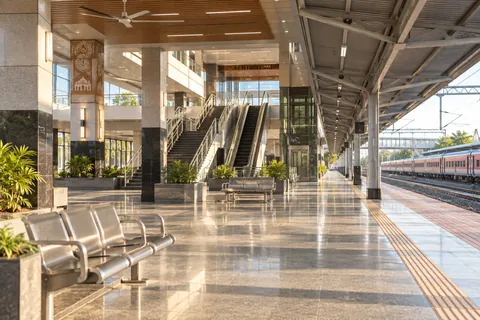
The Amrit Bharat Station Scheme, launched by the Ministry of Railways in 2022, upgrades stations across the Indian Railways network through long-term master plans, multimodal connectivity and better passenger amenities, with facilities planned to suit each station. Five more redeveloped stations in Tamil Nadu were inaugurated on October 11, 2026, taking the State's total to 26 of 77.
Read the story -
EconomyPrelimsGS2
Dark patterns and drip pricing: the CCPA's 2023 Guidelines
Dark patterns are interface designs that trick online users into choices they did not intend. The Central Consumer Protection Authority's Guidelines for Prevention and Regulation of Dark Patterns, 2023 list 13, including drip pricing and basket sneaking. Amendment rules notified in September 2026 require every e-commerce entity to self-audit for them yearly from January 2027.
Read the story -
EconomyGS3Prelims
Special Notified Zones: DGFT redefines who may trade rough diamonds
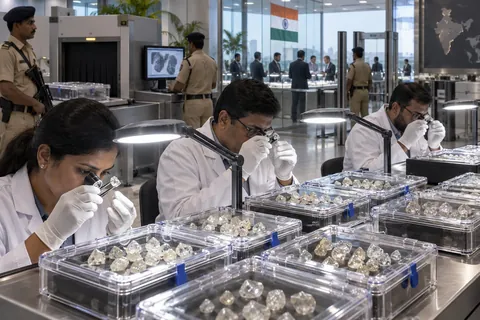
The Directorate General of Foreign Trade on 9 October 2026 amended Para 4.49 of the Foreign Trade Policy, 2023. Foreign diamond-mining companies, their sightholders, and brokers or auction entities covered by Entry 13F of Schedule IV of the Income-tax Act, 2025 may import rough diamonds into Special Notified Zones and auction, sell or re-export them under Customs supervision.
Read the story -
EconomyGS3GS2
Stock limits under the Essential Commodities Act: a tool against hoarding
Why in news: From 15 October 2026, sugar dealers may hold stock for no more than 15 days and, outside Kolkata and Assam, 1,000 quintals, the government said.
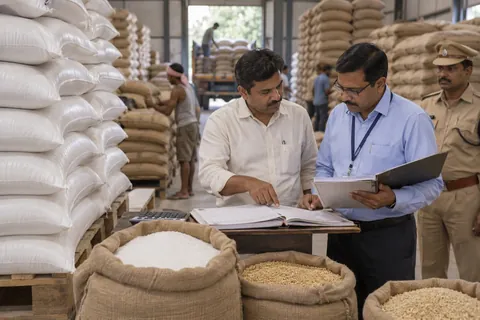
A stock limit caps how much of an essential commodity a trader may hold, and sometimes for how long, so supplies keep moving. The Centre sets such limits by order under section 3 of the Essential Commodities Act, 1955. From 15 October 2026, sugar dealers may hold stock for 15 days at most and, outside Kolkata and Assam, 1,000 quintals.
Read the story -
EconomyGS3Prelims
Social, green and sustainability bonds: how thematic bonds work
Why in news: NABKISAN Finance, a NABARD subsidiary, listed a ₹180 crore social bond for water, sanitation and hygiene on 1 October 2026, the government said.
Thematic bonds are debt securities whose money is earmarked: green bonds fund environmental projects, social bonds fund projects with social outcomes such as clean water or health care, and sustainability bonds fund both. SEBI sets the rules for listed issues. NABKISAN Finance, a NABARD subsidiary, listed a ₹180 crore social bond for water, sanitation and hygiene on 1 October 2026.
Read the story -
EconomyGS3GS2
Multi-Lane Free Flow tolling: how barrier-less highway tolls work
Why in news: NHAI rolled out barrier-less Multi-Lane Free Flow tolling at the Paranur toll plaza in Tamil Nadu, the government said on 1 October 2026.
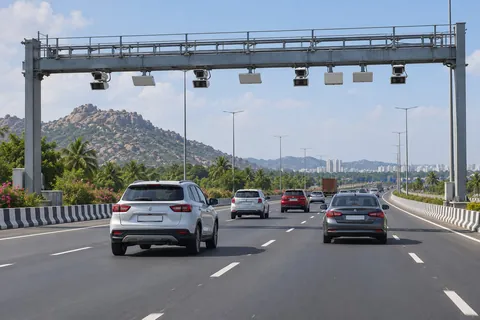
Multi-Lane Free Flow (MLFF) tolling collects highway tolls with no barrier: gantry readers detect a vehicle's FASTag while Automatic Number Plate Recognition cameras log its number plate. A vehicle without a working FASTag or enough balance gets an electronic notice. NHAI brought MLFF to the Paranur toll plaza in Tamil Nadu on 1 October 2026.
Read the story -
EconomyGS3GS2
Integrated Transport and Logistics Authority: India's apex transport planner
Why in news: The Union Cabinet approved setting up ITLA on 6 October 2026 as the apex body for integrated transport and logistics planning.
The Integrated Transport and Logistics Authority (ITLA) is a planned apex institution to plan roads, railways, ports, civil aviation, waterways and urban transport as one network. It will draft a National Transport Master Plan, technically appraise central projects of ₹500 crore or more and pool transport data. The Union Cabinet approved its creation on 6 October 2026.
Read the story -
EconomyGS3Prelims
Prime Minister Dhan-Dhaanya Krishi Yojana: a district-led farm scheme
Why in news: All 100 PMDDKY districts have District Action Plans in place as the scheme completes one year, the government said on 10 October 2026.
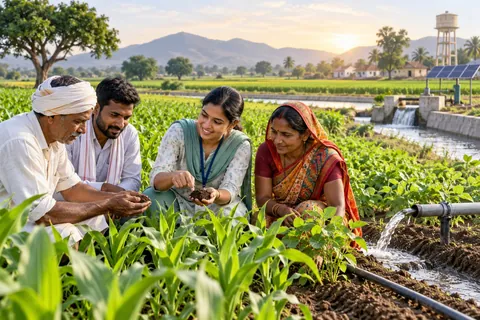
The Prime Minister Dhan-Dhaanya Krishi Yojana (PMDDKY) is a six-year scheme, from 2025-26, to lift farming in 100 lagging districts chosen for low productivity, low cropping intensity and low credit disbursement. It works by converging 36 Central schemes of 11 Ministries and Departments through district plans. The scheme completed its first year on 11 October 2026.
Read the story -
EconomyGS3
Production Linked Incentive scheme and the National Manufacturing Mission
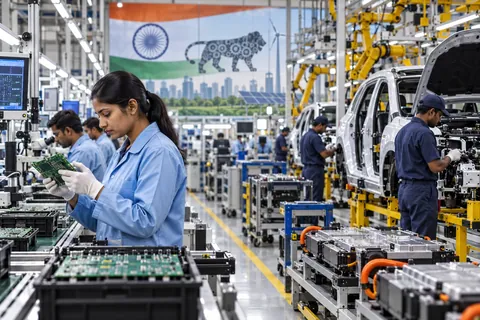
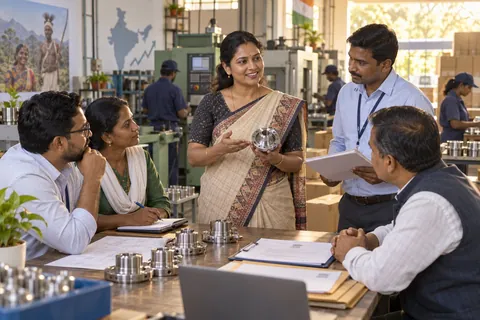
The Production Linked Incentive (PLI) scheme, begun in 2020, pays firms in 14 sectors a share of incremental sales, from a ₹1.97 lakh crore outlay. The National Manufacturing Mission, announced in the Union Budget 2025-26, is meant to align ministries and States behind manufacturing, stressing clean technology. A September 2025 PIB review called both central to India's factory push.
Read the story -
EconomyGS3
India Semiconductor Mission and the Dholera semiconductor cluster
Why in news: A 200-bed hospital, an International Baccalaureate school and investor housing are being built around Dholera's semiconductor cluster, the government said on 28 September 2026.
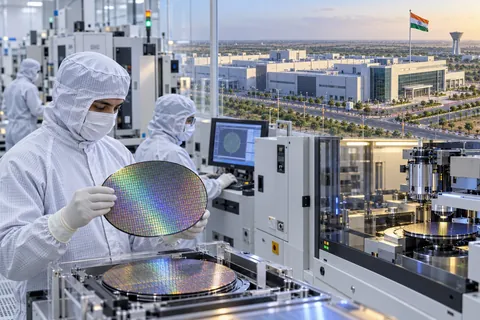
The India Semiconductor Mission (ISM), part of the Digital India Corporation under the Ministry of Electronics and Information Technology, runs the Semicon India programme's incentives for fabs, chip packaging and design. Twelve projects were approved under Semicon India 1.0, six in Gujarat, the government says. A PIB explainer of September 2026 describes the township rising around Dholera's semiconductor cluster.
Read the story -
EconomyPrelimsGS3
India's landmark bridges, tunnels and high-speed rail corridors
India's newer bridges, tunnels, expressways and rail corridors replace long detours around rivers, creeks and high passes: Bogibeel spans the Brahmaputra, Atal Setu crosses Mumbai's harbour and the Atal Tunnel runs beneath Rohtang Pass. The Union Budget 2026–27 announced seven high-speed rail corridors. A government factsheet of 5 October 2026 sets out the time it says each saves.
Read the story -
EconomyGS3Prelims
Inverted duty structure in GST: the textile value chain
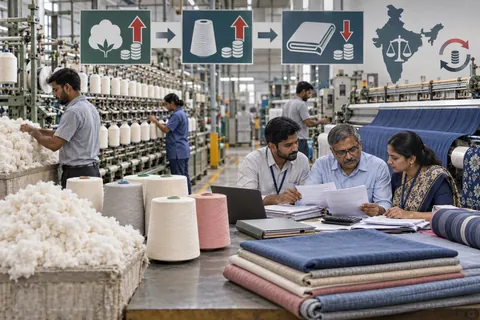
An inverted duty structure arises when inputs carry a higher GST rate than the finished product, so manufacturers pile up unused input tax credit. India's man-made fibre chain was the textbook case, with fibre taxed at 18%, yarn at 12% and fabric at 5%. The GST rate cuts effective 22 September 2025 brought fibre and yarn to 5%.
Read the story -
EconomyGS3Prelims
Khadi and Village Industries Commission (KVIC) and what makes khadi
Why in news: KVIC has modernised its Central Sliver Plants at Chitradurga and Kuttur, with Chitradurga running half on solar power, the government said on 9 October 2026.
The Khadi and Village Industries Commission (KVIC) is a statutory body under the Ministry of Micro, Small and Medium Enterprises that promotes khadi and village industries in rural areas. Khadi is cloth both hand-spun and hand-woven. New khadi ranges, modernised sliver plants and Ponduru Khadi's GI tag featured in the government's review of 9 October 2026.
Read the story -
EconomyGS3Prelims
Prime Minister's Employment Generation Programme (PMEGP): how the subsidy works
Why in news: PMEGP has backed about 8.12 lakh micro-entrepreneurs with Rs 24,398.61 crore in margin money subsidy since 2014-15, the government said on 2 October 2026.
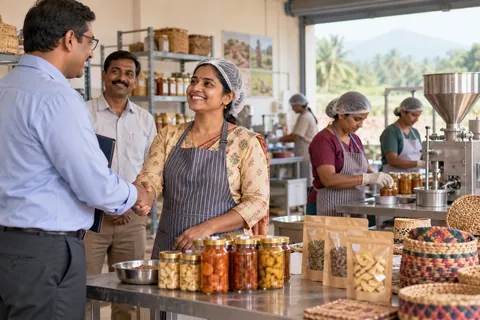
The Prime Minister's Employment Generation Programme (PMEGP) is a Ministry of MSME scheme, run nationally by the Khadi and Village Industries Commission, that adds a margin money subsidy of 15–35% of project cost to bank loans for new non-farm micro-enterprises. About 8.12 lakh micro-entrepreneurs had been assisted since 2014-15, the government said on 2 October 2026.
Read the story -
EconomyGS3GS2
PM E-DRIVE: the Ministry of Heavy Industries' electric vehicle scheme
Why in news: PM E-DRIVE, now ₹11,900 crore and running to March 2028, has sanctioned ₹851 crore for 8,147 EV chargers, the government said on 1 October 2026.
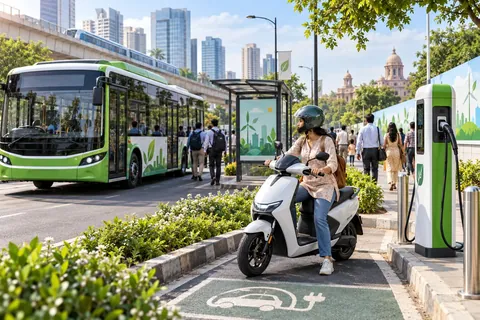
PM Electric Drive Revolution in Innovative Vehicle Enhancement (PM E-DRIVE) is the Ministry of Heavy Industries' scheme that cuts the price of electric two- and three-wheelers, trucks and ambulances and funds e-buses, public chargers and testing agencies. Now a ₹11,900-crore scheme running to March 2028, it had supported 26.59 lakh EV sales by June 2026, the government said.
Read the story -
EconomyGS3Prelims
National SC-ST Hub: how the MSME Ministry backs SC/ST entrepreneurs
Why in news: Public procurement from SC/ST-owned MSEs reached ₹4,013.42 crore in 2025-26, up from ₹99.37 crore in 2015-16, the government said on 8 October 2026.
The National SC-ST Hub is a Ministry of MSME scheme, run by the National Small Industries Corporation (NSIC) since October 2016, that helps enterprises owned by Scheduled Caste and Scheduled Tribe entrepreneurs win government orders through training, subsidies and reimbursements. Public procurement from such firms rose from ₹99.37 crore in 2015-16 to ₹4,013.42 crore in 2025-26, the government said.
Read the story -
EconomyGS3GS2
GST input tax credit, zero-rated supplies and refunds
Why in news: The GST Council's 57th meeting recommended faster, system-based refunds and wider credit refunds for exporters and inverted-duty cases, the government said on 9 October 2026.
Input tax credit lets a GST-registered business deduct tax paid on purchases from tax due on its sales, so GST falls only on value added. Exports and supplies to SEZs are zero-rated, and credit stuck under an inverted duty structure can be refunded. The GST Council's 57th meeting, in October 2026, recommended faster, system-based refunds and wider eligibility.
Read the story -
EconomyGS3Prelims
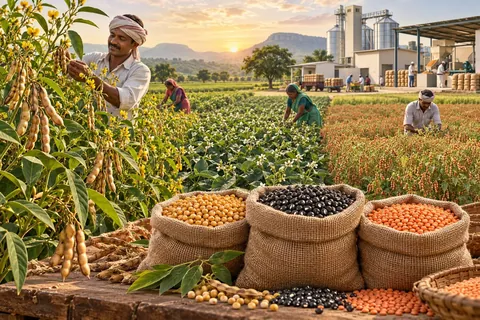
Mission for Aatmanirbharta in Pulses: self-reliance in tur, urad and masoor
Why in news: The Mission for Aatmanirbharta in Pulses completed its first year, with 528 of 1,000 planned dal mills allocated, the government said on 11 October 2026.
The Mission for Aatmanirbharta in Pulses is a six-year plan, from 2025-26 to 2030-31 with ₹11,440 crore, to make India self-sufficient in pulses. Run by the Ministry of Agriculture and Farmers Welfare, it targets tur, urad and masoor through better seed, more area, dal mills and assured MSP procurement. It completed its first year on 11 October 2026.
Read the story -
EconomyGS3GS1
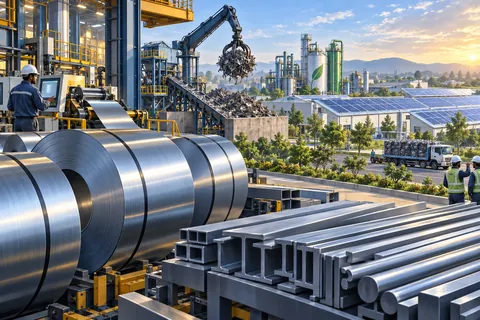
Steel self-reliance: National Steel Policy, PLI and green steel
Why in news: The Ministry of Steel's draft National Steel Policy – Vision 2047, open for public feedback, envisages 604 MT of crude steel capacity by 2047.
India's push for self-reliance in steel rests on the National Steel Policy, 2017, which targets 300 million tonnes of crude steel capacity by 2030-31, backed by production-linked incentives for specialty steel, preference for Indian steel in government purchases, a scrap recycling policy and a Green Steel Taxonomy. The Ministry of Steel posted a draft successor policy in October 2026.
Read the story








Other subjects
- National 86 stories
- World & IR 92 stories
- Polity 150 stories
- Environment 106 stories
- Sci-Tech 67 stories
- Defence 29 stories
- Miscellany 5 stories