
PM E-DRIVE: the Ministry of Heavy Industries' electric vehicle scheme
Why in news: PM E-DRIVE, now ₹11,900 crore and running to March 2028, has sanctioned ₹851 crore for 8,147 EV chargers, the government said on 1 October 2026.
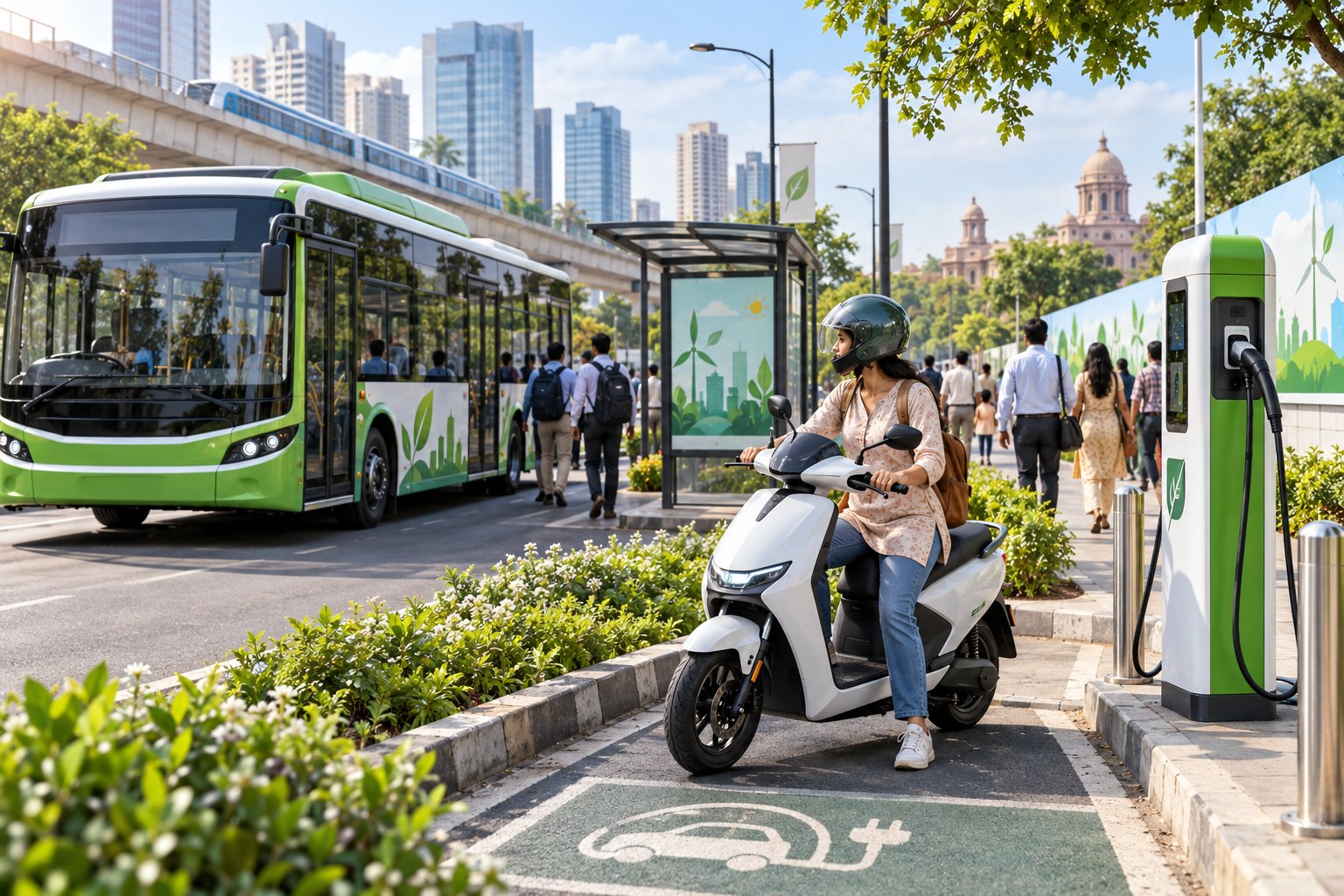
PM Electric Drive Revolution in Innovative Vehicle Enhancement (PM E-DRIVE) is the Ministry of Heavy Industries' scheme that cuts the price of electric two- and three-wheelers, trucks and ambulances and funds e-buses, public chargers and testing agencies. Now a ₹11,900-crore scheme running to March 2028, it had supported 26.59 lakh EV sales by June 2026, the government said.
Syllabus: GS3 · Liberalisation & Industry; GS3 · Infrastructure; GS2 · Government Policies
In short
PM E-DRIVE is the Ministry of Heavy Industries' ₹11,900-crore scheme, running to March 2028, that subsidises EV purchases and funds e-buses, chargers and testing agencies.
PM E-DRIVE has made EVs cheaper at the counter; its lasting value depends on spreading chargers and buses beyond big cities while tapering subsidy.
Why it matters
A delivery rider buying an electric scooter pays up to ₹5,000 less at the showroom, because the subsidy comes off the bill through the e-voucher instead of arriving months later. A bus commuter in a big city gains when State transport undertakings receive e-buses paid for partly by the Centre, and an e-rickshaw driver needs public chargers before the vehicle pays off. Beyond buyers, road transport runs largely on imported oil and fouls city air, so moving two-wheelers, three-wheelers and buses to batteries serves energy security and cleaner air together. Because only localised models qualify, the subsidy also builds an Indian EV supply chain.
Prelims pointers
- PM E-DRIVE: PM Electric Drive Revolution in Innovative Vehicle Enhancement; Ministry of Heavy Industries; pan-India; covers e-2Ws, e-3Ws, e-ambulances, e-trucks, e-buses, chargers and testing agencies.
- E-voucher: generated by the scheme portal at purchase with Aadhaar authentication; the buyer pays a reduced price and the Ministry reimburses the manufacturer.
- E-buses go to State transport undertakings and public transport agencies; Convergence Energy Services Ltd (CESL) aggregates demand in nine cities of over 40 lakh people.
- E-truck incentives and e-bus allocation priority are linked to scrapping old vehicles at registered vehicle scrapping facilities under the Road Transport Ministry's policy.
- FAME India Phase II: Ministry of Heavy Industries, five years from April 2019, ₹11,500 crore; it introduced the Phased Manufacturing Programme for domestic value addition.
- Other Heavy Industries schemes: PLI for Automobile and Auto Component Industry (₹25,938 crore) and PLI for Advanced Chemistry Cell batteries (₹18,100 crore, 50 GWh).
- PM-eBus Sewa (2023), which funds city e-buses on a public-private partnership model, is a Ministry of Housing and Urban Affairs scheme, separate from PM E-DRIVE.
Practise a UPSC-style question
With reference to the PM E-DRIVE Scheme, consider the following statements:
1. It is administered by the Ministry of Heavy Industries of the Government of India.
2. It subsumed the Electric Mobility Promotion Scheme (EMPS) 2024 within its outlay.
3. Its demand incentive is credited to the buyer's bank account after the vehicle is registered.
Which of the statements given above is/are correct?
- (a) 1 and 2 only
- (b) 2 and 3 only
- (c) 1 and 3 only
- (d) 1, 2 and 3
Show the answer
Answer: (a) 1 and 2 only
1 is correct: PM E-DRIVE is a Ministry of Heavy Industries scheme. 2 is correct: EMPS-2024, which ran from April to September 2024, was folded into PM E-DRIVE and its outlay. 3 is incorrect: the buyer gets the incentive upfront as a price cut through an Aadhaar-authenticated e-voucher, and the Ministry reimburses the manufacturer.
In the news
More Explainers
- State Legislative Councils: Articles 168-172 and the graduates' and teachers' seats Polity
- Whales and dolphins in Indian waters: legal protection, IUCN status and strandings Environment
- The Aligarh Movement, AMU and the Article 30 minority test Polity
- Environmental clearance by States: SEIAA, SEAC and the EIA Notification, 2006 Environment
- Software vulnerabilities: CVE, CVSS, coordinated disclosure and CERT-In's role Sci-Tech
- Drug trafficking law in India: NDPS Act, PIT-NDPS, NCB and NCORD National
- Choosing the UN Secretary-General: Article 97, UNSC veto and straw polls World & IR
- UN Convention against Torture, and why India has not ratified it Polity
- NavIC: why India's navigation constellation cannot give a standalone position Sci-Tech
- International Energy Agency: membership, 90-day oil stocks and India's status World & IR
- PM Surya Ghar: Muft Bijli Yojana and the rooftop solar subsidy Economy
- HFSS foods: FSSAI's draft limits and front-of-pack warning labels National