
Dark patterns and drip pricing: the CCPA's 2023 Guidelines
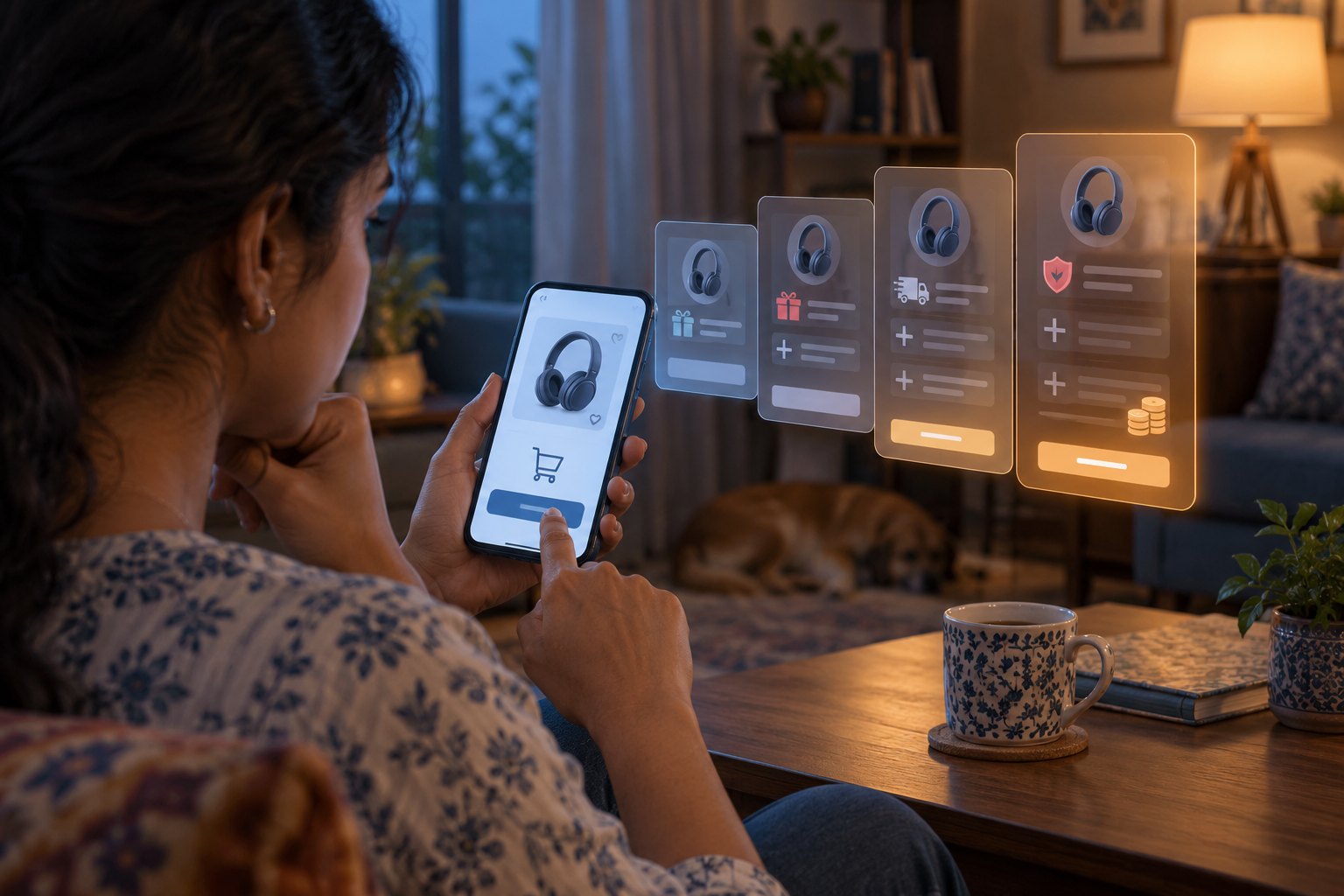
Dark patterns are interface designs that trick online users into choices they did not intend. The Central Consumer Protection Authority's Guidelines for Prevention and Regulation of Dark Patterns, 2023 list 13, including drip pricing and basket sneaking. Amendment rules notified in September 2026 require every e-commerce entity to self-audit for them yearly from January 2027.
Syllabus: Prelims · Current Affairs & IR; GS2 · Statutory & Regulatory Bodies; GS2 · Government Policies
In short
Dark patterns are interface designs that trick users into choices they never intended; the CCPA's 2023 Guidelines bar them under the Consumer Protection Act, 2019.
The Guidelines rightly target design, not prices; they will bite only if self-audits are verified and penalties grow enough to deter.
Why it matters
A shopper sees a low price, adds the item, and meets handling, platform or convenience fees, or a membership or donation she never chose, only at the payment page. Each charge is small, but across millions of orders it moves real money from consumers to platforms and makes honest price comparison impossible. The guidelines let the CCPA treat such design tricks as unfair trade practices: it can order a practice stopped under Section 20 and penalise misleading advertisements under Section 21. The 2026 rules add a yearly self-audit, putting the burden of clean design on platforms. The larger issue is regulating digital markets, where the interface itself, not only the product, can mislead.
Prelims pointers
- CCPA: statutory body under Section 10 of the Consumer Protection Act, 2019 (not the 1986 Act); a Chief Commissioner and Commissioners appointed by the Central Government.
- Dark-pattern guidelines: issued by the CCPA under Section 18 of the 2019 Act; 'misleading advertisement' is defined in Section 2(28) of that Act.
- Section 20 lets the CCPA order recall, refunds and discontinuation of unfair practices; Section 21 covers directions and penalties for false or misleading advertisements.
- Criminal side: Section 89 punishes a false or misleading advertisement with up to two years and Rs 10 lakh; Section 88 punishes defying CCPA directions.
- Basket sneaking excludes free samples, complimentary services and necessary fees disclosed at purchase, such as delivery charges, gift wrapping and government taxes.
- Drip pricing: a marketplace e-commerce entity is not liable for price changes caused by third-party sellers or other factors beyond its control.
- Disguised advertisement also falls under the Guidelines for Prevention of Misleading Advertisements and Endorsements for Misleading Advertisements, 2022.
- Consumer Protection (E-Commerce) Rules, 2020, amended in 2026: yearly dark-pattern self-audit; 'prior price' beside a discount is the lowest price of the previous 30 days.
Practise a UPSC-style question
With reference to the Central Consumer Protection Authority (CCPA), consider the following statements:
1. It is a statutory body established under the Competition Act, 2002.
2. It can order the discontinuation of unfair trade practices and penalise false or misleading advertisements.
Which of the statements given above is/are correct?
- (a) 1 only
- (b) 2 only
- (c) Both 1 and 2
- (d) Neither 1 nor 2
Show the answer
Answer: (b) 2 only
1 is incorrect: the CCPA was established under Section 10 of the Consumer Protection Act, 2019; the Competition Act, 2002 set up the Competition Commission of India. 2 is correct: Section 20 lets it order discontinuation of unfair practices, and Section 21 lets it issue directions and penalties for false or misleading advertisements.
In the news
More Explainers
- State Legislative Councils: Articles 168-172 and the graduates' and teachers' seats Polity
- Whales and dolphins in Indian waters: legal protection, IUCN status and strandings Environment
- The Aligarh Movement, AMU and the Article 30 minority test Polity
- Environmental clearance by States: SEIAA, SEAC and the EIA Notification, 2006 Environment
- Software vulnerabilities: CVE, CVSS, coordinated disclosure and CERT-In's role Sci-Tech
- Drug trafficking law in India: NDPS Act, PIT-NDPS, NCB and NCORD National
- Choosing the UN Secretary-General: Article 97, UNSC veto and straw polls World & IR
- UN Convention against Torture, and why India has not ratified it Polity
- NavIC: why India's navigation constellation cannot give a standalone position Sci-Tech
- International Energy Agency: membership, 90-day oil stocks and India's status World & IR
- PM Surya Ghar: Muft Bijli Yojana and the rooftop solar subsidy Economy
- HFSS foods: FSSAI's draft limits and front-of-pack warning labels National