
Steel self-reliance: National Steel Policy, PLI and green steel
Why in news: The Ministry of Steel's draft National Steel Policy – Vision 2047, open for public feedback, envisages 604 MT of crude steel capacity by 2047.
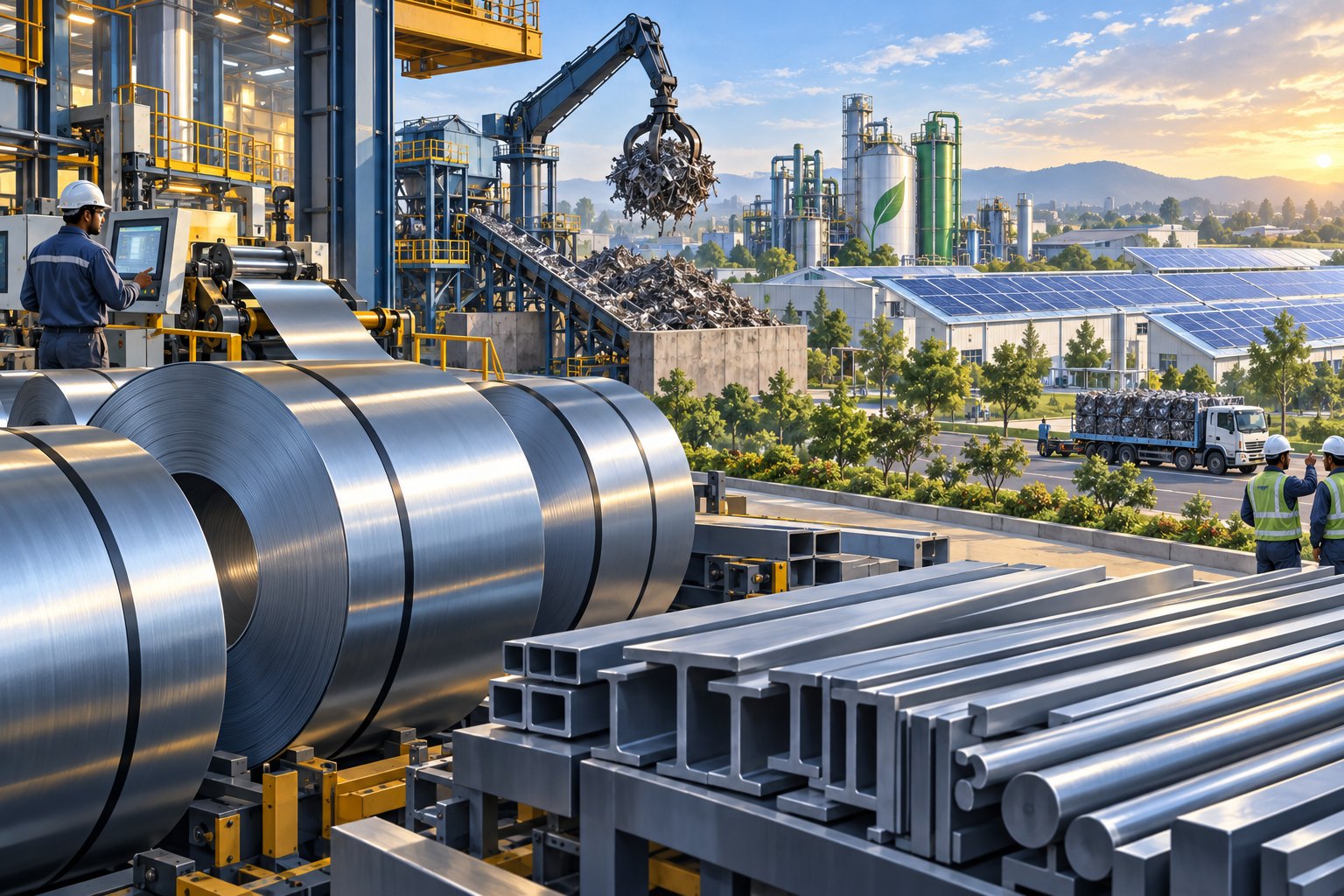
India's push for self-reliance in steel rests on the National Steel Policy, 2017, which targets 300 million tonnes of crude steel capacity by 2030-31, backed by production-linked incentives for specialty steel, preference for Indian steel in government purchases, a scrap recycling policy and a Green Steel Taxonomy. The Ministry of Steel posted a draft successor policy in October 2026.
Syllabus: GS3 · Indian Economy & Growth; GS3 · Liberalisation & Industry; GS1 · Resources & Industry Location
In short
India's steel self-reliance rests on the National Steel Policy, 2017, which targets 300 MTPA of crude steel capacity by 2030-31, in a carbon-heavy sector that must decarbonise.
India's steel push has delivered volume; the next test is cleaner, cheaper steel without making user industries pay for protection.
Why it matters
For a builder buying reinforcement bars or a carmaker buying flat steel, a strong domestic industry means steadier supply and less exposure to sudden import surges. Construction and infrastructure took about 68% of India's steel in 2023-24, so reliable steel lowers the cost of roads, railways and housing. Self-reliance matters most in high-end and strategic grades, where imports are concentrated, which is why the PLI scheme targets specialty steel. But steel is carbon-heavy: as buyers such as the European Union start pricing embedded carbon, mills that cannot show low emissions risk losing markets, so green certification now sits beside capacity targets.
Prelims pointers
- National Steel Policy, 2017: Ministry of Steel; succeeded the 2005 policy; 2030-31 targets of 300 MTPA capacity and 255 MTPA production.
- PLI scheme for specialty steel: Ministry of Steel; one of 14 PLI sectors; ₹6,322 crore; incentives for value-added, downstream steel grades.
- DMI&SP policy (2017, revised May 2025): preference for domestically made iron and steel in government procurement, with minimum domestic content; 'melt and pour' means melted and cast in India.
- Quality Control Orders: issued under the Bureau of Indian Standards Act, 2016; make BIS certification compulsory for notified steel products, domestic or imported.
- Green Steel Taxonomy (Ministry of Steel, 2024): green steel comes from plants emitting under 2.2 tonnes of CO2 equivalent per tonne of finished steel.
- Forms of iron: hot metal is liquid iron from a blast furnace; pig iron is its solid form; sponge iron (direct reduced iron) is ore reduced without melting.
- Perform, Achieve and Trade (2012): Bureau of Energy Efficiency scheme under the National Mission for Enhanced Energy Efficiency; plants beating targets earn tradable Energy Saving Certificates.
- Steel centres: Bhilai (Chhattisgarh, Soviet aid), Rourkela (Odisha, West German aid), Durgapur (West Bengal, British aid), Bokaro (Jharkhand), Kalinganagar (Odisha), Visakhapatnam (Andhra Pradesh).
Practise a UPSC-style question
With reference to the National Steel Policy, 2017, consider the following statements:
1. It was framed by the Ministry of Heavy Industries.
2. It targets a crude steel capacity of 300 million tonnes per annum by 2030-31.
Which of the statements given above is/are correct?
- (a) 1 only
- (b) 2 only
- (c) Both 1 and 2
- (d) Neither 1 nor 2
Show the answer
Answer: (b) 2 only
1 is incorrect: the policy was framed by the Ministry of Steel, the nodal ministry for the deregulated steel sector. 2 is correct: it targets 300 MTPA of crude steel capacity and 255 MTPA of production by 2030-31.
In the news
More Explainers
- State Legislative Councils: Articles 168-172 and the graduates' and teachers' seats Polity
- Whales and dolphins in Indian waters: legal protection, IUCN status and strandings Environment
- The Aligarh Movement, AMU and the Article 30 minority test Polity
- Environmental clearance by States: SEIAA, SEAC and the EIA Notification, 2006 Environment
- Software vulnerabilities: CVE, CVSS, coordinated disclosure and CERT-In's role Sci-Tech
- Drug trafficking law in India: NDPS Act, PIT-NDPS, NCB and NCORD National
- Choosing the UN Secretary-General: Article 97, UNSC veto and straw polls World & IR
- UN Convention against Torture, and why India has not ratified it Polity
- NavIC: why India's navigation constellation cannot give a standalone position Sci-Tech
- International Energy Agency: membership, 90-day oil stocks and India's status World & IR
- PM Surya Ghar: Muft Bijli Yojana and the rooftop solar subsidy Economy
- HFSS foods: FSSAI's draft limits and front-of-pack warning labels National