
Prime Minister's Employment Generation Programme (PMEGP): how the subsidy works
Why in news: PMEGP has backed about 8.12 lakh micro-entrepreneurs with Rs 24,398.61 crore in margin money subsidy since 2014-15, the government said on 2 October 2026.
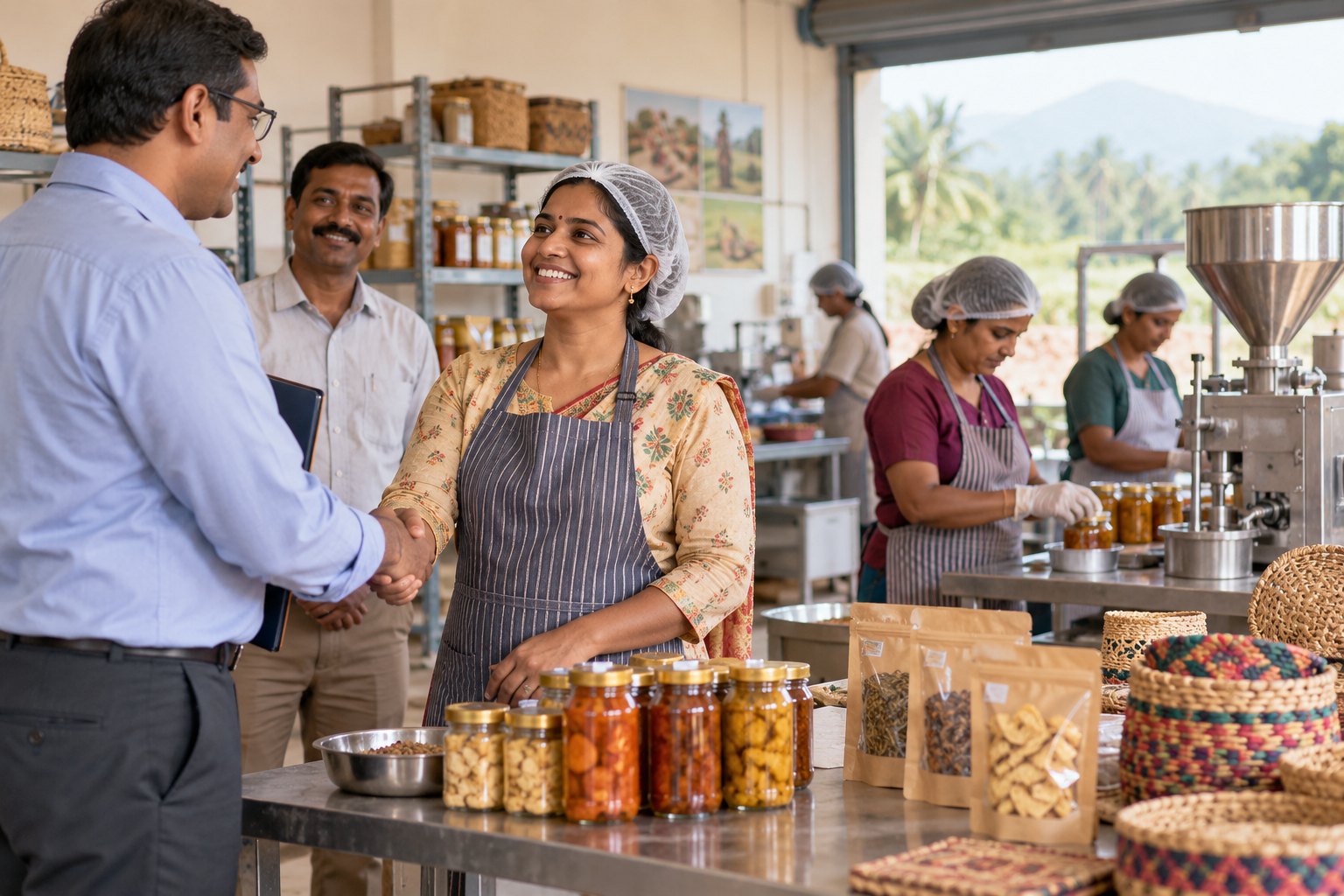
The Prime Minister's Employment Generation Programme (PMEGP) is a Ministry of MSME scheme, run nationally by the Khadi and Village Industries Commission, that adds a margin money subsidy of 15–35% of project cost to bank loans for new non-farm micro-enterprises. About 8.12 lakh micro-entrepreneurs had been assisted since 2014-15, the government said on 2 October 2026.
Syllabus: GS3 · Indian Economy & Growth; GS3 · Inclusive Growth; Prelims · Economy & Social Development
In short
The Prime Minister's Employment Generation Programme (PMEGP), a Ministry of MSME scheme since 2008-09, adds a margin money subsidy to bank loans for new non-farm micro-enterprises.
PMEGP lowers the cost of starting up; its worth lies in units that outlast repayment, so renewal should reward survival, not disbursal.
Why it matters
For a young person in a small town with a skill but no savings, the hardest step is the margin a bank wants before it lends. PMEGP narrows that gap. A special-category applicant setting up a Rs 10 lakh workshop in a village puts in Rs 50,000, borrows the rest, and has Rs 3.5 lakh of the loan met by the subsidy. Because every unit is new, each one adds jobs instead of moving them. The larger issue is whether subsidy-led enterprise can absorb India's young job seekers, and why some units close once repayments begin.
Prelims pointers
- PMEGP: Ministry of MSME; credit-linked subsidy for new non-farm micro-enterprises; KVIC is the single nodal agency at the national level.
- Implementing agencies: State offices of KVIC, State Khadi and Village Industries Boards and District Industries Centres; the Coir Board for coir units; banks sanction the loans.
- Special category (higher subsidy, 5% own share): SC, ST, OBC, minorities, women, transgender persons, ex-servicemen, the differently abled, North East, hill and border areas, aspirational districts.
- Rural or urban for PMEGP (since 2022): areas under Panchayati Raj institutions are rural; areas under municipalities are urban.
- No income ceiling; only new projects qualify; one person per family; the cost of land is not counted in project cost.
- Predecessors: PMRY and REGP, the two schemes in operation till 31 March 2008 that PMEGP merged.
- Do not confuse: Pradhan Mantri Mudra Yojana (2015, Department of Financial Services) gives collateral-free credit to micro enterprises through banks and other lenders.
Practise a UPSC-style question
With reference to the Prime Minister's Employment Generation Programme (PMEGP), consider the following statements:
1. The National Bank for Agriculture and Rural Development is its nodal agency at the national level.
2. It gives a subsidy linked to a bank loan for setting up new micro-enterprises in the non-farm sector.
3. It was formed by merging the Prime Minister's Rozgar Yojana and the Rural Employment Generation Programme.
Which of the statements given above is/are correct?
- (a) 1 and 2 only
- (b) 2 and 3 only
- (c) 1 and 3 only
- (d) 1, 2 and 3
Show the answer
Answer: (b) 2 and 3 only
1 is incorrect: the Khadi and Village Industries Commission is PMEGP's single nodal agency at the national level, not NABARD. 2 is correct: PMEGP is a credit-linked margin money subsidy for new non-farm micro-enterprises. 3 is correct: it was formed in 2008-09 by merging the Prime Minister's Rozgar Yojana and the Rural Employment Generation Programme.
More Explainers
- State Legislative Councils: Articles 168-172 and the graduates' and teachers' seats Polity
- Whales and dolphins in Indian waters: legal protection, IUCN status and strandings Environment
- The Aligarh Movement, AMU and the Article 30 minority test Polity
- Environmental clearance by States: SEIAA, SEAC and the EIA Notification, 2006 Environment
- Software vulnerabilities: CVE, CVSS, coordinated disclosure and CERT-In's role Sci-Tech
- Drug trafficking law in India: NDPS Act, PIT-NDPS, NCB and NCORD National
- Choosing the UN Secretary-General: Article 97, UNSC veto and straw polls World & IR
- UN Convention against Torture, and why India has not ratified it Polity
- NavIC: why India's navigation constellation cannot give a standalone position Sci-Tech
- International Energy Agency: membership, 90-day oil stocks and India's status World & IR
- PM Surya Ghar: Muft Bijli Yojana and the rooftop solar subsidy Economy
- HFSS foods: FSSAI's draft limits and front-of-pack warning labels National