
Supreme Court orders portal and rules protocol on autism stem-cell therapy
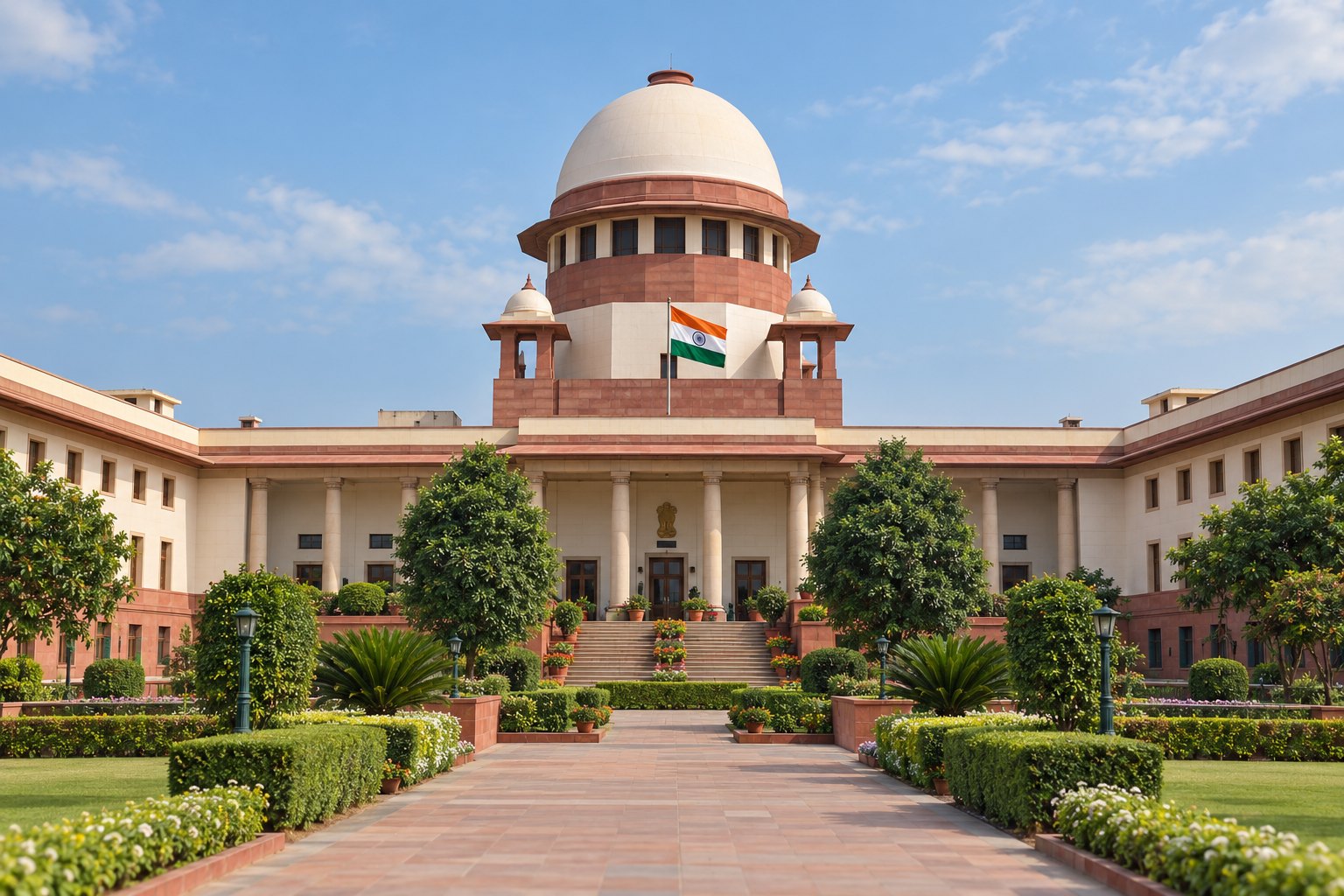
The Supreme Court on 13 October 2026 directed the Centre to set up, within six weeks, an online portal recording autism patients who began stem-cell therapy by 30 January 2026, and to issue a step-wise protocol on the rules for stem-cell research. Registered patients may continue temporarily; the therapy stays barred as a clinical service outside approved trials.
Syllabus: Prelims · Science & Technology; GS2 · Statutory & Regulatory Bodies; GS2 · Health, Education & Human Resources
Why this matters for UPSC
GS2 (health, regulatory bodies) and GS3 (biotechnology): Prelims can ask what the New Drugs and Clinical Trials Rules, 2019 treat as a new drug, what CDSCO, ICMR and the NMC each do, and what pluripotent stem cells are; Mains, about regulating unproven therapies.
Why it matters
Parents of a child with autism are often offered stem-cell injections by private clinics as a treatment, at great cost, though no regulator has approved them. The order changes two things for such families. Those already in treatment must sign up on the portal along with their doctor, which gives the government a record of who is treating whom and how; no new child can be started. A plain notice on the Health Ministry's website should let any parent check the legal position before paying. The larger issue is how India keeps unproven medicine in check when its rules are spread across an Act, rules, guidelines and advisories that few patients can read.
Prelims pointers
- Drugs Technical Advisory Board: set up under section 5 of the Drugs and Cosmetics Act, 1940 to advise the Centre and States on technical matters under the Act.
- Central Licencing Authority under the NDCT Rules, 2019 is the Drugs Controller, India; a trial must be entered in the Clinical Trial Registry of India, kept by ICMR.
- Deeming rule: a cell or stem cell derived product always remains a 'new drug', while other new drugs stay new for four years from approval.
- Pluripotent stem cells, embryonic or induced pluripotent, can form ectodermal, mesodermal and endodermal cells; mesenchymal stem cells are multipotent, first found in bone-marrow stroma.
- Haematopoietic stem cell transplantation is the established stem-cell treatment for set blood, immune and metabolic disorders; umbilical cord blood is the only material CDSCO licenses for banking.
- Ethics and Medical Registration Board: one of the four autonomous boards under the National Medical Commission Act, 2019; it regulates professional conduct and promotes medical ethics.
- Rights of Persons with Disabilities Act, 2016: autism spectrum disorder is a specified disability, listed under intellectual disability in the Act's Schedule.
- National Trust Act, 1999: sets up a national body for the welfare of persons with autism, cerebral palsy, mental retardation and multiple disabilities.
Practise a UPSC-style question
With reference to the New Drugs and Clinical Trials Rules, 2019, consider the following statements:
1. The Central Licencing Authority under these Rules is the Director-General of the Indian Council of Medical Research.
2. The Rules were made under the Drugs and Cosmetics Act, 1940.
3. A cell or stem cell derived product intended to be used as a drug is always deemed a new drug.
Which of the statements given above is/are correct?
- (a) 1 and 2 only
- (b) 2 and 3 only
- (c) 1 and 3 only
- (d) 1, 2 and 3
Show the answer
Answer: (b) 2 and 3 only
Answer: (b) 2 and 3 only. The licensing authority is the Drugs Controller, India, not ICMR's chief.
Statement 1: incorrect. Rule 2 defines the Central Licencing Authority as the Drugs Controller, India; ICMR maintains the Clinical Trial Registry of India.
Statement 2: correct. The Centre made the Rules under sections 12 and 33 of the Drugs and Cosmetics Act, 1940, after consulting the Drugs Technical Advisory Board.
Statement 3: correct. The Explanation to the definition of 'new drug' keeps cell or stem cell derived products new drugs for ever; others stay new for four years.
Eliminate: Judge statement 1 first: approvals under the Rules come from the Drugs Controller, India, so statement 1 is incorrect. Out: (a), (c), (d).
Trap: Swapped attribution. ICMR has real roles in trials (the registry, ethics guidance), so pinning the licensing power on it sounds right.
Remember: NDCT Rules, 2019: under the Drugs and Cosmetics Act, 1940; licensing by the Drugs Controller, India (CDSCO); stem-cell products always new drugs.
More from the 19 October 2026 edition
- Pakistan NOTAM extends airspace ban on Indian aircraft to 24 November World & IR
- Kolkata pandal stampede: NDMA's crowd management guide and what failed National
- Police accountability: Supreme Court panel opens portal on Jantar Mantar violence Polity
- Gwalior temple truck crash: CSP removed, eight police suspended, inquiry ordered National
- CAQM orders PTZ cameras with live feeds at polluting NCR industries Environment
- Section 44A: RBI sanctions Emirates NBD branches' merger with RBL Bank Economy
- FSSAI issues notices over misleading labels on coffee-flavoured milk drinks National
- India–New Zealand FTA due in force on 20 October; origin rules notified Economy
- Section 125A: Supreme Court allows private complaints over false nomination affidavits Polity