
Polity Current Affairs for UPSC
Every Polity story from the daily editions, newest first, each in short with why it matters for Prelims and Mains. Page 4 of 5.
-
PolityPrelimsGS2
Juvenile Justice Act, 2015: Boards, committees and the 16-18 rule
Why in news: The Supreme Court's Juvenile Justice Committee and UNICEF held a national consultation on ten years of the Act on 10-11 October 2026.
The Juvenile Justice (Care and Protection of Children) Act, 2015 governs children under 18 who are accused of offences or need care. Juvenile Justice Boards hear the first group and Child Welfare Committees the second. A Supreme Court consultation on 10-11 October 2026 reviewed its ten years and flagged pending cases and understaffed Boards.
Read the story -
PolityPrelimsGS4
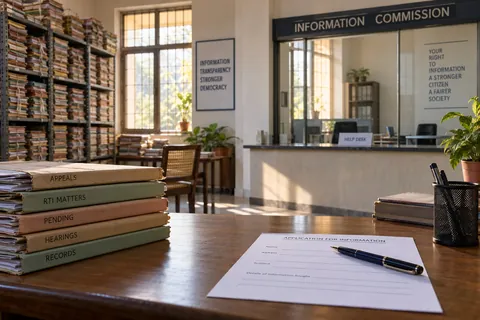
RTI report card: 3.85 lakh cases pending in 28 information commissions
Over 3.85 lakh appeals and complaints were pending in 28 information commissions on 30 June 2026, says Satark Nagrik Sangathan's annual report card for 2025-26. Fourteen commissions would take a year or more to settle a case. The report estimates a wait of two years and three months at the Central Information Commission.
Read the story -
PolityGS2Prelims
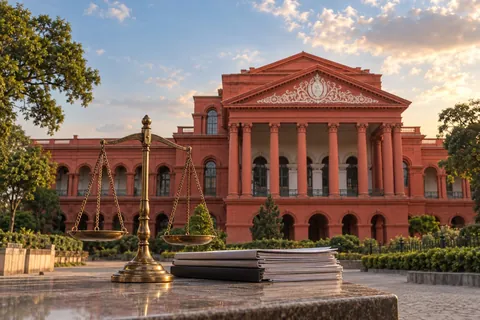
Karnataka High Court strikes down SC/ST quota hike breaching 50% ceiling
The Karnataka High Court on 12 October 2026 struck down a 2022 State law raising SC reservation from 15% to 17% and ST reservation from 3% to 7%. The rise had taken total reservation to 56%. The Court held the 50% ceiling binding under Articles 14, 15 and 16 and ruled that the EWS quota does not lift it.
Read the story -
PolityGS2Prelims
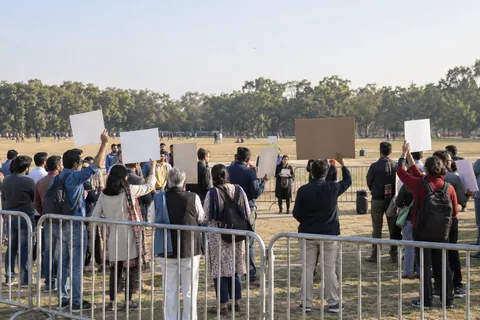
Right to protest: Delhi Police de-notifies Jantar Mantar, names three venues
Delhi Police de-notified Jantar Mantar as the capital's designated protest site through a standing order dated October 11, made public on October 12. Ramlila Maidan, Burari Ground and CBD Ground in east Delhi replace it, on the recommendation of a committee set up by the Union Ministry of Home Affairs. Revised procedures for the three venues will follow.
Read the story -
PolityGS2Prelims
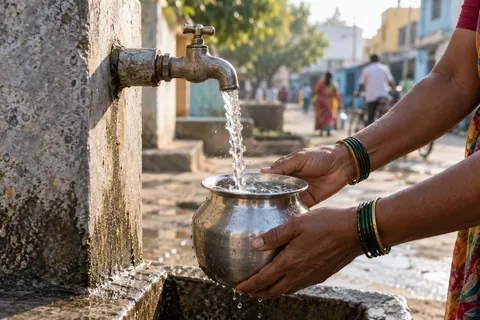
Right to water under Article 21: the courts and the Constitution
Why in news: The NHRC held a national conference, 'Water as the Elixir of Life', on the right to water on its 33rd Foundation Day, 12 October 2026.
No Article names a right to water; the Supreme Court read it into the right to life under Article 21. Subhash Kumar (1991) covered pollution-free water, and A.P. Pollution Control Board II (2000) a State duty to supply clean drinking water. The NHRC's 33rd Foundation Day conference on 12 October 2026 took up the right to water.
Read the story -
PolityGS2GS3
Cauvery water sharing: the 2018 judgment, CWMA and distress-year cuts
Why in news: On 12 October 2026 the Supreme Court heard Tamil Nadu's application on Karnataka's release backlog at Billigundulu and reserved its order.
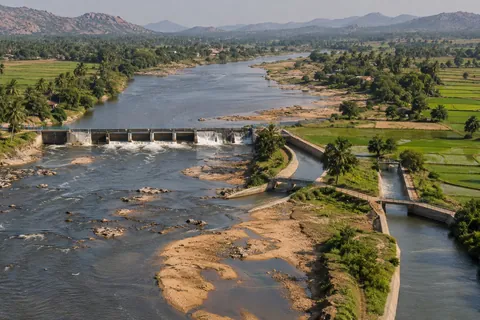
Cauvery water is shared under the Tribunal's 2007 award as modified by the Supreme Court on 16 February 2018: Karnataka 284.75 TMC, Tamil Nadu 404.25 TMC, Kerala 30 TMC, Puducherry 7 TMC. The Cauvery Water Management Authority enforces it, cutting shares proportionately in a distress year. On 12 October 2026 the Court reserved orders on Tamil Nadu's backlog plea.
Read the story -
PolityPrelimsGS2
National Human Rights Commission under the Protection of Human Rights Act, 1993
Why in news: The NHRC marked its 33rd Foundation Day on 12 October 2026 in New Delhi with a national conference on the right to water.
The National Human Rights Commission (NHRC) is a statutory body set up under the Protection of Human Rights Act, 1993 to inquire into human rights violations. A former Chief Justice of India or Supreme Court judge chairs it, and the President appoints its members on a Prime Minister-led committee's advice. It marked its 33rd Foundation Day on 12 October 2026.
Read the story -
PolityGS2Prelims
Right to peaceful assembly: Article 19(1)(b) and designated protest sites
Why in news: A Delhi Police standing order dated 11 October 2026 de-notified Jantar Mantar as a protest site and named Ramlila, Burari and CBD Grounds.
Article 19(1)(b) of the Constitution guarantees citizens the right to assemble peaceably and without arms. Under Article 19(3), the State may restrict it by law for public order or the sovereignty and integrity of India; courts allow regulation, not outright bans. A Delhi Police order dated 11 October 2026 de-notified Jantar Mantar as a protest site.
Read the story -
PolityGS2
Removing a CEC under Article 324(5): what Keralam's Assembly resolution can do
In a resolution passed on 12 October 2026, the Keralam Assembly sought the Chief Election Commissioner's removal, the restoration of eligible voters dropped in the Special Intensive Revision and the Chief Justice of India's return to the panel selecting Election Commissioners. It binds no one: a CEC can be removed only through both Houses of Parliament, under Article 324(5).
Read the story -
PolityPrelimsGS2
State Public Service Commissions: Maharashtra sets up a paper-leak inquiry
On 11 October 2026 the Maharashtra government constituted a committee, chaired by a former judge of the Bombay High Court, to inquire into alleged question-paper leaks in the Maharashtra Public Service Commission (MPSC), review its functioning and recommend reforms within 60 days. The commission's chairman said he would stay on leave until the inquiry is complete.
Read the story -
PolityGS2Prelims
Clinical Establishments Act, 2010 and its rules on displaying rates
Why in news: In a letter announced on 12 October 2026, the Union Health Secretary urged all States and UTs to enforce the display of healthcare rates.
The Clinical Establishments (Registration and Regulation) Act, 2010 makes hospitals, clinics and laboratories register and meet minimum standards where it applies. Its 2012 Rules require them to display rates for each service, in the local language and English. On 12 October 2026 the Union Health Ministry said it had urged States and UTs to enforce the rule.
Read the story -
PolityGS2Prelims
Habeas corpus: High Court frees Goa protesters, noting no prohibitory order
The High Court of Bombay at Goa late on 11 October ordered police to release protesters detained at Panaji's Azad Maidan. On habeas corpus petitions, a Division Bench observed that with no prohibitory order under Section 163 of the BNSS in force, the detention "may not have been authorised". The interim order sought affidavits for the 12 October hearing.
Read the story -
PolityGS2GS1
Manipur Merger Agreement, 1949, and the road to statehood
Why in news: CorCom, an umbrella of proscribed underground groups, called a 12-hour shutdown across Manipur on 15 October 2026, which it observes yearly as "National Black Day".
The Manipur Merger Agreement of 21 September 1949, signed by Maharajah Bodhchandra Singh and V.P. Menon for the Governor-General of India, passed the princely State's administration to the Dominion Government on 15 October 1949. Manipur became a State on 21 January 1972 under the North-Eastern Areas (Reorganisation) Act, 1971. CorCom has called a shutdown for 15 October 2026.
Read the story -
PolityPrelimsGS1
Census counts residents, not citizens: Mizoram to include refugees
Refugees residing in Mizoram will be counted in Phase II of Census 2027, officials said at a review conference chaired by the Chief Secretary in Aizawl on 10 October 2026. Being counted confers no Indian citizenship. All 16 Scheduled Castes in Mizoram will be enumerated, sharing Aadhaar is not compulsory, and the Centre has allocated Rs 19.19 crore.
Read the story -
PolityGS2Prelims
Section 126 BNSS: security for keeping the peace
Why in news: Delhi Police said three persons arrested "u/s 126/170 BNSS" on 10 October 2026 were released on a one-year Rs 50,000 bond on 11 October.
Section 126 of the Bharatiya Nagarik Suraksha Sanhita, 2023 lets an Executive Magistrate ask a person likely to breach the peace to show cause why a bond for keeping the peace, for up to one year, should not be ordered. Delhi Police said three persons it arrested preventively were released on a Rs 50,000 bond on 11 October 2026.
Read the story -
PolityPrelimsGS2
Unlawful Activities (Prevention) Act, 1967: terror law, designation and bail
Why in news: Reported 10 October 2026: the National Investigation Agency registered an FIR under the Anti-Hijacking Act, 2016 and sections 16, 18 and 20 of the UAPA.
The Unlawful Activities (Prevention) Act, 1967 (UAPA) is India's main anti-terror law. It punishes unlawful activity and terrorist acts, lets the Central Government list terrorist organisations and individuals, allows up to 180 days of custody during investigation and restricts bail under section 43D(5). The National Investigation Agency invoked it in an FIR reported on 10 October 2026.
Read the story -
PolityGS2Prelims
Habeas corpus: the writ against illegal detention
Why in news: On 11 October 2026, the Bombay High Court at Goa heard a habeas corpus petition at night and directed the release of detained protesters.
Habeas corpus is the writ by which a court asks whoever holds a person to justify the detention, and frees the person if no legal ground exists. The Supreme Court issues it under Article 32, High Courts under Article 226. On 11 October 2026, the Bombay High Court at Goa directed the release of protesters detained in Panaji.
Read the story -
PolityGS2Prelims
Sedition law: from Section 124A IPC to Section 152 BNS
Sedition was the offence in section 124A of the Indian Penal Code, punishing exciting disaffection towards the government. Mahatma Gandhi pleaded guilty under it on 18 March 1922 and got six years. The Supreme Court kept it in abeyance on 11 May 2022. Section 152 of the Bharatiya Nyaya Sanhita, 2023 now punishes acts endangering India's sovereignty, unity and integrity.
Read the story -
PolityPrelimsGS4
Right to Information Act, 2005: how the law works at 21
Why in news: RTI Diwas on 12 October 2026 marked 21 years of the Right to Information Act, 2005.
The Right to Information Act, 2005 lets every citizen demand information held by a public authority, which must answer within 30 days. Central and State Information Commissions hear appeals and can fine officers who default. A 2019 amendment lets the Central Government set the commissioners' term and pay. The Act turned 21 on 12 October 2026.
Read the story -
PolityPrelimsGS2
Kerala HC gives Centre eight weeks to activate Data Protection Board
The Kerala High Court has directed the Union government to make the Data Protection Board of India functional within eight weeks. Disposing of a PIL on airport passenger data, the court found citizens' privacy was being compromised. It had earlier ruled that Digi Yatra cannot insist on Aadhaar; a driving licence is also accepted.
Read the story -
PolityPrelimsGS2
Election Commission of India: Article 324 and its three members
Why in news: Protests in Delhi on October 10-11, 2026 demanded the Chief Election Commissioner's removal, raising how the Commission is composed and how members are removed.
The Election Commission of India is a constitutional body, set up on 25 January 1950 under Article 324 to run elections to Parliament, State Legislatures and the offices of President and Vice-President. It was a single-member body until 1989 and has had three members since 1993. Delhi protests seeking the Chief Election Commissioner's removal have revived questions on its structure.
Read the story -
PolityGS2Prelims
How Indian citizenship is acquired and proved
Indian citizenship rests on Articles 5 to 11 and the Citizenship Act, 1955, which confers it by birth, descent, registration or naturalisation. For birth in India, a parent's citizenship has counted since 1 July 1987, and both parents' status since 3 December 2004. The Special Intensive Revision of electoral rolls asks unlinked electors to prove birth and parentage.
Read the story -
PolityGS2Prelims
EWS reservation: the 103rd Amendment and Articles 15(6), 16(6)
Why in news: Jammu and Kashmir's Assembly, in its recently concluded session, heard that about 91% of the UT's EWS certificates in two years went to Jammu division.
The Constitution (103rd Amendment) Act, 2019 added Articles 15(6) and 16(6), letting the State reserve up to 10% of seats and posts for economically weaker sections outside the SC, ST and OBC quotas. The Supreme Court upheld it 3:2 in 2022. Jammu and Kashmir's EWS criteria are now questioned over a sharp regional imbalance in certificates.
Read the story -
PolityGS2Prelims
Article 226 and private bodies: the public-function test
Why in news: Running an email service is a commercial activity, not a public function open to writs, the Delhi High Court held on 8 October 2026.
Article 226 lets a High Court issue writs to 'any person or authority'. A private body that is not 'State' under Article 12 can face one when it performs a public function: what counts is the function, not the body's form. In October 2026, two High Courts held neither an email service nor a book-fair organiser performs one.
Read the story -
PolityGS2Prelims
Gram Panchayat Development Plans and the People's Plan Campaign
Why in news: The People's Plan Campaign 2026-27, for 2027-28 village plans, was set to open at special Gram Sabhas on 2 October 2026, the government said.
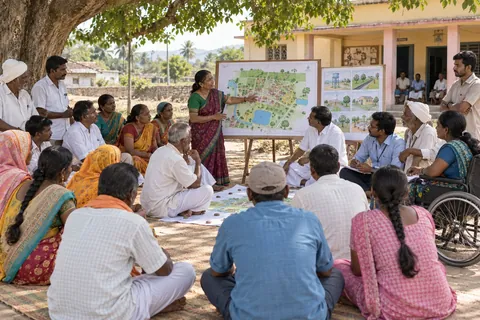
A Gram Panchayat Development Plan (GPDP) is a village panchayat's yearly plan for economic development and social justice, prepared with the Gram Sabha and matched to Finance Commission grants, own revenue and scheme funds. It rests on Article 243G of the Constitution. Special Gram Sabhas on 2 October 2026 were set to open the People's Plan Campaign for 2027-28 plans.
Read the story -
PolityPrelimsGS2
Union Public Service Commission: the constitutional recruiter turns 100
Why in news: The Union Public Service Commission turned 100 on 1 October 2026, dating its history to India's first Public Service Commission of 1926, the government said.
The Union Public Service Commission (UPSC) is the constitutional body, provided for in Articles 315 to 323, that recruits for the Union's services by examination and selection and advises the government on recruitment, promotions and disciplinary cases. It traces its origin to India's first Public Service Commission, constituted on 1 October 1926, and turned 100 on 1 October 2026.
Read the story -
PolityGS2GS3
Foreign Contribution (Regulation) Act, 2010 and its 2026 changes
The Foreign Contribution (Regulation) Act, 2010, administered by the Ministry of Home Affairs, decides who in India may accept money or goods from foreign sources. Funds must enter one State Bank of India account in New Delhi, and political parties, judges and legislators may not take them. Rules amended in June 2026 are in force; an Amendment Bill is pending.
Read the story -
PolityGS2Prelims
Article 17 and the laws against untouchability and caste atrocities
Why in news: Exclusive Special Courts for atrocity cases now number 217 in 15 States and UTs, the government said on 1 October 2026.
Article 17 abolishes untouchability and makes enforcing any disability arising from it an offence. The Protection of Civil Rights Act, 1955 punishes its practice; the Scheduled Castes and the Scheduled Tribes (Prevention of Atrocities) Act, 1989 adds atrocity offences and Special Courts. The Centre gave States and UTs ₹1,423.30 crore in three years to enforce both, the government said.
Read the story -
PolityGS2Prelims
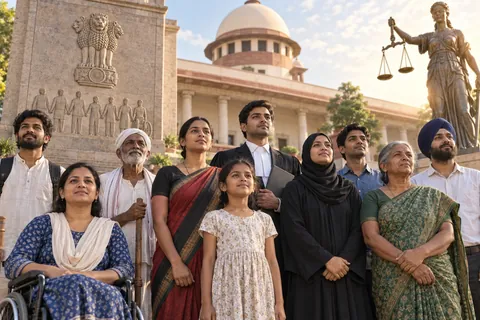
Supreme Court: detain peaceful protesters only by procedure established by law
A two-judge Supreme Court Bench, at a special Sunday sitting on 11 October 2026, directed in an interim order that peaceful, unarmed protesters in Delhi be detained only by procedure established by law. It ordered a Section 163 BNSS prohibitory notice around the Supreme Court taken down, and Metro, rail and internet kept normal. The case returns on 13 October.
Read the story -
PolityGS2Prelims
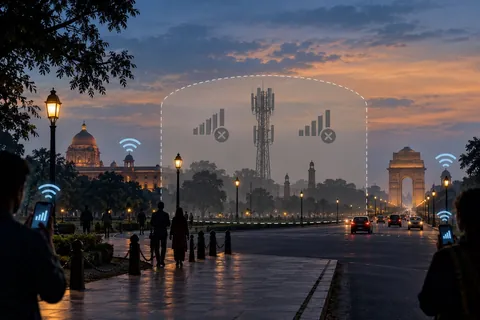
Delhi internet suspensions: how the Telecommunications Act, 2023 governs shutdowns
The Ministry of Home Affairs approved suspending mobile internet within 4 km of Delhi's Janpath–Kartavya Path crossing for 24 hours from 10 pm on 9 October 2026, ahead of a Jantar Mantar protest. A second order covered 500 metres around at least eight temporary jails on 10 October. The first invoked the Telecommunications Act, 2023 and its 2024 suspension Rules.
Read the story







Other subjects
- National 86 stories
- World & IR 92 stories
- Economy 171 stories
- Environment 106 stories
- Sci-Tech 67 stories
- Defence 29 stories
- Miscellany 5 stories