
Polity Current Affairs for UPSC
Every Polity story from the daily editions, newest first, each in short with why it matters for Prelims and Mains. Page 3 of 5.
-
PolityGS2Prelims
PMLA bail: Section 45 twin conditions and Article 21
Why in news: On 14 October 2026 the Supreme Court held that Section 45's twin conditions cannot override Article 21, reiterating its 2024 Manish Sisodia ruling.
Section 45 of the Prevention of Money-laundering Act, 2002 (PMLA) allows bail only after the Public Prosecutor is heard and, if bail is opposed, the court finds reasonable grounds that the accused is not guilty and is unlikely to offend on bail. On 14 October 2026 the Supreme Court reiterated that these twin conditions cannot override Article 21.
Read the story -
PolityGS2Prelims
Uniform Civil Code: Article 44, Goa, Uttarakhand and the Law Commission
Why in news: Maharashtra's Uniform Civil Code Committee launched its website and a 37-question public consultation on 15 October 2026.
A Uniform Civil Code is one set of civil laws on marriage, divorce, succession and related matters for all citizens, whatever their religion. Article 44, a Directive Principle, asks the State to endeavour to secure it. Maharashtra's Uniform Civil Code Committee opened a 37-question public consultation on 15 October 2026, with suggestions due by 15 November.
Read the story -
PolityPrelimsGS1
Women can face gang rape charge under section 70 BNS: Delhi HC
The Delhi High Court has held that "one or more persons constituting a group" in section 70 of the Bharatiya Nyaya Sanhita, 2023, the gang rape provision, is gender-neutral. A woman acting in furtherance of a common intention can be charged with gang rape. A woman alone cannot, because section 63 defines rape as an act by a man.
Read the story -
PolityGS3GS2
Public Accounts Committee, Parliament's financial committees and the CAG
Why in news: The PAC took evidence on 15 October 2026 on a CAG audit of Scheduled Caste scholarships and sought privilege action against six absent chief secretaries.
Parliament scrutinises spending through three financial committees: the Public Accounts Committee (PAC), the Estimates Committee and the Committee on Public Undertakings. The Comptroller and Auditor General (CAG) audits the accounts the PAC examines. On 15 October 2026 the PAC sought privilege action against six chief secretaries who skipped its hearing on a CAG audit of Scheduled Caste scholarships.
Read the story -
PolityGS2Prelims
Scheduled Caste, Scheduled Tribe and backward-class status after religious conversion
Why in news: On 15 October 2026 the Supreme Court upheld the quashing of a Tamil Nadu government order of 9 March 2024 on converts' BC (Muslim) status.
Scheduled Caste status rests on the Constitution (Scheduled Castes) Order, 1950, made under Article 341, whose paragraph 3 admits only Hindus, Sikhs and Buddhists. The Scheduled Tribes Order has no religion clause, and backward classes are notified as communities. On 15 October 2026 the Supreme Court held that conversion alone confers no notified Backward Class Muslim status.
Read the story -
PolityPrelimsGS2
Special Summary Revision of electoral rolls ordered in 14 States, three UTs
The Election Commission of India on 15 October 2026 ordered a Special Summary Revision of electoral rolls in 14 States and three Union Territories: those where the Special Intensive Revision is over, and Assam, which had none. Electors are to be enrolled with reference to 1 January 2027, and final rolls are due early that January.
Read the story -
PolityGS2Prelims
Supreme Court: conversion to Islam brings no automatic backward-class reservation
The Supreme Court on 15 October 2026 upheld the Madras High Court's quashing of a Tamil Nadu order that let converts to Islam claim Backward Class Muslim status. The bench held that conversion by itself confers no membership of a notified backward community in the new faith.
Read the story -
PolityPrelims
Criminal trespass and house-trespass under the Bharatiya Nyaya Sanhita
Why in news: Protesters who climbed Jantar Mantar's locked gates on 13 October 2026, a day after its de-notification as a protest site, face house-trespass charges.
Criminal trespass under section 329 of the Bharatiya Nyaya Sanhita, 2023 (BNS) is entering or staying on property in another's possession to commit an offence or to intimidate, insult or annoy the occupier; entry alone is a civil wrong. House-trespass charges against protesters at a de-notified Delhi protest site have brought it into the news.
Read the story -
PolityGS2Prelims
Overseas Citizen of India cardholders: who qualifies, what rights, what limits
Why in news: In October 2026 the FRRO told actor Imran Khan, a US citizen and OCI cardholder, to leave India by 28 October after a Mumbai protest.
An Overseas Citizen of India (OCI) cardholder is a foreign national registered under Section 7A of the Citizenship Act, 1955, mostly people of Indian origin and foreign spouses of Indians. The card gives a lifelong multiple-entry visa but no vote or public office. A Leave India Notice to a US-citizen actor has put its limits in the news.
Read the story -
PolityGS3Prelims
Forest Rights Act, 2006: who qualifies, which rights, how claims work
Why in news: A Rural Development Ministry RTI reply of 6 October 2026 shows no order on extra workdays for FRA title holders under VB-G RAM G.
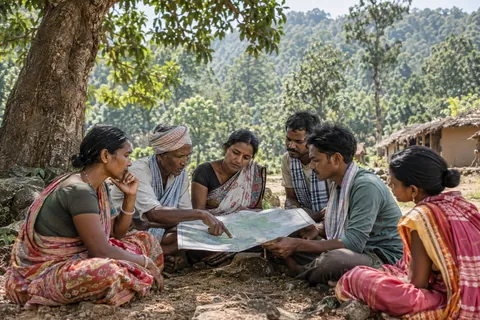
The Forest Rights Act, 2006 recognises the land, forest-produce and community rights of forest-dwelling Scheduled Tribes and other traditional forest dwellers, through claims the Gram Sabha starts. On 6 October 2026, the Rural Development Ministry said in an RTI reply that no order yet gives FRA title holders extra days of work under the new VB-G RAM G Act.
Read the story -
PolityGS2Prelims
Arrest safeguards: Article 22, the BNSS arrest sections and the written-grounds rule
Why in news: On 21 September 2026 the Supreme Court, in Jaskaran Jeet Singh Deol, barred re-arrest after a written-grounds breach without a magistrate's order.
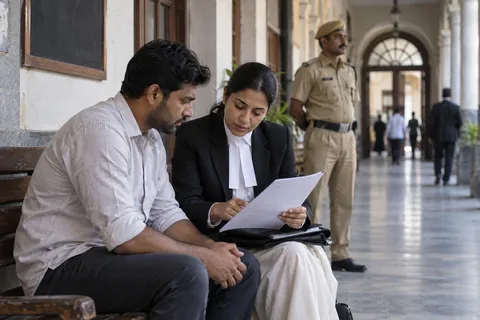
Article 22 of the Constitution entitles an arrested person to be told the grounds, to consult a lawyer of choice and to see a magistrate within 24 hours; the Bharatiya Nagarik Suraksha Sanhita, 2023 sets police arrest duties. On 21 September 2026 the Supreme Court held written grounds binding and put re-arrest after a breach under a magistrate.
Read the story -
PolityGS2GS1
Protecting tribal languages: constitutional safeguards, SPPEL and Adi Vaani
Why in news: The Ministry of Tribal Affairs held the first meeting of its Working Group on Tribal Languages on 15 October 2026, discussing a proposed roadmap.
India protects tribal and endangered languages through Article 29's right to conserve a distinct language, Article 350A's mother-tongue teaching at the primary stage and Article 350B's Special Officer for linguistic minorities, backed by the Education Ministry's SPPEL and the Tribal Affairs Ministry's Adi Vaani. The Ministry's new Working Group on Tribal Languages first met on 15 October 2026.
Read the story -
PolityPrelimsGS2
Rail accident compensation: no-fault liability, Claims Tribunal and travel insurance
Why in news: A Supreme Court order of 6 October 2026 directs that counter tickets be insured in the same manner as online tickets from 27 October 2026.
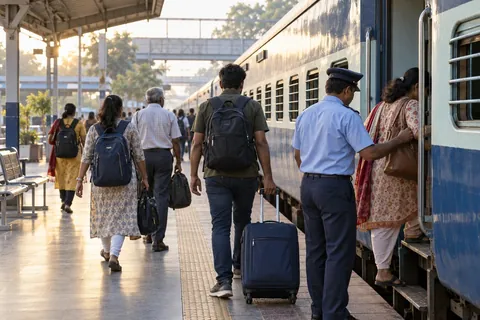
Sections 124 and 124A of the Railways Act, 1989 make the railway administration compensate passengers killed or injured in train accidents and untoward incidents, fault or no fault; the Railway Claims Tribunal decides claims. Optional insurance covers only e-tickets. A Supreme Court order of 6 October 2026 directs that counter tickets be insured in the same manner from 27 October.
Read the story -
PolityGS2Prelims
Article 243E: Allahabad HC orders UP panchayat polls within three months
The Allahabad High Court on 14 October 2026 directed the Uttar Pradesh government and the State Election Commission to complete three-tier panchayat polls within three months. A division bench upheld outgoing gram pradhans serving as administrators meanwhile. The polls will follow existing rules with the 27 per cent reservation provision, without waiting for the State's OBC Commission.
Read the story -
PolityPrelimsGS2
Supreme Court: professional course fees fixed before admission, not midstream
The Supreme Court on 14 October 2026 ruled that authorities must notify the fee for a whole professional course before students take admission, allowing mid-course changes only in exceptional cases such as unforeseen rises in expenditure. The bench of Justices P S Narasimha and Alok Aradhe held that fee fixation committees have a statutory basis and must be institutionalised.
Read the story -
PolityGS2Prelims
Privacy: Supreme Court quashes police notice to X for journalist's data
The Supreme Court on 14 October 2026 quashed a Ghaziabad police notice asking X for a journalist's social-media data from 1 June 2026 onwards, in a road-rage case registered on 18 August. It held that, even after an FIR, police may seek such data only when shown proportional and other means of investigation are inadequate.
Read the story -
PolityGS2Prelims
Law Ministry enlists National Law Universities against pendency in 100 districts
The Ministry of Law and Justice has begun a research-based mission against case pendency in 100 hotspot judicial districts and has asked 19 National Law Universities from 16 States to diagnose each district's causes of delay and suggest remedies. Per the ministry, over 5.8 crore cases are pending nationwide, most of them in district and subordinate courts.
Read the story -
PolityGS2GS1
Three-language formula: CABE 1956 to NEP 2020 and CBSE's R1-R2-R3
Why in news: On 28 September 2026, the Supreme Court directed that Class 6 CBSE students may be granted the third-language exemption already given to Class 7.
The three-language formula sets the languages Indian schoolchildren study. Devised by the Central Advisory Board of Education in 1956 and adopted by the National Policy on Education 1968, it was loosened by NEP 2020: no language imposed on any State; two of three native to India. On 28 September 2026, the Supreme Court extended CBSE's third-language relief to Class 6.
Read the story -
PolityPrelimsGS2
Section 7 of the Aadhaar Act: Aadhaar as a condition for subsidies
Section 7 of the Aadhaar Act, 2016 lets the Centre or a State make Aadhaar a condition for a subsidy, benefit or service paid from the Consolidated Fund, while offering other identification to anyone without a number. The Supreme Court upheld it in 2018. Delhi has now invoked it to require Aadhaar for its electricity subsidy.
Read the story -
PolityGS2Prelims
Free legal aid under Article 39A: NALSA, Lok Adalats and undertrial bail
Article 39A of the Constitution directs the State to provide free legal aid. The Legal Services Authorities Act, 1987 delivers it through the National Legal Services Authority (NALSA) and its State, district and taluk bodies. The Union Home Ministry has asked States to use section 479 of the Bharatiya Nagarik Suraksha Sanhita, 2023 to bail eligible undertrials continuously.
Read the story -
PolityGS2Prelims
158 refugees get citizenship in Ahmedabad, 126 under the CAA
At an Ahmedabad district administration ceremony on 13 October 2026, 158 migrants received Indian citizenship certificates: 126 under the Citizenship (Amendment) Act, 2019 (CAA) and 32 through the Collector. Its route, Section 6B of the Citizenship Act, 1955, covers Hindu, Sikh, Buddhist, Jain, Parsi and Christian migrants from Afghanistan, Bangladesh and Pakistan who entered India by 31 December 2014.
Read the story -
PolityGS2Prelims
Section 8(1)(j) of the RTI Act and its DPDP amendment
Why in news: On 7 August 2026 the Supreme Court gave the Centre two weeks to reply to petitions challenging the DPDP Act's rewrite of RTI Section 8(1)(j).
Section 8(1)(j) of the Right to Information Act, 2005 lets authorities withhold personal information. It once covered only information unrelated to public activity or interest, or whose disclosure unwarrantedly invaded privacy. Section 44(3) of the Digital Personal Data Protection Act, 2023 cut it to "information which relates to personal information". Petitions against the change await a Supreme Court larger Bench.
Read the story -
PolityGS2Prelims
Tenth Schedule: the anti-defection law and resignation of legislators
Why in news: On 13 October 2026, the Madras High Court held that accepting MLAs' resignations does not end disqualification petitions pending against them under the Tenth Schedule.
The Tenth Schedule, added by the 52nd Amendment in 1985, disqualifies a legislator who voluntarily leaves the party or defies its whip, and makes the Speaker or Chairman the judge. Resignation under Articles 101(3)(b) and 190(3)(b) is a separate route. On 13 October 2026, the Madras High Court held that accepting resignations does not end pending disqualification petitions.
Read the story -
PolityPrelimsGS2
Mission Karmayogi and the iGOT Karmayogi platform
Why in news: On 13 October 2026, the Ministry of Tribal Affairs and Karmayogi Bharat signed an MoU to train Adi Karmayogi Volunteers on iGOT Karmayogi.
Mission Karmayogi, the National Programme for Civil Services Capacity Building approved by the Union Cabinet in September 2020, trains public servants for their roles through the iGOT Karmayogi online platform, run by the not-for-profit company Karmayogi Bharat. On 13 October 2026, the Ministry of Tribal Affairs signed an MoU extending the platform to Adi Karmayogi Volunteers.
Read the story -
PolityGS2Prelims
Article 190(3): Madras HC upholds Speaker's acceptance of MLAs' resignations
The Madras High Court's First Bench on 13 October 2026 upheld the Tamil Nadu Assembly Speaker's acceptance of six MLAs' resignations, tendered between 25 May and 29 June 2026. The Speaker had told the court he accepted them under the proviso to Article 190(3)(b) after the members confirmed they resigned of their own free will.
Read the story -
PolityGS2Prelims
Section 30 FSS Act: Uttarakhand bans tobacco gutka for a year
Uttarakhand's food safety commissioner has prohibited the manufacture, storage, distribution and sale of gutka, pan masala and other food products containing tobacco or nicotine for one year from 13 October 2026. The order uses section 30(2)(a) of the Food Safety and Standards Act, 2006 and cites Regulation 2.3.4, which bars tobacco and nicotine as food ingredients.
Read the story -
PolityGS2Prelims
Article 348: the language of the Supreme Court and High Courts
Article 348 makes English the language of all proceedings in the Supreme Court and every High Court until Parliament provides otherwise. A Governor, with the President's previous consent, may allow Hindi or the State's official language in a High Court's proceedings, as in Rajasthan, Uttar Pradesh, Madhya Pradesh and Bihar. The Supreme Court also publishes AI-translated judgments in Indian languages.
Read the story -
PolityGS2Prelims
The Governor: appointment, tenure and powers (Articles 153-163)
Why in news: On 12 October 2026, the President appointed Governors in six States, ending a dual charge under which one Governor also held Tamil Nadu.
The Governor is the constitutional head of a State, appointed by the President under Article 155 and holding office during the President's pleasure under Article 156, for a five-year term. Under Article 163, the Governor acts on the aid and advice of the Council of Ministers, except in discretionary matters. On 12 October 2026, Governors were appointed in six States.
Read the story -
PolityPrelimsGS2
ECI publishes Punjab's final electoral roll after Special Intensive Revision
The Election Commission of India (ECI) published Punjab's final electoral roll for all 117 Assembly constituencies on 12 October 2026, completing the Special Intensive Revision (SIR). Per the ECI's figures, the roll lists 2,01,00,727 electors, 13,60,316 fewer than the 2,14,61,043 registered when the revision began, but 3.64% more than the draft roll.
Read the story -
PolityPrelimsGS2
Electoral rolls and the Special Intensive Revision (RP Act, 1950)
Why in news: On 12 October 2026, the Election Commission published Punjab's final electoral rolls for all 117 Assembly constituencies after the Special Intensive Revision.
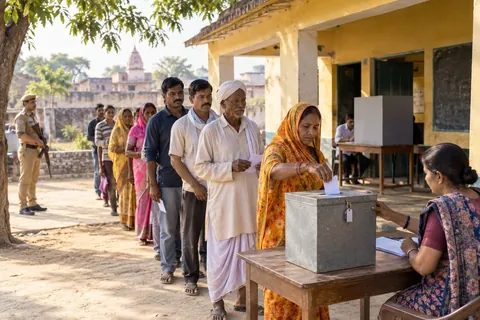
An electoral roll is the list of voters for a constituency, prepared under the Representation of the People Act, 1950 under the Election Commission's control. Section 21 provides for revising it, and section 21(3) lets the Commission order a special revision at any time. On 12 October 2026, Punjab's final roll after the Special Intensive Revision was published.
Read the story










Other subjects
- National 86 stories
- World & IR 92 stories
- Economy 171 stories
- Environment 106 stories
- Sci-Tech 67 stories
- Defence 29 stories
- Miscellany 5 stories