
Habeas corpus: High Court frees Goa protesters, noting no prohibitory order
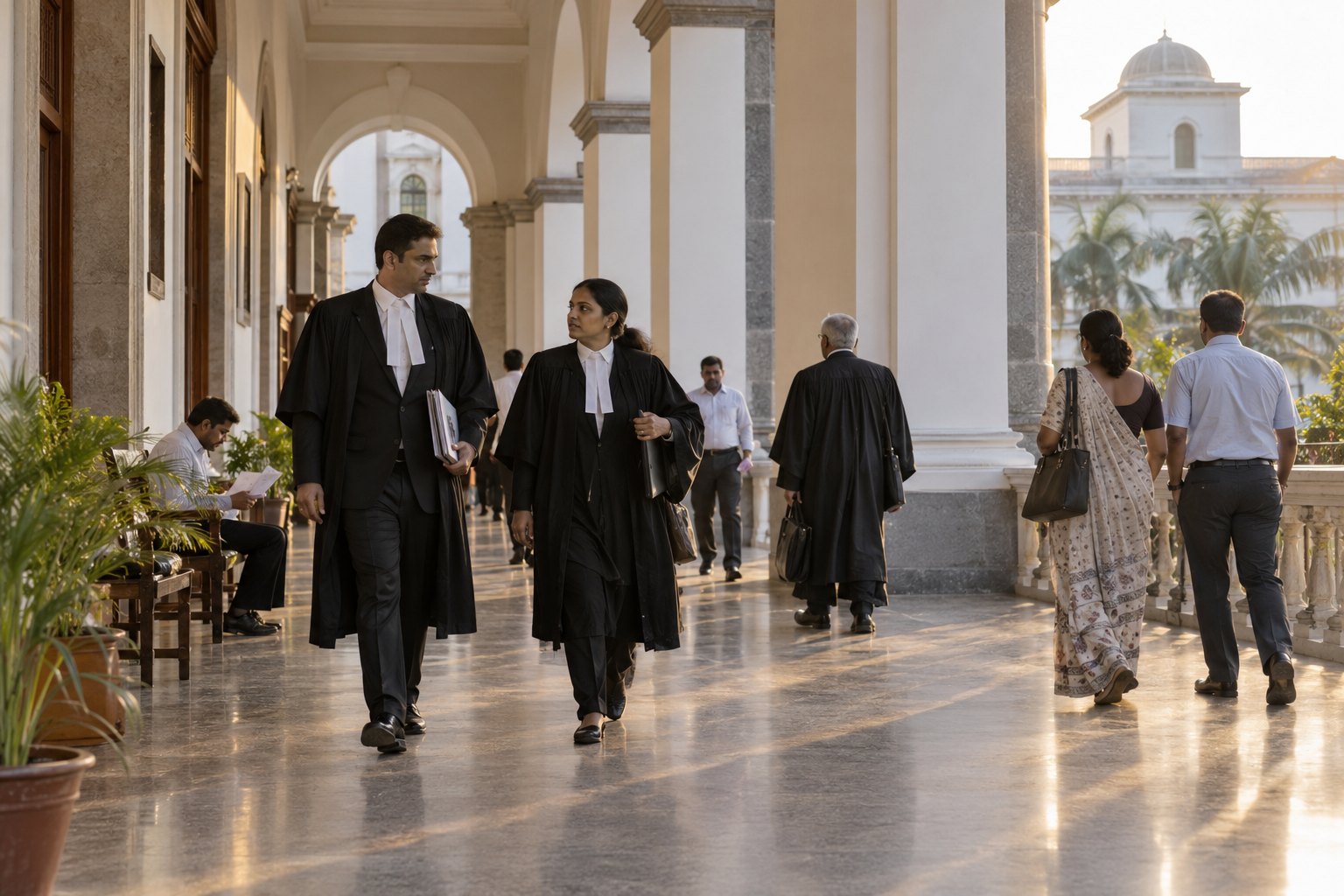
The High Court of Bombay at Goa late on 11 October ordered police to release protesters detained at Panaji's Azad Maidan. On habeas corpus petitions, a Division Bench observed that with no prohibitory order under Section 163 of the BNSS in force, the detention "may not have been authorised". The interim order sought affidavits for the 12 October hearing.
Syllabus: GS2 · Constitution; Prelims · Polity & Governance; GS2 · Executive & Judiciary
Why it matters
A person who joins a peaceful gathering can be removed and held only under a power that some law gives. The police relied on a refusal of permission; the Bench's interim view turned on the absence of any Section 163 order, and the detainees were freed within hours of being detained. The case shows habeas corpus at work: judges sat on a Sunday night, had the people released, and asked the officers involved to explain the detention on affidavit before ruling on its legality. The wider question is how the State can keep public order around protests without turning permission rules into a ban on dissent.
Prelims pointers
- Article 19(1)(b): citizens' right to assemble peaceably and without arms. Article 19(3): reasonable restrictions by law, for sovereignty and integrity of India or public order.
- Article 21: no person shall be deprived of life or personal liberty except according to procedure established by law.
- Article 22: an arrested person must be told the grounds, may consult a lawyer of choice, and must be produced before the nearest magistrate within 24 hours.
- Habeas corpus ('to have the body'): orders a detainee produced and the detention justified; it lies against public authorities and private persons alike.
- Article 32 is itself a fundamental right, for Part III rights; Article 226 is wider, letting High Courts issue writs 'for any other purpose' too.
- Section 163, BNSS (formerly CrPC Section 144): a District Magistrate, Sub-divisional Magistrate or specially empowered Executive Magistrate may restrain gatherings in urgent cases.
- A Section 163 order lasts at most two months; the State Government may, by notification, extend it by up to six months more.
- Anuradha Bhasin v Union of India (2020): prohibitory orders must be reasoned and proportionate, are open to judicial review, and cannot suppress legitimate expression of grievance.
Practise a UPSC-style question
With reference to the writ jurisdiction of courts in India, consider the following statements:
1. The power to issue writs "for any other purpose", besides enforcing Fundamental Rights, is conferred on the Supreme Court by Article 32.
2. The right to move the Supreme Court under Article 32 for the enforcement of Fundamental Rights is itself a Fundamental Right.
Which of the statements given above is/are correct?
- (a) 1 only
- (b) 2 only
- (c) Both 1 and 2
- (d) Neither 1 nor 2
Show the answer
Answer: (b) 2 only
1 is incorrect: the words "for any other purpose" are in Article 226, which gives High Courts the wider writ power; Article 32 covers only the rights in Part III. 2 is correct: Article 32 sits in Part III, so the right to move the Supreme Court is itself a Fundamental Right.
More from the 12 October 2026 edition
- Stabilisation policy's microfoundations win Hall, Woodford the 2026 economics Nobel Economy
- Seafarer safety and freedom of navigation: two Indians missing off Oman World & IR
- Removing a CEC under Article 324(5): what Keralam's Assembly resolution can do Polity
- State Public Service Commissions: Maharashtra sets up a paper-leak inquiry Polity
- Indians in the Gulf: India condemns Houthi-claimed attack on Riyadh airport World & IR
- NDRF drought aid: central team ends Maharashtra survey; memorandum next National
- Chennai Metro Phase-II, a 118.9 km project, opens its first stretch Economy
- Nino 3.4 sea temperature hits record as El Nino strengthens: Copernicus Environment
- Anti-submarine shallow water craft: Navy commissions third Cochin-built ship, INS Mangrol Defence
- India-Canada CEPA talks: 300-delegate Canadian trade mission begins India visit World & IR
- OHCHR voices concern on Delhi detentions; India calls it interference World & IR
- Census counts residents, not citizens: Mizoram to include refugees Polity