
Supreme Court: professional course fees fixed before admission, not midstream
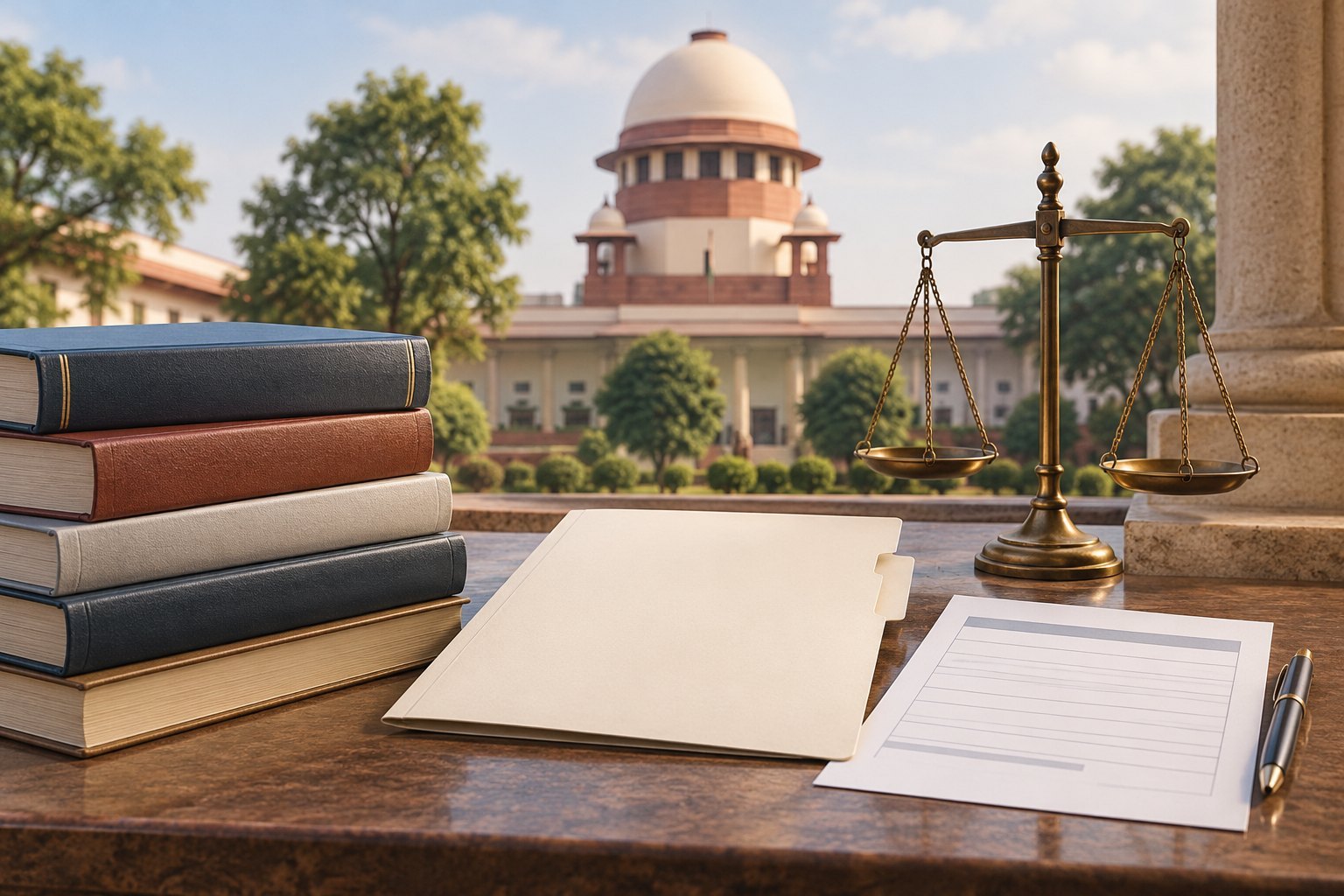
The Supreme Court on 14 October 2026 ruled that authorities must notify the fee for a whole professional course before students take admission, allowing mid-course changes only in exceptional cases such as unforeseen rises in expenditure. The bench of Justices P S Narasimha and Alok Aradhe held that fee fixation committees have a statutory basis and must be institutionalised.
Syllabus: Prelims · Polity & Governance; GS2 · Statutory & Regulatory Bodies; GS2 · Health, Education & Human Resources
Why this matters for UPSC
GS2 (education, statutory bodies, fundamental rights): Prelims can ask what T.M.A. Pai, Islamic Academy and P.A. Inamdar held and what Article 19(6) permits; Mains, on regulating private professional education.
Why it matters
A family that picks an engineering or medical college plans for four or five years of payments. If a college can raise the fee in the middle of the course, a student who cannot pay may have to drop out after spending years and savings, with no real chance to move elsewhere. A fee fixed before admission lets families compare colleges and borrow the right amount. Colleges still need enough income to pay teachers and run labs, so an independent committee that checks their costs keeps fees fair to both sides. The larger issue is how a country that relies on private colleges for professional education keeps them affordable without starving them of funds.
Prelims pointers
- T.M.A. Pai Foundation v State of Karnataka (2002): eleven-judge Bench; rigid fee structures imposed by the State are an unacceptable restriction on private unaided institutions.
- Islamic Academy of Education (2003): five-judge Bench; a fee approved by the State committee binds the institution for three years, after which revision may be sought.
- P.A. Inamdar v State of Maharashtra (2005): seven-judge Bench; admission and fee committees violate neither Article 19(1)(g) nor Article 30(1).
- Article 226: every High Court may issue writs, including mandamus and certiorari, to any authority for enforcing fundamental rights and for any other purpose.
- Article 19(6): permits reasonable restrictions on the Article 19(1)(g) right in the interests of the general public, and laws on professional or technical qualifications.
- AICTE: set up in November 1945 as an advisory body; its purview covers engineering, technology, architecture, management, pharmacy and other technical programmes.
Practise a UPSC-style question
With reference to the T.M.A. Pai Foundation judgment of the Supreme Court (2002), consider the following statements:
1. It was delivered by a Bench of seven judges of the Supreme Court.
2. It held that establishing and running an educational institution is an occupation under Article 19(1)(g).
3. It held that the State may fix a rigid fee structure for private unaided institutions.
Which of the statements given above is/are correct?
- (a) 1 only
- (b) 2 only
- (c) 3 only
- (d) 1, 2 and 3
Show the answer
Answer: (b) 2 only
Answer: (b) 2 only. Only the occupation holding is right; the Bench size and the fee holding are both wrong.
Statement 1: incorrect. T.M.A. Pai Foundation (2002) was decided by eleven judges; seven judges sat in P.A. Inamdar (2005).
Statement 2: correct. The eleven-judge Bench treated running an educational institution as an occupation protected by Article 19(1)(g), even without profit.
Statement 3: incorrect. The Court listed fixing a rigid fee structure among unacceptable restrictions; institutions may set a reasonable fee, without profiteering or capitation fee.
Eliminate: Judge statement 2 first: the occupation holding is the core of the case, so statement 2 is correct. Out: (a), (c).
Eliminate: Statement 3 is incorrect, since the Court rejected a rigid fee structure imposed by the State. Out: (d).
Trap: Look-alike names. The seven-judge Bench of P.A. Inamdar is pinned on T.M.A. Pai, and the line of fee cases blurs together.
Remember: T.M.A. Pai (2002), 11 judges: education is an occupation under Article 19(1)(g); reasonable fee, no profiteering.
More from the 15 October 2026 edition
- IMF Fiscal Monitor urges better tax design as sovereign yields rise Economy
- DoT orders Calling Name Presentation on 4G and above from 1 November National
- India asks OHCHR at UN Third Committee for PoK rights report World & IR
- Article 243E: Allahabad HC orders UP panchayat polls within three months Polity
- India leads IBSAMAR IX naval exercise with Brazil, South Africa Defence
- Cholera spreads across 21 DR Congo provinces, WHO warns Sci-Tech
- NITI Aayog paper proposes 9.5% social discount rate for public projects Economy
- UN Security Council renews Haiti sanctions regime for a year World & IR
- Privacy: Supreme Court quashes police notice to X for journalist's data Polity
- Draft rules propose BS-VII emission norms for new cars from April 2029 Environment
- Keralam Bill proposes registering elder-care centres, recognising living wills National
- NITI Aayog framework ties State data-centre approvals to water, power Economy