
Polity Current Affairs for UPSC
Every Polity story from the daily editions, newest first, each in short with why it matters for Prelims and Mains. Page 2 of 5.
-
PolityGS3GS2
NITI Aayog: the 2015 resolution, its councils and cooperative federalism
Why in news: An All India Radio report of 19 October 2026 described NITI Aayog's Governing Council, State Support Mission and Aspirational Districts Programme.
NITI Aayog (National Institution for Transforming India) is the Union Government's policy think tank, constituted by a Cabinet resolution that took effect on 1 January 2015 and replaced the Planning Commission. The Prime Minister chairs it, and it works with States through its Governing Council and programmes. An All India Radio series revisited this model on 19 October 2026.
Read the story -
PolityGS2GS3
PRAGATI: how the Prime Minister's ICT platform reviews projects, schemes and grievances
Why in news: All India Radio reported on 19 October 2026 that the Prime Minister has chaired 53 PRAGATI meetings so far.
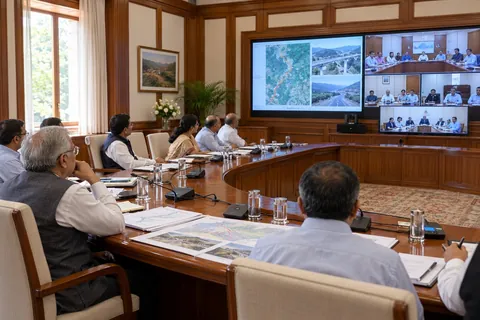
PRAGATI (Pro-Active Governance and Timely Implementation) is an ICT-enabled platform, launched on 25 March 2015, on which the Prime Minister reviews delayed projects, government schemes and public grievances with Union Secretaries and State Chief Secretaries over video-conference. All India Radio reported on 19 October 2026 that it has sped up stalled infrastructure projects.
Read the story -
PolityPrelimsGS2
CCPA uses Consumer Protection Act to curb online explosives sales
The Central Consumer Protection Authority (CCPA) said on 19 October 2026 that 3,940 sellers and listings of explosives were removed from seven online platforms after its action under the Consumer Protection Act, 2019. It has passed three final orders of Rs 10 lakh each. Ammonium nitrate, gunpowder, picric acid and PETN need a licence under the Explosives Act, 1884.
Read the story -
PolityPrelimsGS2
Section 17A, Prevention of Corruption Act: bribe demand needs no approval
The Supreme Court ruled on 16 October 2026 that Section 17A of the Prevention of Corruption Act, 1988 does not shield a public servant accused of demanding a bribe. Prior approval to investigate is needed only where the offence relates to a decision or recommendation made in official duty. The Bench upheld a corruption charge against a Rajasthan police constable.
Read the story -
PolityGS2Prelims
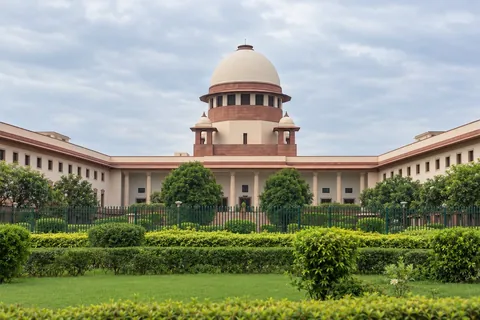
State is custodian, not owner, of temple property: Supreme Court
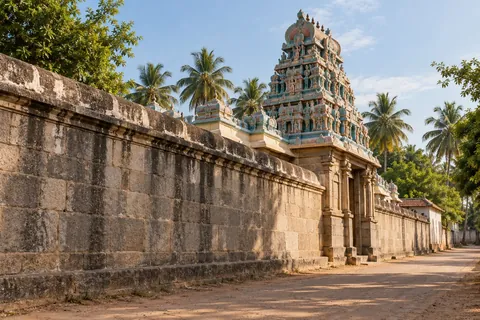
The Supreme Court on 16 October 2026 held that the State is custodian and regulator of temple property, not its owner. It voided a 2017 gift of an Erode temple's inam land to the Tamil Nadu government under Section 41(1) of the Tamil Nadu Hindu Religious and Charitable Endowments Act, 1959. The Taluk Office built there stays, as a tenant.
Read the story -
PolityPrelimsGS2
Rule 93: who may inspect election records, and the 2024 amendment
Why in news: On 14 October 2026 the Supreme Court pulled up the ECI for failing to trace the 2023 counting video of Karnataka's Sringeri seat.
Rule 93 of the Conduct of Elections Rules, 1961 keeps ballot papers and other sealed election packets shut except on a court's order, and opens other papers to public inspection. A December 2024 amendment limited that to papers the rules specify, excluding CCTV and webcast footage. The Supreme Court on 14 October 2026 questioned a missing counting video.
Read the story -
PolityPrelimsGS2
Parliamentary privilege: Articles 105 and 194, contempt and Committee of Privileges
Why in news: On 15 October 2026 the Public Accounts Committee decided to give the Speaker notice of a privilege motion against Chief Secretaries who skipped its meeting.
Parliamentary privilege is the set of rights and immunities that each House of Parliament or a State Legislature, and its members and committees, hold under Articles 105 and 194 of the Constitution. A House may punish breach or contempt, even by outsiders. Parliament's Public Accounts Committee has decided to seek privilege action against State Chief Secretaries who skipped its meeting.
Read the story -
PolityGS3GS2
Jan Vishwas Acts: decriminalising minor offences in Central laws
Why in news: An All India Radio feature on 17 October 2026 presented the Jan Vishwas Act as an instance of the Government's service and good-governance agenda.
The Jan Vishwas Acts amend dozens of Central laws together, replacing imprisonment and criminal fines for minor, procedural lapses with civil penalties, warnings and officer-led adjudication. The 2023 Act covered 183 provisions in 42 Acts; the 2026 Act, per PIB, 784 provisions in 79 Acts. An All India Radio feature on 17 October 2026 revisited the reform.
Read the story -
PolityGS2Prelims
Article 371C: Manipur's hill councils outside the Sixth Schedule
Why in news: Clashes hit Manipur's Kamjong, Ukhrul and Kangpokpi hill districts on 9-10 October 2026; the Hill Areas Committee had met on 18 September.
Manipur's hill areas lie outside the Sixth Schedule: under Article 371C, the Assembly's Hill Areas Committee examines Bills and plans for them, and six district councils under a 1971 Act handle local services but cannot legislate. The committee met on 18 September 2026 after a prolonged gap; clashes hit Kamjong, Ukhrul and Kangpokpi hill districts on 9-10 October.
Read the story -
PolityGS2Prelims
Police accountability: Supreme Court panel opens portal on Jantar Mantar violence
The Supreme Court's High Powered Enquiry Committee on the July 2026 violence at Jantar Mantar and places outside Delhi has opened a complaints portal, hpec.nic.in, the Ministry of Home Affairs said on 17 October 2026. Protesters and affected police personnel may both file. Complaints on pellet guns, targeted violence against women protesters and property destruction on either side get priority.
Read the story -
PolityGS2Prelims
Common High Court for Jammu and Kashmir and Ladakh, and its benches
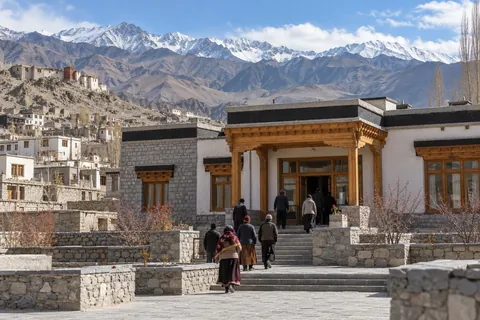
Why in news: On 18 October 2026 the Ladakh Bench of the High Court of Jammu and Kashmir and Ladakh was inaugurated at Leh.
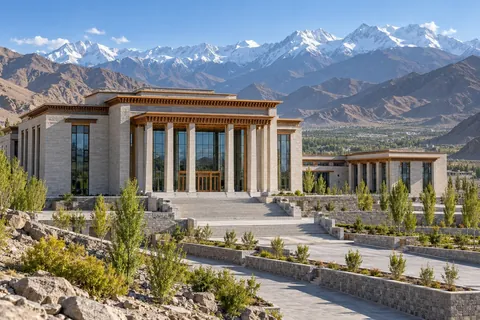
A common High Court serves more than one State or Union territory. Section 75 of the Jammu and Kashmir Reorganisation Act, 2019 made the High Court of Jammu and Kashmir common to the Union territories of Jammu and Kashmir and Ladakh. Under a President's Article 240 regulation, its Ladakh Bench opened at Leh on 18 October 2026.
Read the story -
PolityGS2Prelims
Human trafficking law: Article 23, ITPA, BNS Section 143 and AHTUs
Why in news: Reported on 18 October 2026: the Supreme Court directed all States and UTs to notify Anti-Human Trafficking Units as police stations.
Article 23 of the Constitution prohibits traffic in human beings and forced labour. The Immoral Traffic (Prevention) Act, 1956 targets trafficking for commercial sexual exploitation, while Section 143 of the Bharatiya Nyaya Sanhita, 2023 defines trafficking by action, means and purpose. The Supreme Court has now directed States and UTs to notify Anti-Human Trafficking Units as police stations.
Read the story -
PolityPrelimsGS2
Section 125A: Supreme Court allows private complaints over false nomination affidavits
The Supreme Court on 16 October 2026 held that a private citizen's criminal complaint under Section 125A of the Representation of the People Act, 1951, over false or concealed information in a candidate's nomination affidavit is maintainable. The bar in Section 195 of the Code of Criminal Procedure, which needs a public servant's or court's complaint, does not apply.
Read the story -
PolityGS2Prelims
The triple test for OBC reservation in local bodies
Why in news: On 14 October 2026 the Allahabad High Court ordered Uttar Pradesh's panchayat polls within three months while a dedicated OBC commission's inquiry continues.
The triple test is the Supreme Court's three-part condition for reserving panchayat and municipal seats for Other Backward Classes: a dedicated commission's empirical inquiry, a quota fixed local body-wise on its recommendations, and total SC, ST and OBC reservation within 50%. It is back in focus as Uttar Pradesh must complete panchayat polls within three months.
Read the story -
PolityGS2
Delimitation of constituencies: Articles 82, 170 and the 2026 freeze
Why in news: On 16 October 2026 the Congress President asked the Prime Minister for an all-party meeting before any new delimitation proposal is finalised.
Delimitation redraws Lok Sabha and Assembly constituencies and reallocates seats after a Census, under Articles 82 and 170 of the Constitution. Each State's share of seats stays frozen on the 1971 Census until the first Census after 2026. An amendment Bill to end the freeze failed in April, the Congress President says; he now seeks all-party talks.
Read the story -
PolityPrelimsGS2
Digital Personal Data Protection Act, 2023 and the DPDP Rules, 2025
Why in news: Rule 4 of the DPDP Rules, 2025, on registering Consent Managers, comes into force in November 2026, one year after the Rules' Gazette publication.
The Digital Personal Data Protection Act, 2023 governs how organisations, called Data Fiduciaries, collect and use people's digital personal data, mainly on consent, enforced by a Data Protection Board of India. Its Rules, published in the Gazette on 13 November 2025, phase in duties over eighteen months; the rule on registering Consent Managers takes effect in November 2026.
Read the story -
PolityGS2Prelims
Talaq and the law: Shayara Bano and the 2019 Act
Why in news: On 16 October 2026 the Supreme Court sought the Centre's response to a plea for guidelines on all forms of talaq.
Instant triple talaq (talaq-e-biddat) was set aside 3:2 by the Supreme Court in Shayara Bano v Union of India (2017). The Muslim Women (Protection of Rights on Marriage) Act, 2019 makes it void, illegal and punishable with up to three years' jail. On 16 October 2026 the Court issued notice on a plea for guidelines on all forms of talaq.
Read the story -
PolityGS2Prelims
Supreme Court: internet access a fundamental right, children included
The Supreme Court, in an order dated 15 October 2026, held that the right to access and use the internet is a fundamental right of every individual, children included, under Article 21 read with Article 19(1)(a). It called blanket age-based bans disproportionate and directed the Union to create a national database for removing child sexual abuse material.
Read the story -
PolityPrelimsGS2
Symbols Order paragraph 15: how the ECI settles party splits
Why in news: Officials said on 16 October the ECI will hear rival All India Trinamool Congress factions on 30 October, after a 17 September interim order.
Paragraph 15 of the Election Symbols (Reservation and Allotment) Order, 1968 lets the Election Commission of India decide which rival group of a recognised party is that party, and so who keeps its reserved symbol. The Order fixes no test. The Commission will hear rival All India Trinamool Congress factions on 30 October 2026.
Read the story -
PolityGS2Prelims
Constitutional tort: State compensation for violating Article 21
Why in news: On 16 October 2026, a Supreme Court bench remarked it could award constitutional tort compensation if curbs over a Delhi protest proved unlawful.
Constitutional tort is the public-law remedy by which the Supreme Court (Article 32) or a High Court (Article 226) makes the State compensate a person whose fundamental right, chiefly Article 21, its officers violated. Sovereign immunity is no defence. On 16 October 2026, a Supreme Court bench remarked it could invoke this jurisdiction if Delhi protest curbs unlawfully hurt traders.
Read the story -
PolityGS4GS2
Public Examinations (Prevention of Unfair Means) Act, 2024 and its Rules
Why in news: On 13 October 2026, High-Powered Task Force chair Nandan Nilekani suggested last-minute papers from a large question bank, a suggestion, not a decision.
The Public Examinations (Prevention of Unfair Means) Act, 2024 punishes paper leaks and rigging in Central recruitment and entrance tests, including those of the UPSC, SSC, Railway Recruitment Boards, IBPS and the National Testing Agency. A 2026 amendment raised its penalties. On 13 October 2026, the exam-reform task force chair suggested last-minute papers from a question bank.
Read the story -
PolityPrelimsGS2
National Medical Commission: the NMC Act, 2019 and its four boards
Why in news: An NMC public notice of 15 October 2026 allowed eligible MBBS students admitted from 2019-20 a fifth First Professional examination attempt.
The National Medical Commission (NMC), set up under the National Medical Commission Act, 2019, regulates medical education and doctors through four autonomous boards and replaced the Medical Council of India in September 2020. On 15 October 2026 it gave eligible MBBS students admitted from 2019-20 one extra attempt at the First Professional examination.
Read the story -
PolityGS2Prelims
Chief Election Commissioner: appointment, removal and Section 16 immunity
Why in news: On 13 October 2026 the Supreme Court issued notice to the Centre and the Election Commission on ADR's plea against Section 16.
Under a 2023 Act, the President names the Chief Election Commissioner and other Election Commissioners on the recommendation of a Selection Committee: the Prime Minister, the Leader of Opposition and a Cabinet Minister. Section 16 shields serving and former commissioners from civil and criminal proceedings for official acts. The Supreme Court has sought replies on a challenge to it.
Read the story -
PolityGS2Prelims
President's Article 240 regulation recasts Ladakh hill councils for seven districts
The President has made the Ladakh Autonomous Hill Development Councils (Amendment) Regulation, 2026 under Article 240, published in the Gazette on 16 October 2026. It adapts the 1997 Act to the Union territory of Ladakh, with a council for each of its seven districts and 7 to 24 elected seats apiece. It takes effect on a date the Administrator notifies.
Read the story -
PolityGS2GS3
Finance Commission under Article 280 and the 16th Finance Commission's award
The Finance Commission, set up by the President under Article 280 at least every five years, recommends how Union taxes are split with the States and shared among them. The 16th Finance Commission kept the States' share at 41% for 2026-31, a recommendation the Union accepted on 1 February 2026, and added contribution to GDP to the sharing formula.
Read the story -
PolityGS2Prelims
Transgender rights in India: NALSA, the 2019 Act and its 2026 amendment
The Supreme Court's NALSA judgment of 2014 recognised transgender persons as a third gender with a right to self-identify, and the Transgender Persons (Protection of Rights) Act, 2019 put it into law. A 2026 amendment, in force since 25 May 2026, narrowed the definition and dropped self-perceived identity; challenges to it await the Supreme Court.
Read the story -
PolityPrelimsGS2
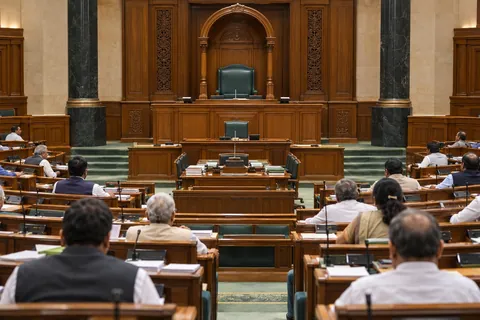
Speaker and Deputy Speaker of the Lok Sabha: Articles 93-97
Why in news: PRS's review of the Monsoon Session, 20 July to 13 August 2026, notes the Lok Sabha still has no Deputy Speaker.
The Speaker and Deputy Speaker are the Lok Sabha's presiding officers, chosen by the House from among its members under Article 93 and removable by a resolution passed by a majority of all its then members after 14 days' notice. PRS Legislative Research's Monsoon Session 2026 review records over seven years without a Deputy Speaker.
Read the story -
PolityGS2Prelims
Enemy property: the Enemy Property Act, 1968 and its Custodian
Why in news: On 15 October 2026, West Bengal's Chief Minister said the Centre would make the State government custodian of enemy properties in the State.
Enemy property is property left in India by people who took the nationality of a country that fought India, Pakistan or China. A Custodian under the Union Home Ministry holds and sells it under the Enemy Property Act, 1968. On 15 October 2026, West Bengal's Chief Minister said the State would become its custodian there.
Read the story -
PolityPrelimsGS2
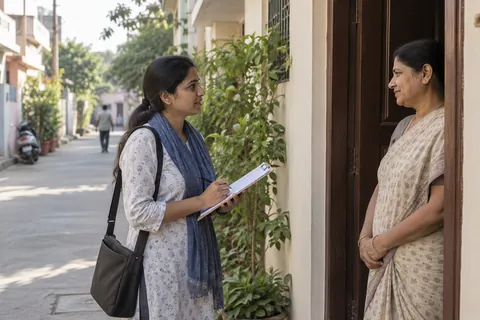
Census Rules, 1990 amended to spell out who can be enumerators
The Ministry of Home Affairs on 16 October 2026 notified the Census (Amendment) Rules, 2026 under section 18(1) of the Census Act, 1948. Teachers of aided and unaided private institutions, and clerks and officials of public sector undertakings, banks and companies, are now listed as eligible enumerators. States and Union territories may also appoint any other suitable person.
Read the story -
PolityGS2Prelims
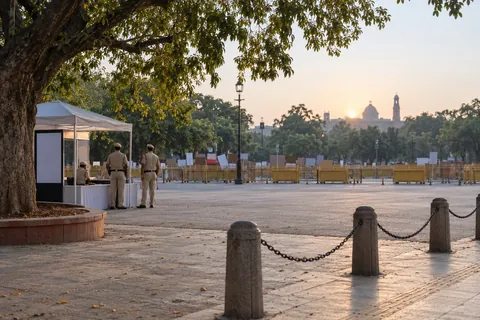
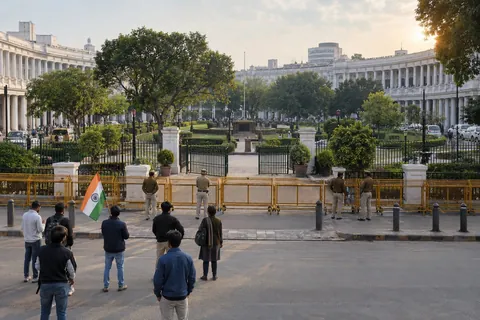
Section 163 BNSS order and park closure curb Connaught Place assembly
Delhi Police served a notice on the organiser of a planned flag march, citing a prohibitory order under section 163 of the Bharatiya Nagarik Suraksha Sanhita in force in the New Delhi area. The New Delhi Municipal Council shut Central Park, Connaught Place, to the public on 16 and 17 October for administrative reasons.
Read the story






Other subjects
- National 86 stories
- World & IR 92 stories
- Economy 171 stories
- Environment 106 stories
- Sci-Tech 67 stories
- Defence 29 stories
- Miscellany 5 stories