
ECI publishes Punjab's final electoral roll after Special Intensive Revision
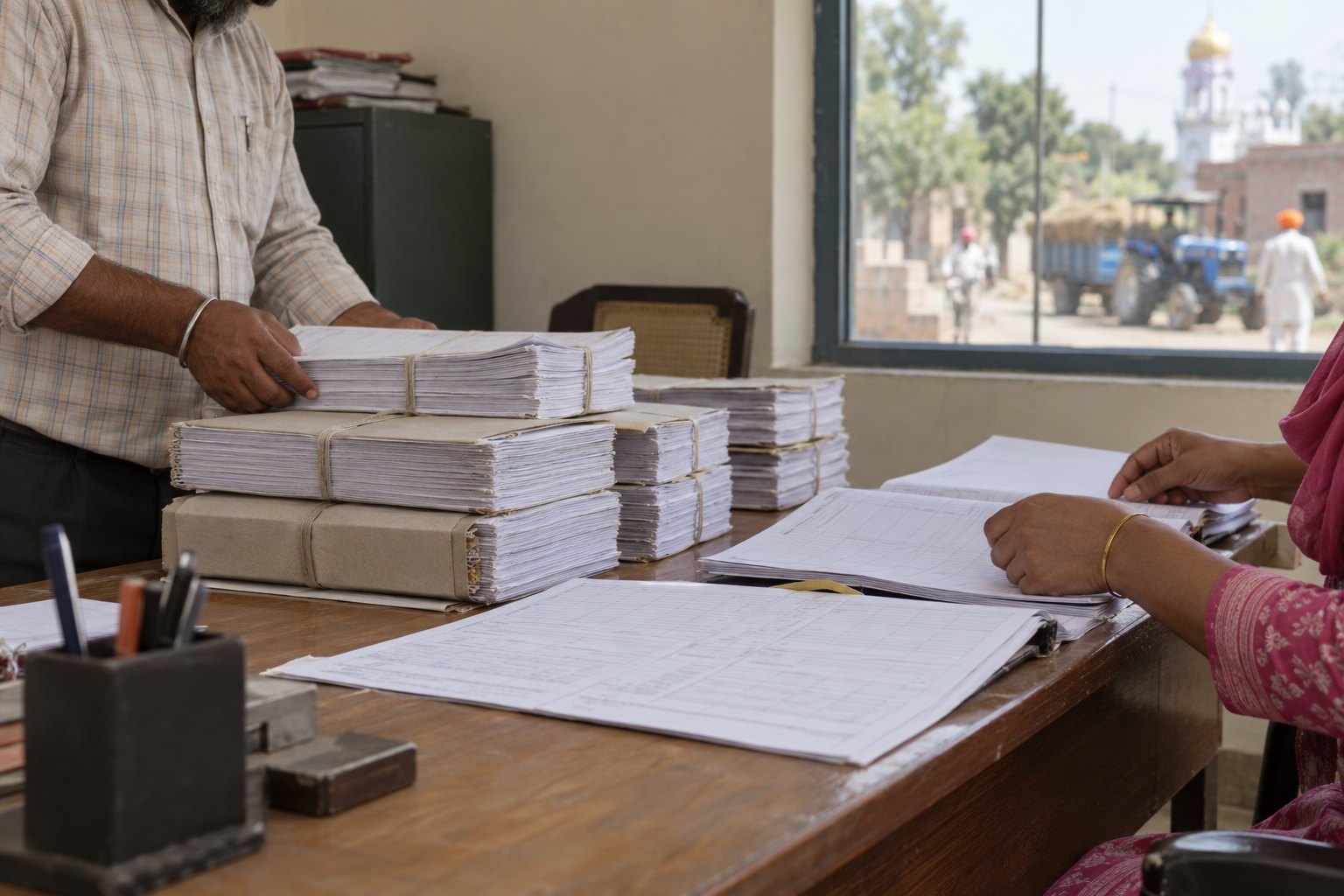
The Election Commission of India (ECI) published Punjab's final electoral roll for all 117 Assembly constituencies on 12 October 2026, completing the Special Intensive Revision (SIR). Per the ECI's figures, the roll lists 2,01,00,727 electors, 13,60,316 fewer than the 2,14,61,043 registered when the revision began, but 3.64% more than the draft roll.
Syllabus: Prelims · Polity & Governance; GS2 · Representation of the People Act; GS2 · Constitutional Bodies
Why this matters for UPSC
GS2, Salient features of the Representation of People's Act: Prelims can ask who prepares, corrects and hears appeals on electoral rolls under the Representation of the People Act, 1950; Mains, about accurate rolls and exclusion.
Why it matters
A voter whose name is missing from the final roll cannot vote in the coming Assembly election, however long the person has lived in Punjab. The roll is over 13 lakh names shorter than before the revision, so many households will want to check their entries now. A new or omitted voter can still apply on Form 6, but section 23(3) of the Representation of the People Act, 1950 bars any inclusion after the last date for nominations. A clean roll keeps out the dead, the shifted and duplicates; a careless one shuts out lawful voters. Both affect the fairness of the election itself.
Prelims pointers
- Article 324 of the Constitution: superintendence, direction and control of the preparation of electoral rolls and of elections rests with the Election Commission.
- Article 326: elections to the Lok Sabha and State Assemblies are on adult suffrage; the voting age became 18 by the 61st Amendment, effective 1989.
- RP Act 1950, section 16: non-citizens and persons declared of unsound mind by a competent court cannot be registered.
- RP Act 1950, sections 17 and 18: no one may be registered in more than one constituency, or more than once in one constituency.
- RP Act 1950, section 20: owning a house in a constituency does not by itself make a person ordinarily resident there.
- RP Act 1950, section 22: the ERO corrects, transposes or deletes entries, after giving the person a reasonable opportunity of being heard.
- RP Act 1950, section 23(3): no inclusion or correction after the last date for nominations until the election is over.
- Registration of Electors Rules, 1960: Form 6 for inclusion, Form 7 for objection or deletion, Form 8 for correction or shifting.
Practise a UPSC-style question
With reference to the Representation of the People Act, 1950, consider the following statements:
1. The conditions of registration, including age on the qualifying date and ordinary residence, are laid down in the Representation of the People Act, 1951.
2. A person who is not a citizen of India is disqualified for registration in an electoral roll.
3. No person is entitled to be registered in the electoral roll of more than one constituency.
Which of the statements given above is/are correct?
- (a) 1 and 2 only
- (b) 2 and 3 only
- (c) 1 and 3 only
- (d) 1, 2 and 3
Show the answer
Answer: (b) 2 and 3 only
1 is incorrect: the conditions of registration are in section 19 of the Representation of the People Act, 1950, not the 1951 Act. 2 is correct: section 16 of the 1950 Act disqualifies non-citizens. 3 is correct: section 17 of the 1950 Act bars registration in more than one constituency.
Explainers on this topic
More from the 13 October 2026 edition
- India wants terrorist acts in UN crimes against humanity convention World & IR
- NHAI makes independent proof-checking of complex highway designs mandatory Economy
- UNGA adopts pandemic declaration; WHO Pandemic Agreement awaits PABS annex World & IR
- IPC Alert flags rising Famine risk in Sudan's Darfur and Kordofan World & IR
- IMF's World Economic Outlook lifts India's 2026-27 growth forecast to 7% Economy
- Tribal Affairs Ministry launches financial literacy drive for PVTG villages National
- RSETIs get uniform training standards under MoRD pact with RUDSETI academy Economy
- Lakshadweep declared fully literate under ULLAS literacy scheme National
- IMD dedicates WebGIS cyclone and marine warning system to the nation Sci-Tech
- Army signs five-year MoU with Food Corporation of India, launches Bharat Rice National
- PM-SETU: AM/NS India pacts to upgrade nine ITIs in Surat, Visakhapatnam Economy
- RDI Fund clears first 19 fund managers, commits ₹7,131 crore Sci-Tech