
Article 190(3): Madras HC upholds Speaker's acceptance of MLAs' resignations
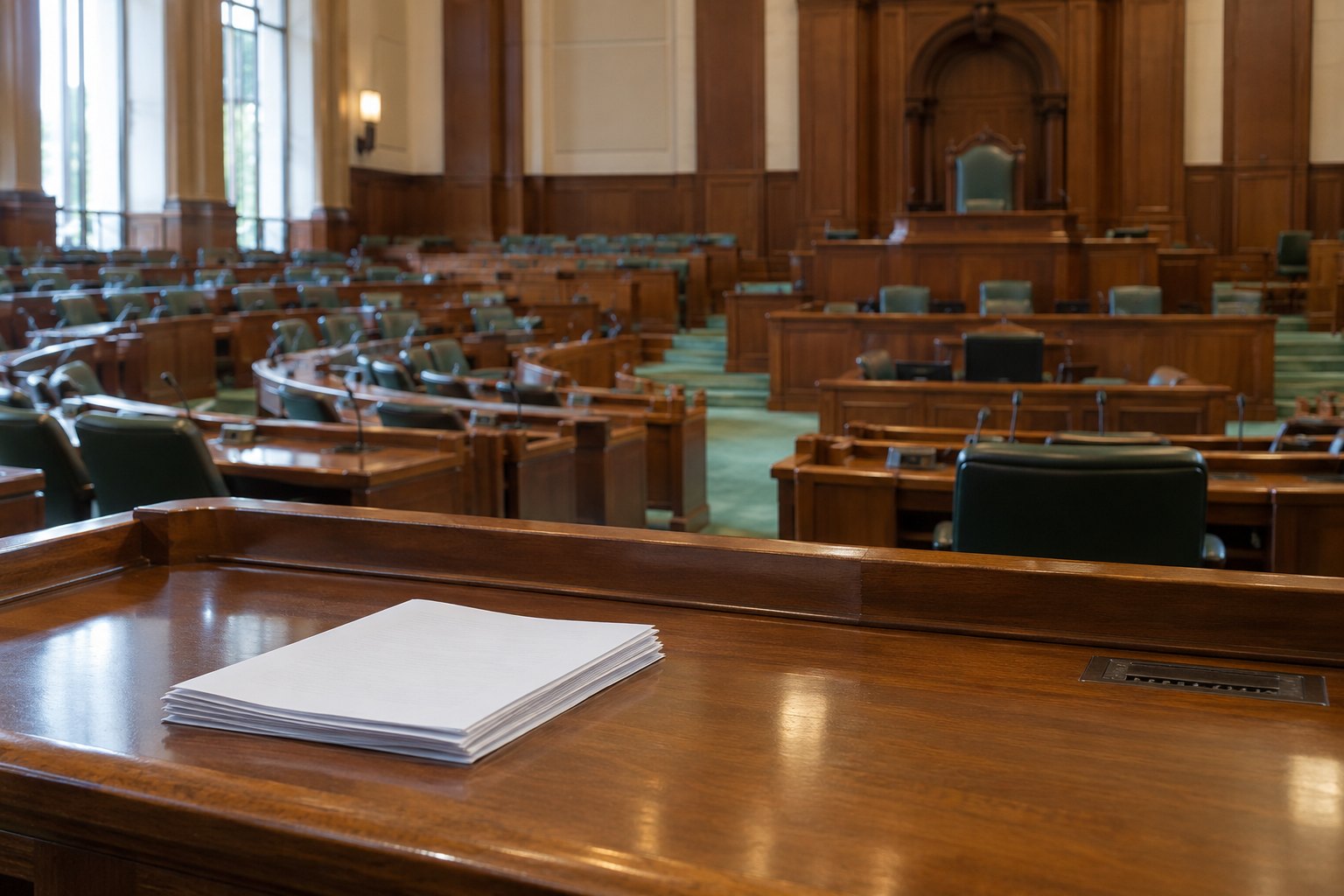
The Madras High Court's First Bench on 13 October 2026 upheld the Tamil Nadu Assembly Speaker's acceptance of six MLAs' resignations, tendered between 25 May and 29 June 2026. The Speaker had told the court he accepted them under the proviso to Article 190(3)(b) after the members confirmed they resigned of their own free will.
Syllabus: GS2 · Constitution; Prelims · Polity & Governance; GS2 · Parliament & State Legislatures
Why this matters for UPSC
GS2 (State Legislatures; Constitution): Prelims can ask what Article 190(3)(b) and its proviso provide and who decides defection under the Tenth Schedule; Mains, whether the Speaker should judge defection.
Why it matters
When legislators leave a party mid-term, they can take one of two roads. If they resign, their seats fall vacant and voters choose again in a by-election; two of these six members won their seats back that way on 6 October 2026. If they are disqualified for defection instead, the Constitution adds a penalty: they cannot be made Ministers until their old term would have ended or they are re-elected. The case shows the gap between the two roads. Under the Supreme Court's 2019 ruling in Shrimanth Balasaheb Patil, the Speaker may test a resignation only for whether it is voluntary and genuine, not for its motive, so claims of inducement must be judged in separate defection proceedings, by the same presiding officer.
Prelims pointers
- Article 190(3)(b): a State legislator resigns by writing addressed to the Speaker or Chairman; the seat falls vacant when the resignation is accepted.
- Proviso to Article 190(3)(b), added by the Thirty-third Amendment Act, 1974: the Speaker shall not accept a resignation found not voluntary or genuine.
- Article 101(3)(b) carries the same resignation rule and proviso for members of Parliament.
- Article 191(2): a State legislator is disqualified if so disqualified under the Tenth Schedule; Article 192 sends Article 191(1) questions to the Governor on the Election Commission's opinion.
- Tenth Schedule (Fifty-second Amendment Act, 1985): disqualification for voluntarily giving up party membership or defying the party whip; the Speaker or Chairman decides.
- Kihoto Hollohan (1992): the Speaker deciding a Tenth Schedule question acts as a tribunal; paragraph 7, barring courts, was declared invalid for want of ratification.
- Shrimanth Balasaheb Patil (2019): the Speaker's inquiry into a resignation is limited to whether it is voluntary and genuine; disqualification relates back to the act of defection.
- Articles 164(1B) and 361B (Ninety-first Amendment Act, 2003): a member disqualified for defection cannot become a Minister or hold a remunerative political post until the term ends or re-election.
Practise a UPSC-style question
With reference to resignation by a member of a State Legislature, consider the following statements:
1. The proviso barring acceptance of a resignation that is not voluntary or genuine was inserted by the Forty-second Amendment Act, 1976.
2. Under Article 190(3)(b), the member's seat falls vacant when the Speaker or Chairman accepts the written resignation.
Which of the statements given above is/are correct?
- (a) 1 only
- (b) 2 only
- (c) Both 1 and 2
- (d) Neither 1 nor 2
Show the answer
Answer: (b) 2 only
1 is incorrect: the proviso was inserted by the Constitution (Thirty-third Amendment) Act, 1974, not the Forty-second Amendment. 2 is correct: Article 190(3)(b) vacates the seat once the resignation, written under the member's hand, is accepted by the Speaker or Chairman.
Explainers on this topic
More from the 14 October 2026 edition
- Cooperation Ministry mandates uniform audit report for Multi-State societies Economy
- CCEA approves strategic buyer for 60.72% of IDBI Bank Economy
- India approved to join Southern Indian Ocean Fisheries Agreement Economy
- India–Mauritius tax treaty gets principal purpose test against treaty shopping Economy
- Greater India Society at 100: India's cultural links across Asia National
- Cabinet extends National Social Assistance Programme to 2030-31, renames it National
- Indian Navy to end first command of CMF's Combined Task Force 154 Defence
- Putin signs law ratifying India-Russia temporary labour agreement World & IR
- India rejects UN Indigenous Peoples Rapporteur's reference, cites Forest Rights Act World & IR
- India tells UNGA Third Committee UN rights bodies must shun selectivity World & IR
- 158 refugees get citizenship in Ahmedabad, 126 under the CAA Polity
- India-Canada reset: PMs back early CEPA to double trade by 2030 World & IR