
President's Article 240 regulation recasts Ladakh hill councils for seven districts
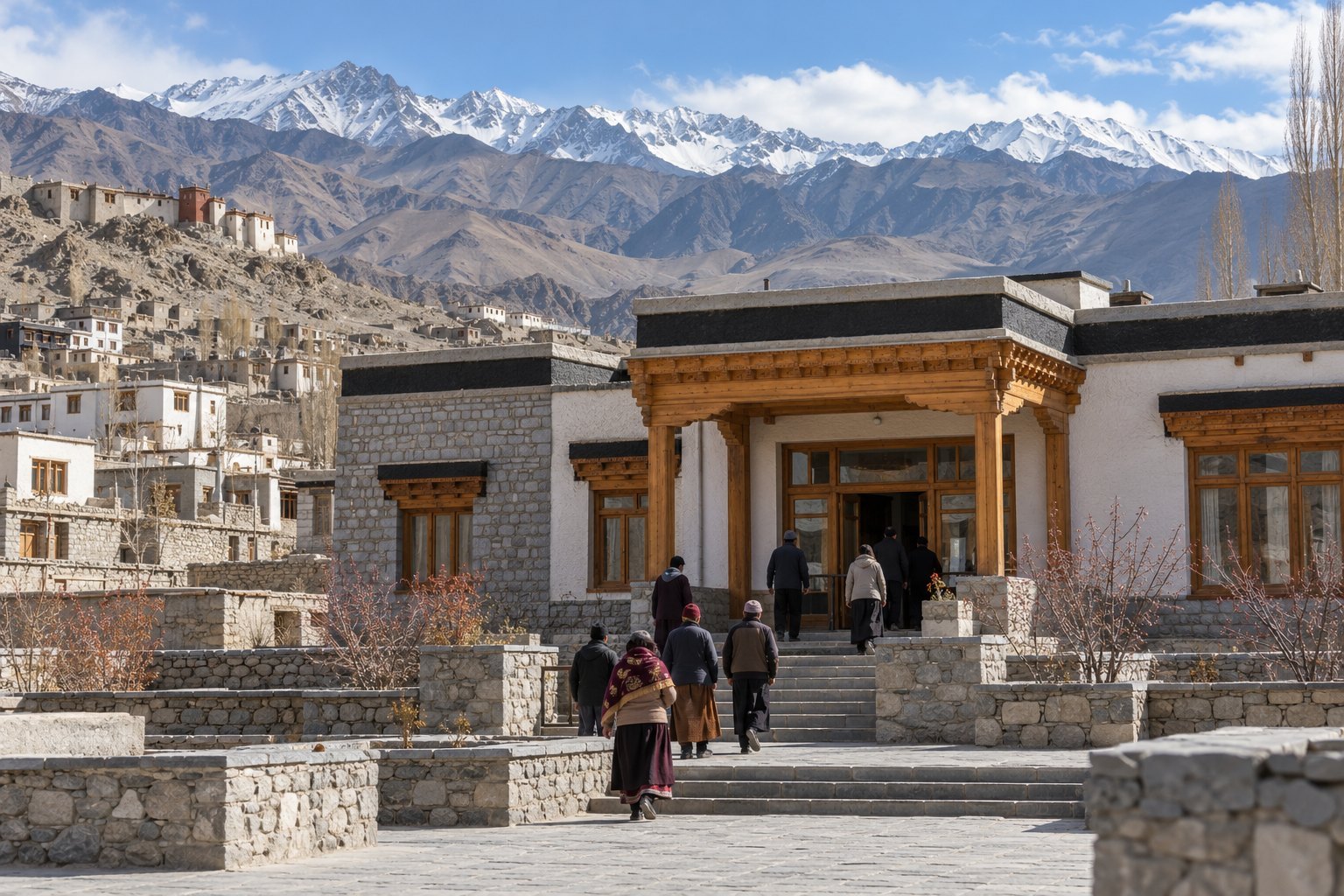
The President has made the Ladakh Autonomous Hill Development Councils (Amendment) Regulation, 2026 under Article 240, published in the Gazette on 16 October 2026. It adapts the 1997 Act to the Union territory of Ladakh, with a council for each of its seven districts and 7 to 24 elected seats apiece. It takes effect on a date the Administrator notifies.
Syllabus: GS2 · Constitution; GS2 · Federalism & Local Government; Prelims · Polity & Governance
Why this matters for UPSC
GS2 polity: Union territories and local government. Prelims can ask what Article 240 and Article 239 provide and how the Sixth Schedule differs; Mains, whether statutory hill councils can meet Ladakh's demands for self-rule.
Why it matters
For a farmer in Nubra or a shopkeeper in Zanskar, decisions on land allotment, district development plans, local hiring, schools and health centres will be taken by an elected council in their own district, not in Leh or Kargil. Councils will be smaller and drawn to each district's size, and a woman must sit on every executive council. Yet the councils can only run things, not make laws, and their budget grants come from the Union territory Administration. Whether that is enough for a region that wants a say over its land and jobs is the larger question behind the talks with the Centre.
Prelims pointers
- Article 239(2): a Governor made administrator of an adjoining Union territory acts independently of his own Council of Ministers.
- Article 240(2): a President's regulation may repeal or amend an Act of Parliament applying to the Union territory and has that Act's force.
- Article 240: the President cannot make regulations for Puducherry while its Legislature under Article 239A is functioning.
- Jammu and Kashmir Reorganisation Act, 2019, section 3: Ladakh formed from Kargil and Leh districts as a Union territory without a legislature.
- Sixth Schedule, paragraph 2: a District Council has at most thirty members, up to four nominated by the Governor, the rest elected by adult suffrage.
- Sixth Schedule, paragraph 3: District Council laws on land, inheritance, marriage and social customs have no effect until the Governor assents.
- Article 371 series: special provisions for named States, such as 371A for Nagaland, 371F for Sikkim and 371G for Mizoram.
Practise a UPSC-style question
With reference to Article 240 of the Constitution of India, consider the following statements:
1. A regulation made under it may repeal or amend an Act of Parliament that applies to the Union territory concerned.
2. A regulation made under it, once promulgated by the President, has the same force as an Act of Parliament for that territory.
Which of the statements given above is/are correct?
- (a) 1 only
- (b) 2 only
- (c) Both 1 and 2
- (d) Neither 1 nor 2
Show the answer
Answer: (c) Both 1 and 2
Answer: (c) Both 1 and 2. Article 240(2) gives a President's regulation both the power to amend Acts and an Act's force.
Statement 1: correct. Article 240(2) lets a regulation repeal or amend any Act of Parliament or other law applying to that Union territory.
Statement 2: correct. Article 240(2) says a regulation, when promulgated by the President, has the same force and effect as an Act of Parliament there.
Eliminate: statement 2 is the clause most students recall, since a regulation is the law of a UT without a legislature. Out: (a), (d).
Eliminate: statement 1 is also true, as the same clause lets a regulation amend an Act of Parliament. Out: (b).
Trap: Sounds right. Statement 1 feels wrong because an executive act seems unable to override Parliament, yet Article 240(2) allows exactly that.
Remember: Article 240 regulations can amend Acts of Parliament and carry an Act's force in that Union territory.
Explainers on this topic
More from the 17 October 2026 edition
- FSSAI proposes maximum residue limits for two neonicotinoids in tea National
- Supreme Court: internet access a fundamental right, children included Polity
- FSSAI draft would bar added sucrose and fructose in infant foods National
- US President waives Graham Act tariffs on Russian oil buyers World & IR
- Jaishankar and Rubio to review India-US partnership in Mumbai on 20 October World & IR
- CGPM ends leap seconds in UTC from 20 May 2027 Sci-Tech