
Protected areas under the Wild Life (Protection) Act, 1972
Why in news: On 26 October 2026 Maharashtra's State Board for Wildlife approved proposals for two sanctuaries, Kolamarka and an expanded Tansa, and 14 conservation reserves.
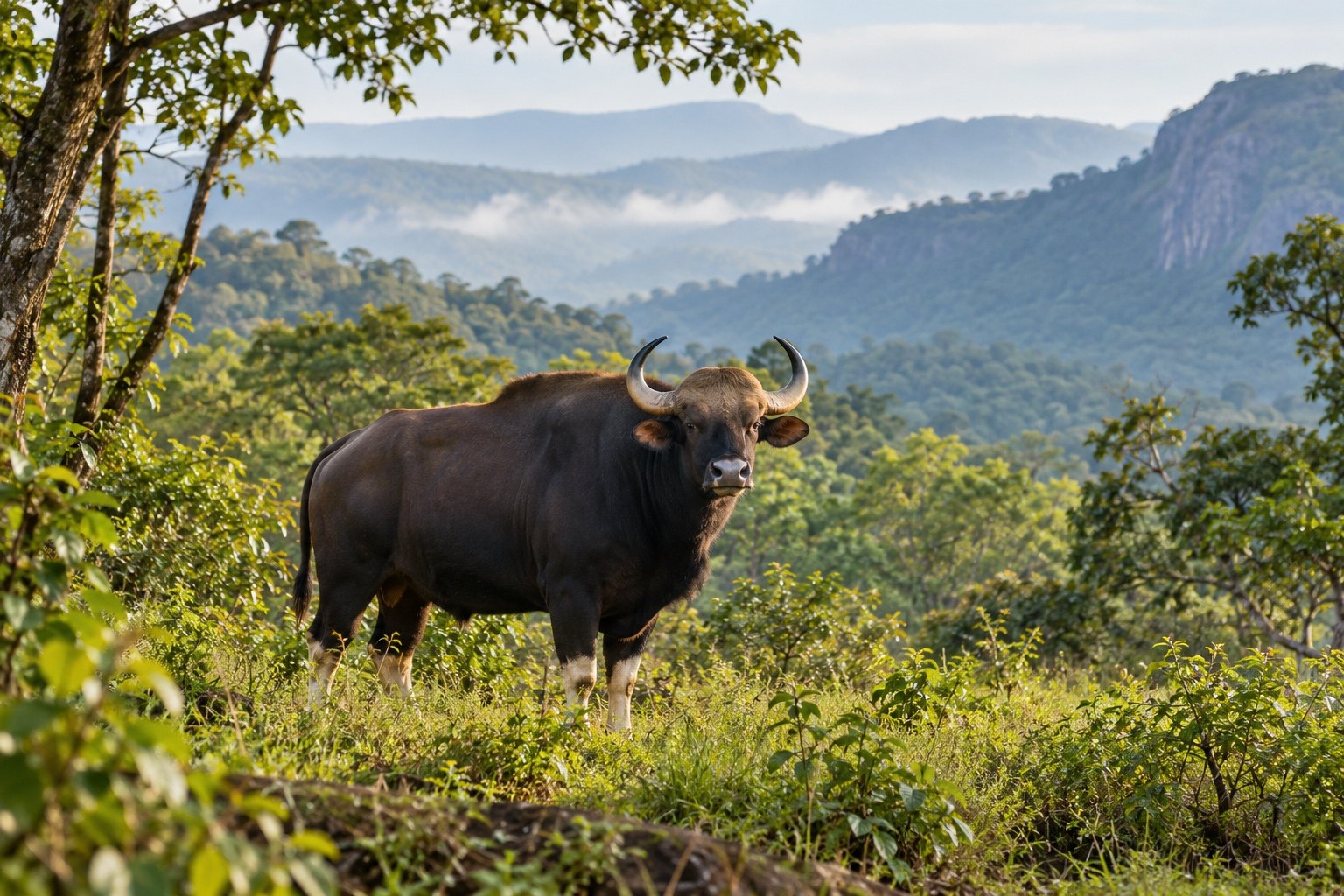
The Wild Life (Protection) Act, 1972 provides four kinds of protected area: sanctuaries and national parks, mostly State-declared, conservation reserves on government land and community reserves on private or community land. Rights can survive in sanctuaries, not in national parks. Maharashtra's State Board for Wildlife approved proposals for two sanctuaries and 14 conservation reserves on 26 October 2026.
Syllabus: Prelims · Environment & Ecology; GS3 · Environment & Conservation
Why this matters for UPSC
Protected areas are a core GS3 conservation topic. Prelims asks who declares a sanctuary, national park, conservation reserve or community reserve and what rights survive; GS3 Mains asks how conservation is balanced with forest dwellers' rights.
In short
Protected areas are tracts notified under Chapter IV of the Wild Life (Protection) Act, 1972, graded from strict national parks to community-run reserves, weighing protection against local rights.
Protected areas work only when declarations follow fair settlement of rights; States should favour reserves people help run over notifications that displace them.
Why it matters
A villager whose fields fall inside a new sanctuary may still graze cattle or gather firewood if the Collector allows it. Once the land becomes a national park, those rights end and grazing stops altogether. A conservation reserve on government forest needs no settlement or acquisition of anyone's rights, while a community reserve lets a village or a landowner protect its own land and draw up its own plan. The label therefore decides who loses access, who manages the land and how hard it is to run a road or power line through it. The larger question is how India guards about a twentieth of its land for wildlife without pushing out the people who live there.
Prelims pointers
- Section 26A: reserve forest or territorial waters can be put in a sanctuary by final notification; territorial waters need the Central Government's prior concurrence.
- Section 35: a national park is notified only after all rights vest in the State Government; no grazing of livestock is permitted inside it.
- Sections 26A(3) and 35(5): a State may alter a sanctuary's or national park's boundaries only on the National Board's recommendation.
- Section 36A: conservation reserves sit on government-owned land, particularly areas adjacent to national parks and sanctuaries or linking one protected area with another.
- Section 36C: no change in land-use pattern in a community reserve without its management committee's resolution and the State Government's approval.
- National Board for Wild Life (section 5A): Prime Minister chairs; its Standing Committee (section 5B) has the Vice-Chairperson, Member-Secretary and up to ten members.
- State Board for Wild Life (section 6): Chief Minister chairs and the Chief Wild Life Warden is Member-Secretary; it meets at least twice a year.
- Section 38: the Centre may declare a sanctuary or national park on land a State leases or transfers to it; since 2022 also a conservation reserve.
Practise a UPSC-style question
With reference to protected areas under the Wild Life (Protection) Act, 1972, consider the following statements:
1. A State Government may alter a national park's boundaries on the recommendation of the State Board for Wild Life.
2. No grazing of any livestock is permitted inside a national park.
3. In a sanctuary, the Collector may allow a person's right over land to continue, in consultation with the Chief Wild Life Warden.
Which of the statements given above is/are correct?
- (a) 1 and 2 only
- (b) 2 and 3 only
- (c) 1 and 3 only
- (d) 1, 2 and 3
Show the answer
Answer: (b) 2 and 3 only
Answer: (b) 2 and 3 only. Statement 1 names the wrong board; 2 and 3 state the Act.
Statement 1: incorrect. Section 35(5) allows a national park's boundaries to be altered only on the recommendation of the National Board for Wild Life, not the State Board.
Statement 2: correct. Section 35(7) bars grazing of livestock in a national park; livestock may enter only when used as a vehicle by an authorised person.
Statement 3: correct. Section 24(2)(c) lets the Collector allow a right to continue within a sanctuary, consulting the Chief Wild Life Warden; this is barred for national parks.
Eliminate: statement 1 is surely wrong, because boundary changes of parks and sanctuaries go to the National Board. Out: (a), (c), (d).
Trap: Swapped attribution. The State Board advises on selecting protected areas, so a student may credit it with the boundary power that the Act gives the National Board.
Remember: Boundaries of a sanctuary or a national park change only on the National Board's recommendation.
In the news
More Explainers
- Crypto in Indian law: virtual digital assets, tax and PMLA cover Economy
- The collegium system for appointing and transferring higher court judges Polity
- Protected Area, Restricted Area and Inner Line Permits Polity
- Scheduled Tribe seats in Assemblies: Article 332 and Goa's 2025 Act Polity
- Ballot papers and EVMs: where India still votes on paper Polity
- Gelephu Mindfulness City: Bhutan's special zone on the Assam border World & IR
- Nuclear fusion, the tokamak and India's role in ITER Sci-Tech
- Gilgit-Baltistan, CPEC and India's sovereignty objection World & IR
- India-Nepal electricity trade: how Nepal sells power to India World & IR
- Infant mortality and child malnutrition among Scheduled Tribes National
- Genocide Convention, 1948: the legal test and who can judge it World & IR
- Chola bronzes: lost-wax casting and Nataraja iconography National