
Protected Area, Restricted Area and Inner Line Permits
Why in news: The Home Ministry held a session on easing foreigners' entry to protected areas at the Tawang tourism mart that ended on 30 October 2026.
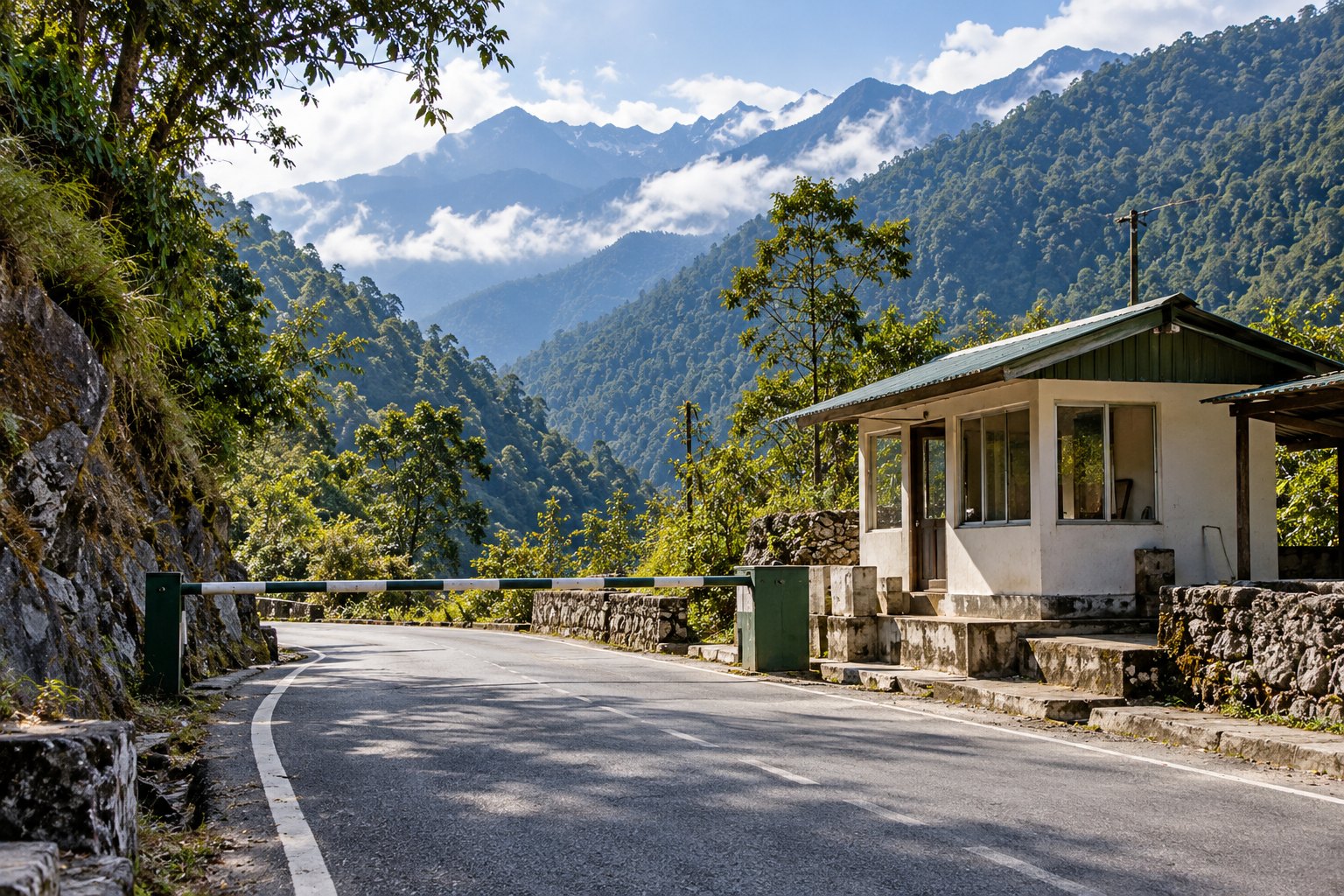
Foreigners need a Protected Area Permit or a Restricted Area Permit to enter many border areas, including the whole of five northeastern States, under the Immigration and Foreigners Act, 2025. Indians from elsewhere need an Inner Line Permit for Arunachal Pradesh, Nagaland, Mizoram and Manipur. The Home Ministry discussed easing foreigners' entry at a Tawang tourism mart.
Syllabus: Prelims · Polity & Governance; GS1 · Indian Society & Diversity; GS3 · Border Security & Organised Crime
Why this matters for UPSC
GS3 border security and GS1 tribal society: India's entry permits for border and tribal areas. Prelims can ask the 2025 Act, the listed areas and Inner Line States; Mains, security against tourism.
In short
India keeps foreigners out of sensitive border areas without a special permit under the Immigration and Foreigners Act, 2025; Indians need an Inner Line Permit for four northeastern States.
The permits guard borders and tribal land; a fast, predictable online process can keep that protection while admitting genuine visitors.
Why it matters
A trekker from Europe who hopes to see a monastery in Arunachal Pradesh must first win a permit, an extra step that can turn visitors towards easier regions. Hotels, guides and homestays in the hills then lose spending that foreign visitors would bring. A trader from another Indian State also needs a pass to work in the same valley, which keeps land and jobs with local tribes but slows business. The rules exist because these regions sit on sensitive borders and hold small communities that newcomers could swamp. The larger question is how a democracy keeps its frontier safe and its tribes secure while still opening remote regions to trade, tourism and contact.
Prelims pointers
- Look-alikes: Protected and Restricted Area Permits are Union permits for foreign nationals; the Inner Line Permit is a State-issued pass for Indian citizens.
- Sikkim is the listed State that lies partly in a Protected Area and partly in a Restricted Area for foreigners.
- Assam, Meghalaya and Tripura do not appear on the Bureau of Immigration's list of protected or restricted areas for foreigners.
- Defence areas and vital installations count as prohibited places; entry needs the jurisdictional civil authority's or Registration Officer's permission, apart from any area permit.
- Orders made under the repealed Acts, such as the Foreigners (Protected Areas) Order, 1958, are deemed made under the 2025 Act where consistent.
Practise a UPSC-style question
With reference to the Immigration and Foreigners Act, 2025, consider the following statements:
1. It repealed the Foreigners Act, 1946 along with three other laws on foreigners and immigration.
2. Citizens of Nepal are exempt from the special permit needed for Protected and Restricted Areas.
3. It defines a protected area as one contiguous with India's international border or otherwise specified by the Centre.
Which of the statements given above are correct?
- (a) 1 and 2 only
- (b) 2 and 3 only
- (c) 1 and 3 only
- (d) 1, 2 and 3
Show the answer
Answer: (c) 1 and 3 only
Answer: (c) 1 and 3 only. The repeal and the definition are right; the exemption is wrong.
Statement 1: correct. The Immigration and Foreigners Act, 2025 repealed the Foreigners Act, 1946, with the Acts of 1920, 1939 and 2000.
Statement 2: incorrect. The official list exempts citizens of Bhutan, not Nepal, from the special permit.
Statement 3: correct. The 2025 Act defines a protected area as one contiguous with the international border, or another area the Centre specifies.
Eliminate: Statement 2 swaps Bhutan for Nepal, so statement 2 is false. Out: (a), (b), (d).
Trap: Swapped attribution. Nepal also has an open border with India, so it is easily credited with Bhutan's exemption.
Remember: 2025 Act replaced the Foreigners Act, 1946; Bhutan's citizens need no area permit.
More Explainers
- Crypto in Indian law: virtual digital assets, tax and PMLA cover Economy
- The collegium system for appointing and transferring higher court judges Polity
- Scheduled Tribe seats in Assemblies: Article 332 and Goa's 2025 Act Polity
- Ballot papers and EVMs: where India still votes on paper Polity
- Gelephu Mindfulness City: Bhutan's special zone on the Assam border World & IR
- Nuclear fusion, the tokamak and India's role in ITER Sci-Tech
- Gilgit-Baltistan, CPEC and India's sovereignty objection World & IR
- India-Nepal electricity trade: how Nepal sells power to India World & IR
- Infant mortality and child malnutrition among Scheduled Tribes National
- Genocide Convention, 1948: the legal test and who can judge it World & IR
- Chola bronzes: lost-wax casting and Nataraja iconography National
- PMMSY, PM-MKSSY, FIDF and KCC: how India funds its fish value chain Economy