
The collegium system for appointing and transferring higher court judges
Why in news: A former Supreme Court judge's memoir, discussed in an interview on 1 November 2026, renews debate on the executive's influence over the collegium.
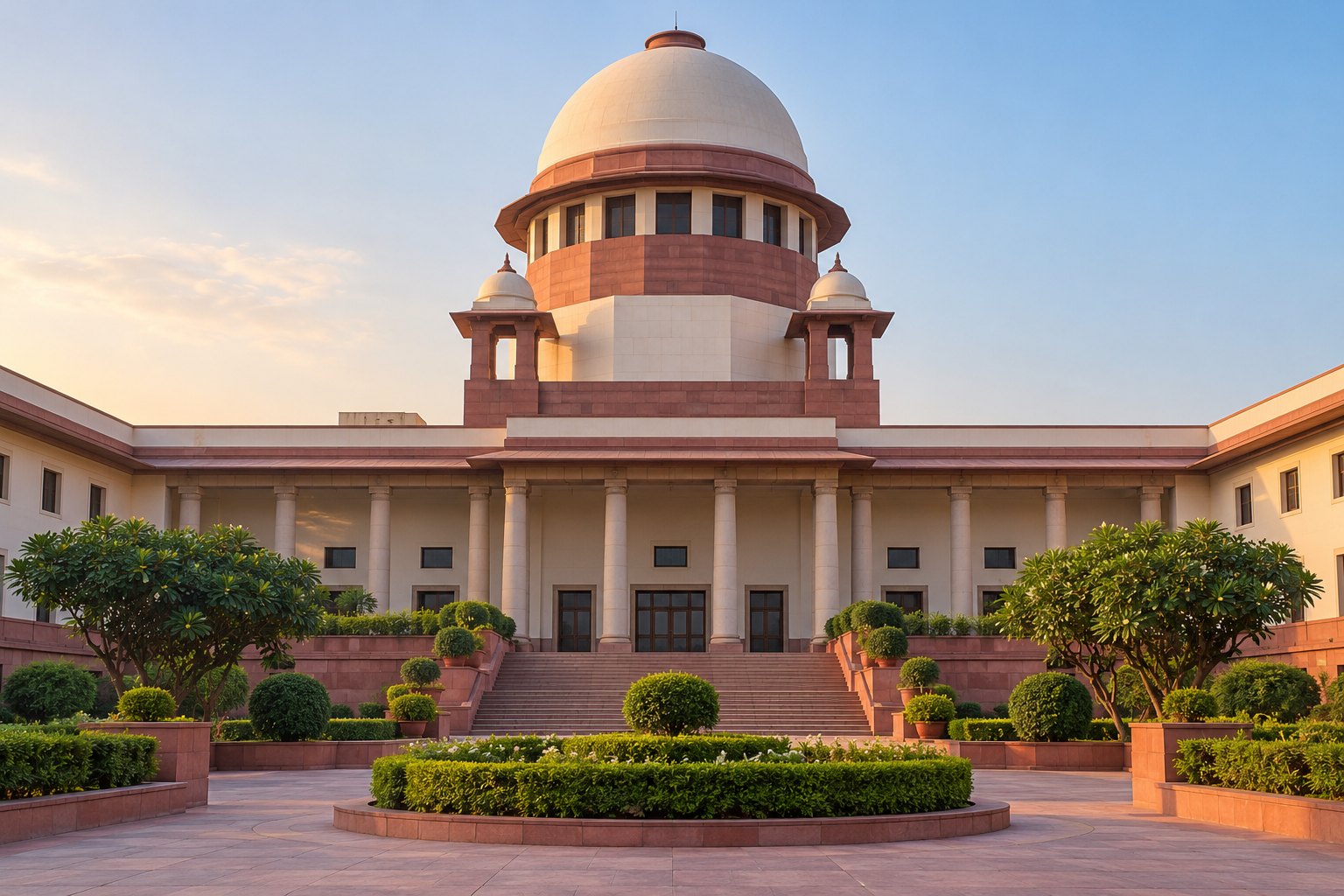
The collegium is the body of senior judges that recommends who becomes a Supreme Court or High Court judge and who moves between High Courts. It grew out of the Supreme Court's reading of consultation in Articles 124(2), 217(1) and 222(1). A former Supreme Court judge's memoir has revived debate on the executive's influence over it.
Syllabus: GS2 · Constitution; GS2 · Separation of Powers; Prelims · Polity & Governance
Why this matters for UPSC
GS2 polity: appointment of judges under Articles 124, 217 and 222, and judicial independence. Prelims asks collegium make-up and the Judges cases; Mains, the executive's role.
In short
The collegium is a group of senior judges that recommends appointments to the Supreme Court and High Courts and transfers between High Courts, built by judicial reading of 'consultation'.
Judicial primacy guards independence, but its legitimacy now rests on open selection criteria and on the executive acting promptly on recommendations.
Why it matters
A litigant waiting years for a hearing in a High Court depends on vacancies being filled on time and on judges chosen for merit and integrity. The collegium decides whose names go forward, so its choices shape who hears constitutional, criminal and commercial disputes for a generation. If the government picked judges alone, courts that rule against it every day could lose their independence. If judges choose judges with little outside check, the process can look closed to the public. That tension is why every change, from the Judges cases to the NJAC verdict, has drawn sharp debate. The same process decides how many lawyers, district judges, women and members of marginalised groups reach the bench.
Prelims pointers
- Article 124(2), before 2014, let the President appoint Supreme Court judges after consulting Supreme Court and High Court judges; a proviso made consulting the CJI mandatory.
- Article 217(1) names three consultees for a High Court judge: the CJI, the State's Governor and, except for the Chief Justice, the High Court Chief Justice.
- Article 222(1) lets the President transfer a judge from one High Court to another after consulting the CJI.
- The First Judges case (1981) was decided 4:3 by seven judges; the Second (1993), 7:2 by nine judges, overruled it.
- The Third Judges case was not an appeal: it was a Presidential reference under Article 143, answered unanimously by nine judges.
- Collegium and NJAC differ: the collegium has only judges, while the NJAC was to add the Union Law Minister and two eminent persons.
- A puisne High Court judge's transfer is reviewable only if the four senior-most Supreme Court judges were not consulted or either High Court Chief Justice's views were not obtained.
Practise a UPSC-style question
With reference to the appointment and transfer of judges under the Constitution of India, consider the following statements:
1. Article 222(1) requires the President to consult the Chief Ministers of both States before transferring a High Court judge.
2. Article 217(1) provides for consultation with the Governor of the State before a High Court judge is appointed.
3. Under Article 124(2), a judge of the Supreme Court holds office until attaining the age of sixty-five years.
Which of the statements given above is/are correct?
- (a) 1 and 2 only
- (b) 2 and 3 only
- (c) 1 and 3 only
- (d) 1, 2 and 3
Show the answer
Answer: (b) 2 and 3 only
Answer: (b) 2 and 3 only. Statements 2 and 3 restate the Articles; statement 1 names the wrong consultee.
Statement 1: incorrect. Article 222(1), in its original form, requires consultation with the Chief Justice of India before a High Court judge is moved, not with any Chief Minister.
Statement 2: correct. Article 217(1) names the Chief Justice of India, the Governor of the State and, for a judge other than the Chief Justice, the High Court Chief Justice.
Statement 3: correct. Article 124(2) says a Supreme Court judge holds office until the age of sixty-five years.
Eliminate: statement 1 is surely wrong, since transfers involve the judiciary, not State governments. Out: (a), (c), (d).
Trap: Swapped attribution. The Chief Minister does give views on a High Court appointment proposal, so the question pins that role on transfers under Article 222.
Remember: Article 222 transfers: President after consulting the Chief Justice of India.
More Explainers
- Crypto in Indian law: virtual digital assets, tax and PMLA cover Economy
- Protected Area, Restricted Area and Inner Line Permits Polity
- Scheduled Tribe seats in Assemblies: Article 332 and Goa's 2025 Act Polity
- Ballot papers and EVMs: where India still votes on paper Polity
- Gelephu Mindfulness City: Bhutan's special zone on the Assam border World & IR
- Nuclear fusion, the tokamak and India's role in ITER Sci-Tech
- Gilgit-Baltistan, CPEC and India's sovereignty objection World & IR
- India-Nepal electricity trade: how Nepal sells power to India World & IR
- Infant mortality and child malnutrition among Scheduled Tribes National
- Genocide Convention, 1948: the legal test and who can judge it World & IR
- Chola bronzes: lost-wax casting and Nataraja iconography National
- PMMSY, PM-MKSSY, FIDF and KCC: how India funds its fish value chain Economy