
Gilgit-Baltistan, CPEC and India's sovereignty objection
Why in news: On 30 October 2026, Pakistan's Prime Minister ordered faster work on federal projects in Gilgit-Baltistan, including a 100 MW solar project.
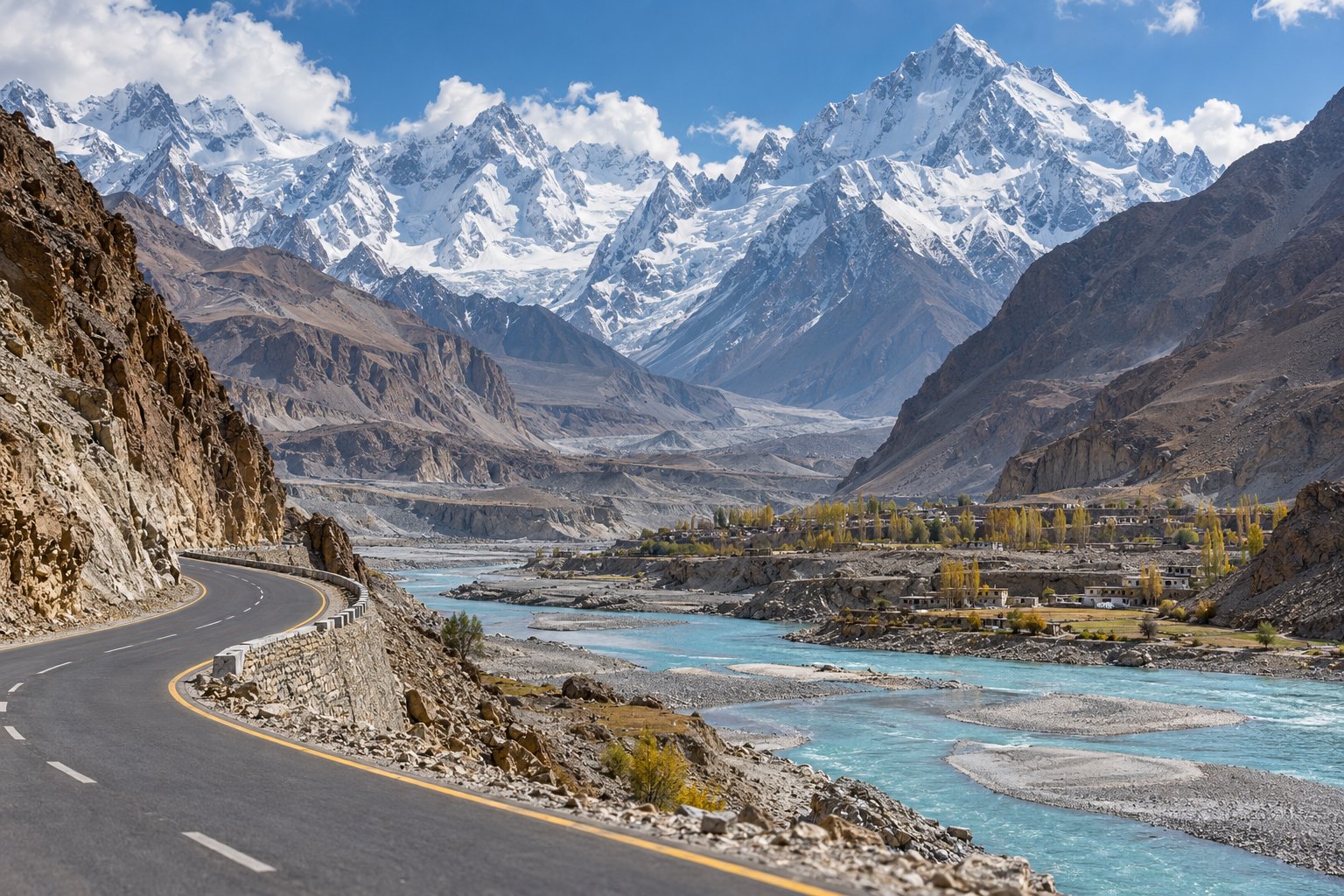
Gilgit-Baltistan is a region bordering China that Pakistan holds and India claims as part of its Union Territories of Jammu and Kashmir and Ladakh, citing the 1947 accession. The China-Pakistan Economic Corridor (CPEC), joining Xinjiang to Gwadar port, crosses it, and India calls such projects illegal. Pakistan's Prime Minister ordered projects there fast-tracked on 30 October 2026.
Syllabus: GS2 · India & its Neighbourhood; GS2 · Foreign Policies & the Diaspora; GS3 · Border Security & Organised Crime
Why this matters for UPSC
GS2 India and its neighbourhood: India's claim to Gilgit-Baltistan and its objection to CPEC. Prelims can ask where CPEC runs; Mains, connectivity against sovereignty.
In short
Gilgit-Baltistan, bordering China, is held by Pakistan but claimed by India through the 1947 accession; CPEC's route through it turns a territorial dispute into a connectivity contest.
India must keep its legal claim to Gilgit-Baltistan alive through consistent protest, while offering partners sovereignty-respecting corridors that make CPEC's route less attractive.
Why it matters
For a resident of Gilgit-Baltistan, a finished solar park or power plant means steadier electricity and better roads. For India, each such project is a brick in Pakistan's hold over land India counts as its own, built partly with Chinese money. Once roads, dams and cables are in place, the occupation looks more permanent and harder to undo through talks. That is why India protests even routine development orders and warns other countries against joining the corridor. The question also ties India's quarrel with Pakistan to its competition with China, and shapes how New Delhi judges Chinese-backed connectivity across its neighbourhood.
Prelims pointers
- The Jammu and Kashmir Reorganisation Act, 2019 created the Union Territory of Ladakh without a legislature, made up of the Kargil and Leh districts.
- Union Territory of Ladakh versus India's claim: the 2019 Act lists only Kargil and Leh, while the MEA bases India's claim to Gilgit-Baltistan on the 1947 accession.
- Gwadar, the corridor's southern end, is a port in Pakistan; its northern end lies in Xinjiang, a region of China.
- A 2016 Lok Sabha reply said China helps Pakistan with hydroelectric projects, highways, motorways, ports and an export processing zone, besides defence training and equipment.
- Pakistan runs Gilgit-Baltistan as a separate region with its own Chief Minister; in 2020 its government announced provisional provincial status for it.
Practise a UPSC-style question
With reference to the China-Pakistan Economic Corridor (CPEC), consider the following statements:
1. It runs between Xinjiang in China and the port of Gwadar in Pakistan.
2. Gwadar port, the corridor's southern end, lies in China's Xinjiang region.
3. India has stated that third-country participation in CPEC projects would infringe its sovereignty.
Which of the statements given above is/are correct?
- (a) 1 and 2 only
- (b) 2 and 3 only
- (c) 1 and 3 only
- (d) 1, 2 and 3
Show the answer
Answer: (c) 1 and 3 only
Answer: (c) 1 and 3 only. CPEC runs from Xinjiang in China to Gwadar in Pakistan, and India opposes outsiders joining it.
Statement 1: correct. CPEC is a connectivity programme whose two ends are Xinjiang in China and Gwadar port in Pakistan.
Statement 2: incorrect. Gwadar is a port in Pakistan; Xinjiang is the corridor's Chinese end, not the place of the port.
Statement 3: correct. In July 2022 the MEA said any third country joining CPEC projects would directly infringe India's sovereignty and territorial integrity.
Eliminate: statement 2 swaps Gwadar into China, so any option with 2 goes. Out: (a), (b), (d).
Trap: Swapped attribution. The question pins Gwadar on the wrong country, using the corridor's two ends against each other.
Remember: CPEC runs Xinjiang (China) to Gwadar (Pakistan), through Gilgit-Baltistan.
More Explainers
- Crypto in Indian law: virtual digital assets, tax and PMLA cover Economy
- The collegium system for appointing and transferring higher court judges Polity
- Protected Area, Restricted Area and Inner Line Permits Polity
- Scheduled Tribe seats in Assemblies: Article 332 and Goa's 2025 Act Polity
- Ballot papers and EVMs: where India still votes on paper Polity
- Gelephu Mindfulness City: Bhutan's special zone on the Assam border World & IR
- Nuclear fusion, the tokamak and India's role in ITER Sci-Tech
- India-Nepal electricity trade: how Nepal sells power to India World & IR
- Infant mortality and child malnutrition among Scheduled Tribes National
- Genocide Convention, 1948: the legal test and who can judge it World & IR
- Chola bronzes: lost-wax casting and Nataraja iconography National
- PMMSY, PM-MKSSY, FIDF and KCC: how India funds its fish value chain Economy