
Genocide Convention, 1948: the legal test and who can judge it
Why in news: On 26 October 2026, a UN commission of inquiry told the General Assembly that Israeli forces committed genocide even after the Gaza ceasefire.
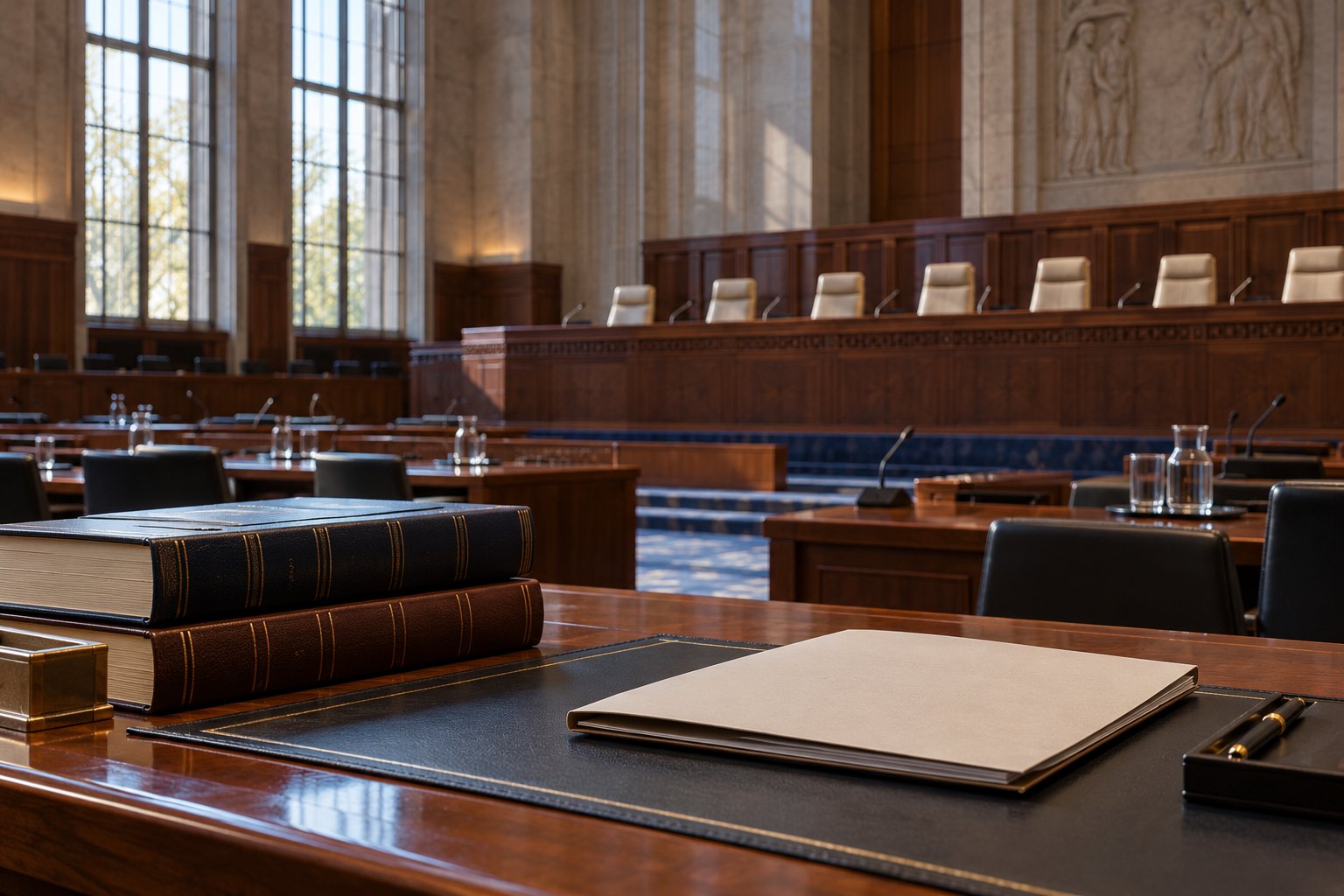
The Convention on the Prevention and Punishment of the Crime of Genocide, 1948, makes genocide a crime under international law. Genocide means any of five acts done with intent to destroy a national, ethnical, racial or religious group. A UN commission of inquiry says Israeli forces committed genocide even after the Gaza ceasefire.
Syllabus: Prelims · Current Affairs & IR; GS2 · Groupings & Agreements; GS2 · International Institutions
Why this matters for UPSC
GS2 international institutions: the Genocide Convention, the ICJ, the ICC and UN commissions of inquiry. Prelims asks who judges whom; Mains, fact-finding versus adjudication.
In short
Genocide is one of the most serious crimes under international law. The Genocide Convention, 1948, defines it by intent to destroy a protected group, but leaves its judging to several separate bodies.
The Convention's definition is sound; its weakness is enforcement. Wider acceptance of ICJ jurisdiction and cooperation with fact-finders would give it real force.
Why it matters
A family that has lost relatives to a massacre wants someone held to account, and the Convention offers two separate roads. A State accused of trying to wipe out a people can be taken to the ICJ by another State that is a party. The commander or minister who ordered the acts can face a national court or the ICC. Because intent is hard to prove, many atrocities end up charged as war crimes or crimes against humanity instead. A commission punishes no one, but the testimony it records today can decide a trial years later. For India, the treaty shapes how far it can be pulled into a dispute it has not agreed to take to court.
Prelims pointers
- The Convention protects four kinds of group: national, ethnical, racial and religious; political groups are not in its list.
- Five acts are punishable under the Convention: genocide, conspiracy to commit it, direct and public incitement, attempt and complicity.
- Under the Convention, parties may ask the competent UN organs to act under the UN Charter to prevent and suppress genocide.
- The ICJ sits at the Peace Palace in The Hague; it has 15 judges elected for nine years by the General Assembly and the Security Council.
- Look-alike courts: the ICJ, created by the UN Charter in 1945, hears cases between States; the ICC, created by the Rome Statute in 1998, tries individual persons.
- Crimes against humanity need a widespread or systematic attack on civilians with knowledge of it; genocide needs intent to destroy a protected group.
- The Convention binds its parties to pass national laws giving effect to it, with effective penalties for those found guilty.
Practise a UPSC-style question
With reference to the Convention on the Prevention and Punishment of the Crime of Genocide, 1948, consider the following statements:
1. It protects national, ethnical, racial and religious groups from acts meant to destroy them.
2. It treats genocide as a crime under international law in time of war, but not in time of peace.
3. It makes direct and public incitement to commit genocide a punishable act.
Which of the statements given above is/are correct?
- (a) 1 and 2 only
- (b) 2 and 3 only
- (c) 1 and 3 only
- (d) 1, 2 and 3
Show the answer
Answer: (c) 1 and 3 only
Answer: (c) 1 and 3 only. The Convention names four protected groups and punishes incitement, in peace and war alike.
Statement 1: correct. Article II of the Genocide Convention, 1948, covers acts aimed at destroying a national, ethnical, racial or religious group.
Statement 2: incorrect. Article I confirms genocide is a crime under international law whether committed in time of peace or in time of war.
Statement 3: correct. Article III punishes direct and public incitement, along with genocide, conspiracy, attempt and complicity.
Eliminate: statement 2 is the surest to judge, since the treaty plainly covers peacetime; every option holding it goes. Out: (a), (b), (d).
Trap: Wrong scope. Statement 2 narrows the crime to wartime, confusing genocide with war crimes, which do need an armed conflict.
Remember: genocide is a crime in peace and in war; war crimes need a war.
In the news
More Explainers
- Crypto in Indian law: virtual digital assets, tax and PMLA cover Economy
- The collegium system for appointing and transferring higher court judges Polity
- Protected Area, Restricted Area and Inner Line Permits Polity
- Scheduled Tribe seats in Assemblies: Article 332 and Goa's 2025 Act Polity
- Ballot papers and EVMs: where India still votes on paper Polity
- Gelephu Mindfulness City: Bhutan's special zone on the Assam border World & IR
- Nuclear fusion, the tokamak and India's role in ITER Sci-Tech
- Gilgit-Baltistan, CPEC and India's sovereignty objection World & IR
- India-Nepal electricity trade: how Nepal sells power to India World & IR
- Infant mortality and child malnutrition among Scheduled Tribes National
- Chola bronzes: lost-wax casting and Nataraja iconography National
- PMMSY, PM-MKSSY, FIDF and KCC: how India funds its fish value chain Economy