
Maharashtra wildlife board approves Kolamarka, Tansa sanctuaries and 14 conservation reserves
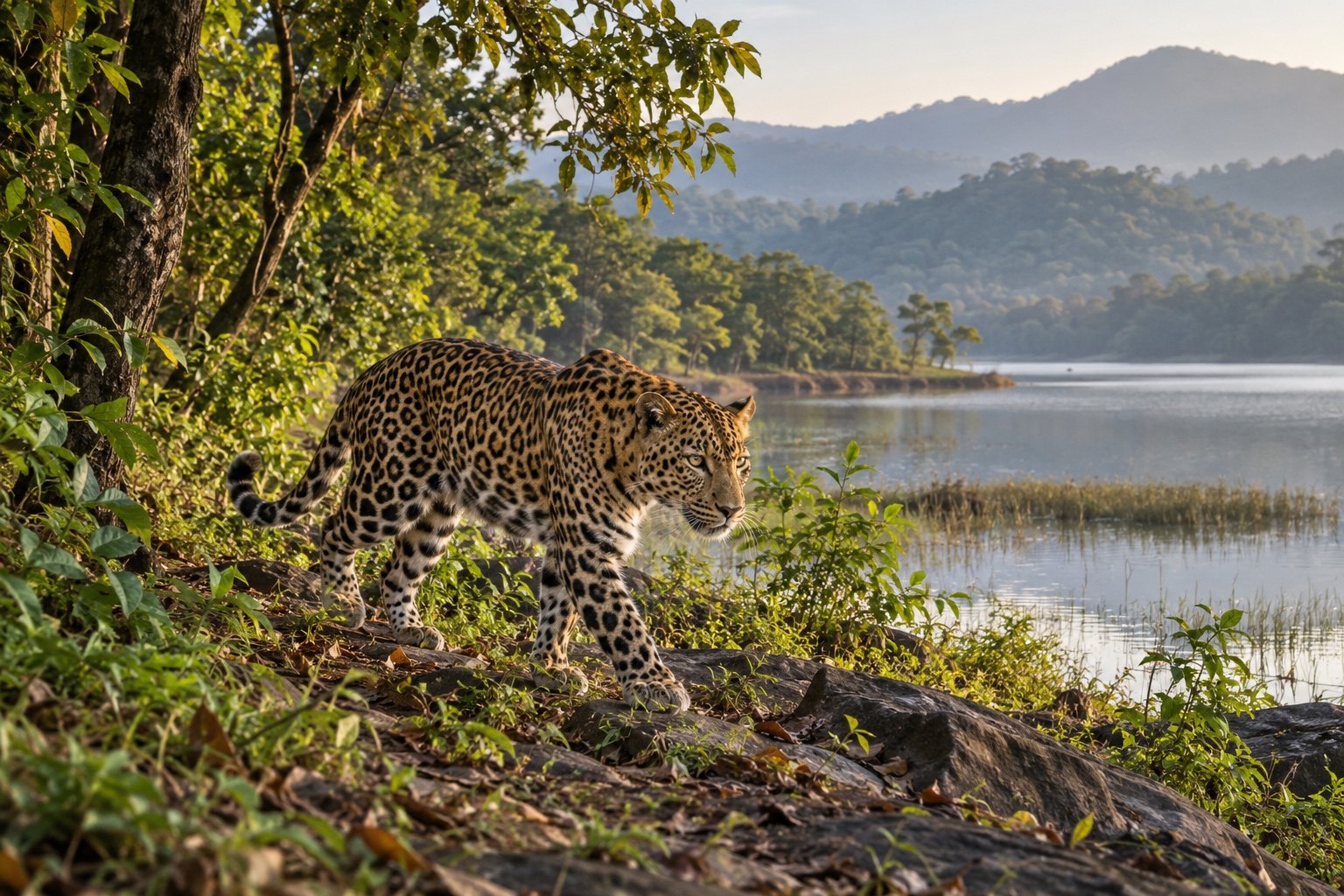
Maharashtra's State Board for Wildlife on 26 October 2026 approved proposals to make the Kolamarka Conservation Reserve in Gadchiroli and a newly expanded Tansa area wildlife sanctuaries. It also approved 14 conservation reserves in seven districts. Parts of the Koka and Jayakwadi Bird sanctuaries were backed as critical wildlife habitats. Each step still awaits notification.
Syllabus: Prelims · Environment & Ecology; GS3 · Environment & Conservation
Why this matters for UPSC
GS3 conservation: Prelims can ask how sanctuaries and conservation reserves are declared under the Wild Life (Protection) Act, 1972, and what the Forest Rights Act, 2006 calls a critical wildlife habitat. GS3 Mains can ask about protected areas and people.
Why it matters
Families who own or till land in the six villages around Tansa would see it pass into the sanctuary once it is notified, as the board wants it free of settlements. How they are paid and resettled matters as much as the map. In Gadchiroli, the wild buffalo herds of Kolamarka would move from a lighter category into a sanctuary's stricter rules. The 14 new conservation reserves, from Pune and Nashik to Palghar and Chandrapur, would protect Government land, which the law allows only after local communities are consulted. Yet the same meeting cleared roads, power lines and cables through protected land, a reminder that every protected area is also a place where people need water, schools and hospitals.
Prelims pointers
- Section 6, Wild Life (Protection) Act, 1972: the State Board for Wild Life is chaired by the Chief Minister; the Chief Wild Life Warden is member-secretary.
- Section 6A (2022 amendment): a State Board may set up a Standing Committee of the vice-chairperson, member-secretary and up to ten members.
- Section 26A(3): a State may alter a sanctuary's boundaries only on a recommendation of the National Board for Wild Life, which the Prime Minister chairs.
- Section 36A: the State declares a conservation reserve after consulting local communities; land of the Central Government needs the Centre's prior concurrence.
- Section 36C: a community reserve is declared on private or community land where a community or an individual volunteers to conserve wildlife.
- Section 38(2A), added in 2022: the Central Government may itself declare a conservation reserve over an area referred to in section 38(1), when section 36A's conditions are met.
- MoEFCC letter of 30 January 2023: projects inside notified conservation reserves need no consideration by the Standing Committee of the National Board for Wild Life.
- Forest Rights Act, 2006, section 4(2): rights holders may be relocated from critical wildlife habitats only with the Gram Sabha's free informed consent in writing.
Practise a UPSC-style question
With reference to the Wild Life (Protection) Act, 1972, consider the following statements:
1. The State Board for Wild Life is chaired by the State's Minister in charge of Forests and Wild Life.
2. A State Government may alter the boundaries of a sanctuary on a recommendation of the National Board for Wild Life.
Which of the statements given above is/are correct?
- (a) 1 only
- (b) 2 only
- (c) Both 1 and 2
- (d) Neither 1 nor 2
Show the answer
Answer: (b) 2 only
Answer: (b) 2 only. The Chief Minister chairs the State Board, and sanctuary boundaries change on the National Board's advice.
Statement 1: incorrect. Section 6 makes the Chief Minister the chairperson of the State Board for Wild Life; the Forest Minister is its vice-chairperson.
Statement 2: correct. Section 26A(3) bars a State from altering a sanctuary's boundaries except on a recommendation of the National Board for Wild Life.
Eliminate: Statement 1 fails because the Chief Minister, not the Forest Minister, chairs the board. Out: (a), (c).
Eliminate: Statement 2 holds under section 26A(3). Out: (d).
Trap: Swapped attribution. The Forest Minister does sit on the board, as vice-chairperson, so a student who remembers the name but not the post marks statement 1 true.
Remember: State Board: Chief Minister chairs; National Board: Prime Minister chairs; boundary change needs the National Board.
Explainers on this topic
More from the 28 October 2026 edition
- UNFCCC NDC Synthesis Report: new pledges cut emissions only 6% by 2035 Environment
- Project Cheetah cub found injured outside Kuno dies of pellet injuries Environment
- National Highways Fee Rules amended to add annual Local Pass for residents Economy
- NHRC women's safety advisory seeks action reports within two months Polity
- Telangana and Maharashtra agree to joint committee on Tummidihatti barrage Polity
- ECI suspends six Agra officials over lapses in Council teachers' poll Polity
- Violent Arunachal shutdown cancels hearing on Subansiri Upper hydro project Environment
- SC directs States, UTs to fund bar rooms, washrooms for women advocates Polity