
India-Nepal electricity trade: how Nepal sells power to India
Why in news: Nepal Electricity Authority data show Nepal exported about 1,262 million units to India between 27 August and 27 October 2026, despite floods.
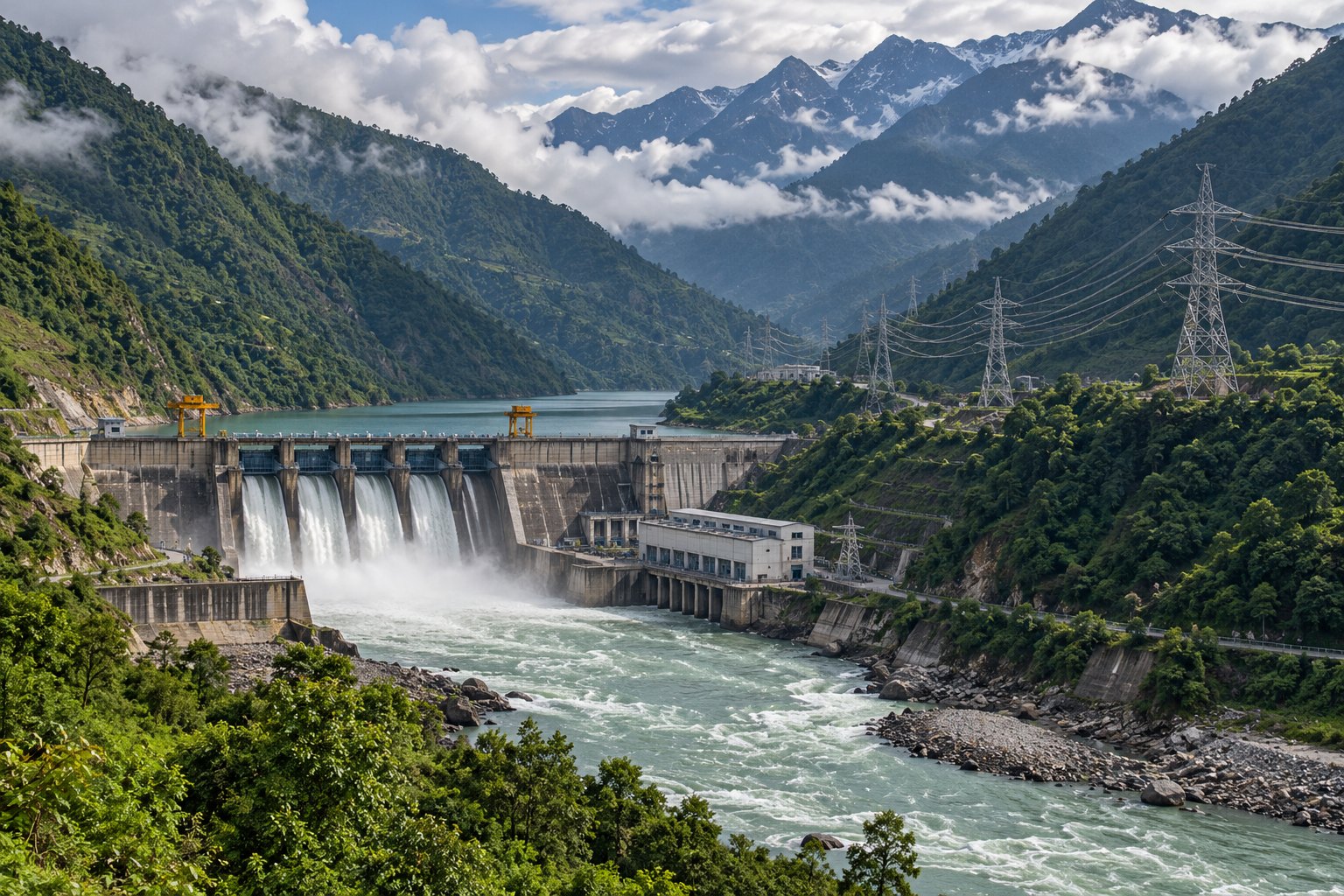
India-Nepal electricity trade follows the seasons. Nepal sells surplus hydropower to India in the monsoon and buys Indian power in the dry winter. Each sale works within India's 2018 cross-border guidelines and needs official approval. Nepal Electricity Authority data show Nepal still exported about 1,262 million units to India between 27 August and 27 October 2026, despite August's floods.
Syllabus: GS3 · Infrastructure; GS2 · India & its Neighbourhood; GS2 · Groupings & Agreements
Why this matters for UPSC
GS2 India and its neighbourhood, and GS3 energy infrastructure. Prelims can ask about the 2018 guidelines and power exchanges; Mains, regional energy security.
In short
Cross-border electricity trade lets Nepal sell its monsoon hydropower surplus to India under India's 2018 guidelines and buy power back in winter, making electricity a pillar of bilateral ties.
Power trade now binds India and Nepal through a long-term market; flood-resilient plants and lines will decide whether the 10,000 MW goal is met.
Why it matters
A household or business in Nepal gains when the country's surplus monsoon power is sold to India, and it can draw Indian power in winter when Nepal's rivers run low. India gains a nearby source of hydropower during the monsoon. Each country therefore covers the other's lean season, which the Power Ministry describes as a step towards energy security in the region. The trade also gives Nepal an export earner that can pay for new plants and lines, and a route to sell to Bangladesh. The August 2026 floods showed the risk: one disaster in the hills can damage the plants and lines that both countries depend on.
Prelims pointers
- The Ministry of Power issues the cross-border electricity guidelines; the Central Electricity Regulatory Commission frames the matching regulations, so policy and regulation come from different bodies.
- Under the 2018 guidelines, the tariff for trade between Indian and neighbouring entities may be fixed by mutual agreement.
- The Muzaffarpur-Dhalkebar line is a 400 kV double-circuit India-Nepal link that the Power Ministry said in March 2020 was being run at 220 kV.
- India-Nepal 132 kV cross-border lines include Raxaul-Parwanipur, Kataiya-Kusaha and New Nautanwa-Mainhiya.
- In March 2020 the Power Ministry said India imported power from Bhutan and exported to Nepal, Bangladesh and Myanmar; Alipurduar-Jigmeling is an India-Bhutan line.
- India's grid links with Bangladesh, Bhutan and Nepal use both synchronous AC and asynchronous HVDC connections, the Power Ministry stated in 2020.
Practise a UPSC-style question
With reference to cross-border trade of electricity under India's 2018 guidelines, consider the following statements:
1. The Designated Authority that approves cross-border trade is appointed by the Central Electricity Regulatory Commission.
2. Entities from neighbouring countries can trade on Indian power exchanges through a licensed Indian power trader.
Which of the statements given above is/are correct?
- (a) 1 only
- (b) 2 only
- (c) Both 1 and 2
- (d) Neither 1 nor 2
Show the answer
Answer: (b) 2 only
Answer: (b) 2 only. The Ministry of Power, not CERC, designates the authority; exchange access through Indian traders is right.
Statement 1: incorrect. The Designated Authority is designated by the Ministry of Power under its 2018 guidelines; CERC framed the 2019 cross-border regulations.
Statement 2: correct. Neighbouring entities may trade on Indian power exchanges through a licensed Indian trader, with the Designated Authority's approval of the quantity.
Eliminate: statement 1 is wrong, since the Ministry of Power designates the authority. Out: (a), (c).
Eliminate: statement 2 matches the 2018 guidelines. Out: (d).
Trap: Swapped attribution. The regulator CERC is a plausible appointer, but the guidelines give that role to the Ministry of Power.
Remember: Ministry of Power issues the guidelines and designates the authority; CERC frames the regulations.
More Explainers
- Crypto in Indian law: virtual digital assets, tax and PMLA cover Economy
- The collegium system for appointing and transferring higher court judges Polity
- Protected Area, Restricted Area and Inner Line Permits Polity
- Scheduled Tribe seats in Assemblies: Article 332 and Goa's 2025 Act Polity
- Ballot papers and EVMs: where India still votes on paper Polity
- Gelephu Mindfulness City: Bhutan's special zone on the Assam border World & IR
- Nuclear fusion, the tokamak and India's role in ITER Sci-Tech
- Gilgit-Baltistan, CPEC and India's sovereignty objection World & IR
- Infant mortality and child malnutrition among Scheduled Tribes National
- Genocide Convention, 1948: the legal test and who can judge it World & IR
- Chola bronzes: lost-wax casting and Nataraja iconography National
- PMMSY, PM-MKSSY, FIDF and KCC: how India funds its fish value chain Economy