
Scheduled Tribe seats in Assemblies: Article 332 and Goa's 2025 Act
Why in news: On 29 October 2026, the High Court of Bombay at Goa, in an interim order, barred the Census Commissioner from notifying Goa's estimated ST population.
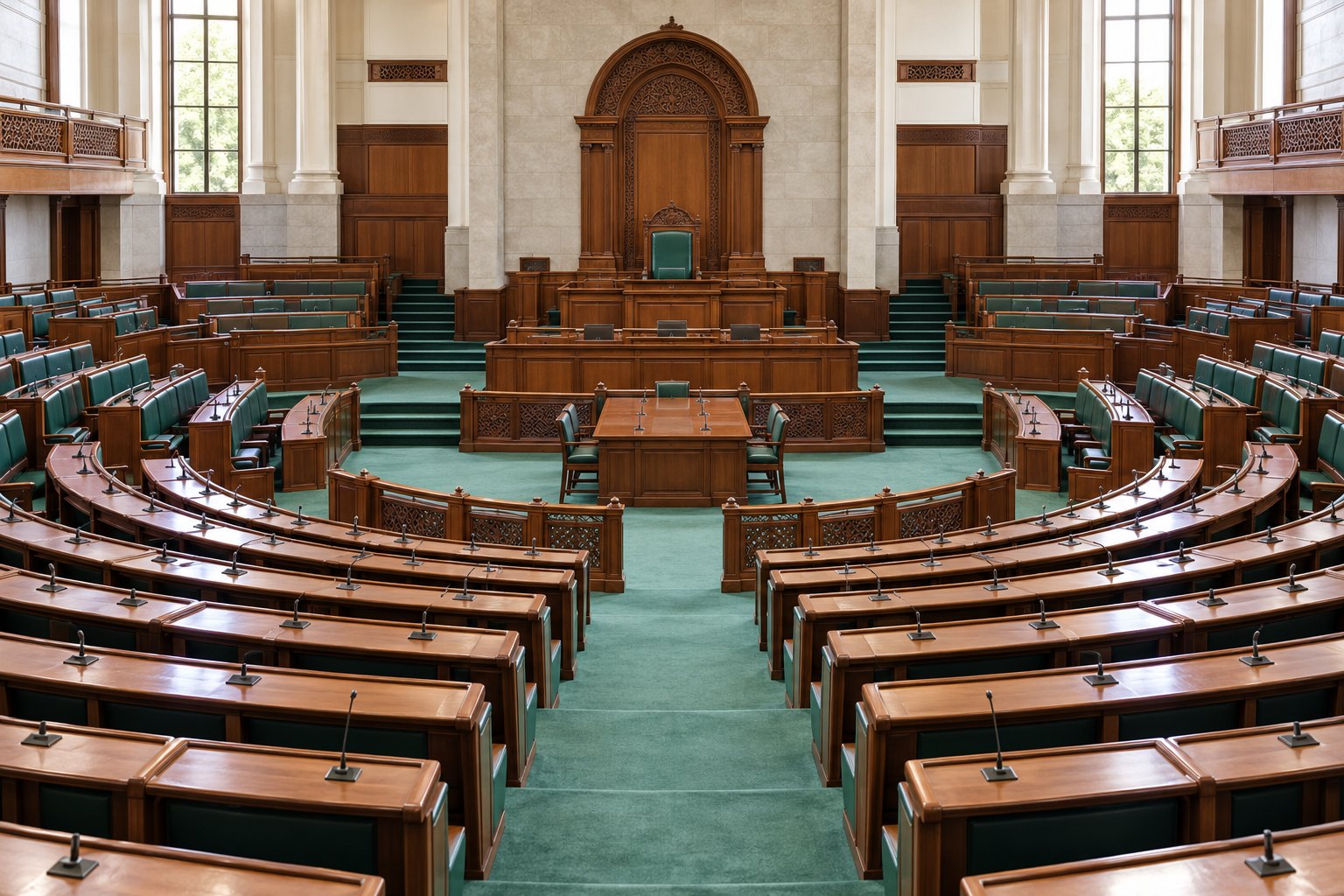
Scheduled Tribes (STs) get reserved seats in every State Assembly under Article 332, sized to their population share; until the first Census after 2026, that share comes from the 2001 Census. A 2025 law has the Census Commissioner re-estimate Goa's ST population to reserve seats. A High Court interim order of 29 October 2026 has put the notification on hold.
Syllabus: GS2 · Constitution; Prelims · Polity & Governance; GS2 · Parliament & State Legislatures
Why this matters for UPSC
GS2 polity: reservation in legislatures under Articles 330 and 332, and delimitation under Article 170. Prelims can ask which Article covers what; Mains, the Census freeze and tribal representation.
In short
Article 332 of the Constitution reserves Assembly seats for Scheduled Castes and Scheduled Tribes by population share, but a 2001 Census base can leave tribes listed later without seats.
Tribal representation should follow the tribe list without breaking the constitutional freeze; a defensible estimation method, tested by the courts, will decide Goa's case.
Why it matters
A voter from Goa's Kunbi, Gauda or Velip communities belongs to a listed tribe, yet the seat count in the Assembly was fixed before such tribes were listed. Reserved seats are meant to give a tribe a guaranteed voice in the House that makes its laws and budgets. The new law tried to close that gap before the next election. The court's pause means those seats may not be ready in time, so tribal communities could vote once more under a map that leaves them out. The wider question is how a Census freeze, which keeps seat totals fixed, can delay representation for groups added to the tribe list later.
Prelims pointers
- Article 330 reserves seats for SCs and STs in the Lok Sabha; Article 332 does so in State Legislative Assemblies, both by population share.
- Article 82 provides for readjusting Lok Sabha seats after each Census; Article 170 does the same for State Legislative Assemblies.
- Under Article 170(3), total Assembly seats in each State stay as readjusted on the 1971 Census until the first Census after 2026.
- Article 332 keeps STs in the autonomous districts of Assam outside the general ST quota; the autonomous districts get reserved seats of their own.
- Article 332(3A) makes special provision for ST seats in Arunachal Pradesh, Meghalaya, Mizoram and Nagaland until the readjustment on the post-2026 Census.
Practise a UPSC-style question
With reference to reservation of seats for Scheduled Castes and Scheduled Tribes, consider the following statements:
1. Article 332 reserves seats in State Legislative Assemblies in proportion to the group's population in the State.
2. Article 330 provides for reservation of seats for Scheduled Castes and Scheduled Tribes in the Rajya Sabha.
3. Scheduled Tribes in the autonomous districts of Assam are dealt with separately for Lok Sabha reservation.
Which of the statements given above is/are correct?
- (a) 1 and 2 only
- (b) 2 and 3 only
- (c) 1 and 3 only
- (d) 1, 2 and 3
Show the answer
Answer: (c) 1 and 3 only
Answer: (c) 1 and 3 only. Article 330 concerns the Lok Sabha, not the Rajya Sabha.
Statement 1: correct. Article 332 ties the number of reserved Assembly seats to the share of SCs or STs in the State's population.
Statement 2: incorrect. Article 330 reserves seats in the House of the People, the Lok Sabha; the Council of States is not covered.
Statement 3: correct. Article 330 lists STs of Assam's autonomous districts as a category apart from other STs.
Eliminate: Statement 2 names the wrong House, so statement 2 is false. Out: (a), (b), (d).
Trap: Swapped attribution. The Lok Sabha rule of Article 330 is pinned on the Rajya Sabha, whose members are elected indirectly.
Remember: 330 = Lok Sabha reserved seats; 332 = State Assembly reserved seats.
More Explainers
- Crypto in Indian law: virtual digital assets, tax and PMLA cover Economy
- The collegium system for appointing and transferring higher court judges Polity
- Protected Area, Restricted Area and Inner Line Permits Polity
- Ballot papers and EVMs: where India still votes on paper Polity
- Gelephu Mindfulness City: Bhutan's special zone on the Assam border World & IR
- Nuclear fusion, the tokamak and India's role in ITER Sci-Tech
- Gilgit-Baltistan, CPEC and India's sovereignty objection World & IR
- India-Nepal electricity trade: how Nepal sells power to India World & IR
- Infant mortality and child malnutrition among Scheduled Tribes National
- Genocide Convention, 1948: the legal test and who can judge it World & IR
- Chola bronzes: lost-wax casting and Nataraja iconography National
- PMMSY, PM-MKSSY, FIDF and KCC: how India funds its fish value chain Economy