
Inter-State river water disputes: Article 262, the 1956 Act and tribunals
Why in news: On 26 October 2026, Telangana and Maharashtra agreed to a joint committee to study raising the Tummidihatti project's height.
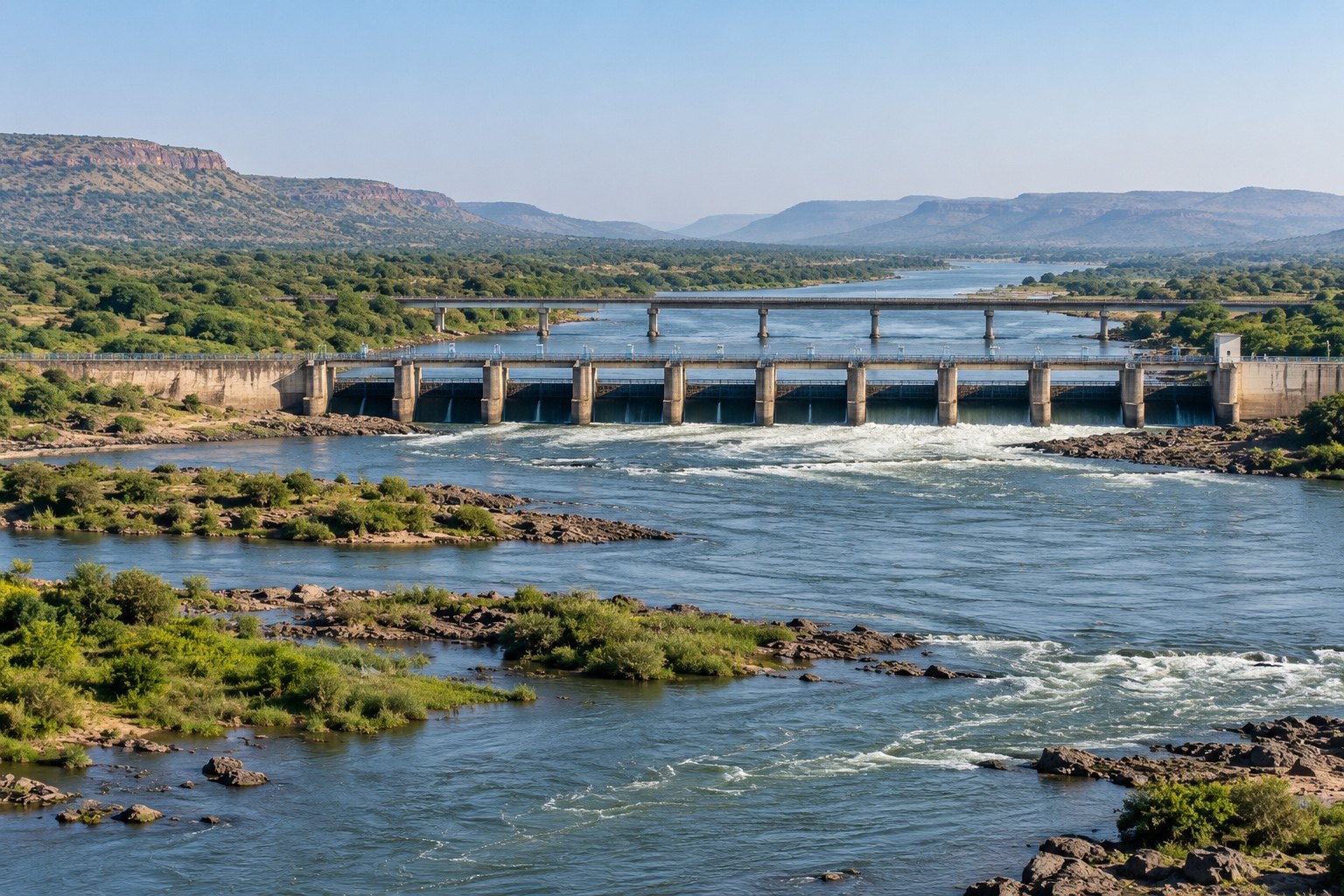
Article 262 of the Constitution lets Parliament provide for settling disputes over inter-State river waters and keep courts out of them. The Inter-State River Water Disputes Act, 1956 does this through Water Disputes Tribunals. On 26 October 2026, Telangana and Maharashtra instead chose talks, agreeing to a joint committee on the Tummidihatti project.
Syllabus: GS2 · Constitution; GS2 · Federalism & Local Government; GS2 · Separation of Powers
Why this matters for UPSC
GS2 federalism and dispute redressal. Prelims can ask what Article 262, entry 56 of List I and entry 17 of List II provide and which tribunals exist; Mains, why awards take decades and what the 2019 Bill proposes.
In short
Inter-State river water disputes are conflicts between States over sharing rivers that cross their borders; Article 262 lets Parliament send them to tribunals and keep courts out.
Article 262 trades court access for expert adjudication; that bargain holds only if awards come on time, are notified and are enforced.
Why it matters
Farmers, towns and power plants in a river basin depend on how much water crosses a State border, above all in a dry year. A tribunal's decision fixes those shares, but only after it is published and a body carries it out. Until then, each State plans dams and canals on its own reading of its rights, and a project like a barrage can wait for years. The larger issue is federal: water belongs to the States, yet rivers ignore their borders, so the Centre must act as referee without taking the subject over. Faster and final decisions would give farmers certainty about water and spare States years of conflict.
Prelims pointers
- Article 262 is an enabling clause: courts are barred only because Parliament so provided, through section 11 of the Inter-State River Water Disputes Act, 1956.
- Under entry 56 of List I, Parliament has enacted the River Boards Act, 1956, the Betwa River Board Act, 1976 and the Brahmaputra Board Act, 1980.
- A tribunal has a chairman and two members, nominated by the Chief Justice of India from Supreme Court or High Court judges; the Centre may add assessors.
- Section 7 bars a State from charging another State seigniorage for water from works inside its borders; a dispute over such a levy counts as a water dispute.
- Section 8: no tribunal reference for a matter that may go to arbitration under the River Boards Act, 1956.
- A tribunal holds civil-court powers under the Code of Civil Procedure, 1908 to summon witnesses, call for documents and requisition data (section 9).
- The 1956 Act has been amended four times, last in 2002; its Rules were framed in 1959 and last amended in January 2011.
Practise a UPSC-style question
With reference to Article 262 of the Constitution of India, consider the following statements:
1. Parliament may by law provide for the adjudication of disputes over the use, distribution or control of inter-State river waters.
2. Article 262 by itself bars the Supreme Court from hearing inter-State water disputes, without any law made by Parliament.
Which of the statements given above is/are correct?
- (a) 1 only
- (b) 2 only
- (c) Both 1 and 2
- (d) Neither 1 nor 2
Show the answer
Answer: (a) 1 only
Answer: (a) 1 only. Article 262 lets Parliament provide for adjudication and, by law, bar courts; it bars nothing by itself.
Statement 1: correct. Article 262(1) lets Parliament by law provide for adjudicating disputes over use, distribution or control of inter-State river waters.
Statement 2: incorrect. Article 262(2) says Parliament may by law bar the courts; the bar comes from section 11 of the Inter-State River Water Disputes Act, 1956.
Eliminate: Statement 2 misreads an enabling clause as a direct bar, so it is incorrect. Out: (b), (c).
Eliminate: Statement 1 is the text of Article 262(1), so it is correct. Out: (d).
Trap: Wrong scope. The question turns a power Parliament may use into a bar the Constitution imposes on its own.
Remember: Article 262 enables; section 11 of the 1956 Act bars the courts.
In the news
More Explainers
- Crypto in Indian law: virtual digital assets, tax and PMLA cover Economy
- The collegium system for appointing and transferring higher court judges Polity
- Protected Area, Restricted Area and Inner Line Permits Polity
- Scheduled Tribe seats in Assemblies: Article 332 and Goa's 2025 Act Polity
- Ballot papers and EVMs: where India still votes on paper Polity
- Gelephu Mindfulness City: Bhutan's special zone on the Assam border World & IR
- Nuclear fusion, the tokamak and India's role in ITER Sci-Tech
- Gilgit-Baltistan, CPEC and India's sovereignty objection World & IR
- India-Nepal electricity trade: how Nepal sells power to India World & IR
- Infant mortality and child malnutrition among Scheduled Tribes National
- Genocide Convention, 1948: the legal test and who can judge it World & IR
- Chola bronzes: lost-wax casting and Nataraja iconography National