
Subordinate courts (Articles 233-237): appointment and control of district judges
Why in news: On 26 October 2026 the Supreme Court said 14 States had agreed to let district judicial officers serve till 62.
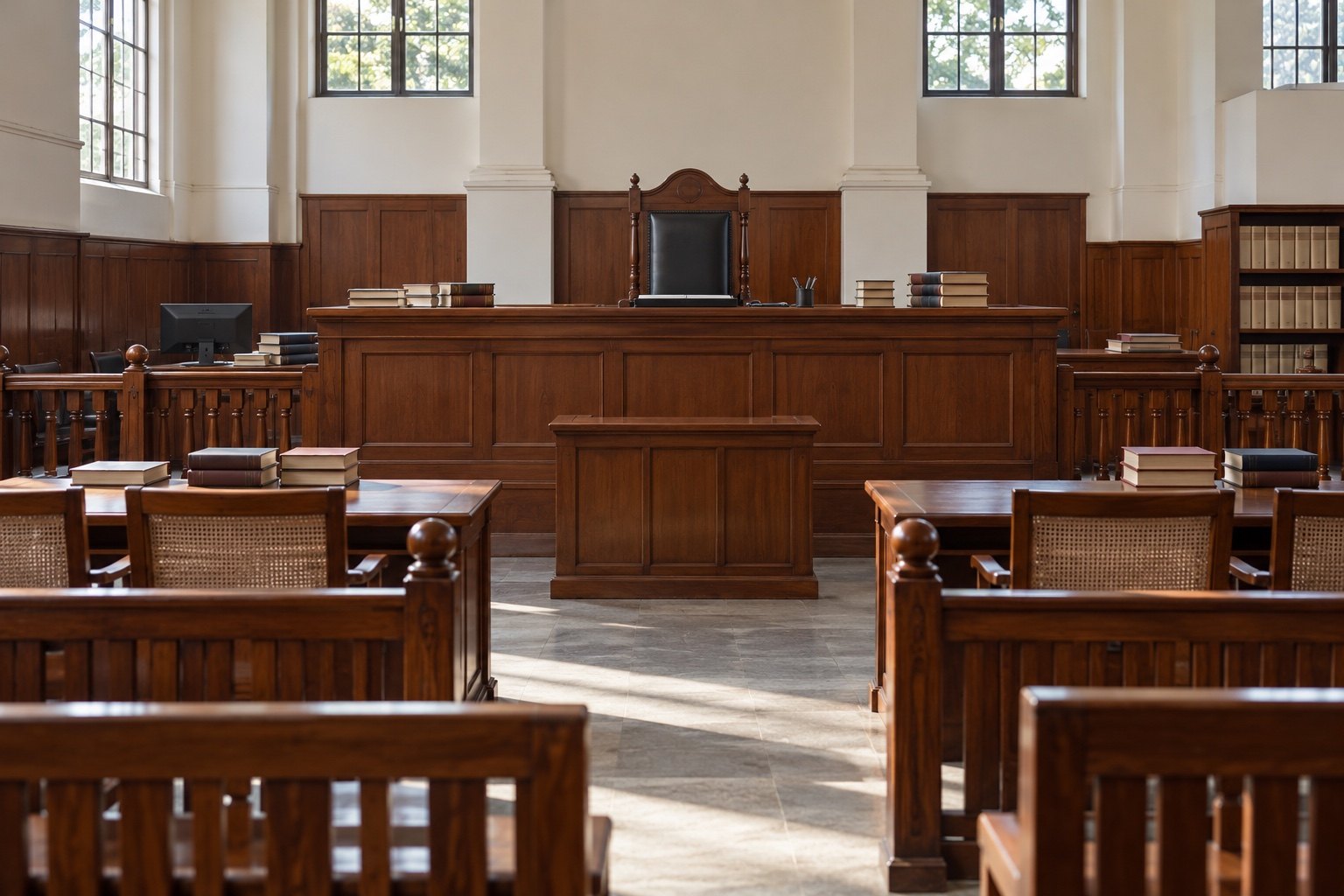
Articles 233 to 237 of the Constitution govern the subordinate courts. The Governor appoints district judges in consultation with the High Court, which then controls the courts below. On 26 October 2026 the Supreme Court recorded that 14 States have agreed to raise district judicial officers' retirement age from 60 to 62.
Syllabus: GS2 · Federalism & Local Government; Prelims · Polity & Governance; GS2 · Executive & Judiciary
Why this matters for UPSC
GS2 polity asks about the judiciary's structure: Prelims can ask what Articles 233 to 237 provide and who appoints a district judge; Mains, about the High Court's control and judicial independence.
In short
Subordinate courts are the district courts and the courts below them. Chapter VI of Part VI, Articles 233 to 237, divides power over them between Governor and High Court.
The Constitution gives the High Court control of the district judiciary; uniform, consent-based service conditions must now protect that independence from State budgets.
Why it matters
A district court is where most people file a property suit, seek bail or face a criminal trial. When an experienced judge retires at 60 and the post stays empty, cases move to a new judge who must learn the files again, and hearings slow down. Letting fit judges serve two more years keeps that experience on the bench while recruitment catches up. The larger issue is independence: if a State government could set a judge's pay and tenure like any clerk's, the courts that rule against it every day would depend on its budget. The High Court's check on each officer at 60 keeps the extension from becoming automatic.
Prelims pointers
- Article 233(2): a direct recruit as district judge needs at least seven years as an advocate or pleader and the High Court's recommendation.
- Article 234: recruitment below district judge follows the Governor's rules, made after consulting the State Public Service Commission and the High Court.
- Article 235: posting, promotion and grant of leave of judicial officers below district judge are vested in the High Court.
- Article 233A was inserted by the Constitution (Twentieth Amendment) Act, 1966.
- Article 236(a): 'district judge' includes a sessions judge, an additional district judge, a chief judge of a small cause court and a chief presidency magistrate.
- Article 237: the Governor, by public notification, may apply Chapter VI to any class or classes of magistrates.
- Article 50, a Directive Principle: the State shall take steps to separate the judiciary from the executive in its public services.
- First National Judicial Pay Commission: set up by the Union on 21 March 1996 under Justice K.J. Shetty; final report on 11 January 1999.
Practise a UPSC-style question
With reference to the appointment of district judges under the Constitution of India, consider the following statements:
1. The Governor of the State appoints district judges in consultation with the High Court exercising jurisdiction over that State.
2. A person not already in the service of the Union or the State must have practised for at least ten years as an advocate or pleader.
3. A person directly recruited from the Bar as a district judge must be recommended by the High Court.
Which of the statements given above is/are correct?
- (a) 1 and 2 only
- (b) 2 and 3 only
- (c) 1 and 3 only
- (d) 1, 2 and 3
Show the answer
Answer: (c) 1 and 3 only
Answer: (c) 1 and 3 only. Article 233 asks for seven years at the Bar, not ten.
Statement 1: correct. Article 233(1) gives the Governor the power to appoint, post and promote district judges in consultation with the High Court.
Statement 2: incorrect. Article 233(2) asks for not less than seven years as an advocate or a pleader for a direct recruit.
Statement 3: correct. Article 233(2) also requires that such a person be recommended by the High Court for appointment.
Eliminate: statement 2 is the surest, as seven years is the figure in Article 233(2). Out: (a), (b), (d).
Trap: Near-miss figure. Ten years is the practice needed for a High Court judge under Article 217, so it looks familiar for a district judge too.
Remember: District judge from the Bar: seven years' practice plus the High Court's recommendation (Article 233(2)).
More Explainers
- Crypto in Indian law: virtual digital assets, tax and PMLA cover Economy
- The collegium system for appointing and transferring higher court judges Polity
- Protected Area, Restricted Area and Inner Line Permits Polity
- Scheduled Tribe seats in Assemblies: Article 332 and Goa's 2025 Act Polity
- Ballot papers and EVMs: where India still votes on paper Polity
- Gelephu Mindfulness City: Bhutan's special zone on the Assam border World & IR
- Nuclear fusion, the tokamak and India's role in ITER Sci-Tech
- Gilgit-Baltistan, CPEC and India's sovereignty objection World & IR
- India-Nepal electricity trade: how Nepal sells power to India World & IR
- Infant mortality and child malnutrition among Scheduled Tribes National
- Genocide Convention, 1948: the legal test and who can judge it World & IR
- Chola bronzes: lost-wax casting and Nataraja iconography National