
MPLADS: how MPs' local area fund works and flows through eSAKSHI
Why in news: On 5 October 2026 the Lok Sabha Committee on MPLADS chose six subjects for 2026-27, among them enhancing the Rs 5 crore allocation.
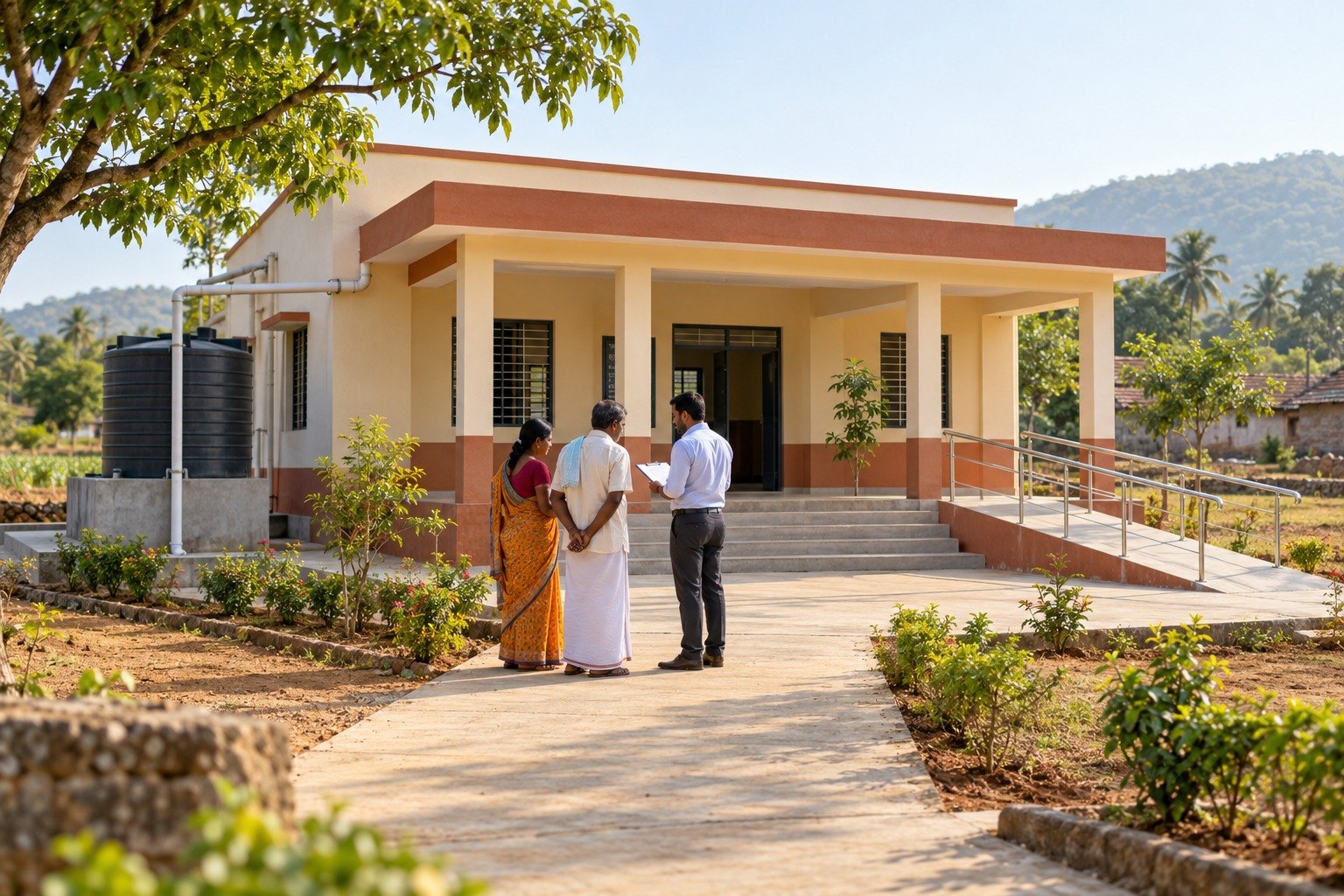
The Members of Parliament Local Area Development Scheme (MPLADS) is a Central Sector Scheme of the Ministry of Statistics and Programme Implementation. Each MP recommends works worth Rs 5 crore a year for durable community assets, now paid through the eSAKSHI portal. A Lok Sabha committee has chosen enhancing that allocation among its subjects for 2026-27.
Syllabus: Prelims · Polity & Governance; GS2 · Parliament & State Legislatures; GS2 · Government Policies
Why this matters for UPSC
MPLADS sits in GS2, government schemes and Parliament. Prelims asks its scheme type, ministry, allocation and SC/ST shares; Mains, whether MPs should choose local works and how eSAKSHI improves accountability.
In short
MPLADS is a Central Sector Scheme, fully funded by the Centre and run by MoSPI, under which each MP recommends Rs 5 crore of local works a year.
MPLADS works best as a gap-filler under district discipline; any rise should follow faster sanctions, finished assets and open data on every work.
Why it matters
For a village that lacks a school room, a drinking-water point or a link road, MPLADS is often the quickest route to one. Its MP can recommend the work, and the district must decide on it fast. Because the Centre pays the whole cost, a small but urgent need does not wait for a State's budget or a line department's plan. The larger issue is accountability. Lawmakers choosing local works sit close to the executive's job, so citizens need to see what was recommended, sanctioned and built. Digital tracking, a plaque at every site and the Right to Information Act, 2005 let them check whether public money became a lasting public asset.
Prelims pointers
- MPLADS origin: announced on 23 December 1993; run by the Ministry of Rural Development until October 1994, and by MoSPI since.
- Where works go: Lok Sabha member, own constituency; elected Rajya Sabha member, State of election; nominated member, anywhere in India; outside-area ceiling Rs 25 lakh a year.
- SC/ST earmarking: at least 15% of the yearly entitlement for Scheduled Caste areas, 7.5% for Scheduled Tribe areas; a Lok Sabha constituency short of one group may swap them.
- Calamity relief: any MP, up to Rs 1 crore a year for a Centre-declared Calamity of Severe Nature; a State's MPs, Rs 25 lakh where only the State declares one.
- Time limits, 2023 Guidelines: sanction or rejection within 45 days of a recommendation; completion generally within one year of sanction.
- Unspent balance is carried forward to the MP's next year; an MP serving under three months in a year gets nothing, three to nine months half.
- Pooling: MPLADS money may join other Central, State or local-body projects but is used last, to fill the gap; with MGNREGA it buys only materials (2023 Guidelines).
- Trusts and societies: Rs 50 lakh a year in all, Rs 1 crore to any one in a term; none with a sitting MP or relative on its board.
Practise a UPSC-style question
With reference to the Members of Parliament Local Area Development Scheme (MPLADS), consider the following statements:
1. It is a Central Sector Scheme fully funded by the Government of India.
2. It has been administered by the Ministry of Rural Development since October 1994.
3. Any unspent balance of an MP's annual allocation is carried forward to the next financial year.
Which of the statements given above is/are correct?
- (a) 1 and 2 only
- (b) 2 and 3 only
- (c) 1 and 3 only
- (d) 1, 2 and 3
Show the answer
Answer: (c) 1 and 3 only
Answer: (c) 1 and 3 only. Statement 2 swaps the ministry that runs the scheme.
Statement 1: correct. MoSPI and the 2023 Guidelines describe MPLADS as a Central Sector Scheme fully funded by the Government of India.
Statement 2: incorrect. The Ministry of Rural Development ran it at first; since October 1994 the Ministry of Statistics and Programme Implementation has.
Statement 3: correct. Under the 2023 Guidelines an unspent balance is added to the MP's allocation for the next financial year.
Eliminate: Statement 2 is wrong because MoSPI has run the scheme since October 1994. Out: (a), (b), (d).
Trap: Swapped attribution. The scheme's first home, Rural Development, is presented as its present one.
Remember: MPLADS is MoSPI's Central Sector Scheme; Rural Development held it only till October 1994.
More Explainers
- Crypto in Indian law: virtual digital assets, tax and PMLA cover Economy
- The collegium system for appointing and transferring higher court judges Polity
- Protected Area, Restricted Area and Inner Line Permits Polity
- Scheduled Tribe seats in Assemblies: Article 332 and Goa's 2025 Act Polity
- Ballot papers and EVMs: where India still votes on paper Polity
- Gelephu Mindfulness City: Bhutan's special zone on the Assam border World & IR
- Nuclear fusion, the tokamak and India's role in ITER Sci-Tech
- Gilgit-Baltistan, CPEC and India's sovereignty objection World & IR
- India-Nepal electricity trade: how Nepal sells power to India World & IR
- Infant mortality and child malnutrition among Scheduled Tribes National
- Genocide Convention, 1948: the legal test and who can judge it World & IR
- Chola bronzes: lost-wax casting and Nataraja iconography National