
Apomixis and genome editing: how India is breeding its staple crops
Why in news: The Hindu's science page of 29 October 2026 reviewed new genetic tools for India's rice and wheat, naming apomixis as the next one.
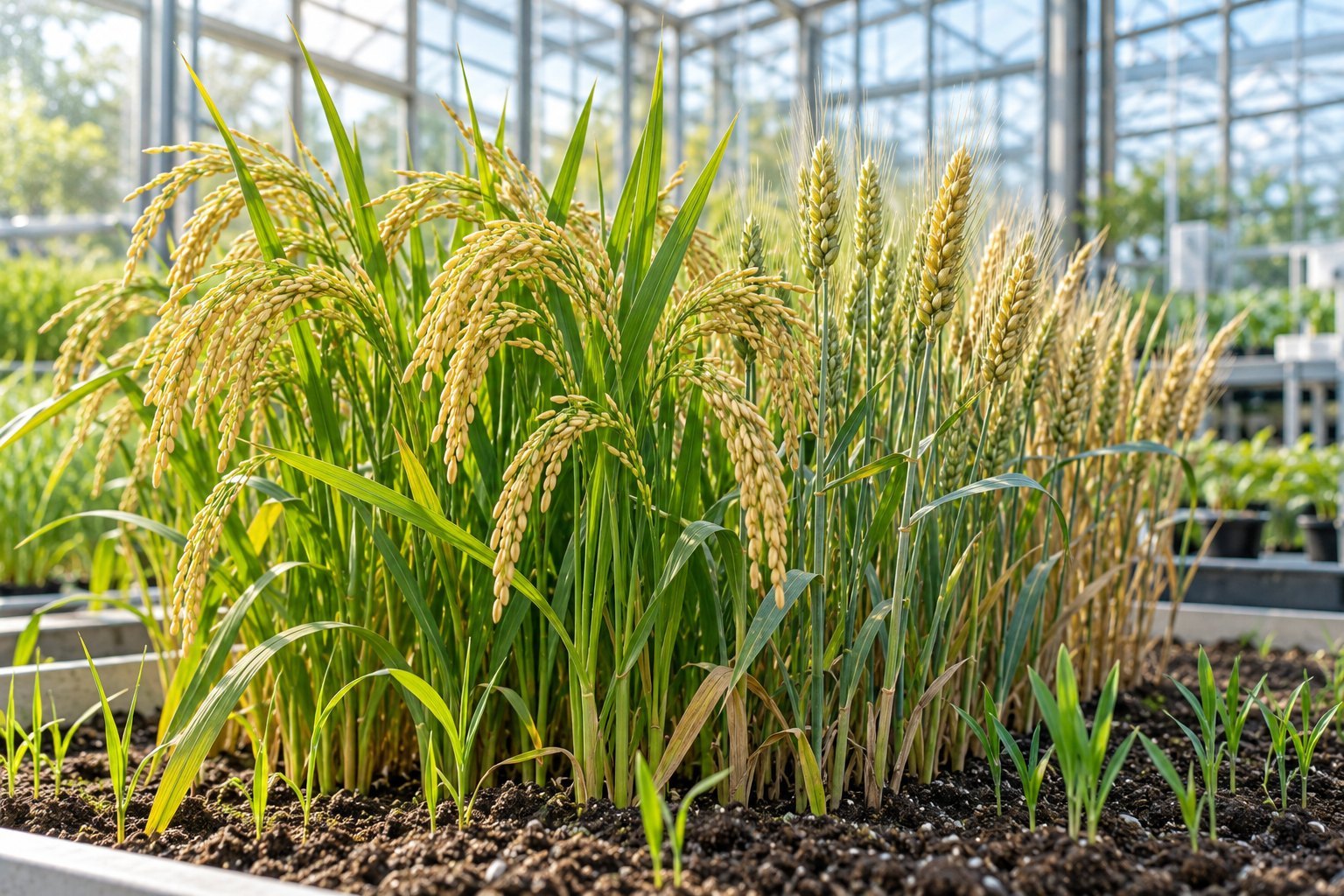
Apomixis lets a plant form seed without fertilisation. A hybrid's vigour can then pass unchanged to the next generation. Genome editing makes precise changes in a crop without leaving foreign DNA. India has exempted such SDN-1 and SDN-2 plants from key biosafety rules since 2022. Both tools were reviewed for rice and wheat on 29 October 2026.
Syllabus: GS3 · Agriculture & Irrigation; GS3 · Indian Achievements in S&T; GS3 · IT, Space, Biotech & IPR
Why this matters for UPSC
GS3 science and technology (biotechnology) and agriculture: Prelims can ask what apomixis and SDN-1 and SDN-2 editing are and which rules exempt them; Mains, how edited crops and hybrid seed affect food security and farmers.
In short
Apomixis is seed formation without fertilisation, which lets a hybrid breed true. With genome editing, exempt in India since 2022 when no foreign DNA remains, it could reshape staple-crop breeding.
India should pair its lighter rules for DNA-free edits with rigorous field testing and a strong public seed system, so apomixis reaches smallholders affordably.
Why it matters
A smallholder who grows hybrid rice pays for fresh seed every season, because seed saved from a hybrid crop loses its vigour. If apomixis reaches fields, that farmer could keep part of the harvest as seed and sow it again without losing yield, removing a big recurring expense for a small farm. Genome editing helps sooner: rice that ripens earlier or tolerates salt can be grown where water is short or soils are damaged, and public breeders can pass it on without restrictive patents. The larger question is food security in a hotter, less predictable climate, and whether India's rules and public seed system keep pace as private firms invest in Indian seed.
Prelims pointers
- Any registered seed company, whether public or private, can take up the new varieties that India's public institutions breed.
- Private companies dominate seed supply for maize and cotton in India, while public institutions play the large role in wheat and rice.
- Biosafety regulation of SDN-1 and SDN-2 genome-edited plants is done by Institutional Biosafety Committees, under SOPs notified on the RCGM's recommendation.
- Seed saved from a hybrid crop loses the hybrid's vigour, which is why farmers buy fresh hybrid seed each season.
- HB4 wheat is a transgenic trait carrying a sunflower gene for drought tolerance; it is grown commercially in Argentina.
- Breeder seed from ICAR laboratories and State agricultural universities is multiplied into foundation seed; the National Seeds Corporation (1963) works with State seed corporations early in supply.
- Wheat is harder to hybridise than rice or maize because of its floral biology.
Practise a UPSC-style question
With reference to apomixis in crop plants, consider the following statements:
1. It allows a plant to form viable seed without fertilisation taking place.
2. It causes hybrid vigour to be lost in the very next generation of saved seed.
3. Adding foreign genes to the plant is not required to make it work.
Which of the statements given above is/are correct?
- (a) 1 and 2 only
- (b) 2 and 3 only
- (c) 1 and 3 only
- (d) 1, 2 and 3
Show the answer
Answer: (c) 1 and 3 only
Answer: (c) 1 and 3 only. Apomixis skips fertilisation and needs no foreign gene; it keeps hybrid vigour, it does not lose it.
Statement 1: correct. In apomixis the plant bypasses sexual reproduction and fertilisation, so the seed copies the mother plant.
Statement 2: incorrect. Apomixis preserves hybrid vigour across generations; ordinary seed saved from a hybrid is what loses it.
Statement 3: correct. Apomixis can work without adding foreign genes, which is why it may face a simpler approval route.
Eliminate: statement 2 reverses what apomixis does. Out: (a), (b), (d).
Trap: Reversed direction. The statement takes the problem apomixis solves, vigour fading in saved hybrid seed, and pins it on apomixis itself.
Remember: Apomixis = seed without fertilisation; hybrid vigour kept; no foreign gene needed.
More Explainers
- Crypto in Indian law: virtual digital assets, tax and PMLA cover Economy
- The collegium system for appointing and transferring higher court judges Polity
- Protected Area, Restricted Area and Inner Line Permits Polity
- Scheduled Tribe seats in Assemblies: Article 332 and Goa's 2025 Act Polity
- Ballot papers and EVMs: where India still votes on paper Polity
- Gelephu Mindfulness City: Bhutan's special zone on the Assam border World & IR
- Nuclear fusion, the tokamak and India's role in ITER Sci-Tech
- Gilgit-Baltistan, CPEC and India's sovereignty objection World & IR
- India-Nepal electricity trade: how Nepal sells power to India World & IR
- Infant mortality and child malnutrition among Scheduled Tribes National
- Genocide Convention, 1948: the legal test and who can judge it World & IR
- Chola bronzes: lost-wax casting and Nataraja iconography National