
Economy Current Affairs for UPSC
Every Economy story from the daily editions, newest first, each in short with why it matters for Prelims and Mains. Page 2 of 6.
-
EconomyGS2GS3
Patents in India: Section 3(d), compulsory licences and TRIPS
Why in news: On 16 October 2026 the Ayush Ministry cited a CGPDTM report counting 4,077 Ayush patent applications and 711 grants between FY 2014-15 and FY 2025-26.
The Patents Act, 1970 gives a 20-year monopoly only to new, inventive and industrially applicable inventions. Section 3(d) refuses patents on new forms of known substances without enhanced efficacy, and sections 84 to 92 allow compulsory licences. The law is in focus after an official report counted 4,077 Ayush patent applications filed since 2014-15.
Read the story -
EconomyGS3Prelims
SEBI recasts Closing Auction Session; expiry settlement moves to VWAP
The Securities and Exchange Board of India (SEBI) revised its Closing Auction Session (CAS) framework on 15 October 2026. From 7 December 2026, the cash segment's closing auction will run from 3:30 to 3:40 pm and most derivatives will trade until 3:45 pm. Expiring index and stock derivatives will settle on the last 30 minutes' volume-weighted average price.
Read the story -
EconomyGS3Prelims
Household Consumption Expenditure Survey: how MPCE values free welfare items
Why in news: Two NSO officers' paper in Sarvekshana's September 2026 issue, posted on 13 October 2026, used HCES 2022-23 data to value in-kind transfers.
The Household Consumption Expenditure Survey (HCES) of the National Statistics Office measures Monthly Per Capita Consumption Expenditure (MPCE), the chief gauge of living standards. Since 2022-23 it publishes two MPCE series, without and with the value of food and goods received free through welfare schemes. A Sarvekshana paper posted on 13 October 2026 uses that gap to trace in-kind transfers.
Read the story -
EconomyGS3
Windfall tax: India's fortnightly levy on petrol, diesel and ATF exports
Why in news: From 16 October 2026, petrol exports pay Rs 2.5 a litre (from Rs 0.5) and diesel Rs 8.5 (from Rs 16); ATF stays Rs 10.5.
India's windfall tax is a Special Additional Excise Duty and Road and Infrastructure Cess on exports of petrol, diesel and ATF, reset every fortnight by the Finance Ministry. First levied in July 2022 and withdrawn in December 2024, it returned for exports in March 2026. From 16 October, petrol exports pay Rs 2.5 a litre, diesel Rs 8.5.
Read the story -
EconomyPrelimsGS3
Bilateral Investment Treaties and India's 2015 Model BIT
Why in news: A revamped Model BIT was reported on 25 September 2026 to have been sent to the Union Cabinet for approval.
Under a Bilateral Investment Treaty (BIT), two countries promise each other's investors protections that an international tribunal can enforce. India's 2015 Model BIT keeps tax disputes out and sends investors to domestic courts first. In September 2026, government sources said a revamped Model had been sent to the Union Cabinet for approval.
Read the story -
EconomyGS3GS2
Foreign banks in India: branch mode or wholly owned subsidiary
Why in news: On 16 October 2026 the RBI sanctioned, under section 44A, the amalgamation of Emirates NBD's Indian branches into RBL Bank from 1 December 2026.
Foreign banks may operate in India through the parent's own branches or through a wholly owned subsidiary incorporated in India, never both, under a framework the RBI first issued in 2013. The subsidiary gets near national treatment in opening branches. On 16 October 2026 the RBI sanctioned the merger of Emirates NBD's Indian branches into RBL Bank.
Read the story -
EconomyPrelimsGS3
Connectivity infrastructure in Jammu and Kashmir: rail, roads and air
Why in news: PIB's explainer of 17 October 2026, Connecting Kashmir: Building the Infrastructure for Growth, reviewed the region's rail, road, air and cargo links.
Jammu and Kashmir's connectivity rests on the 272-km Udhampur-Srinagar-Baramulla Rail Link, the Sonamarg (Z-Morh) road tunnel with the Zojila Tunnel being built towards Ladakh, Srinagar's expanding airport and UDAN airports planned at Udhampur and Kishtwar. Freight terminals carry the region's produce outward. A PIB explainer of 17 October 2026 reviewed how these links now work as one network.
Read the story -
EconomyGS3Prelims
Minimum wages and the floor wage under the Code on Wages
Why in news: The Labour Bureau's orders of 30 September 2026 revised the Variable Dearness Allowance in central-sphere minimum wages from 1 October 2026.
Under the Code on Wages, 2019, every employee has a statutory right to a minimum wage, fixed by the Centre or a State by skill category and area, and never below a national floor wage set under Section 9. The Labour Bureau's orders of 30 September 2026 raised the Variable Dearness Allowance in central-sphere rates from 1 October 2026.
Read the story -
EconomyGS3Prelims
National Food Security Act, 2013: entitlements, PMGKAY, ONORC and fortification
Why in news: The FAO marked World Food Day on 16 October 2026 under the theme 'Innovate today. Nourish tomorrow.'
The National Food Security Act, 2013 gives up to 75% of rural and 50% of urban Indians a legal right to grain: 35 kg a month per Antyodaya household and 5 kg per person for priority households, free since 2023 under the Pradhan Mantri Garib Kalyan Anna Yojana. The FAO marked World Food Day on 16 October 2026.
Read the story -
EconomyGS3GS2
Digital rupee (e₹) and UPI: central bank money versus a payment rail
Why in news: The Reserve Bank of India updated its digital rupee FAQs as on 1 October 2026, setting out how e₹ differs from UPI.
The digital rupee (e₹) is India's Central Bank Digital Currency (CBDC): a digital form of the rupee note, issued by the Reserve Bank of India, held in a wallet and accepted as legal tender. The Unified Payments Interface (UPI) is a payment system that moves money between bank accounts. RBI's FAQs, updated on 1 October 2026, set out this difference.
Read the story -
EconomyGS3
Government securities and bond yields: why prices and yields move opposite
Why in news: India's benchmark 10-year government bond yield rose to 7.40% on 12 October 2026 after the RBI's liquidity-withdrawal measures announced on 9 October.
Government bonds, or G-Secs, are how the Centre and the States borrow from investors; the yield is the return a buyer earns, and it climbs when the bond's market price drops. India's benchmark 10-year yield rose 10 basis points to 7.40% on 12 October 2026, after the RBI took steps to withdraw surplus liquidity from banks.
Read the story -
EconomyGS3GS2
Non-tariff barriers: SPS and TBT measures and India's trade remedies
Why in news: On 16 October 2026 the Finance Minister said China's non-tariff barriers, citing phytosanitary measures, are the biggest hurdle in India-China trade.
Non-tariff barriers restrict trade through rules instead of duties: food-safety and plant-health (SPS) checks and technical standards (TBT), both disciplined by WTO agreements. Trade remedies, namely anti-dumping, countervailing and safeguard duties, investigated in India by the DGTR, answer unfair or surging imports. On 16 October 2026 the Finance Minister called non-tariff barriers the biggest hurdle in India-China trade.
Read the story -
EconomyPrelimsGS3
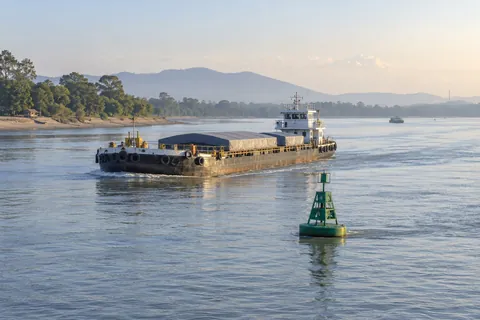
Inland waterways: National Waterways, IWAI and safe river navigation
Why in news: A PIB backgrounder of 16 October 2026 described IWAI's surveys, depth monitoring and digital navigation tools and the Brahmaputra's planned riverine lighthouses.
The National Waterways Act, 2016 declares 111 National Waterways, which the Inland Waterways Authority of India (IWAI) keeps navigable through hydrographic surveys, dredging, navigation aids and digital depth data. A PIB backgrounder of 16 October 2026 set out this system, including India's first riverine lighthouses planned on the Brahmaputra.
Read the story -
EconomyGS3GS1
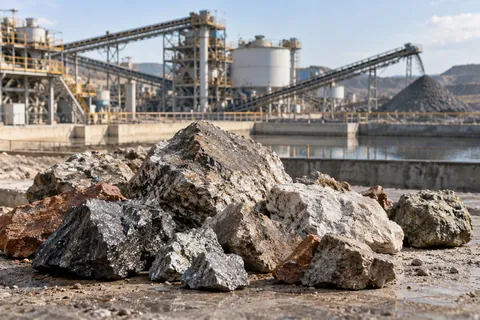
Critical minerals, rare earths and the National Critical Mineral Mission
Why in news: On 16 October 2026 the World Bank announced a goal to quintuple its critical-minerals business in five years: USD 19 billion over FY2026-30, per Reuters.
Critical minerals are minerals of high economic importance whose supply is at risk; the Ministry of Mines listed 30 for India in June 2023, rare earth elements among them. The MMDR Amendment Act, 2023 lets the Centre auction them. On 16 October 2026 World Bank President Ajay Banga set a goal to quintuple the Bank's critical-minerals business within five years.
Read the story -
EconomyGS3Prelims
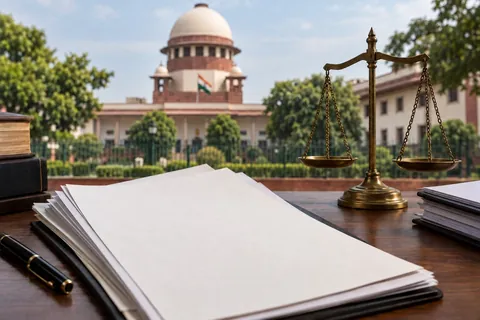
AT-1 bonds: Supreme Court upholds quashing of Yes Bank write-down
The Supreme Court on 15 October 2026 dismissed appeals by Yes Bank, the Reserve Bank of India and the Centre, leaving intact the Bombay High Court's 2023 ruling that quashed the March 2020 write-down of Rs 8,415 crore of Additional Tier 1 (AT-1) bonds. At the point of non-viability, it held, only the RBI, not the administrator, could order it.
Read the story -
EconomyGS3GS2
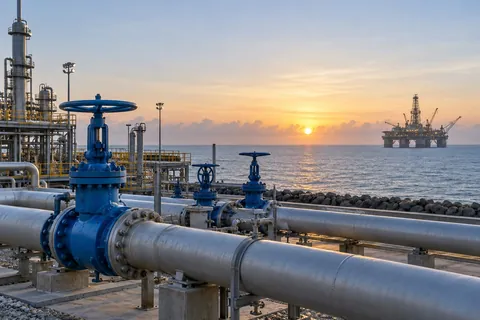
Domestic natural gas pricing: APM formula and deepwater ceiling
Why in news: On 30 September 2026, PPAC set the deepwater and HP-HT gas ceiling at $9.89/MMBtu for October 2026-March 2027, and October's APM cap at $7.
India prices gas from the old fields of ONGC and Oil India under the Administered Price Mechanism: 10% of the Indian Crude Basket, within a floor and ceiling. Deepwater, ultra-deepwater and HP-HT gas has pricing freedom up to a separate ceiling. PPAC has set that ceiling at $9.89/MMBtu for October 2026-March 2027, with APM gas capped at $7 for October.
Read the story -
EconomyGS3Prelims
RBI extends Foreign Exchange Risk Reserve to banks' own hedges, sets scope
The Reserve Bank of India has directed authorised dealer banks to hold a Foreign Exchange Risk Reserve (FERR) of 20% of the rupee value of qualifying forex derivative contracts, as interest-free cash with it. Directions of 10 and 12 October 2026 cover hedges buying foreign currency against the rupee; FAQs of 15 October set out the scope.
Read the story -
EconomyGS3Prelims
SCOMET: India's export-control list for dual-use items
Why in news: On 15 October 2026 the Commerce Minister launched the National Strategic Trade Command Centre, whose SCOMET dashboard tracks pending export applications.
SCOMET (Special Chemicals, Organisms, Materials, Equipment and Technologies) is India's control list for exporting dual-use, nuclear and military items, including software and technology. The Directorate General of Foreign Trade notifies it, and a listed item needs an export authorisation. On 15 October 2026 the Commerce Ministry launched a trade command centre that tracks pending SCOMET applications.
Read the story -
EconomyGS3Prelims
Rules of origin and India's DFTP Scheme for LDCs
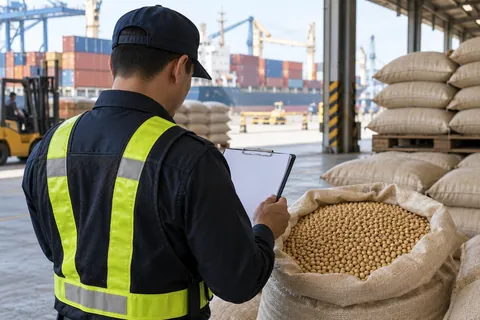
Why in news: On 15 October 2026, trade sources told Reuters that Niger-declared soybeans bound for India were diverted as customs tightened origin checks.
Rules of origin decide which country a product comes from, so that only a beneficiary's own goods get a trade preference. India's Duty Free Tariff Preference Scheme gives Least Developed Countries duty-free access subject to such rules. Customs is now holding soybean cargoes declared as from Niger, suspecting Nigerian beans relabelled to escape duty.
Read the story -
EconomyGS3Prelims
IMF Fiscal Monitor urges better tax design as sovereign yields rise
The International Monetary Fund's October 2026 Fiscal Monitor, 'Taxing Better to Boost Growth', released on 14 October at the IMF-World Bank Annual Meetings in Bangkok, urges revenue-neutral tax reforms to lift growth. The IMF projects global public debt to exceed 100% of world GDP by 2030 and wants high-debt advanced economies to start fiscal consolidation now as sovereign yields climb.
Read the story -
EconomyGS3Prelims
How India measures GDP: the 2022-23 base year revision
Why in news: On 15 October 2026, the IMF's Asia and Pacific Department director called India's GDP base revision a welcome development consistent with IMF advice.
India's GDP is compiled by the National Statistics Office under MoSPI, which on 27 February 2026 moved the national accounts base year from 2011-12 to 2022-23, adding double deflation, Supply and Use Tables and new data such as GST and annual household surveys. On 15 October 2026, an IMF director called the revision consistent with IMF advice.
Read the story -
EconomyGS3Prelims
Keynesian versus classical economics and the case for stabilisation policy
Why in news: On 12 October 2026, Robert E. Hall and Michael Woodford were announced as Economics Nobel laureates, for the microeconomic foundations of macroeconomic stabilisation.
Classical economists held that flexible wages and prices return an economy to full employment on their own. John Maynard Keynes argued in 1936 that total demand can stay too low, so governments should spend more in slumps and restrain demand in booms. The 2026 Economics Nobel, announced on 12 October for New Keynesian stabilisation models, revived the debate.
Read the story -
EconomyGS3Prelims
PPV&FR Act, 2001: plant breeders' rights and farmers' seed rights
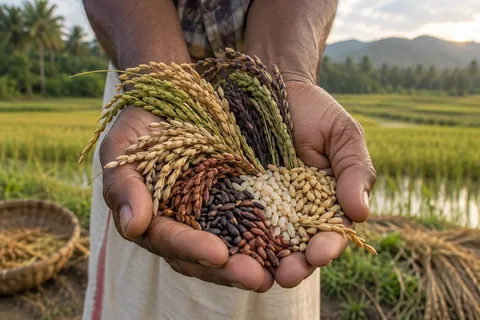
Why in news: Cheruvayal Raman, the Wayanad rice conserver who received the Plant Genome Saviour Farmer Recognition (2013) and Padma Shri (2023), died on 14 October 2026.
The Protection of Plant Varieties and Farmers' Rights Act, 2001 is India's sui generis law under the TRIPS Agreement. It gives breeders exclusive rights over registered varieties, lets farmers save, share and sell unbranded seed, and rewards conservers from the National Gene Fund. Cheruvayal Raman, a Wayanad rice conserver honoured under it in 2013, died on 14 October 2026.
Read the story -
EconomyGS3Prelims
India's trade deficit with China and its trade-defence toolkit
Why in news: On 14 October 2026, China's General Administration of Customs put India's January-September 2026 deficit with China at USD 105.93 billion.
India imports more from China than it sells there, chiefly electronics, machinery and organic chemicals; the gap was USD 112.15 billion in 2025-26, per Commerce Ministry data. India's tools include DGTR trade remedies, Quality Control Orders, Press Note 3 screening and PLI. On 14 October 2026, China's customs data put the January-September 2026 deficit at USD 105.93 billion.
Read the story -
EconomyGS3GS1
Women's work and the PLFS: LFPR, WPR and usual status
Why in news: A PIB backgrounder on 15 October 2026 reviewed women's work and enterprise, citing PLFS data on rising female participation.
The Periodic Labour Force Survey (PLFS) of MoSPI measures work through the Labour Force Participation Rate, Worker Population Ratio and unemployment rate, using a 365-day usual status and a seven-day Current Weekly Status. A PIB backgrounder of 15 October 2026 cites female LFPR rising from 23.3% (2017-18) to 40.0% (2025), though MoSPI says 2025 estimates may not be strictly comparable.
Read the story -
EconomyGS3
Disinvestment and strategic sale: how India sells public sector stakes
Why in news: On 14 October 2026 the CCEA approved selling 60.72% of IDBI Bank to a Fairfax unit for Rs 52,878 crore.
Disinvestment is the sale of the Centre's shares in public sector enterprises, either a minority stake or a strategic sale that also transfers management control. DIPAM, a Finance Ministry department, runs it under the New PSE Policy of 2021. On 14 October 2026 the CCEA approved selling 60.72% of IDBI Bank to a Fairfax unit.
Read the story -
EconomyGS3Prelims
RBI forex swaps: buy/sell, sell/buy and the 2026 FCNR(B) window
Why in news: Despite about USD 143.6 billion of swap-facility inflows, the rupee neared 97 a dollar; the RBI curbed rupee derivatives on 10 October 2026.
A foreign-exchange swap is a spot currency deal tied to its reversal on a fixed later date. In a buy/sell swap the Reserve Bank of India (RBI) takes in dollars and releases rupees; a sell/buy swap drains rupees. Under the RBI's 2026 swap facility, banks reported USD 1,43,596 million of forex inflows by 18 September 2026, the RBI said.
Read the story -
EconomyGS3GS2
Alternative Investment Funds and SEBI's accredited-investor framework
Why in news: SEBI's board approved wider accreditation on 24 September 2026; on 14 October a SEBI whole-time member said its circular would come soon.
An Alternative Investment Fund (AIF) is a privately pooled fund registered with SEBI, mainly as Category I, II or III; it normally takes at least Rs 1 crore from each investor. Accredited investors are exempt from that floor. SEBI's board approved on 24 September 2026 adding a Rs 5 crore securities-market exposure test for individuals, yet to be notified.
Read the story -
EconomyGS3Prelims
How India measures domestic tourism: DTES and Tourism Satellite Account
Why in news: MoSPI released the Domestic Tourism Expenditure Survey 2025-26 (NSS 80th round, July 2025-June 2026) on 23 September 2026, the first since 2014-15.
India measures domestic tourism from two sides. The National Statistics Office's Domestic Tourism Expenditure Survey asks households about overnight and same-day trips and their cost; the Ministry of Tourism's Tourism Satellite Account matches that spending with national accounts to estimate tourism's share of GDP and jobs. MoSPI released the 2025-26 survey's results on 23 September 2026.
Read the story -
EconomyGS3Prelims
ASUSE: how MoSPI measures India's unincorporated non-farm enterprises
Why in news: MoSPI's report of September 2026 gave ASUSE 2025's first district-level estimates, the NSO's first from a nationwide enterprise survey.
The Annual Survey of Unincorporated Sector Enterprises (ASUSE), run by the National Statistics Office under MoSPI, measures establishments outside company and LLP law in manufacturing, trade and other services, excluding farming and construction. Its 2025 round, released in March and May 2026, made districts the sampling strata, opening the way to district-level estimates.
Read the story














Other subjects
- National 86 stories
- World & IR 92 stories
- Polity 150 stories
- Environment 106 stories
- Sci-Tech 67 stories
- Defence 29 stories
- Miscellany 5 stories