
Mineral exchanges: an electronic market to set India's mineral prices
Why in news: On 28 October 2026, firms were reported setting up India's first mineral exchanges under rules framed earlier in 2026.
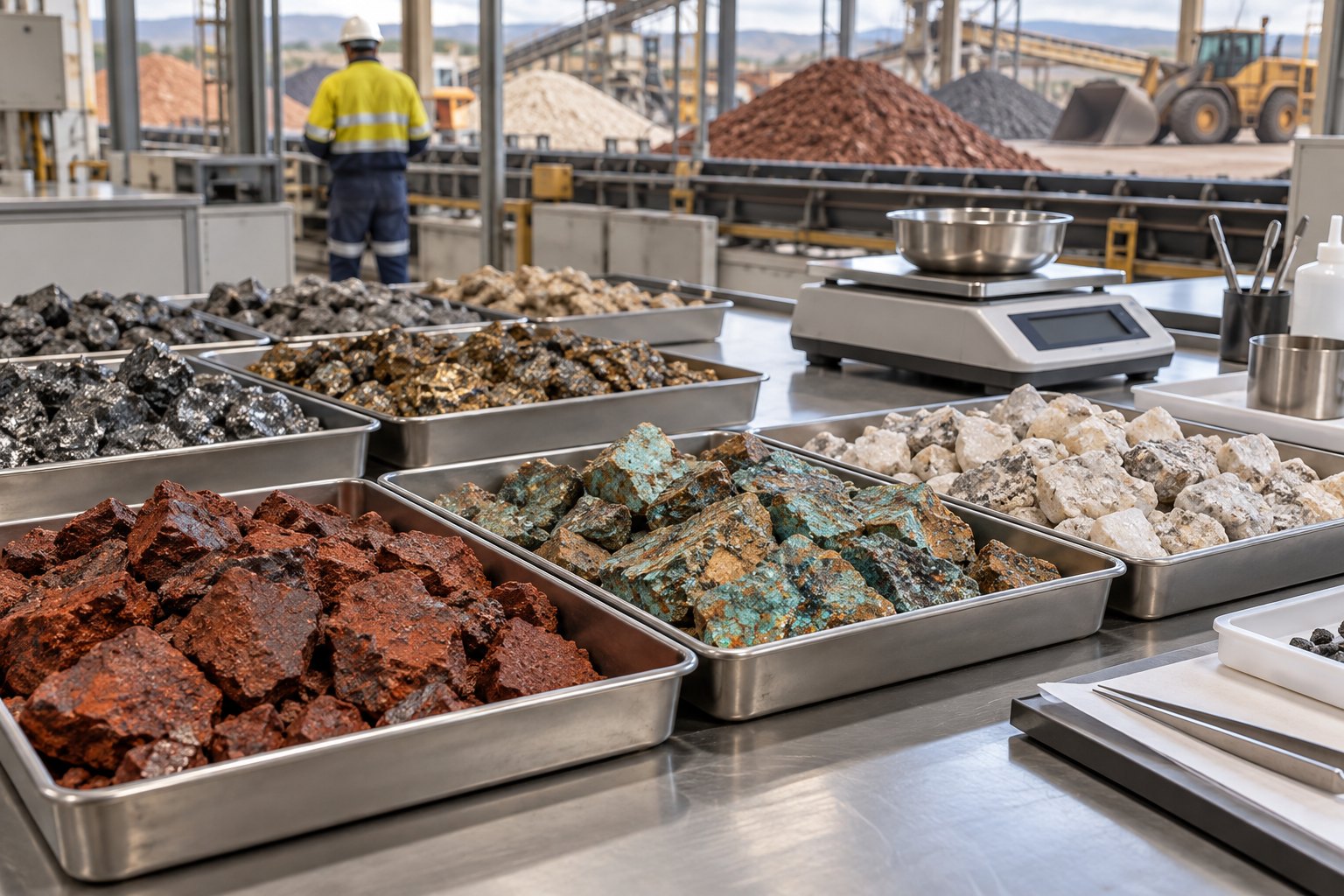
A mineral exchange is an electronic, delivery-based market where many miners and buyers trade actual ore, so prices form from demand and supply. The MMDR Amendment Act, 2025 empowered the Centre to promote such exchanges, with the Indian Bureau of Mines as regulator. Operators are now preparing the first exchanges under rules framed in 2026.
Syllabus: GS3 · Indian Economy & Growth; GS3 · Liberalisation & Industry; GS3 · Investment Models
Why this matters for UPSC
GS III Indian economy: mobilisation of resources and the mining sector. Prelims can ask what Section 18B of the MMDR Act provides and who regulates mineral exchanges; Mains, whether exchanges can give India transparent mineral prices.
In short
A mineral exchange is a regulated electronic market where miners and buyers trade physical minerals, letting demand and supply set prices; Section 18B of the MMDR Act, 1957 enables it.
Rules and regulator are in place; mineral exchanges will succeed only if standard grades, wide participation and firm surveillance turn trades into trusted prices.
Why it matters
A small iron ore miner today often sells to whichever large steel plant will negotiate, often without knowing what similar ore fetched elsewhere. A public exchange would show that price, so the miner can bargain on equal terms and plan output. Steel, cement and aluminium makers would get a reference price for budgeting raw-material costs. Explorers would see future demand more clearly, which can draw investment into finding new deposits. The larger issue is resource security: as India mines more minerals for batteries, electric vehicles and defence, a trusted domestic price signal makes supply chains less dependent on foreign benchmarks.
Prelims pointers
- The Ministry of Mines frames rules under the MMDR Act, 1957, including the Mineral (Auction) Rules, 2015 and the Mineral Exchange Rules, 2026.
- The 2025 amendment lets a new mineral be added to a mining lease; no additional amount applies to critical and strategic minerals or Seventh Schedule minerals.
- The MMDR Amendment Act, 2025 renamed the National Mineral Exploration Trust the National Mineral Exploration and Development Trust and raised lessees' payment from 2% to 3% of royalty.
- The same 2025 amendment removed the cap on sale of minerals from captive mines once the linked end-use plant's need is met.
- Commodity derivatives in India are regulated by the Securities and Exchange Board of India under the SEBI Act, 1992, not by the Indian Bureau of Mines.
- Under the Mineral (Auction) Rules, 2015, the State Government issues a letter of intent to the preferred bidder before the mining lease is executed.
Practise a UPSC-style question
With reference to mineral exchanges in India, consider the following statements:
1. Section 18B of the Mines and Minerals (Development and Regulation) Act, 1957 enables the Centre to develop mineral markets, with trading on mineral exchanges.
2. The Securities and Exchange Board of India is the authority to register and regulate mineral exchanges.
3. Coal, lignite and atomic minerals fall outside the minerals for which the Indian Bureau of Mines regulates mineral exchanges.
Which of the statements given above is/are correct?
- (a) 1 and 2 only
- (b) 2 and 3 only
- (c) 1 and 3 only
- (d) 1, 2 and 3
Show the answer
Answer: (c) 1 and 3 only
Answer: (c) 1 and 3 only. The MMDR Act enables mineral exchanges and the Indian Bureau of Mines, not SEBI, regulates them.
Statement 1: correct. Section 18B of the MMDR Act, 1957 lets the Centre develop mineral markets, with trading on mineral exchanges.
Statement 2: incorrect. The Centre named the Indian Bureau of Mines the authority by S.O. 4570(E) of 7 October 2025; SEBI-regulated instruments stay outside the exchange rules.
Statement 3: correct. The Bureau's remit excludes minerals in Parts A and B of the First Schedule: coal, lignite and atomic minerals.
Eliminate: statement 2 is the surest; the regulator is the Indian Bureau of Mines. Out: (a), (b), (d).
Trap: Swapped attribution. SEBI regulates commodity derivatives, so pinning mineral exchanges on it sounds natural, but the physical mineral market has a sector regulator.
Remember: Mineral exchanges = Section 18B of the MMDR Act + the Indian Bureau of Mines as regulator.
More Explainers
- Crypto in Indian law: virtual digital assets, tax and PMLA cover Economy
- The collegium system for appointing and transferring higher court judges Polity
- Protected Area, Restricted Area and Inner Line Permits Polity
- Scheduled Tribe seats in Assemblies: Article 332 and Goa's 2025 Act Polity
- Ballot papers and EVMs: where India still votes on paper Polity
- Gelephu Mindfulness City: Bhutan's special zone on the Assam border World & IR
- Nuclear fusion, the tokamak and India's role in ITER Sci-Tech
- Gilgit-Baltistan, CPEC and India's sovereignty objection World & IR
- India-Nepal electricity trade: how Nepal sells power to India World & IR
- Infant mortality and child malnutrition among Scheduled Tribes National
- Genocide Convention, 1948: the legal test and who can judge it World & IR
- Chola bronzes: lost-wax casting and Nataraja iconography National