
Indo-Tibetan Border Police: the force that guards the India-China border
Why in news: The ITBP marked its 65th Raising Day on 24 October 2026, two days after its chief said face-offs with Chinese troops continue in Arunachal Pradesh.
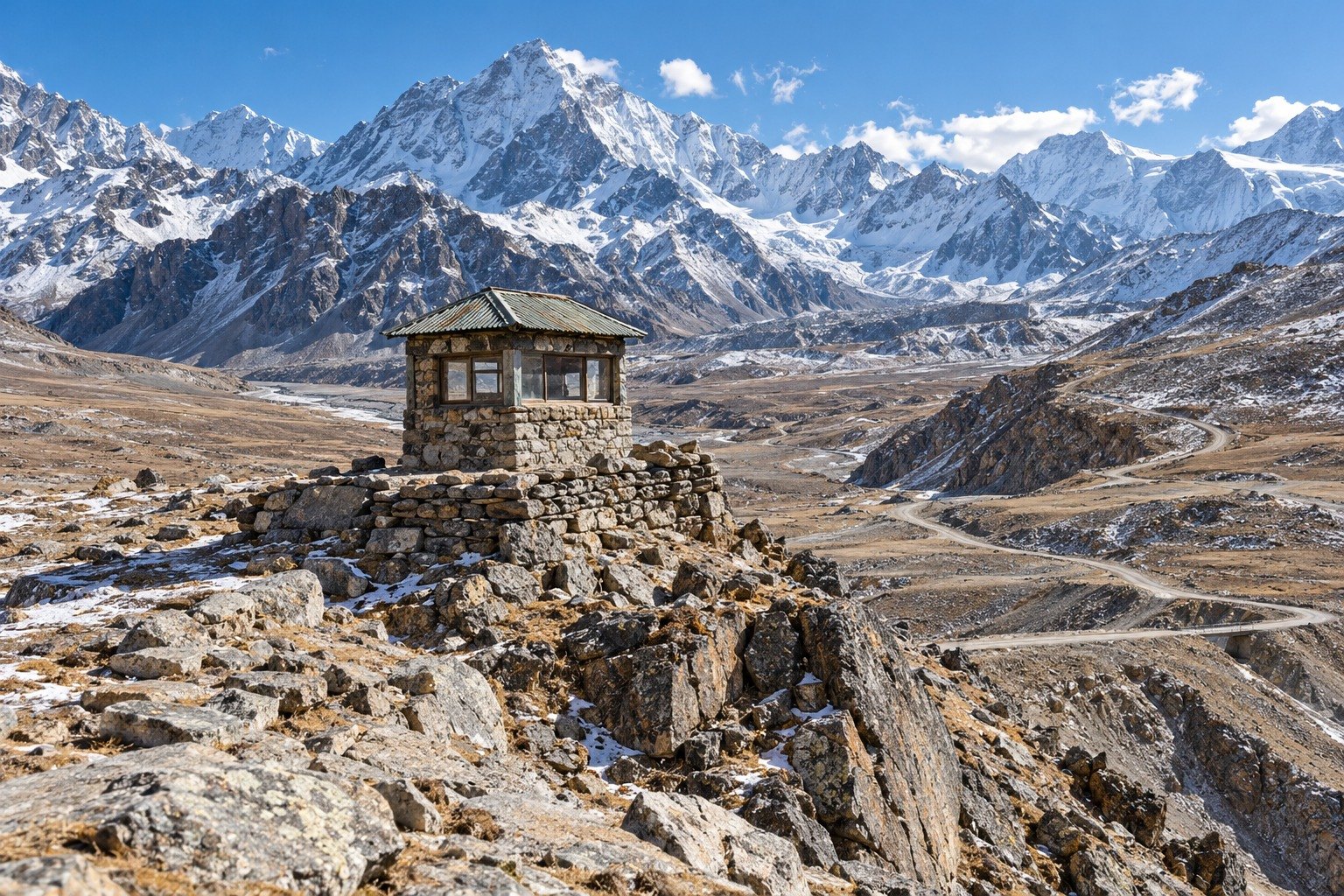
The Indo-Tibetan Border Police (ITBP), raised on 24 October 1962, is an armed force of the Union guarding the 3,488 km India-China border from the Karakoram Pass to Jachep La. It works under the Ministry of Home Affairs and its own 1992 Act. Its 65th Raising Day followed its chief's remarks that face-offs continue in Arunachal Pradesh.
Syllabus: GS2 · India & its Neighbourhood; GS3 · Border Security & Organised Crime; GS3 · Security Forces & Agencies
Why this matters for UPSC
GS3 covers security forces and border management. Prelims can ask the ITBPF Act, 1992, 'One Border One Force' and the Vibrant Villages Programme; Mains, how India guards the Line of Actual Control.
In short
The Indo-Tibetan Border Police is an armed force of the Union under the Ministry of Home Affairs, constituted by its 1992 Act, that guards India's border with China.
One accountable force on the China border is sound; it now needs Army coordination, mountain-war training and living border villages to hold the line.
Why it matters
A shepherd in Ladakh or a villager in Arunachal Pradesh lives beside a border that China disputes, and the nearest ITBP post is where the state meets that frontier. Its patrols decide whether a face-off is spotted early and handled calmly, and its rescue teams are first responders when Himalayan disasters strike. When border villages empty out, the force loses the residents who see things first; that is why the government ties road, power and phone links in those villages to border security. The larger question is how India guards a long, unsettled mountain frontier with a police force while the Army and diplomats manage the wider dispute.
Prelims pointers
- Section 4, ITBPF Act, 1992: the Force is an armed force of the Union for ensuring border security and other duties the Central Government entrusts.
- Section 5, ITBPF Act, 1992: general superintendence vests in the Central Government; command and supervision in a Director-General it appoints.
- ITBP duties: prevent trans-border crime, smuggling and unauthorised entry or exit; protect sensitive installations, banks and persons at risk; restore order.
- Sashastra Seema Bal (SSB): the CAPF under the MHA that guards the Indo-Nepal and Indo-Bhutan borders.
- VVP-I (2023): Centrally Sponsored Scheme, Rs 4,800 crore for 2022-23 to 2025-26; 46 blocks in 19 districts of four States and Ladakh.
- VVP-II (2025): Central Sector Scheme, Rs 6,839 crore till 2028-29, for blocks on international land borders other than the northern border.
- India-China boundary talks: Special Representatives mechanism set up in 2003; WMCC created by an agreement at the 15th SR round, January 2012.
Practise a UPSC-style question
Consider the following statements about the Indo-Tibetan Border Police (ITBP):
1. Under the Indo-Tibetan Border Police Force Act, 1992, general superintendence of the Force vests in the Chief of the Army Staff.
2. The ITBP began in 1962 as a force under the CRPF Act, three decades before its own Act.
Which of the statements given above is/are correct?
- (a) 1 only
- (b) 2 only
- (c) Both 1 and 2
- (d) Neither 1 nor 2
Show the answer
Answer: (b) 2 only
Answer: (b) 2 only. The force began under the CRPF Act, and its own Act vests control in the Central Government.
Statement 1: incorrect. Section 5 of the ITBPF Act, 1992 vests general superintendence, direction and control in the Central Government; a Director-General commands.
Statement 2: correct. The CRPF Act was the legal basis when the force came into being on 24 October 1962; Parliament passed its own Act in 1992.
Eliminate: Statement 2 is the surest: the 1962 raising under the CRPF Act is the force's origin. Out: (a), (d).
Eliminate: Statement 1 gives the Army chief a control the Act gives the Central Government. Out: (c).
Trap: Swapped attribution. The ITBP works beside the Army on the border, so the question hands its control to the Army chief.
Remember: ITBP: raised 1962 under the CRPF Act; own Act 1992; control with the Central Government (MHA).
More Explainers
- Crypto in Indian law: virtual digital assets, tax and PMLA cover Economy
- The collegium system for appointing and transferring higher court judges Polity
- Protected Area, Restricted Area and Inner Line Permits Polity
- Scheduled Tribe seats in Assemblies: Article 332 and Goa's 2025 Act Polity
- Ballot papers and EVMs: where India still votes on paper Polity
- Gelephu Mindfulness City: Bhutan's special zone on the Assam border World & IR
- Nuclear fusion, the tokamak and India's role in ITER Sci-Tech
- Gilgit-Baltistan, CPEC and India's sovereignty objection World & IR
- India-Nepal electricity trade: how Nepal sells power to India World & IR
- Infant mortality and child malnutrition among Scheduled Tribes National
- Genocide Convention, 1948: the legal test and who can judge it World & IR
- Chola bronzes: lost-wax casting and Nataraja iconography National