
BNSS does not define detention; Article 22 safeguards apply on arrest
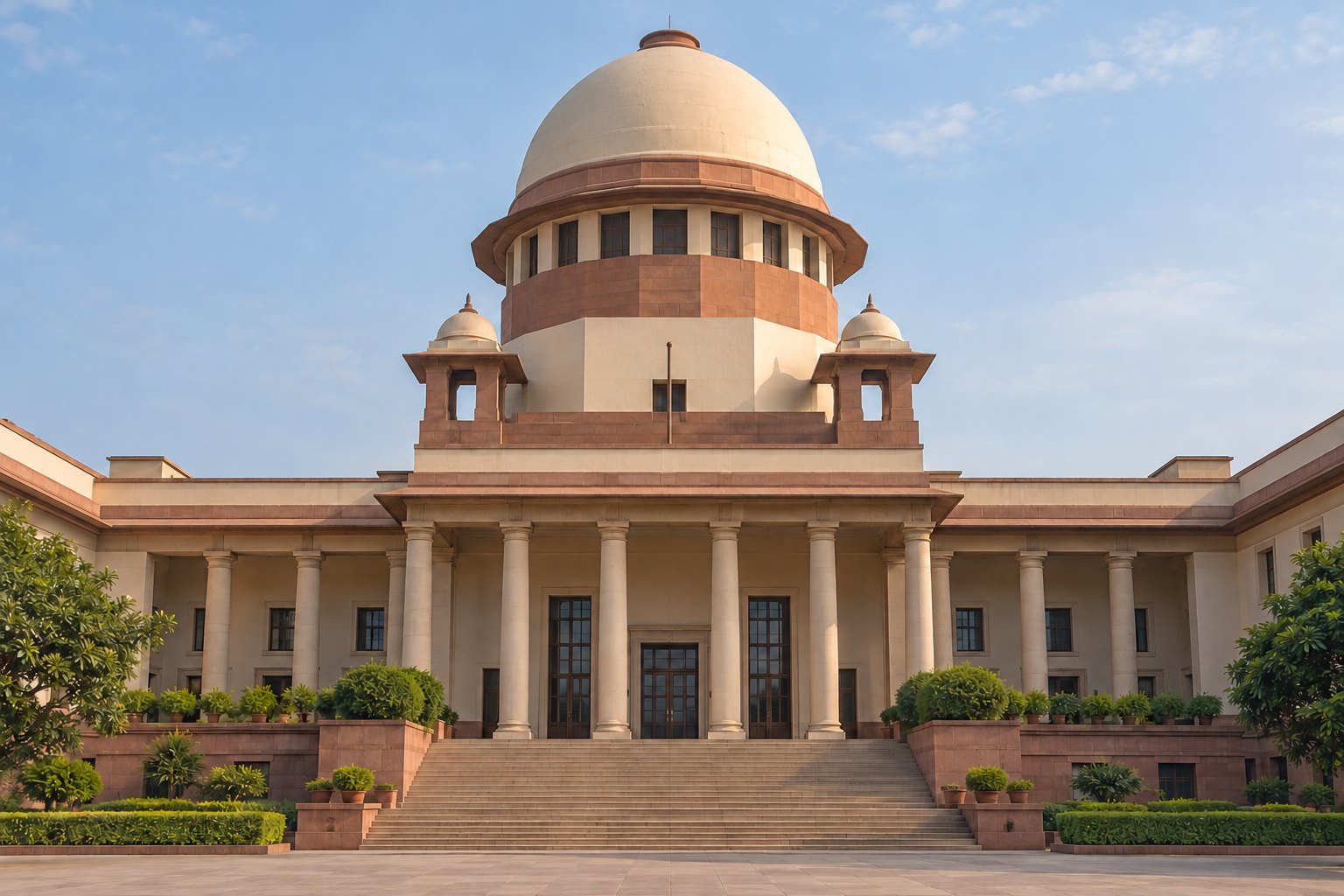
Delhi Police detained Leader of Opposition Rahul Gandhi and other Opposition leaders during protests in New Delhi on October 6 and again on October 7, 2026. The Bharatiya Nagarik Suraksha Sanhita, 2023 does not define detention. Article 22 requires an arrested person to be told the grounds and produced before a magistrate within 24 hours.
Syllabus: GS2 · Constitution; Prelims · Polity & Governance; GS2 · Executive & Judiciary
Why it matters
For a person put on a police bus at a protest, whether this is an arrest or a detention decides what the police owe them. A formal arrest brings a memo, stated grounds, a lawyer and a magistrate within 24 hours. Section 172 of the BNSS lets police hold a person who ignores a lawful direction and, in a petty case, release them within 24 hours instead of taking them before a magistrate. The Supreme Court's D.K. Basu safeguards still apply to every case of arrest or detention. The larger question is how the State keeps public order during protests while respecting the right to assemble peaceably under Article 19 and personal liberty under Article 21.
Prelims pointers
- Article 22(1) and (2): an arrested person must be told the grounds, may consult a lawyer of choice, and must reach a magistrate within 24 hours, excluding journey time.
- Article 22(3): these safeguards do not apply to an enemy alien or to a person held under a preventive detention law.
- Article 22(4): preventive detention beyond three months needs an Advisory Board of serving, former or eligible High Court judges to report sufficient cause.
- Seventh Schedule: police and public order are State List subjects; preventive detention appears in both the Union List and the Concurrent List.
- Section 163 of the BNSS (earlier Section 144 of the Code of Criminal Procedure, 1973): urgent written orders by a District Magistrate, Sub-divisional Magistrate or an empowered Executive Magistrate.
- Article 39A, a Directive Principle added by the 42nd Amendment in 1976, directs the State to provide free legal aid; the Legal Services Authorities Act, 1987 gives it effect.
- Joginder Kumar v. State of UP (1994): having the power to arrest is one thing; justifying its use is another.
- Arnesh Kumar v. State of Bihar (2014): police must not arrest automatically for offences punishable with up to seven years' imprisonment.
Practise a UPSC-style question
With reference to Article 22 of the Constitution of India, consider the following statements:
1. An arrested person has the right to consult, and to be defended by, a legal practitioner of his or her choice.
2. An arrested person must be produced before the nearest magistrate within forty-eight hours of arrest, excluding the time taken for the journey.
3. The rights to a legal practitioner and to production before a magistrate do not apply to a person detained under a preventive detention law.
Which of the statements given above is/are correct?
- (a) 1 and 2 only
- (b) 2 and 3 only
- (c) 1 and 3 only
- (d) 1, 2 and 3
Show the answer
Answer: (c) 1 and 3 only
1 is correct: Article 22(1) gives an arrested person the right to be told the grounds of arrest and to consult and be defended by a legal practitioner of choice. 2 is incorrect: Article 22(2) fixes the limit at twenty-four hours, excluding journey time, not forty-eight. 3 is correct: Article 22(3) keeps enemy aliens and persons held under a preventive detention law outside these two safeguards.
Explainers on this topic
More from the 9 October 2026 edition
- Article 21 speedy trial: victims may move High Court, Supreme Court rules Polity
- UNESCO GEM report puts rural India's upper-secondary gender parity at 0.59 National
- London Convention and Protocol parties adopt marine geoengineering assessment frameworks Environment
- Ravi Canal carries 400 cusecs; J&K seeks Rs 534 crore National
- Indian Railways electrifies 99.7% of broad gauge; 191 route km remain Economy
- Coral bleaching in 2024 hit Lakshadweep's reefs hardest, study finds Environment
- Gold imports by banks lose GST exemption, attract 3% IGST Economy
- Coal stock at domestic-coal power plants falls 66% in six months Economy
- Mines Ministry launches auction of two Andaman Sea offshore mineral blocks Economy
- Centre launches ₹23,731-crore GOBARdhan scheme for compressed biogas Economy
- Andhra Pradesh declares early Kharif drought in 388 mandals, 21 districts Environment
- MeitY urges social media platforms to curb manipulated, out-of-context content Polity