
Anaemia Mukt Bharat Abhiyaan: the 7x7x7 strategy and the T4 approach
Why in news: The Health Ministry released the revamped Anaemia Mukt Bharat Abhiyaan Operational Guidelines, with a 7x7x7 strategy, on 29 June 2026.
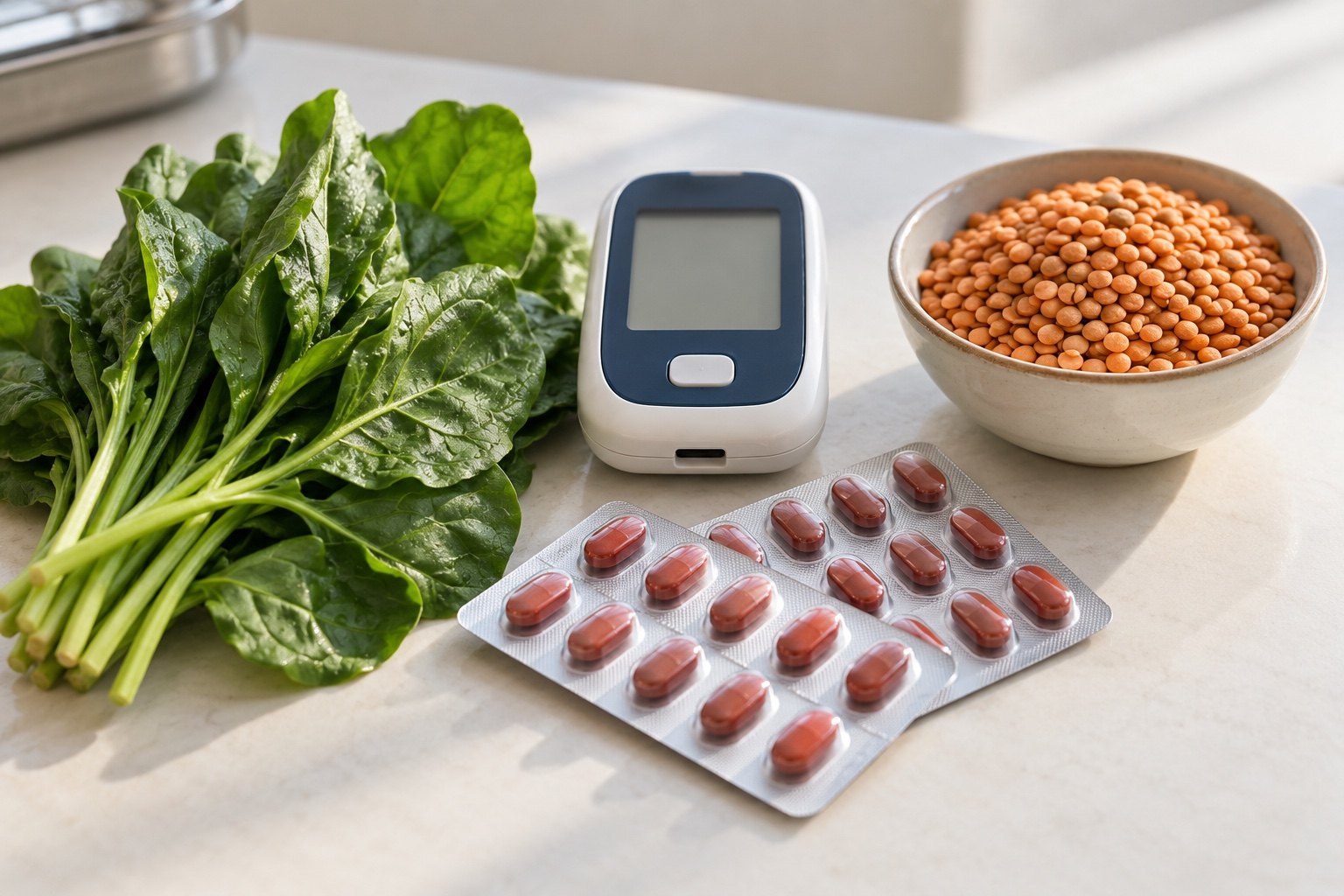
Anaemia Mukt Bharat (AMB) is the Health Ministry's 2018 programme against anaemia among children, adolescents and women. It works through iron-folic acid supplements, deworming, testing and treatment. Guidelines released on 29 June 2026 renamed it Anaemia Mukt Bharat Abhiyaan. They widened its 6x6x6 strategy to 7x7x7 and added tracking to Test, Treat and Talk.
Syllabus: Prelims · Economy & Social Development; GS2 · Welfare of Vulnerable Sections; GS2 · Health, Education & Human Resources
Why this matters for UPSC
GS2 health and welfare schemes: Prelims can ask Anaemia Mukt Bharat's beneficiary groups, the T4 approach and the Double Fortified Salt standard; Mains, why anaemia persists despite supplementation and fortification.
In short
Anaemia Mukt Bharat is the Health Ministry's life-cycle programme against anaemia, launched in 2018 in step with POSHAN Abhiyaan; its 2026 Abhiyaan form moves from prevention towards testing, treatment and tracking.
The 7x7x7 Abhiyaan will work only if tracking turns screening into completed treatment, while diets and safe fortification reach what tablets cannot.
Why it matters
Anaemia means the blood carries too little oxygen. For a pregnant woman in a village it raises the risk of heavy bleeding at delivery and of a premature or underweight baby. For a schoolchild it brings tiredness, poor concentration and slower growth; for a working adult, less strength for the day's labour. Because an anaemic mother often gives birth to a baby with low iron stores, the problem passes from one generation to the next. The revamp tries to stop people slipping through: a girl found anaemic at a school camp should now be treated and checked again, not just handed tablets once. Whether that follow-up actually happens decides whether India's long struggle with anaemia finally turns.
Prelims pointers
- AMB supplementation: IFA syrup twice a week for children 6-59 months; weekly pink tablet for 5-9 years, blue for adolescents, red for women 20-49.
- National Deworming Day: biannual mass deworming of children and adolescents aged 1-19 years on 10 February and 10 August.
- Anaemia cut-offs used by AMB (WHO, 2017): pregnant women and children 6-59 months are anaemic below 11 g/dl and severely anaemic below 7 g/dl.
- Iron in Double Fortified Salt must come from ferrous sulphate or ferrous fumarate; iodine from potassium iodate. Heme iron is barred in fortified food.
- Fortified rice: Fortified Rice Kernels with iron, folic acid and vitamin B12 blended into custom milled rice to FSSAI standards.
- India committed to the World Health Assembly target of halving anaemia among women of reproductive age by 2025.
- Weekly Iron Folic Acid Supplementation (WIFS) covers adolescents aged 10-19 years; AMB's design builds on it and on NIPI.
Practise a UPSC-style question
With reference to the Anaemia Mukt Bharat strategy launched in 2018, consider the following statements:
1. Men aged 15-49 years were one of its six target beneficiary groups.
2. It was designed to meet POSHAN Abhiyaan's target of cutting anaemia by 3 percentage points a year.
3. Mandatory provision of iron and folic acid fortified foods in government-funded public health programmes was one of its six interventions.
Which of the statements given above is/are correct?
- (a) 1 and 2 only
- (b) 2 and 3 only
- (c) 1 and 3 only
- (d) 1, 2 and 3
Show the answer
Answer: (b) 2 and 3 only
Answer: (b) 2 and 3 only. Men were never a target group; the target and the fortified-food intervention are both in the 2018 guidelines.
Statement 1: incorrect. The six groups were children 6-59 months, children 5-9 years, adolescents 10-19 years, pregnant women, lactating women and women of reproductive age.
Statement 2: correct. The 2018 guidelines aimed to cut anaemia by 3 percentage points a year among children, adolescents and women of reproductive age, in line with POSHAN Abhiyaan.
Statement 3: correct. The fifth of the six 2018 interventions was mandatory provision of iron and folic acid fortified foods in government-funded public health programmes.
Eliminate: Statement 1 is the surest call, since men were never one of the six groups. Out: (a), (c), (d).
Trap: Wrong scope. NFHS reports anaemia among men too, so a student may assume men were a target group; AMB's six groups were children, adolescents and women.
Remember: AMB 2018 = 6 groups (children, adolescents, women), 6 interventions, 6 mechanisms; 3 points a year.
More Explainers
- Crypto in Indian law: virtual digital assets, tax and PMLA cover Economy
- The collegium system for appointing and transferring higher court judges Polity
- Protected Area, Restricted Area and Inner Line Permits Polity
- Scheduled Tribe seats in Assemblies: Article 332 and Goa's 2025 Act Polity
- Ballot papers and EVMs: where India still votes on paper Polity
- Gelephu Mindfulness City: Bhutan's special zone on the Assam border World & IR
- Nuclear fusion, the tokamak and India's role in ITER Sci-Tech
- Gilgit-Baltistan, CPEC and India's sovereignty objection World & IR
- India-Nepal electricity trade: how Nepal sells power to India World & IR
- Infant mortality and child malnutrition among Scheduled Tribes National
- Genocide Convention, 1948: the legal test and who can judge it World & IR
- Chola bronzes: lost-wax casting and Nataraja iconography National