
Swachh Bharat Mission-Urban 2.0 and manual scavenging: the 2013 Act, NAMASTE
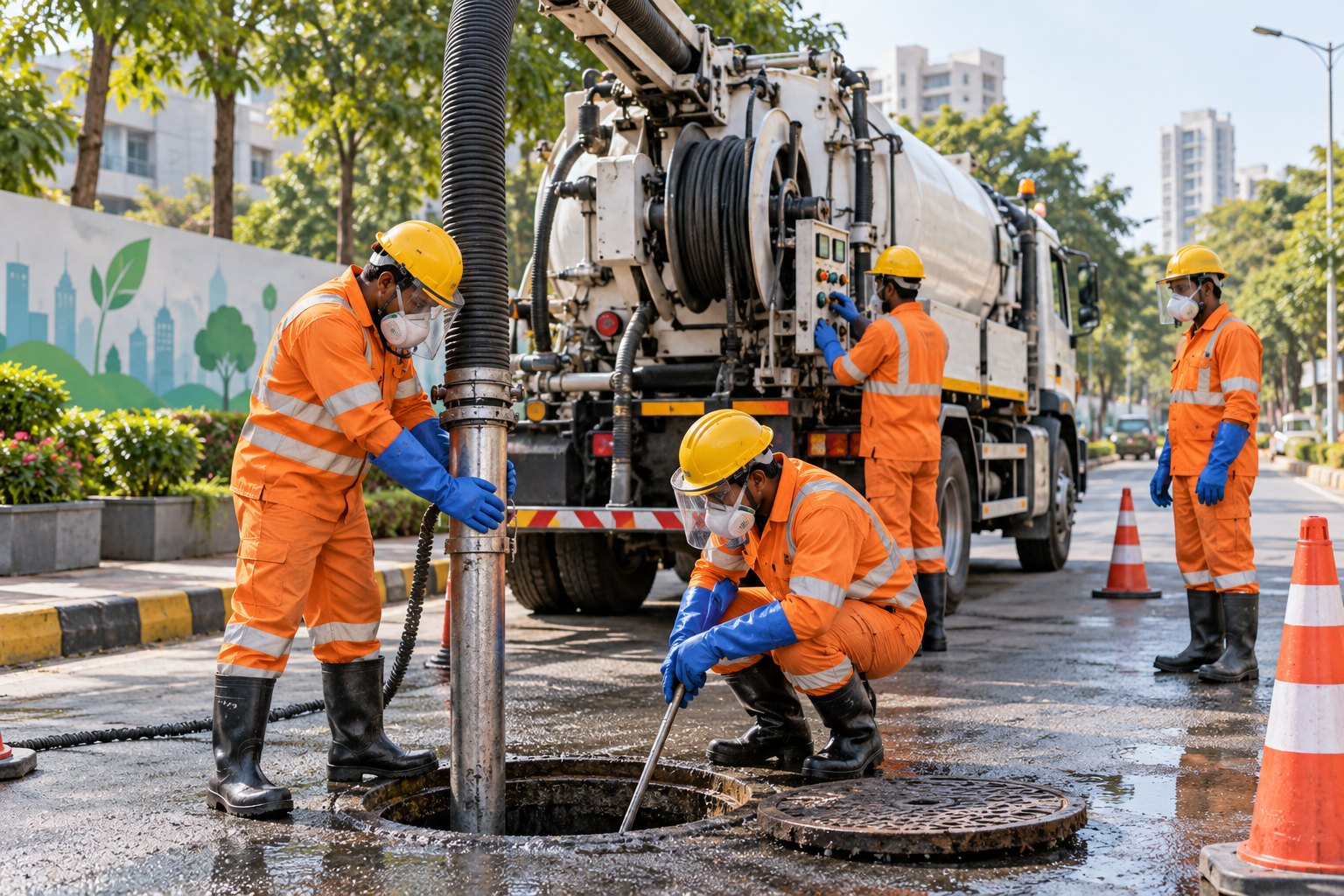
Swachh Bharat Mission-Urban 2.0, the Ministry of Housing and Urban Affairs' mission launched on 1 October 2021, aims for garbage-free cities and an end to hazardous entry into sewers and septic tanks through machines, protective gear and training. A PIB feature on 1 October 2026 described its July 2025 monsoon cleanliness campaign and city steps to protect sanitation workers.
Syllabus: GS1 · Women, Population & Urbanisation; GS2 · Government Policies; GS2 · Welfare of Vulnerable Sections
In short
Swachh Bharat Mission-Urban 2.0, launched by the Ministry of Housing and Urban Affairs on 1 October 2021, seeks garbage-free cities and an end to hazardous sewer entry.
SBM-U 2.0's goal of zero fatalities rests on cities enforcing the 2013 Act and funding machines, making sanitation work safer, skilled and dignified.
Why it matters
For a sewer worker, the difference between a manhole entered by hand and one cleaned by a machine can be the difference between life and death: toxic gases in sewers and septic tanks kill workers who go down without gear. SBM-U 2.0 and NAMASTE try to replace that entry with machines, train and insure workers, and help them own sanitation vehicles. For city residents, drains cleared before the monsoon mean less waterlogging and fewer cases of dengue and malaria. The larger issue is dignity of labour: manual scavenging, tied to caste, persists despite laws since 1993, and whether urban local bodies enforce safety decides if the goal of zero deaths is met.
Prelims pointers
- Prohibition of Employment as Manual Scavengers and their Rehabilitation Act, 2013: bans manual scavenging and hazardous cleaning of sewers and septic tanks; offences are cognizable and non-bailable.
- The 2013 Act has overriding effect over the Employment of Manual Scavengers and Construction of Dry Latrines (Prohibition) Act, 1993, and adds rehabilitation of identified manual scavengers.
- National Commission for Safai Karamcharis: set up in 1994 under an Act of 1993; non-statutory since that Act lapsed in 2004; under MoSJE; monitors the 2013 Act.
- NAMASTE (National Action for Mechanised Sanitation Ecosystem): MoSJE and MoHUA; implemented by NSKFDC; covers sewer and septic tank workers and, since 2024, waste pickers.
- ODF+ certifies working, maintained toilets; ODF++ adds safe management of faecal sludge and septage; Water+ adds treatment of all wastewater and its optimum reuse.
- Garbage Free City star rating: MoHUA's 1-to-7-star rating of cities on solid waste management; SBM-U 2.0 wants every city at least 3-star.
- Swachhata Udyami Yojana: NSKFDC loans to sanitation workers and their dependents for sanitation vehicles and equipment.
Practise a UPSC-style question
With reference to Swachh Bharat Mission-Urban 2.0, consider the following statements:
1. It is implemented by the Ministry of Jal Shakti.
2. It aims to make every city at least 3-star Garbage Free.
3. It aims to make cities with less than one lakh population ODF++.
Which of the statements given above is/are correct?
- (a) 1 and 2 only
- (b) 2 and 3 only
- (c) 1 and 3 only
- (d) 1, 2 and 3
Show the answer
Answer: (b) 2 and 3 only
1 is incorrect: SBM-Urban 2.0 is run by the Ministry of Housing and Urban Affairs; the Ministry of Jal Shakti runs the rural mission. 2 is correct: every city is to reach at least a 3-star Garbage Free rating. 3 is correct: cities under one lakh population are to become ODF++, with wastewater management added for them.
More Explainers
- State Legislative Councils: Articles 168-172 and the graduates' and teachers' seats Polity
- Whales and dolphins in Indian waters: legal protection, IUCN status and strandings Environment
- The Aligarh Movement, AMU and the Article 30 minority test Polity
- Environmental clearance by States: SEIAA, SEAC and the EIA Notification, 2006 Environment
- Software vulnerabilities: CVE, CVSS, coordinated disclosure and CERT-In's role Sci-Tech
- Drug trafficking law in India: NDPS Act, PIT-NDPS, NCB and NCORD National
- Choosing the UN Secretary-General: Article 97, UNSC veto and straw polls World & IR
- UN Convention against Torture, and why India has not ratified it Polity
- NavIC: why India's navigation constellation cannot give a standalone position Sci-Tech
- International Energy Agency: membership, 90-day oil stocks and India's status World & IR
- PM Surya Ghar: Muft Bijli Yojana and the rooftop solar subsidy Economy
- HFSS foods: FSSAI's draft limits and front-of-pack warning labels National