
Kyasanur Forest Disease: the tick-borne monkey fever of the Western Ghats
Why in news: On 27 November 2026, Karnataka's Health Minister reviewed KFD readiness in Shivamogga, ordering hotspot mapping and reporting of monkey deaths.
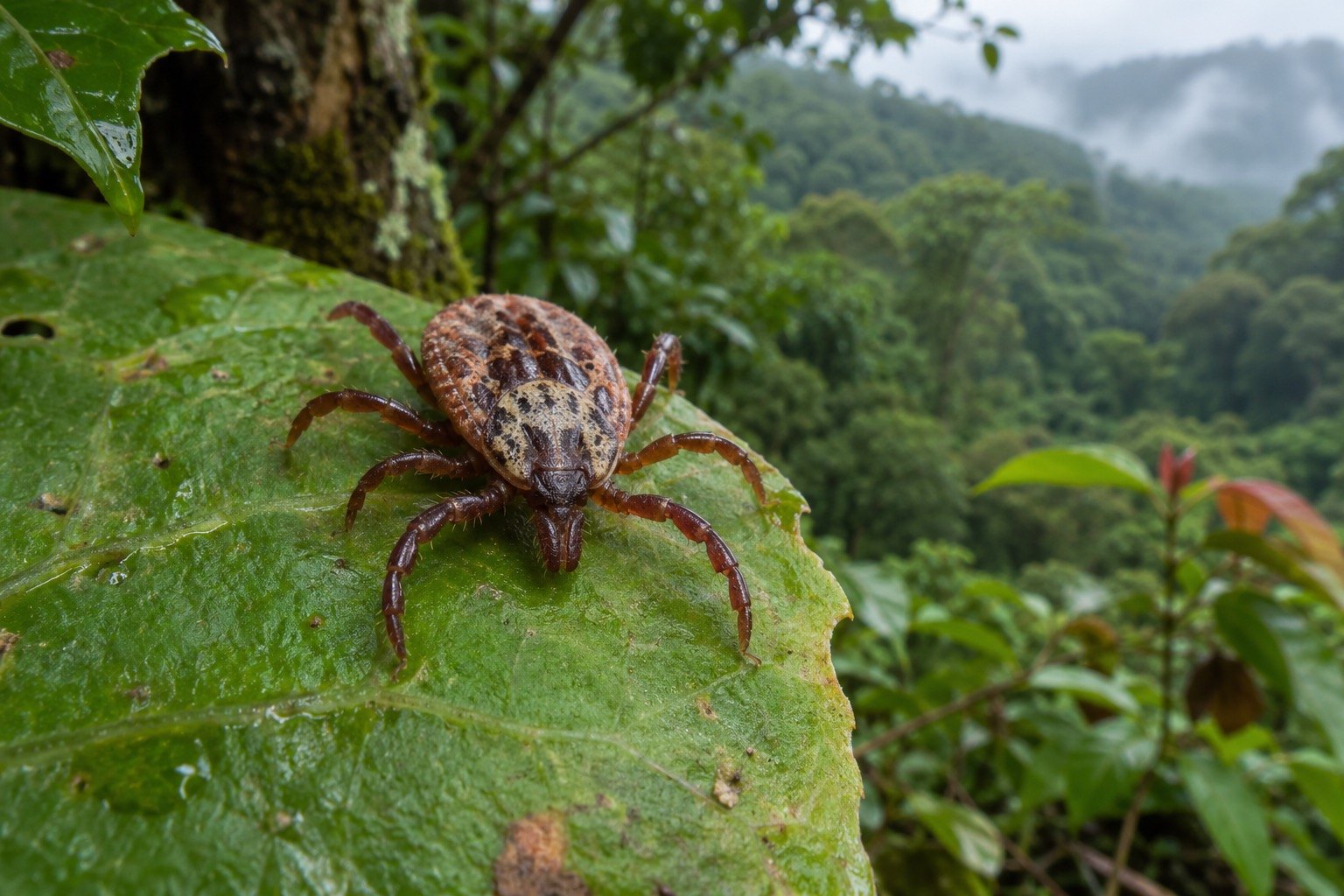
Kyasanur Forest Disease (KFD), or monkey fever, is a viral haemorrhagic illness spread by ticks, first identified in 1957 in Karnataka's Shivamogga district. Monkeys multiply the virus; people catch it from tick bites, with no person-to-person spread reported. Karnataka's Health Minister said Shivamogga's taluk hospitals had special KFD wards as the season opened.
Syllabus: Prelims · Current Affairs & IR; Prelims · Science & Technology; GS3 · Science & Technology
Why this matters for UPSC
GS2 health and GS3 science: zoonoses, vaccines and One Health. Prelims can ask KFD's vector, hosts and States; Mains, zoonotic disease control.
In short
Kyasanur Forest Disease (KFD), or monkey fever, is a tick-borne viral haemorrhagic fever of the Western Ghats, passed from forest animals to people and first identified in Karnataka in 1957.
KFD control rests on a stronger vaccine and early warning from monkey deaths; neither works unless forest, animal and human health agencies act together.
Why it matters
A plantation worker or a family gathering firewood at the forest edge in the Western Ghats is the person most exposed. Nobody can catch the disease from a sick neighbour, so protection depends on keeping ticks away and spotting danger early. A dead monkey near a village is that early sign: it means infected ticks are on the ground nearby, so a quick report lets health workers warn people before cases appear. The old vaccine asked villagers to return for boosters year after year, a burden ICMR believes discouraged many. A vaccine that works in two doses would change that, and the disease shows how clearing forests can bring animal infections to people.
Prelims pointers
- KFDV is a spherical, enveloped virus with a positive-sense, single-stranded RNA genome.
- KFDV, Omsk haemorrhagic fever virus and Alkhurma haemorrhagic fever virus are tick-borne flaviviruses tied to haemorrhagic fever; the Alkhurma virus struck Saudi Arabia.
- KFD illness has two phases: fever, headache and body pain after a 3-8 day incubation; in 10-20% of patients, a later neurological phase follows.
- No specific antiviral is used for KFD; treatment is symptomatic and supportive, and real-time RT-PCR confirms infection.
- KFDV is a risk group 3 pathogen: diagnosis may use a BSL-2 laboratory, but isolating it from ticks or animals needs BSL-3 containment.
- The older KFD vaccine is formalin-inactivated; its short-lived immunity needs a booster in 6-9 months, then yearly boosters for five years after the last local case.
Practise a UPSC-style question
With reference to Kyasanur Forest Disease (KFD), consider the following statements:
1. It is caused by a virus belonging to the family Flaviviridae.
2. Its main vector is a species of Anopheles mosquito.
3. Humans are dead-end hosts, as no human-to-human transmission has been reported.
Which of the statements given above is/are correct?
- (a) 1 and 2 only
- (b) 2 and 3 only
- (c) 1 and 3 only
- (d) 1, 2 and 3
Show the answer
Answer: (c) 1 and 3 only
Answer: (c) 1 and 3 only. KFD is a flavivirus disease carried by ticks, and the chain stops with humans.
Statement 1: correct. NCDC classes the Kyasanur Forest Disease Virus as an arbovirus of the family Flaviviridae, genus Flavivirus.
Statement 2: incorrect. The main vector is the hard tick Haemaphysalis spinigera, family Ixodidae; KFD is a tick-borne disease, not a mosquito-borne one.
Statement 3: correct. With no human-to-human transmission reported, humans are dead-end hosts in the KFD cycle.
Eliminate: statement 2 is wrong, since KFD spreads by tick bite. Out: (a), (b), (d).
Trap: Swapped attribution. The vector role is pinned on a mosquito, the carrier students link with most fevers, when ticks carry KFD.
Remember: KFD: flavivirus, hard tick Haemaphysalis spinigera, humans a dead end.
More Explainers
- Human spaceflight analog missions and crew training on Earth Sci-Tech
- Didarganj Yakshi and Mauryan art: pillars, capitals, yakshas and the polish National
- E-Waste (Management) Rules, 2022: registration, EPR targets and certificates Environment
- Cash transfers and subsidies: what they cost State finances Economy
- India's Tibet policy: Panchsheel, the 1959 asylum and succession World & IR
- Moral rights of authors under Section 57 of the Copyright Act, 1957 Polity
- The Post Office Act, 2023: India's new postal law Polity
- Antiquities and Art Treasures Act, 1972: how India guards and retrieves antiquities National
- AI training vs inference, and what the IndiaAI Mission funds Sci-Tech
- Chandrayaan-5/LUPEX: the ISRO-JAXA lunar polar mission Sci-Tech
- Kalinga's maritime heritage: Boita Bandana and Bali Jatra National
- Eighth Schedule: India's 22 Scheduled Languages Polity