
AI training vs inference, and what the IndiaAI Mission funds
Why in news: On 16 November 2026 a Bengaluru startup launched an inference platform serving Chinese-developed open-weight models on GPUs in India, prompting debate.
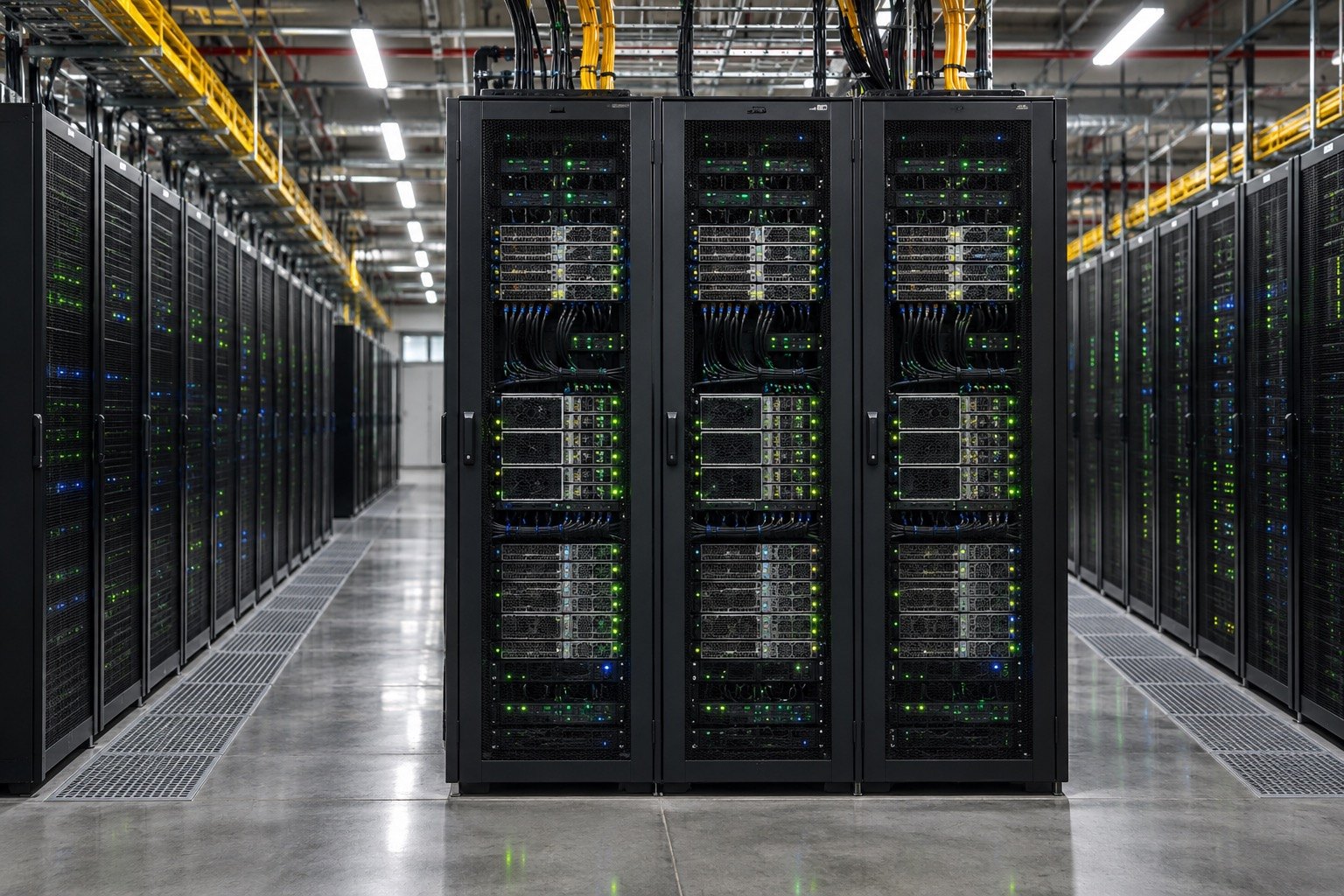
Training teaches an Artificial Intelligence (AI) model from large amounts of data; inference puts the trained model to work on user requests. The two stages need different computing power. The IndiaAI Mission, approved in March 2024 with Rs 10,371.92 crore, subsidises compute. Sarvam AI's inference platform, launched on 16 November 2026, has prompted debate over indigenous AI.
Syllabus: GS3 · Science & Technology; GS3 · Indian Achievements in S&T; GS3 · IT, Space, Biotech & IPR
Why this matters for UPSC
GS3 science and technology: AI, indigenisation of technology and the IndiaAI Mission. Prelims can ask its pillars and what inference means; Mains, AI sovereignty.
In short
An AI model is trained on large data, then used in inference to answer requests; the IndiaAI Mission funds compute, but hosting a model is not building one.
India should keep subsidising compute for both stages, but judge self-reliance by who builds the chips and models, not where servers stand.
Why it matters
Take a student building a chatbot in an Indian language. Without cheaper shared hardware, such a startup may never build its model at all. Once built, the model still has to be served to millions of people every day, which is a separate business with its own costs. A hospital or bank that uses such a service cares where its data is processed. The larger issue is technological self-reliance: running foreign models on Indian servers creates jobs and capacity, but it does not give India its own models or its own chips.
Prelims pointers
- The IndiaAI Mission has seven pillars: Compute Capacity, Innovation Centre, Datasets Platform, Application Development Initiative, FutureSkills, Startup Financing, and Safe & Trusted AI.
- The IndiaAI Datasets Platform is meant to give startups and researchers easier access to quality non-personal datasets.
- IndiaAI FutureSkills plans more AI courses in degree programmes and Data and AI Labs in Tier 2 and Tier 3 cities.
- The IndiaAI Mission (MeitY, Rs 10,371.92 crore) differs from the National Mission on Interdisciplinary Cyber-Physical Systems (Department of Science and Technology, Rs 3,660 crore, 25 Technology Innovation Hubs).
- Semicon 2.0, approved on 15 July 2026 with Rs 1,27,500 crore, extends the semiconductor push to materials, gases and equipment as well as chip design and fabs.
- An Application Programming Interface (API) lets one software application talk to another; an inference platform may bill customers by the number of tokens processed.
- India joined the Pax Silica coalition, with the United States and other partners, at the India AI Impact Summit 2026 to secure silicon supply chains.
Practise a UPSC-style question
With reference to stages in the life of an Artificial Intelligence model, consider the following statements:
1. Inference is the stage in which a model is taught by feeding it large amounts of data.
2. Inference involves running a trained model repeatedly, often for thousands of requests at the same time.
Which of the statements given above is/are correct?
- (a) 1 only
- (b) 2 only
- (c) Both 1 and 2
- (d) Neither 1 nor 2
Show the answer
Answer: (b) 2 only
Answer: (b) 2 only. Statement 1 describes training, not inference.
Statement 1: incorrect. Teaching a model from large data is training; inference is using the trained model to perform tasks.
Statement 2: correct. Inference serves user requests again and again, often thousands at once, so responses must be fast and reliable.
Eliminate: statement 2 is correct, so the codes without it go. Out: (a), (d).
Eliminate: statement 1 is incorrect, so the code with both goes. Out: (c).
Trap: Look-alike names. Training and inference are swapped in statement 1, and a student who treats the two terms as one stage marks it correct.
Remember: Training teaches the model; inference puts the trained model to work.
More Explainers
- Human spaceflight analog missions and crew training on Earth Sci-Tech
- Didarganj Yakshi and Mauryan art: pillars, capitals, yakshas and the polish National
- E-Waste (Management) Rules, 2022: registration, EPR targets and certificates Environment
- Kyasanur Forest Disease: the tick-borne monkey fever of the Western Ghats Sci-Tech
- Cash transfers and subsidies: what they cost State finances Economy
- India's Tibet policy: Panchsheel, the 1959 asylum and succession World & IR
- Moral rights of authors under Section 57 of the Copyright Act, 1957 Polity
- The Post Office Act, 2023: India's new postal law Polity
- Antiquities and Art Treasures Act, 1972: how India guards and retrieves antiquities National
- Chandrayaan-5/LUPEX: the ISRO-JAXA lunar polar mission Sci-Tech
- Kalinga's maritime heritage: Boita Bandana and Bali Jatra National
- Eighth Schedule: India's 22 Scheduled Languages Polity