
India's Tibet policy: Panchsheel, the 1959 asylum and succession
Why in news: On 24 November 2026 The Indian Express reported that the Dalai Lama has been given a bungalow in central Delhi.
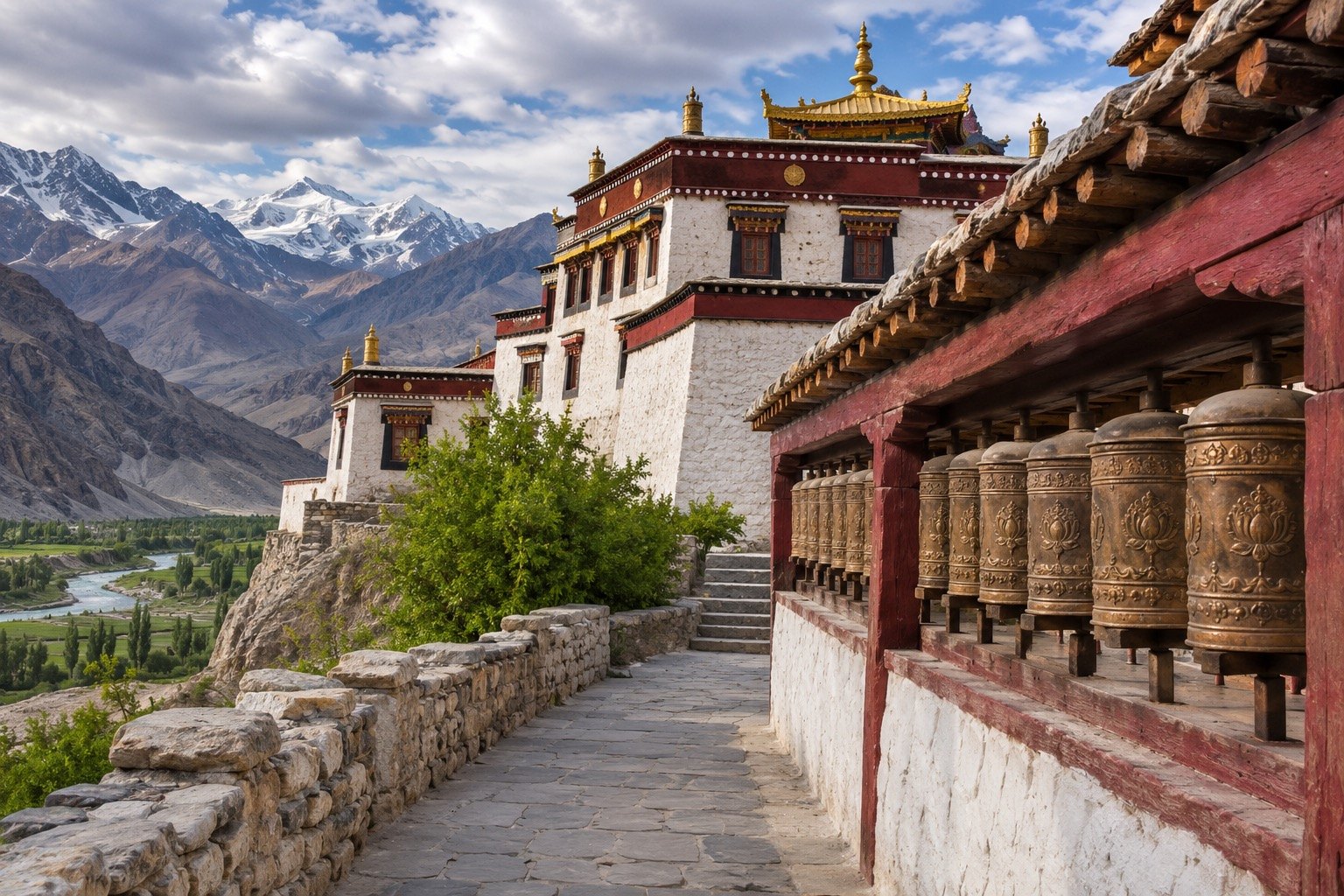
India's Tibet policy has two roots: Panchsheel, agreed with China in 1954, and the Dalai Lama's 1959 asylum, given on condition that Indian soil is not used against China. India now treats his succession as a matter of faith. A November 2026 report of a Delhi bungalow for him revived the history.
Syllabus: GS1 · Post-independence India; GS2 · India & its Neighbourhood; GS2 · Groupings & Agreements
Why this matters for UPSC
GS II India and its neighbourhood: India-China relations and Panchsheel; GS I post-independence history. Prelims asks Panchsheel's principles and origin; Mains, India's balance between asylum and ties with China.
In short
India's Tibet policy rests on Panchsheel, first set out in a 1954 India-China agreement on the Tibet region, and on the asylum India gave the Dalai Lama in 1959.
India's policy works by separating faith from statecraft: shelter and religious freedom for Tibetans, no position on succession, and Panchsheel as the frame with China.
Why it matters
Tibetans have lived in India since 1959. India's stand decides how freely they can practise their faith and run their own institutions. It also keeps that life from becoming a quarrel between New Delhi and Beijing. For India, the policy is both a lever and a liability. Hosting the Dalai Lama keeps India true to its record of shelter. Yet a visit or a statement can sour talks with China on a long, disputed border. When the next Dalai Lama must be chosen, India's choice to treat it as faith, not statecraft, will shape the refugees' future and the tone of ties with China.
Prelims pointers
- Panchsheel's five principles: mutual respect for territorial integrity and sovereignty, mutual non-aggression, mutual non-interference, equality and mutual benefit, and peaceful co-existence.
- The 1955 Bandung Conference of 29 Afro-Asian countries absorbed Panchsheel into its Ten Principles; the 1961 Belgrade conference made it the core of the Non-Aligned Movement.
- A UN General Assembly resolution on peaceful co-existence, presented by India, Yugoslavia and Sweden, was adopted unanimously on 11 December 1957.
- The Dalai Lama later said the 1951 17-point agreement, which came a year after Chinese forces invaded Tibet, had been signed under duress.
- Panchsheel came from a bilateral India-China agreement on the Tibet region; the Ten Principles came from the multilateral Bandung Conference of 1955.
- Relief for Tibetan refugees falls to the Home Ministry's Freedom Fighters and Rehabilitation Division, which also provides relief to Sri Lankan refugees.
Practise a UPSC-style question
With reference to Panchsheel, consider the following statements:
1. It was first formally set out in the preamble of a 1954 India-China agreement concerning the Tibet region.
2. The declaration of the Bandung Conference of Afro-Asian countries absorbed it into its Ten Principles.
3. The UN General Assembly resolution on peaceful co-existence that carried its tenets was presented by India, Egypt and Yugoslavia.
Which of the statements given above is/are correct?
- (a) 1 and 2 only
- (b) 2 and 3 only
- (c) 1 and 3 only
- (d) 1, 2 and 3
Show the answer
Answer: (a) 1 and 2 only
Answer: (a) 1 and 2 only. Panchsheel began in the 1954 Tibet agreement and entered the Bandung declaration; Sweden, not Egypt, co-presented the UN resolution.
Statement 1: correct. The MEA says the five principles were first formally stated in the preamble of the Agreement on Trade and Intercourse between the Tibet region of China and India, 1954.
Statement 2: correct. The MEA says the April 1955 Bandung Conference of 29 Afro-Asian countries took Panchsheel into its Ten Principles.
Statement 3: incorrect. The 1957 resolution was presented by India, Yugoslavia and Sweden and adopted unanimously.
Eliminate: statement 3 is incorrect, since Sweden was the third sponsor. Out: (b), (c), (d).
Trap: Swapped attribution. Egypt sounds like a natural non-aligned partner of India and Yugoslavia, but the third sponsor was Sweden.
Remember: 1954 Tibet agreement, 1955 Bandung, 1957 UN (India, Yugoslavia, Sweden), 1961 Belgrade.
More Explainers
- Human spaceflight analog missions and crew training on Earth Sci-Tech
- Didarganj Yakshi and Mauryan art: pillars, capitals, yakshas and the polish National
- E-Waste (Management) Rules, 2022: registration, EPR targets and certificates Environment
- Kyasanur Forest Disease: the tick-borne monkey fever of the Western Ghats Sci-Tech
- Cash transfers and subsidies: what they cost State finances Economy
- Moral rights of authors under Section 57 of the Copyright Act, 1957 Polity
- The Post Office Act, 2023: India's new postal law Polity
- Antiquities and Art Treasures Act, 1972: how India guards and retrieves antiquities National
- AI training vs inference, and what the IndiaAI Mission funds Sci-Tech
- Chandrayaan-5/LUPEX: the ISRO-JAXA lunar polar mission Sci-Tech
- Kalinga's maritime heritage: Boita Bandana and Bali Jatra National
- Eighth Schedule: India's 22 Scheduled Languages Polity