
India–Nordic Summit, India's Arctic Policy and the India–EFTA TEPA
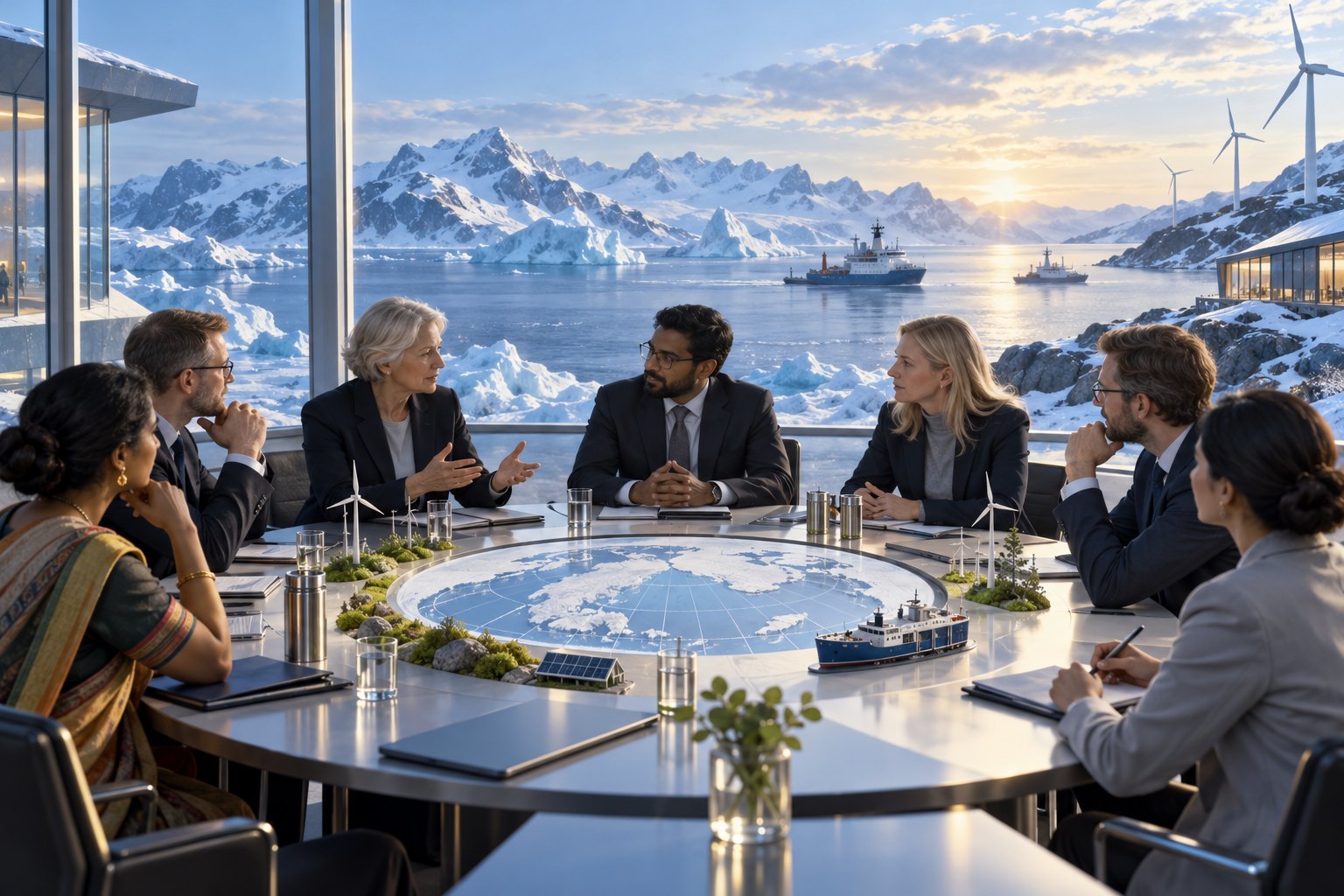
The India–Nordic Summit brings India together with the five Nordic countries: Denmark, Finland, Iceland, Norway and Sweden. Begun in 2018, the partnership centres on green technology, clean energy and innovation, and supports India's Arctic Policy. At the third summit, in Oslo on 19 May 2026, the leaders agreed a Green Technology and Innovation Strategic Partnership.
Syllabus: Prelims · Current Affairs & IR; GS1 · Geophysical Phenomena; GS2 · Groupings & Agreements
In short
The India–Nordic Summit, begun in Stockholm in 2018, joins India and the five Nordic states on green technology and the Arctic, though they sit in two trade blocs.
India should treat the Nordic five as one partner across two trade rulebooks, judging the summit by technology transferred, not declarations signed.
Why it matters
A farmer in Vidarbha will never see the Arctic, yet polar ice melt in the Arctic can change weather and rainfall patterns, including the monsoon. That is why India keeps an Arctic Policy and works with the Arctic states, all five Nordic countries among them. Closer ties can bring tested Nordic know-how in geothermal energy, water recycling and maritime industries, and open research and job routes for Indian students and IT professionals; Finland alone hosts about 2,400 Indian students. Because three Nordic states are in the EU and two in EFTA, Indian exporters meet two different rulebooks in one region.
Prelims pointers
- Nordic countries: Denmark, Finland, Iceland, Norway and Sweden; all five are members of the Arctic Council.
- EU members: Denmark, Finland, Sweden. EFTA members: Iceland, Liechtenstein, Norway, Switzerland; EFTA was founded by the Stockholm Convention of 1960.
- India–EFTA TEPA: signed in New Delhi on 10 March 2024, in force from 1 October 2025; EFTA aims to raise investment in India by USD 100 billion over 15 years.
- European Economic Area: the EU plus Iceland, Liechtenstein and Norway; Switzerland, though in EFTA, stays outside it.
- India's Arctic Policy (Ministry of Earth Sciences, 2022): six pillars, from science and research to national capacity building.
- Arctic Council: set up by the Ottawa Declaration of 1996; eight Arctic states are members; India has been an observer since 2013.
- Himadri: India's Arctic research station at Ny-Ålesund, Svalbard (Norway), since 2008; the National Centre for Polar and Ocean Research, Goa, runs India's polar programme.
- Defence FDI in India: up to 74% through the automatic route; beyond 74%, up to 100%, through the government route.
Practise a UPSC-style question
Consider the following statements about the European Free Trade Association (EFTA):
1. Denmark is a member of EFTA.
2. Finland is a member of EFTA.
3. Iceland is a member of EFTA.
4. Norway is a member of EFTA.
How many of the above statements are correct?
- (a) Only one
- (b) Only two
- (c) Only three
- (d) All four
Show the answer
Answer: (b) Only two
1 is incorrect: Denmark is a member of the European Union, not EFTA. 2 is incorrect: Finland is also in the EU. 3 is correct: Iceland belongs to EFTA. 4 is correct: Norway belongs to EFTA. EFTA's four members are Iceland, Liechtenstein, Norway and Switzerland, so only two Nordic countries are covered by the India–EFTA TEPA.
More Explainers
- State Legislative Councils: Articles 168-172 and the graduates' and teachers' seats Polity
- Whales and dolphins in Indian waters: legal protection, IUCN status and strandings Environment
- The Aligarh Movement, AMU and the Article 30 minority test Polity
- Environmental clearance by States: SEIAA, SEAC and the EIA Notification, 2006 Environment
- Software vulnerabilities: CVE, CVSS, coordinated disclosure and CERT-In's role Sci-Tech
- Drug trafficking law in India: NDPS Act, PIT-NDPS, NCB and NCORD National
- Choosing the UN Secretary-General: Article 97, UNSC veto and straw polls World & IR
- UN Convention against Torture, and why India has not ratified it Polity
- NavIC: why India's navigation constellation cannot give a standalone position Sci-Tech
- International Energy Agency: membership, 90-day oil stocks and India's status World & IR
- PM Surya Ghar: Muft Bijli Yojana and the rooftop solar subsidy Economy
- HFSS foods: FSSAI's draft limits and front-of-pack warning labels National